Table of Contents
For years, the headline has been the same: robots are coming to warehouses.
That story is still being written. But something more interesting is happening right now. Robots have already arrived in places most people never expected — a theme park ride in Hollywood, an app-hailed car in Atlanta, a campus sidewalk in the middle of a college quad.
Once you know what you’re looking at, you see them everywhere.
That matters because the warehouse automation technology behind those deployments is the same technology being installed in fulfillment centers and distribution centers right now. The cost has dropped. The reliability is proven. The case for acting has never been clearer.
Here’s where robots are showing up — and what each example means for your operation.

01. A Horror Ride at Universal Studios Runs on the Same Robots Used in Warehouses
Universal Studios Hollywood recently opened Monsters Unchained: The Horror Ride. There’s no track. No fixed rail. Riders sit in pods mounted to 6-axis industrial robotic arms that tilt, spin, and lunge in real time.
Those arms aren’t custom entertainment hardware. They’re the same class of 6-degree-of-freedom (6-DOF) industrial robots used in:
- Automotive assembly
- Precision welding
- Warehouse picking and packaging
The ride is spectacular. But the technology has been working in factories and fulfillment centers for years.
What this means for your DC: The same robotic arm thrilling guests at Universal can pick a case, sort a carton, or palletize a pallet. Your facility is a far more controlled environment than a moving ride full of guests. If it works there, it works for you.
02. Waymo Is Running Driverless Cars in Downtown Atlanta Traffic
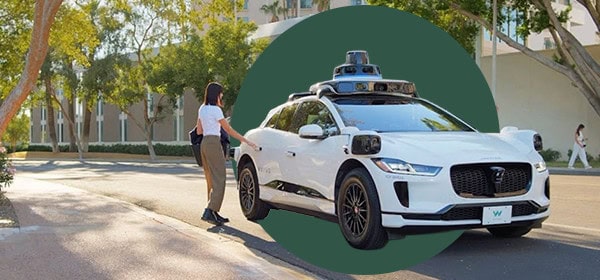
Waymo now operates fully autonomous commercial rides in Phoenix, San Francisco, Los Angeles, and Atlanta. No driver. No safety operator. Just a car navigating real city traffic — construction zones, pedestrians, cyclists, and rush-hour gridlock — on its own.
Downtown Atlanta at rush hour is not a controlled environment. And the autonomy works anyway.
What this means for your DC: A warehouse floor is significantly more predictable than downtown Atlanta. The routes are known. The space is mapped. The variables are managed. If autonomous vehicles can handle the complexity of city traffic, autonomous mobile robots (AMRs) can absolutely handle your floor. The technology has caught up with the idea.
03. Campus Delivery Robots Are Logging Millions of Deliveries With No Human Involved
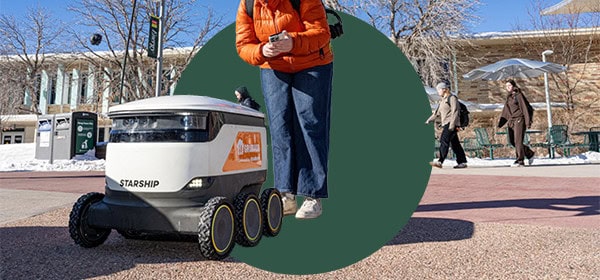
Across U.S. universities, small autonomous robots roll down sidewalks, stop at crosswalks, and hand off food directly to students. Companies like Starship Robotics have deployed thousands of units, logging millions of deliveries in rain, cold, and heavy foot traffic.
They run 24 hours a day. No scheduling. No breaks. No turnover.
Look at what these robots are actually doing:
- Following predictable routes
- Executing repetitive tasks
- Operating around human foot traffic
- Scaling up without adding headcount
Those are the same challenges your distribution center faces every day — at a much larger scale.
What this means for your DC: If this technology handles the complexity of a busy college quad at lunch, it’s ready for a warehouse floor specifically designed for it. The question is no longer capability. It’s deployment strategy.
What This Shift in Warehouse Automation Technology Means Right Now
Robots aren’t showing up in theme parks and on campuses by accident. The technology has crossed a critical line — from experimental to reliable, and from expensive to commercially viable.
That same shift is happening in industrial automation right now. Three things have changed:
The conversation has shifted. Most operations have moved past “should we automate?” The real question now is: what do we automate first, and how do we connect it to what we already have?
Integration is the hard part. AMRs, robotic arms, and automated sortation all need to communicate with your WMS, your conveyors, and each other. The hardware is ready. Getting it to work together inside your specific operation is where experience makes the difference.
The cost of waiting is going up. Lead times on automation components are extending. Operations that start planning now choose their own timeline. Those that wait have one assigned to them.
The Main Types of Warehouse Automation Being Deployed Today
Not every operation needs the same stack. Here’s a plain-language breakdown of what’s actually being installed.
Autonomous Mobile Robots (AMRs)
AMRs use onboard sensors and AI navigation to move through a facility without fixed tracks or magnetic tape. They carry totes, shelving units, or pallet loads to pick stations and pack zones — cutting the walking and transport time that eats up most warehouse labor hours.
Key advantages:
- No floor modifications required
- Redeployable as your operation changes
- Often operational within weeks
AMR vs. AGV: What’s the Difference?
Automated guided vehicles (AGVs) follow fixed paths — tape, wire, or embedded tracks. AMRs navigate dynamically, adjusting routes in real time around people and obstacles.
For most modern distribution environments, AMRs offer more flexibility and faster ROI than traditional AGVs.
6-Axis Robotic Arms for Picking and Packaging
The same technology in Monsters Unchained is increasingly used in DCs for:
- Case picking
- Carton erecting
- Palletizing
- Pack-out operations
Modern robotic arms with vision systems can handle a wide range of SKU sizes, weights, and packaging types — making them viable for mixed-SKU environments, not just high-volume single-SKU lines.
Automated Sortation Systems
Sortation is the throughput multiplier in high-volume fulfillment. Products are inducted, scanned, and automatically diverted to the correct shipping lane or staging area — at rates no manual process can match.
When combined with AMRs and robotic pick systems, sortation becomes the connective tissue of a fully integrated operation.
Conveyor Systems as the Automation Backbone
Every AMR deployment, every robotic pick cell, and every sortation system connects to a conveyor backbone. That backbone needs to be designed from the start to support both current systems and future expansion.
Modular retrofits let existing facilities add automation incrementally — no full rebuild required.
For a framework on evaluating automation ROI, the Material Handling Institute (MHI) maintains in-depth resources for distribution and fulfillment operators.
How to Know If Your Facility Is Ready for Automation
Before investing in any equipment, the most valuable step is an honest look at your current operation. Start with these questions:
- Where are your highest labor costs? Pick, pack, transport, or sortation? The answer tells you where automation pays back fastest.
- What does your volume look like? Flat and predictable, or spiked seasonally? Systems need to be sized for peak, not average.
- What’s your software situation? Automation hardware needs an orchestration layer. Outdated or disconnected control systems are often the real bottleneck.
- What’s your capital structure? Phased deployments let you generate ROI while continuing to expand.
- Who handles integration and support? Multi-vendor deployments create risk. A single partner who handles engineering, installation, and maintenance reduces that significantly.
Conclusion: The Window to Get Ahead Is Open
The robots at Universal Studios, in Atlanta traffic, and on college campuses aren’t novelties. They’re proof of concept — at scale — built on the same technology available for your facility right now.
The cost curve has shifted. The reliability is demonstrated. The case for warehouse automation technology has never been stronger or more accessible.
Operations that start the conversation now will compound their advantages. Operations that wait will spend more, have less time to plan, and start from behind.
Century Conveyor designs and integrates complete material handling systems — conveyor backbones, sortation, AMR integration, and robotic picking. We work with distribution centers and manufacturers across the country to figure out what makes sense before you spend a dollar on equipment.
Call (908) 205-0625, email info@centuryconveyor.com, or visit centuryconveyor.com to start the conversation.
Frequently Asked Questions About Warehouse Automation Technology
What is the difference between an AMR and an AGV? AGVs follow fixed paths built into the floor — magnetic tape, wires, or embedded tracks. AMRs use sensors and AI to navigate dynamically, adapting to obstacles and route changes in real time. For most modern facilities, AMRs deploy faster, reconfigure more easily, and deliver stronger ROI.
Are warehouse robots reliable enough for live production operations? Yes. Modern AMRs, 6-axis robotic arms, and sortation systems are deployed in mission-critical fulfillment operations processing millions of orders annually. The technology is production-grade. Reliable performance depends on proper system design, integration, and an ongoing maintenance program.
How quickly can AMRs be deployed in an existing warehouse? Most initial AMR deployments are operational in weeks. Unlike fixed conveyor installations, AMRs require no floor modifications and can be redeployed as your operation changes.
Do warehouse robots replace workers or work alongside them? In practice, automation works alongside workers — not instead of them. Robots handle repetitive, high-volume, physically demanding tasks. Workers focus on judgment-intensive work: exceptions, quality control, and customer-specific requirements. Most operations reduce dependency on hard-to-fill roles while improving safety and productivity for the workers they retain.
What does a warehouse need before deploying robotic automation? At a minimum: clarity on order profiles and peak volumes, a WMS or WCS capable of communicating with robotic systems, sufficient network infrastructure, and a facility layout designed for safe human-robot interaction. A pre-deployment automation readiness assessment with an experienced integration partner is always the right first step.
Does Century Conveyor handle robotic integration alongside conveyor systems? Yes. Century designs and integrates complete systems — conveyor backbones, sortation, AMRs, and robotic picking cells — so every component communicates and operates together from day one.