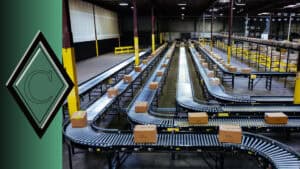
Benefits of warehouse automation has shifted from being a competitive advantage to a foundational requirement for modern distribution, e-commerce, and fulfillment operations. Within this space, Century Conveyor Systems positions itself as a full-service systems integrator that designs, builds, and supports end-to-end automation ecosystems rather than simply supplying equipment. Their approach to warehouse automation—especially in order fulfillment environments—centers on engineered conveyor systems, robotics integration, and lifecycle support that work together as a unified operational strategy.
Below is a detailed FAQ exploring the benefits of warehouse automation, specifically framed through the capabilities and solutions offered by Century Conveyor Systems.
Table of Contents
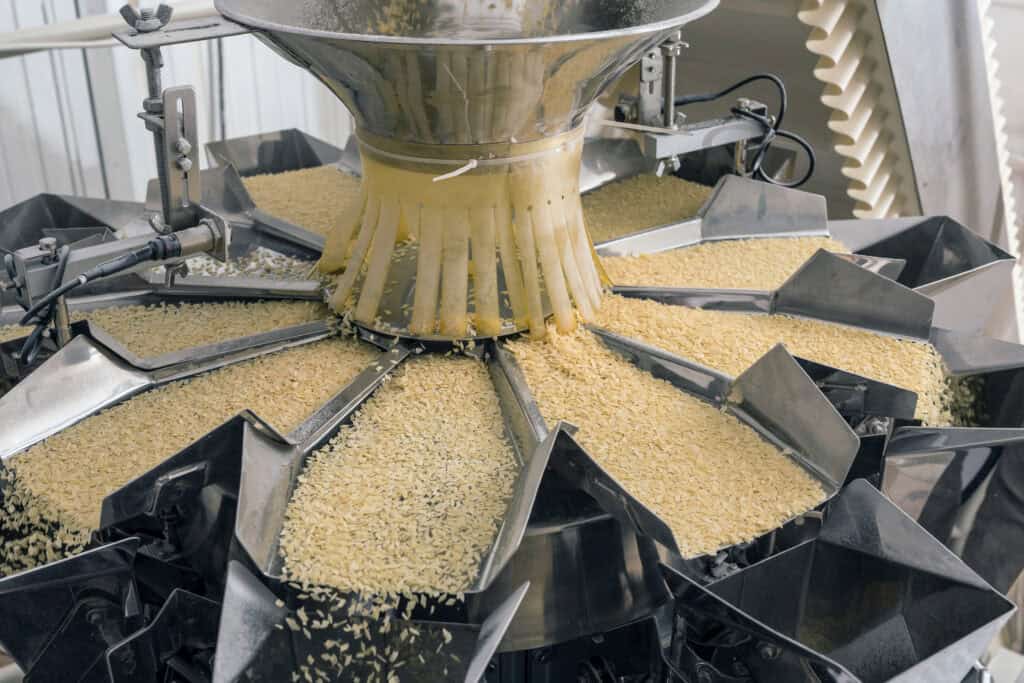
Benefits of Warehouse Automation FAQ #1: Why is warehouse automation considered a strategic advantage rather than just an operational upgrade?
Warehouse automation is no longer just about moving boxes faster—it fundamentally reshapes how a facility performs under pressure. Century Conveyor Systems designs automation with the goal of optimizing the entire material flow from receiving to shipping, not just isolated tasks like transport or sorting.
The strategic value comes from how automation integrates multiple operational layers:
- Physical movement (conveyors, sortation, robotics)
- Decision systems (controls, PLCs, WCS/WMS integration)
- Labor orchestration (reducing manual touches and travel time)
Instead of relying on human-driven batch workflows, automated systems create continuous, predictable throughput. This predictability is what allows warehouses to scale without proportional increases in labor or space. In practical terms, automation turns warehouse performance into a measurable, controllable system rather than a variable one.
Century’s role as an integrator matters here because the benefit is not just the equipment—it is how well the system is engineered as a whole.
Benefits of Warehouse Automation FAQ #2: How does Century Conveyor Systems improve throughput and order fulfillment speed?
One of the most immediate benefits of warehouse automation is increased throughput—how many orders or units a facility can process in a given time window. Century’s order fulfillment solutions are designed specifically to increase output performance while reducing manual handling and delays.
In traditional warehouses, movement is fragmented: forklifts, carts, and manual picking create bottlenecks between steps. Century replaces these interruptions with continuous-flow systems such as conveyors, sortation lines, and robotic transport.
Key improvements include:
- Continuous movement from picking → packing → shipping
- Reduced idle time between workstations
- Faster routing through automated sortation
- Elimination of repetitive transport tasks
The real advantage is not just speed—it is flow consistency. When goods move predictably through each stage, downstream processes (packing stations, shipping docks, labeling systems) can operate at stable, optimized rates without sudden surges or bottlenecks.
This is especially important in e-commerce and high-SKU environments where order volumes fluctuate significantly.
Benefits of Warehouse Automation FAQ #3: How does automation reduce labor dependency without eliminating workforce value?
A major benefit of warehouse automation is labor optimization, not simply labor reduction. Century’s systems are designed to minimize manual handling tasks while allowing human workers to focus on higher-value activities such as exception handling, quality control, and system oversight.
For example, conveyor and robotic systems reduce the need for:
- Long-distance walking across warehouse floors
- Manual cart movement between zones
- Repetitive lifting and carrying tasks
- Time-consuming sorting and staging work
At the same time, Century integrates robotics such as AGVs and AMRs that handle transport tasks typically performed by forklifts or manual labor.
The key insight is that automation redistributes labor rather than simply removing it. Instead of requiring more workers as volume increases, warehouses can stabilize staffing levels and redeploy personnel toward more complex decision-based tasks.
This improves both efficiency and workforce sustainability, especially in environments facing labor shortages or high turnover.
Benefits of Warehouse Automation FAQ #4: Why does automation significantly reduce operational errors and product damage?
Error reduction is one of the most financially impactful benefits of warehouse automation. Manual handling introduces variability—mis-picks, mis-sorts, dropped items, and inconsistent routing. Century’s engineered systems aim to eliminate these inconsistencies through controlled, repeatable processes.
Century designs systems to optimize:
- Order accuracy (correct item routing through sortation logic)
- Handling consistency (reduced manual touches)
- Product protection (controlled movement via conveyors and accumulation systems)
By minimizing human handling steps, the system reduces opportunities for error accumulation across the fulfillment cycle. Even small improvements in accuracy can significantly reduce return rates, re-shipping costs, and customer dissatisfaction.
Additionally, automation reduces product damage by controlling spacing, speed, and transitions between conveyor zones. Instead of unpredictable manual transport, products follow engineered pathways with defined acceleration, deceleration, and transfer points.
This is particularly valuable for fragile goods, high-value inventory, or high-volume retail fulfillment operations.
Benefits of Warehouse Automation FAQ #5: How does Century Conveyor Systems improve scalability for growing warehouses?
Scalability is one of the most important long-term benefits of warehouse automation. Century designs systems with expansion in mind, allowing operations to grow without requiring complete system replacement.
Their approach includes modular integration of:
- Conveyor extensions and additional sortation lanes
- Robotics (AGVs/AMRs) that can be scaled up as volume increases
- Storage systems that integrate with automated retrieval
- Software controls that adjust routing logic dynamically
Unlike fixed manual workflows, automated systems can be expanded in phases. This means a warehouse can start with a partial automation footprint—such as a packing or shipping zone—and gradually extend automation across the entire facility.
The benefit is financial as well as operational: instead of large upfront redesigns, businesses can scale incrementally while maintaining system continuity.
This flexibility is especially important for seasonal businesses and fast-growing e-commerce operations.
Benefits of Warehouse Automation FAQ #6: How does automation improve space utilization inside the warehouse?
Warehouse space is one of the most expensive operational constraints. Automation helps maximize usable space by reducing wasted aisle time, inefficient storage layouts, and oversized staging areas.
Century’s systems support space efficiency through:
- Compact conveyor routing that replaces wide forklift lanes
- Vertical integration with storage modules and racking systems
- Automated movement that reduces the need for staging buffers
- Robotics that operate in tighter spaces than traditional equipment
Because automated systems do not require the same turning radius or travel clearance as forklifts, warehouses can redesign layouts to prioritize storage density over manual accessibility.
This leads to a higher throughput per square foot, which is often more valuable than simply increasing speed.
Benefits of Warehouse Automation FAQ #7: Why is system integration (conveyors + robotics + software) a major benefit of Century’s approach?
One of the defining benefits of Century Conveyor Systems is that they operate as a full systems integrator rather than a single-equipment vendor.
This matters because warehouse automation only performs well when all components work together:
- Conveyors move items physically
- Robotics handle flexible transport tasks
- Controls systems coordinate flow and logic
- WMS/WCS software manages inventory and routing decisions
If these systems are disconnected, warehouses often experience bottlenecks, miscommunication between systems, or inefficiencies in routing logic.
Century’s integration-first approach ensures that automation behaves like a unified ecosystem. This reduces friction between subsystems and improves reliability under high-volume conditions.
The result is fewer “handoff failures” between systems and smoother end-to-end execution of fulfillment workflows.
Benefits of Warehouse Automation FAQ #8: How does warehouse automation improve long-term operational reliability?
Reliability is one of the most overlooked but critical benefits of automation. Warehouse systems run continuously under heavy load, and even small disruptions can create cascading delays.
Century supports reliability through:
- Engineered system design tailored to operational needs
- Preventative maintenance and service programs
- Long-term parts availability and support
- Controls and monitoring systems for early issue detection
Unlike manual systems, which vary based on workforce consistency, automated systems operate with standardized performance parameters. This consistency allows managers to forecast output, schedule labor more accurately, and reduce unexpected downtime.
Over time, this leads to improved service levels, fewer shipping delays, and stronger customer satisfaction metrics.
Benefits of Warehouse Automation FAQ #9: What is the biggest overall benefit of warehouse automation with Century Conveyor Systems?
The most important benefit is not any single improvement—it is the compounding effect of all improvements working together.
When Century designs an automated warehouse system, the combined result is:
- Faster order processing
- Lower labor intensity per unit shipped
- Reduced errors and product damage
- Improved scalability for growth
- More efficient use of space
- Greater operational predictability
Instead of optimizing isolated functions, Century’s approach creates a synchronized fulfillment system where each component reinforces the others.
That systemic alignment is what turns warehouse automation from a collection of machines into a high-performance logistics engine.