A well-designed conveyor picking system can transform the way a warehouse or distribution center handles orders. As businesses face increasing demands for faster fulfillment, greater accuracy, and improved operational efficiency, conveyor automation has become an important part of modern material handling. By connecting picking, packing, sorting, and shipping operations, conveyor systems help facilities move products efficiently while reducing unnecessary manual handling.
Century Conveyor Systems specializes in designing, engineering, and implementing automated material handling solutions for warehouses, distribution centers, and fulfillment facilities. Its approach combines conveyor technology, robotic fulfillment, warehouse controls, and customized system integration to help businesses improve productivity and streamline their order fulfillment processes.
Whether a company is looking to modernize an existing facility or develop a new distribution operation, understanding how a conveyor picking system works can help identify opportunities for improvement.
Below are some frequently asked questions about Century Conveyor Systems’ conveyor picking system solutions, including their benefits, applications, components, and long-term value.
Table of Contents
1. What Is a Conveyor Picking System, and How Does Century Conveyor Systems Approach It?
A conveyor picking system is an automated material handling solution designed to transport products, cartons, totes, and other inventory throughout a warehouse during the order fulfillment process. Instead of requiring employees to manually move products between different operational areas, conveyors provide a continuous transportation method that connects picking stations, packing areas, sorting equipment, and shipping operations.
The primary purpose of a conveyor picking system is to make order fulfillment faster, more organized, and less dependent on unnecessary manual transportation.
Century Conveyor Systems approaches conveyor picking as part of a larger warehouse automation strategy. Rather than relying on a one-size-fits-all conveyor configuration, the company engineers solutions around the specific requirements of each facility. This includes considering available floor space, product dimensions, order volume, throughput expectations, and the existing warehouse layout.
Its conveyor solutions include belt conveyors, live roller conveyors, gravity conveyors, modular belt conveyors, and specialized conveyor sections designed for different material handling applications.
These components can be integrated into a larger fulfillment operation to support the movement of individual packages, split-case orders, full-case orders, and pallets.
The result is a system designed to connect different stages of warehouse operations while improving the overall flow of products. For businesses looking to improve fulfillment performance, this customized engineering approach helps ensure that conveyor equipment supports actual operational requirements rather than creating unnecessary complexity.
2. How Does a Conveyor Picking System Improve Warehouse Order Fulfillment?
One of the biggest advantages of a conveyor picking system is its ability to reduce the time and effort required to move products throughout a warehouse.
Traditional fulfillment operations can involve significant amounts of manual transportation. Employees may need to walk between storage locations, picking stations, packing areas, and shipping docks to complete individual orders. These movements consume valuable time and can create bottlenecks, especially when order volumes increase.
A properly engineered conveyor system reduces these inefficiencies by creating designated transportation paths between operational areas.
Century Conveyor Systems focuses on optimizing fulfillment operations at multiple touchpoints. Its solutions are designed to improve output performance, reduce errors that can result in returns or damaged merchandise, and process items faster with fewer manual interactions.
For example, a conveyor line can transport picked cartons directly to a packing station. Once packing is complete, additional conveyor sections can move those cartons toward a sorting or shipping area. Diverts can direct packages to their designated destinations without requiring employees to manually transport every order.
This creates a more coordinated fulfillment process in which products move between departments with less interruption.
Another important advantage is the ability to support different order profiles. Businesses handling both individual-item orders and larger case quantities can benefit from conveyor configurations designed to accommodate these varying requirements.
By reducing unnecessary transportation and connecting separate processes, a conveyor picking system can help warehouses increase productivity without relying exclusively on additional labor.
3. What Types of Conveyors Can Be Included in Century Conveyor Systems’ Picking Solutions?
Different products and warehouse operations require different conveyor technologies. Selecting the appropriate equipment is essential because conveyor performance depends on factors such as package dimensions, weight, shape, speed requirements, and the type of movement needed.
Century Conveyor Systems offers several conveyor technologies that can be incorporated into material handling and fulfillment operations.
Live Roller and Gravity Conveyors
Live roller conveyors use powered rollers to move cartons and products along a designated path. Gravity conveyors, on the other hand, rely on gravity rather than motors to move items.
These systems are commonly used in packing lines, divert applications, extendable conveyor configurations, and end-of-line operations. Their ability to interface with manual induction makes them useful in facilities where automated transportation and employee-operated workstations need to function together.
Belted Conveyors
Belted conveyors use a continuous belt to transport products across the conveyor surface. They are particularly useful for smaller packages, polybags, irregular cartons, and products that may not travel reliably on rollers.
Their stable transportation surface also supports inclines, declines, and controlled spacing between packages. This makes them a practical option for facilities that need consistent product movement across different elevations or operational areas.
Modular Belt Conveyors
Modular belt conveyors use interconnected belt sections rather than one continuous vulcanized rubber belt. Individual sections can be removed, cleaned, or modified more easily.
These systems can be especially useful in specialized product handling applications where additional traction, tight transfers, or easier maintenance access are important considerations.
Conveyor Diverts
Diverts direct products from one conveyor line to another. This allows warehouses to separate packages based on their destination, processing requirements, or shipping assignments.
Depending on the application, divert mechanisms can use roller balls, skate wheels, rising platforms, swinging arms, or push trays.
Zero-Pressure and Minimum-Pressure Accumulation Conveyors
These conveyor configurations help manage the spacing between products as they move through a fulfillment operation.
Zero-pressure accumulation prevents packages from touching, while minimum-pressure accumulation allows products to make light contact. Both approaches can help reduce product damage in situations where package separation is important.
By combining these technologies, Century can develop a conveyor picking system that accommodates the specific movement and handling requirements of a warehouse.
4. Can Century Conveyor Systems Integrate Robotics Into a Conveyor Picking System?
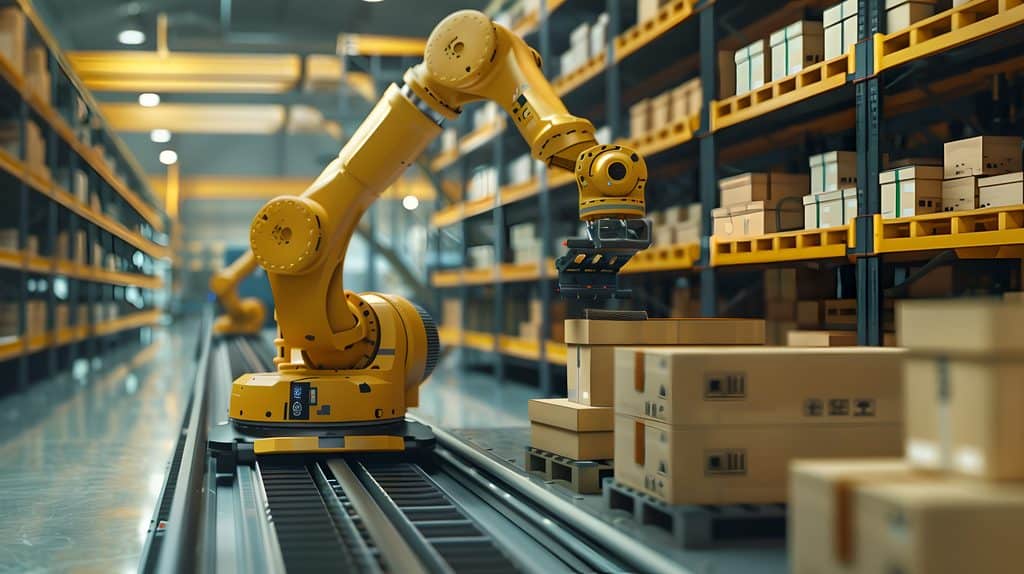
Yes. Robotic fulfillment is an important component of modern warehouse automation, and Century Conveyor Systems offers solutions involving automated guided vehicles (AGVs) and autonomous mobile robots (AMRs).
Integrating robotics with conveyor equipment can help warehouses reduce repetitive transportation tasks while creating more flexible fulfillment operations.
AGVs and AMRs serve different purposes depending on the facility’s requirements.
Automated Guided Vehicles typically follow predetermined routes using navigation technologies such as magnetic tape, QR code markers, inductive wires, and laser-based guidance systems.
They are useful for transporting pallets, cartons, and other materials along established routes. AGVs can also be equipped with conveyor or cart attachments to accommodate different product handling requirements.
Autonomous Mobile Robots offer greater flexibility because they navigate through a facility using sensors and onboard programming rather than relying exclusively on fixed travel paths.
This makes AMRs particularly useful for goods-to-person fulfillment operations. For example, an AMR can retrieve an inventory tote and transport it to a packing line or directly to an order fulfillment associate.
When integrated with conveyors, these robotic technologies can create a coordinated transportation network.
The main advantage is flexibility. Instead of depending entirely on fixed conveyor paths for every transportation task, warehouses can use mobile robots to move products between areas where traditional conveyor infrastructure may be impractical.
For growing businesses, robotic integration also offers opportunities to expand automation as operational requirements change.
5. How Does a Conveyor Picking System Help Reduce Picking and Fulfillment Errors?
Picking accuracy is one of the most important factors in warehouse performance. When the wrong products are selected, orders are incomplete, or packages are damaged during transportation, businesses can experience additional shipping costs, customer complaints, returns, and unnecessary labor.
A conveyor picking system can help address these challenges by creating a more structured and organized fulfillment process.
One important benefit is controlled product movement. Conveyors establish designated transportation routes that reduce the need for employees to manually move packages between departments. This helps create more consistent handling procedures and reduces opportunities for products to become misplaced during transportation.
Conveyor diverts provide another layer of operational organization. Instead of requiring employees to manually sort every package, automated divert mechanisms can direct cartons toward designated lines or processing areas.
Additionally, accumulation conveyors help manage the spacing between packages. This is especially important when handling fragile merchandise or products that could be damaged through repeated contact.
However, conveyor automation should be viewed as one component of a broader accuracy strategy. The conveyor itself transports products; warehouse software, scanning procedures, controls, and employee workflows help ensure that the correct items are selected and routed.
Century Conveyor Systems also provides controls engineering and software-related capabilities, including programmable logic controls (PLC), warehouse management system (WMS) integration, and warehouse control system (WCS) solutions.
When these technologies work together, a facility can establish a more coordinated fulfillment environment that supports accurate product movement and order processing.
6. Can a Conveyor Picking System Be Customized for an Existing Warehouse?
Absolutely. Warehouse layouts vary considerably, and an effective conveyor picking system must account for the physical and operational characteristics of the facility.
Some warehouses have limited floor space, while others operate across multiple levels or use mezzanines to maximize available storage capacity. Product types, order volumes, shipping requirements, and existing equipment also influence the design of an automation solution.
Century Conveyor Systems provides system design, mechanical engineering, controls engineering, installation, and project management services to support customized material handling projects.
This means a conveyor picking system can be developed around an existing warehouse configuration rather than requiring the entire facility to be redesigned.
For example, a business might need to connect an existing picking area with a newly established packing line. Another facility may need additional conveyor sections to support increased order volume or introduce automated package sorting.
Different equipment configurations can address these needs.
Spiral conveyors can move products between floor levels while conserving space. Extendable conveyors can support truck loading and unloading by transporting packages directly into trailers. Pallet conveyors can handle heavier loads, while smaller belt and roller conveyors can accommodate individual cartons.
The ability to combine these technologies allows businesses to approach automation in stages.
Rather than replacing every existing process at once, companies can identify the most significant operational bottlenecks and introduce equipment where it will provide the greatest benefit.
This flexibility is particularly valuable for established distribution centers that need to improve productivity while maintaining ongoing operations.
7. What Should Businesses Consider Before Investing in a Conveyor Picking System?
Investing in warehouse automation is a significant operational decision. Before selecting equipment, businesses should understand their current fulfillment challenges and identify what they want their new system to accomplish.
Several considerations can help guide the planning process.
Order Volume and Throughput Requirements
Businesses should evaluate how many orders, cartons, and individual items move through their facility during normal and peak operating periods.
A system designed around average daily volume may not provide sufficient capacity during seasonal demand increases. Understanding current and projected throughput helps engineers determine the appropriate conveyor configuration and capacity.
Product Characteristics
The size, shape, weight, and packaging of products influence conveyor selection.
Small polybags may require a different transportation surface than large cartons or heavy pallets. Fragile merchandise may also require additional spacing and controlled accumulation to reduce the risk of damage.
Available Floor Space
Conveyor systems must fit within the facility while supporting efficient employee movement and access to other operational areas.
Businesses should consider vertical transportation opportunities, mezzanines, existing storage systems, and potential changes to their warehouse layout.
Integration With Existing Equipment
A new conveyor picking system should work effectively with the facility’s existing equipment and technology.
This may involve connecting conveyors with packing stations, sortation equipment, robotic systems, warehouse software, and shipping operations.
Long-Term Expansion
Automation investments should account for future business requirements. A facility that expects order volume to increase may benefit from a system that allows additional conveyor sections, robotic equipment, or processing stations to be introduced later.
Taking these factors into account helps ensure that the selected solution supports both immediate operational improvements and long-term business objectives.
8. What Maintenance and Support Are Available for Century Conveyor Systems’ Conveyor Solutions?
Long-term reliability is an important consideration when investing in conveyor automation. Even a well-designed system requires regular maintenance to maintain performance, identify potential issues, and minimize unexpected downtime.
Century Conveyor Systems offers conveyor preventative maintenance, repair services, replacement parts, and ongoing technical support.
Preventative maintenance helps identify wear, mechanical issues, and other conditions that could affect equipment performance. Regular inspections and servicing can also help extend equipment life.
According to Century’s conveyor solutions information, a well-maintained conveyor system can last more than 20 years, making proper maintenance an important part of protecting the investment.
The company also provides mechanical and electrical installation capabilities, along with controls engineering and project support.
Its service department offers conveyor maintenance and repair capabilities, supported by technicians and a fleet of service vehicles serving the New Jersey, Pennsylvania, and New York metropolitan area. Replacement conveyor parts and equipment can also be quoted for delivery.
Having access to ongoing support is particularly important for distribution centers that depend on consistent material movement to meet shipping deadlines.
Rather than treating installation as the final step, businesses should consider maintenance and service availability as part of the overall automation strategy.
9. Why Choose Century Conveyor Systems for a Conveyor Picking System?
Choosing the right automation partner is just as important as selecting the right conveyor equipment. A successful project requires more than installing machinery. It involves understanding warehouse operations, engineering an appropriate layout, coordinating equipment, implementing controls, and providing support after installation.
Century Conveyor Systems offers a full-service approach to material handling automation.
Its capabilities cover several stages of the project lifecycle, including system design, validation, mechanical engineering, controls engineering, project management, equipment installation, startup support, and ongoing parts and service.
This integrated approach allows businesses to work with a partner that understands how individual conveyor components fit into a larger warehouse operation.
Another important advantage is the range of available solutions. Century works with conveyor systems, robotic fulfillment, sortation equipment, storage modules, programmable logic controls, warehouse management systems, and warehouse control systems.
This broad expertise makes it possible to develop solutions that address multiple operational requirements rather than focusing on a single piece of equipment.
The company’s experience also provides a foundation for handling projects of different sizes and levels of complexity. Century reports more than 1,500 installations over the past five years, reflecting its involvement in warehouse and distribution facility automation projects.
For businesses evaluating a conveyor picking system, this combination of engineering, equipment integration, and ongoing support can make the difference between simply adding conveyors and creating a more efficient fulfillment operation.
10. How Can Businesses Get Started With a Conveyor Picking System From Century Conveyor Systems?
The first step is identifying the specific operational challenges that a conveyor picking system should address.
Businesses should consider where delays occur, which processes require excessive manual transportation, whether existing conveyor equipment is meeting throughput requirements, and where automation could improve the movement of products.
Having a clear understanding of these challenges helps establish the foundation for an effective system design.
Century Conveyor Systems encourages businesses to provide project details so its automation experts can evaluate their requirements and determine appropriate next steps.
The planning process can include reviewing the warehouse layout, understanding product handling requirements, evaluating existing equipment, and identifying opportunities to improve fulfillment performance.
From there, Century can develop a customized material handling solution that combines the necessary conveyor technologies, controls, and robotic equipment.
Businesses interested in exploring their options can contact Century Conveyor Systems through its website or reach its team by phone at (908) 205-0625.
The goal is to develop an automation strategy that supports the facility’s operational requirements while providing room for future growth.
Final Thoughts: Is a Conveyor Picking System the Right Investment for Your Warehouse?
A conveyor picking system can play a significant role in improving warehouse productivity, reducing unnecessary manual transportation, and creating a more organized order fulfillment process.
However, the most effective solution depends on the specific requirements of the facility. Conveyor types, robotic technologies, software integration, product characteristics, and available space all influence how an automated system should be designed.
Century Conveyor Systems brings these elements together through customized material handling engineering and turnkey automation integration. By combining conveyor equipment with robotic fulfillment, sortation, controls, and ongoing support, the company helps businesses develop warehouse solutions that address their current operational challenges while supporting future growth.
For distribution centers and fulfillment facilities looking to improve efficiency, exploring a customized conveyor picking system is a practical first step toward building a more productive warehouse operation.