Table of Contents
More than 90% of Fortune 500 companies rely on at least one 3PL partner for fulfillment. 3PL and contract fulfillment demand is the number-one driver of new large-warehouse leasing activity in the U.S. The sector is growing — and the operators winning that growth all have something in common that has nothing to do with sales.
Winning a new 3PL contract is one thing. Building the operation behind it is another.
The 3PLs that keep customers longest are the ones with systems that can grow with them. When the customer’s volume doubles, the operation adapts. When a second customer comes into the building, the controls handle it. When the contract changes, the equipment doesn’t get ripped out.
That kind of flexibility isn’t an accident. It’s an engineering decision made before the first conveyor goes in — and it’s the difference between buying equipment and building a platform.
What Most 3PL Systems Are Not Built to Handle
Three operational pressures consistently separate the 3PLs that grow from the ones that plateau.
Speed to operational
New customer contracts come with aggressive go-live timelines. A prospective customer choosing between operators is also choosing between start dates — and a system that takes 14 months to build loses deals before the conversation starts. Fulfillment center automation only helps you win business if it can be deployed at the pace that business moves.
Multi-customer controls
This is the one that catches operators by surprise. Customer A runs one WMS. Customer B runs another. If your controls layer can only talk to one warehouse management system at a time, every new account means a custom integration project — or worse, a full rebuild. The floor should not have to choose which customer’s system drives it.
Volume that wasn’t in the original plan
A customer that signed at 5,000 orders a day is now moving 12,000. That’s the outcome every 3PL wants — and a fixed system built to the original spec can’t absorb it without a capital project. When growth requires re-engineering, growth stalls.
If any of these sound familiar, the issue isn’t the equipment you bought. It’s that it was bought as equipment, not designed as a platform.
The Platform Approach: Design for Day One, Engineer for What’s Next
We don’t start with the largest system that fits the building. We start with what the customer actually needs on day one, and design from there for what comes next. Four capabilities make that possible in a 3PL environment.
AMRs and modular conveyor
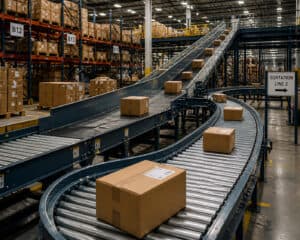
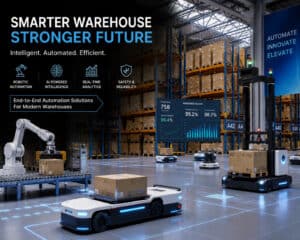
Autonomous mobile robots and modular conveyor lines can be reconfigured as customer mix, volume, and product profile change — no permanent commitment to a fixed layout. When a new account brings a different carton profile or a different pick path, the system moves with it instead of becoming the obstacle.
Put walls and shipping sortation
Fulfillment operations serve retail, DTC, and B2B out of the same building, which means mixed SKUs, mixed cartons, and mixed compliance requirements on every shift. Put walls handle order consolidation across that mix; automated shipping sortation routes finished orders to the right carrier lane without a dedicated team per channel.
WCS/WES controls that speak multiple WMS
A warehouse execution system that integrates with multiple WMS environments simultaneously is the core of multi-customer flexibility. Customer A and Customer B keep their own systems; the WES orchestrates the floor underneath both. Onboarding a new account becomes a configuration exercise, not a controls rebuild.
Rapid-deploy systems
Deployment timelines should match the pace of 3PL business. We’ve taken systems from site walk to go-live on aggressive schedules for operators who couldn’t wait 18 months for a traditional build — because in contract fulfillment, the operator who can say yes to the start date wins the contract.
The Best Time to Design for Flexibility
The best time to design a flexible system is before the first system is in the ground. The second-best time is before the next customer, the next expansion, or the next equipment replacement — because every fixed decision you make now is a constraint you’ll negotiate around later.
Century has been part of those decisions for 3PLs across the country: opening-day installations, multi-phase expansions, and platforms built around a single customer relationship that kept growing.
Planning a new 3PL facility, onboarding a new customer, or replacing equipment that wasn’t built to scale? Start the conversation — an engineering conversation, not a pitch.
Rick Maldonado leads business development for Century Conveyor Systems and works directly with operations teams on fulfillment projects across the country.
Rick Maldonado, Business Development Manager (713) 867-5309 | rick.maldonado@centuryconveyor.com
Want articles like this in your inbox? Sign up for the Century email blast.