A conveyor belt cleaner can play an important role in keeping a material handling system operating efficiently, particularly in warehouses, distribution centers, fulfillment facilities, and other environments where conveyors move products continuously. When conveyor equipment is integrated into a larger automated operation, cleanliness and maintenance become part of a much bigger consideration: maintaining reliable material flow from one stage of the operation to the next.
Century Conveyor Systems specializes in conveyor and material handling automation for warehouses, distribution centers, shipping operations, and fulfillment facilities. Its approach includes system design, installation, controls, maintenance, repair, replacement parts, and ongoing support. That broader perspective is useful when evaluating equipment such as a conveyor belt cleaner because the cleaner is not an isolated component—it needs to work as part of the conveyor system and the facility around it.
The following FAQ explains what businesses should understand about conveyor belt cleaners and how the topic relates to Century Conveyor Systems’ conveyor and fulfillment solutions.
Table of Contents
What is a conveyor belt cleaner?
A conveyor belt cleaner is a device or maintenance component designed to help remove material, debris, residue, or other unwanted buildup from a conveyor belt during operation or maintenance.
The basic purpose is straightforward: a conveyor belt transports products, and material can sometimes remain on or around the belt after the product has moved onward. Without appropriate cleaning and maintenance, accumulated material can interfere with conveyor performance, contribute to wear, or create housekeeping challenges.
The specific type of cleaning equipment required depends heavily on the conveyor’s application. A conveyor handling packaged goods in a distribution center can have very different cleaning requirements from a conveyor used for bulk material or food-related applications.
This is why selecting a conveyor belt cleaner should generally begin with understanding the complete conveyor application rather than choosing a component based only on the belt itself.
Why is conveyor belt cleaning important in an automated material handling system?
Conveyor systems are often central to automated material movement. Century describes warehouse conveyor systems as the backbone of automated operations, where conveyors continuously move products through processing, sortation, and distribution activities.
That means an issue affecting one section of a conveyor can potentially affect processes farther downstream. In an automated environment, equipment is interconnected, so maintaining the conveyor is about more than keeping an individual belt visually clean.
Regular attention to conveyor cleanliness can support several operational objectives:
- Maintaining consistent product movement
- Reducing the accumulation of unwanted material
- Supporting preventative maintenance practices
- Helping protect conveyor components from unnecessary buildup
- Maintaining an orderly work environment
- Supporting reliable operation across connected conveyor sections
Century offers conveyor preventative maintenance as well as conveyor repair and parts services. Its maintenance approach recognizes that conveyor equipment needs ongoing care after installation, rather than being treated as a one-time capital investment.
Does Century Conveyor Systems offer a specific conveyor belt cleaner?
Century Conveyor Systems’ published website describes a broad range of conveyor systems, service capabilities, and material handling solutions. Its offerings include belt and roller conveyors, sortation conveyors, modular belt conveyors, pallet handling systems, conveyor service, preventative maintenance, repair, and replacement parts.
The company information available publicly does not identify a single product specifically branded as a “Century Conveyor Systems conveyor belt cleaner.” Therefore, businesses should not assume that the phrase refers to one standardized Century product.
Instead, a conveyor belt cleaning requirement should be evaluated within the context of the conveyor system being designed, installed, serviced, or modernized.
This distinction matters because the appropriate cleaning method can depend on factors such as belt construction, conveyed products, conveyor configuration, operating environment, production requirements, and the type of residue being removed.
How does a conveyor belt cleaner fit into Century’s broader conveyor services?
One of the important considerations when evaluating conveyor cleaning equipment is the relationship between the component and the rest of the conveyor.
Century describes itself as a full-service material handling integrator. Its services cover system design and validation, installation, startup support, controls engineering, mechanical engineering, project management, preventative maintenance, repair, and parts.
That makes maintenance part of the overall lifecycle of a conveyor system.
A conveyor belt cleaner may therefore be considered alongside other maintenance and service requirements rather than as a standalone purchase. If a facility is experiencing belt contamination, tracking problems, buildup, or recurring maintenance issues, the underlying conveyor configuration may also deserve evaluation.
A comprehensive approach can help determine whether cleaning equipment, maintenance, replacement parts, adjustments, or a larger system modification is appropriate.
What types of conveyors does Century work with?
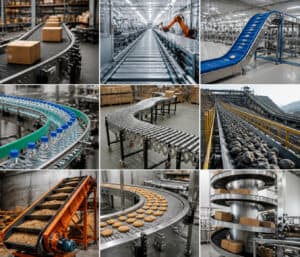
Century’s order fulfillment information describes several conveyor configurations, including live roller and gravity conveyors, belted conveyors, modular belt conveyors, conveyor diverts, zero- and minimum-pressure accumulation conveyors, extendable conveyors, spiral conveyors, and pallet conveyors.
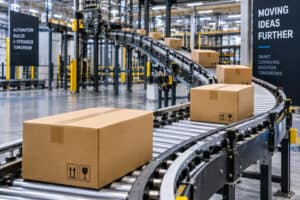
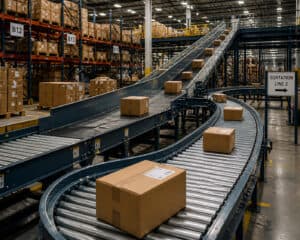
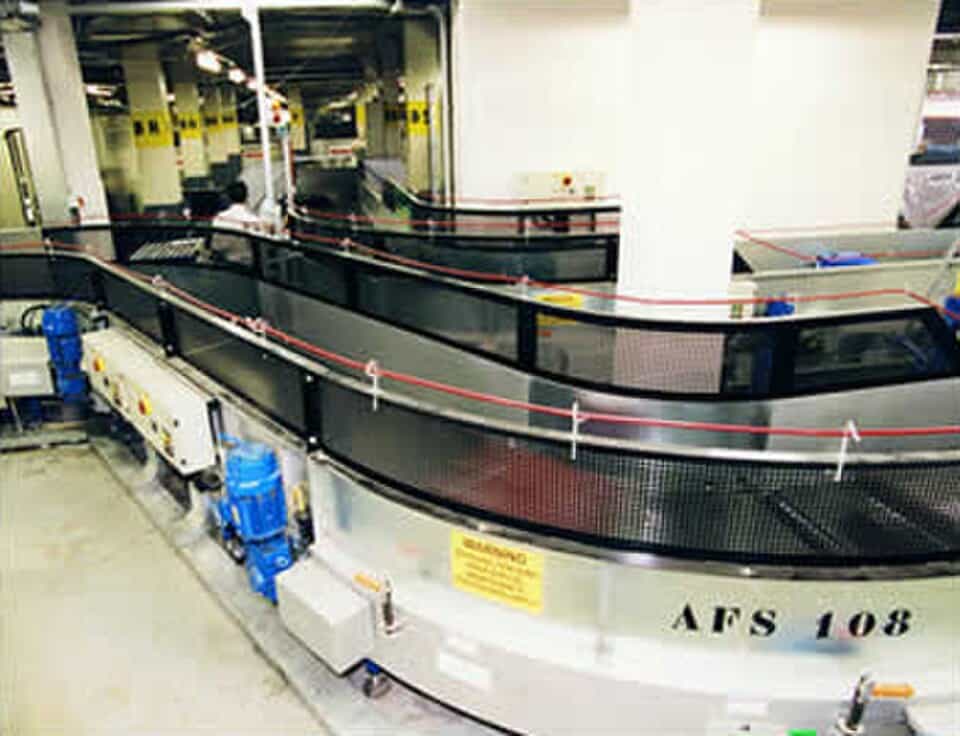
Belted conveyors are particularly relevant to a conveyor belt cleaner discussion. Century explains that belt-over conveyors use belts wrapped over the slider or rollers of a conveyor bed. These systems can provide stable conveyance for small polybags, parcels, and irregular carton sizes, while also supporting applications such as inclines, declines, and gapping.
Modular belt conveyors use individual belt sections rather than a single vulcanized rubber belt. According to Century, these modular belts can be removed, cleaned, or modified more easily and can be useful in applications requiring additional traction, tight transfers, or easier accumulation handling.
These differences demonstrate why there is no universal conveyor belt cleaning solution. The belt’s construction and the way the conveyor operates can influence what type of cleaning and maintenance approach makes sense.
Is a conveyor belt cleaner useful for fulfillment centers?
It can be, depending on the products, conveyor design, and operating environment.
Fulfillment centers place significant demands on material handling equipment because products may move through numerous stages between order receipt and shipment. Century describes order fulfillment as a process that extends from receiving an order through processing and ultimately moving the item to the shipping dock.
Conveyor systems can automate movement between these stages, reducing manual interactions and helping facilities process products efficiently.
In that environment, maintaining conveyor equipment is part of maintaining the overall material flow. A conveyor belt cleaner can be one component of a broader maintenance strategy where appropriate.
However, cleaning requirements for a fulfillment center handling cartons and polybags may differ substantially from requirements for another industry. The right solution should be based on the actual material being conveyed and the conveyor system’s operating conditions.
How should a business choose the right conveyor belt cleaner?
The first step is to define the application.
Important questions include:
- What type of belt is being used?
Belt construction can influence which cleaning methods are appropriate. - What products travel on the conveyor?
Cartons, polybags, food products, pallets, bulk materials, and other products can create very different cleaning requirements. - What type of residue or debris needs to be removed?
Dust, product fragments, packaging material, moisture, adhesive residue, and other contaminants may require different approaches. - How fast does the conveyor operate?
Operating speed can influence how and when cleaning equipment can be used. - Where is the conveyor located in the process?
A conveyor at an induction station may have different requirements from one positioned near packing or shipping. - How does the cleaning method affect maintenance?
A solution should ideally fit into the facility’s existing maintenance program rather than create an additional source of complexity.
Century’s engineering and service capabilities can be relevant when these questions involve the conveyor system as a whole. The company provides system design, mechanical engineering, installation, preventative maintenance, repair, and parts support.
Can conveyor belt cleaning be part of preventative maintenance?
Yes. Cleaning and inspection can form part of a broader preventative maintenance program.
Preventative maintenance is intended to identify and address developing issues before they become larger operational problems. For conveyor equipment, this can involve inspecting components, identifying wear, checking alignment and tracking, addressing buildup, replacing worn parts, and maintaining equipment according to its operating requirements.
Century specifically lists conveyor preventative maintenance among its services and also provides conveyor repair and replacement parts.
A belt cleaner does not replace preventative maintenance. Instead, where appropriate, it can complement a maintenance program by helping manage material accumulation and supporting the cleanliness of the conveyor belt.
The most effective maintenance program is typically one that considers the complete conveyor rather than focusing on a single component.
Can a conveyor belt cleaner help reduce conveyor downtime?
Potentially, although the effect depends on the cause of downtime and the application.
If material buildup contributes to operational issues, keeping the belt cleaner may help address one factor contributing to those problems. But downtime can have many causes, including worn components, mechanical failures, tracking problems, electrical issues, controls problems, overloaded equipment, or inadequate maintenance.
Century’s approach covers multiple areas of conveyor support, including mechanical and electrical installation, controls engineering, preventative maintenance, repair services, and replacement parts.
This broader capability is important because simply installing a conveyor belt cleaner will not resolve every conveyor performance problem. If a facility experiences repeated downtime, the underlying cause should be identified before selecting a particular maintenance component.
What role does conveyor design play in belt cleaning?
Conveyor design can have a major effect on maintenance requirements.
Century explains that warehouse conveyor systems are engineered around the functions they need to perform. Different sections may be selected for processing, transportation, accumulation, sortation, loading, or other operational requirements.
For example, belted conveyors can provide stability for small or irregular packages, while modular belts offer a different construction and can be removed and cleaned more easily. Conveyor diverts, accumulation systems, spirals, extendables, and pallet conveyors introduce additional mechanical considerations.
Consequently, cleaning should be considered as part of the system’s design and operating requirements.
For a new facility, this means maintenance access and cleaning requirements can be considered during system planning. For an existing facility, the same principle can help identify whether a modification or modernization project would improve maintainability.
Is a conveyor belt cleaner enough to maintain a conveyor system?
No. A conveyor belt cleaner is only one potential component of a much larger maintenance strategy.
A complete conveyor maintenance program can involve routine inspections, cleaning, lubrication where applicable, component replacement, belt tracking checks, mechanical inspections, electrical inspections, controls maintenance, and prompt repair of developing problems.
Century provides conveyor service and parts support as part of its broader offering. The company states that it has an established conveyor maintenance and service department, along with replacement conveyor parts and equipment.
For facilities that depend heavily on automated material handling, this broader approach can be particularly important. A conveyor is a system of interacting mechanical, electrical, and control components, so maintenance decisions should account for those relationships.
How does conveyor maintenance support order fulfillment?
Order fulfillment depends on moving products through a series of operational steps. Century describes its fulfillment solutions as being designed to optimize output performance, reduce errors that can result in returns or product damage, and process items faster with fewer manual interactions.
Conveyors are an important part of that process because they provide continuous movement between operational areas.
Maintaining those conveyors helps facilities preserve the equipment’s intended operating conditions. Cleaning is one aspect of that maintenance, while inspections, repairs, replacement parts, controls, and system optimization address other aspects.
The goal is not simply to keep a belt clean. The larger objective is to maintain dependable material movement throughout the fulfillment operation.
When should a company contact Century Conveyor Systems about a conveyor belt cleaner?
A business should consider discussing the requirement with a conveyor specialist when cleaning becomes a recurring maintenance issue, when buildup is affecting conveyor operation, when an existing belt or conveyor is being replaced, or when a new automated material handling system is being designed.
It can also make sense to seek engineering input when a facility is experiencing repeated conveyor problems and is unsure whether cleaning, maintenance, replacement parts, modernization, or a larger system change is required.
Century provides conveyor system design as well as service, repair, preventative maintenance, parts, mechanical engineering, controls engineering, and installation. That range of capabilities allows a conveyor belt cleaning requirement to be considered within the larger material handling system.
What should businesses remember about conveyor belt cleaners?
The most important point is that a conveyor belt cleaner should be evaluated as part of the conveyor system, not as an isolated component.
Century Conveyor Systems works with multiple conveyor configurations and provides broader material handling engineering and service capabilities for warehouses, distribution centers, and fulfillment facilities. Its published solutions include belted and modular belt conveyors as well as numerous other conveyor technologies.
For an existing operation, the right cleaning approach depends on the belt, conveyed materials, operating environment, and maintenance requirements. For a new installation, cleaning and maintenance considerations can be incorporated into the system design from the beginning.
Ultimately, effective conveyor maintenance combines the right equipment with appropriate system design, inspection, preventative maintenance, repair, and parts support. A conveyor belt cleaner may be an important part of that equation, but its value is greatest when it is selected and maintained as part of a complete material handling strategy.