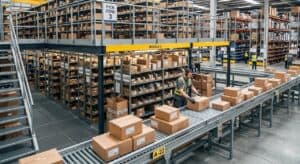
Warehouse operations are under constant pressure to move to automated solutions, fulfill orders faster, control operating costs, and maintain accuracy as customer expectations continue to rise. For distribution centers and fulfillment facilities, automated solutions can provide a way to improve material flow while reducing dependence on repetitive manual handling.
Century Conveyor Systems specializes in automated material handling and turnkey system integration for warehouses, distribution centers, shipping operations, and fulfillment facilities. Its approach brings together conveyor systems, robotic fulfillment, robotic palletizing, controls and software, sortation, storage systems, print-and-apply equipment, and ongoing service capabilities.
The following FAQ explains what makes Century Conveyor Systems’ automated solutions different and how the company’s approach can address several common warehouse and distribution challenges.
Table of Contents

What are Century Conveyor Systems’ automated solutions?
Century Conveyor Systems’ automated solutions are engineered material handling systems designed to improve how products, cartons, totes, pallets, and other items move through a warehouse or distribution facility.
Rather than treating automation as a single piece of equipment, Century approaches it as an integrated system. Depending on the requirements of a facility, that system can include conveyor equipment, robotic technologies, sortation, pallet handling, warehouse controls, software, storage systems, and other material handling technologies.
This matters because warehouse automation works best when individual components operate as part of a coordinated process. A conveyor may transport an item, for example, while a control system determines where it needs to go and a sortation device directs it to the appropriate destination.
Century’s role as a system integrator means the company can work across these different technologies and manage the project from system design and validation through installation, startup support, parts, and service.
Why would a warehouse need automated solutions?
The biggest reason is that growing operational demands can eventually exceed what manual processes can efficiently handle.
A facility may be dealing with increasing order volumes, longer travel distances, labor-intensive picking, repetitive pallet movement, congested work areas, or a growing need to process products consistently throughout the day. Simply adding more manual labor does not necessarily solve those problems.
Automation can instead change the way work moves through the facility.
Century’s order fulfillment approach focuses on optimizing warehouse touchpoints to improve output, reduce errors that can lead to returns or damaged products, and process items more quickly with fewer manual interactions.
That makes automated solutions particularly relevant for organizations looking beyond short-term labor adjustments and toward a more scalable material handling strategy.
How do conveyor systems fit into Century’s automated solutions?
Conveyors are one of the foundational technologies in a warehouse automation system because they provide a consistent method for moving products between operational areas.
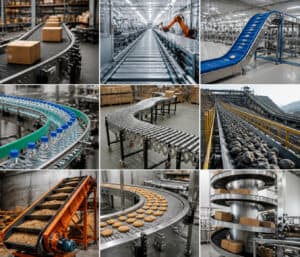
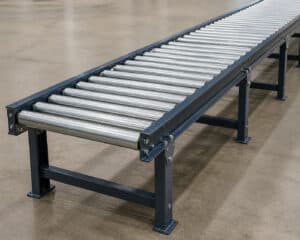
Century offers several conveyor configurations, including live roller, gravity, belted, modular belt, pallet, spiral, and other specialized conveyor applications. The appropriate technology depends on factors such as the product being handled, desired throughput, available floor space, accumulation requirements, and the way different workstations interact.
For example, belted conveyors can provide stable transportation for small polybags, parcels, and irregular cartons. Gravity and live roller conveyors can be useful in areas that need to interface with manual induction or packing processes. Spiral conveyors can move products between levels while conserving valuable floor space.
The key advantage is not simply having a conveyor. It is having the right conveyor configuration integrated into the overall material flow.
Can automated solutions reduce manual material handling?
Yes. Reducing unnecessary manual transportation is one of the central opportunities provided by warehouse automation.
In a traditional facility, employees may spend substantial portions of their shifts walking, transporting cartons, moving pallets, retrieving inventory, or carrying products between process steps. These activities consume time without necessarily adding value to the product itself.
Century’s automated solutions can shift some of that transportation work to conveyors, automated guided vehicles, autonomous mobile robots, and other equipment.
The result can be a workflow in which employees spend more time performing tasks that require human judgment or interaction while automated equipment handles repetitive transportation.
This is particularly relevant to goods-to-person operations, where automation can bring inventory or totes to workers rather than requiring workers to repeatedly travel to retrieve products.
What role do robots play in Century’s automated solutions?
Robotics provide another layer of flexibility beyond fixed conveyor infrastructure.
Century identifies two major categories of warehouse robots: automated guided vehicles (AGVs) and autonomous mobile robots (AMRs).
AGVs can be used to transport pallets, cartons, or other loads along defined routes. Depending on the application, they can use technologies such as magnetic tape, QR codes, inductive wires, or laser-based navigation.
AMRs operate differently. They are trackless and use sensors and programming to navigate through a facility. This allows them to move more freely and makes them particularly useful for applications where transportation paths may need to be flexible.
For example, AMRs can transport totes or carts through a distribution facility and can support goods-to-person workflows by retrieving inventory and delivering it to packing or fulfillment personnel.
The important distinction is that robotics do not necessarily replace conveyor automation. In many facilities, robots and conveyors can complement one another.
Are Century’s automated solutions scalable?
Scalability is one of the most important considerations when investing in warehouse automation.
A company may know that its order volume will increase but may not know exactly how quickly that growth will occur. Installing a system designed only for today’s workload can create limitations later, while investing too heavily in capacity too early can create unnecessary costs.
Century highlights scalability as a benefit of its robotic fulfillment solutions. Additional robotic systems can be implemented as operational requirements change, allowing an organization to expand its automation strategy over time.
This can be particularly useful for businesses experiencing seasonal demand, expanding product lines, entering new markets, or increasing fulfillment volumes.
A scalable approach also encourages companies to think beyond a single automation project. Instead, the initial system can become the foundation for future improvements.
How can automated solutions improve order fulfillment?
Order fulfillment involves a chain of activities that begins when an order is received and continues until the completed shipment reaches the shipping dock.
Every handoff represents an opportunity for delay, damage, misrouting, or unnecessary labor.
Century’s fulfillment systems are designed to address the flow between these stages. Conveyors can transport cartons and other products, accumulation systems can manage spacing, diverts can route products toward different destinations, and robotic systems can automate transportation within the facility.
Sortation can further separate products according to their destination or processing requirements.
When these technologies are properly coordinated, the facility can create a more predictable flow of materials instead of relying on employees to manually coordinate every movement.
That consistency is one of the major reasons automated solutions can have an impact beyond simple transportation speed.
Can automation help reduce product damage and fulfillment errors?
Automation can contribute to greater consistency in product handling, which can help address certain causes of damage and fulfillment errors.
Century specifically emphasizes reducing errors that can result in returns or item breakage as part of its order fulfillment strategy.
One example is zero-pressure accumulation. These conveyor systems use sensors and other equipment to create controlled spacing between products so that items do not collide with one another. This can be especially useful when handling fragile products.
Automated diverts and sortation systems can also help direct products to the appropriate lines or destinations without requiring every carton to be manually redirected.
Automation does not eliminate every possible source of error, but designing the material flow around controlled, repeatable processes can reduce the number of manual interactions where mistakes may occur.
What makes Century’s approach different from simply buying automation equipment?
The difference is system integration.
A warehouse can purchase individual conveyors, robots, controls, or storage products from different suppliers, but those components still need to work together as a functional system.
Century positions itself as a full-service integrator rather than simply an equipment provider. Its process includes system design, validation, implementation, installation, startup support, and ongoing parts and service.
That integrated approach is important because the success of an automation project depends on more than the specifications of individual machines.
The equipment needs to fit the physical facility, the products being handled, the required throughput, the workforce, the operational processes, and the software and controls governing the system.
In other words, effective automated solutions are designed around the operation rather than added to it as disconnected equipment.
Can Century automated solutions work with existing warehouse infrastructure?
They can be designed around a facility’s existing requirements, and automation does not necessarily mean replacing every component already in operation.
Century offers retrofit and modernization capabilities in addition to new automation systems. This is significant for organizations that already have conveyor equipment or other material handling infrastructure but need greater capacity, improved controls, updated technology, or additional automation.
A modernization strategy can allow a company to address specific limitations rather than starting from scratch.
For example, an existing conveyor line might be supplemented with new controls, sortation, robotic transportation, or other equipment. The right approach depends on the condition of the current system and the organization’s operational goals.
This flexibility can make automated solutions relevant to both new facilities and established warehouses.
What types of products can Century’s automated solutions handle?
The company’s solutions are designed for a broad range of material handling applications. Century states that it can engineer systems for items that go into boxes, pallets, totes, drums, or polybags.
That breadth matters because different products create different engineering requirements.
Small parcels may require stable belted conveyance. Heavy pallets may require specialized pallet conveyor equipment. Fragile products may benefit from controlled accumulation. Irregular products may need a different handling method than standardized cartons.
Rather than applying one automation technology to every product, the system can be designed around the characteristics of the items moving through the facility.
This product-specific approach is an important consideration when evaluating automated solutions.
How do controls and software contribute to automation?
Physical equipment is only part of a modern automated material handling system. Controls and software help coordinate what the equipment actually does.
Century provides capabilities involving control panels, programmable logic controls, warehouse management systems, and warehouse control systems.
These technologies can help connect the movement of physical products with the information required to manage that movement.
For example, a conveyor system needs to know when products should move, stop, accumulate, divert, or proceed to another processing area. Coordinating those actions requires controls and programming.
The result is a system in which equipment and operational information work together rather than existing as isolated components.
Are automated solutions only appropriate for large distribution centers?
No. The appropriate level of automation depends on the operation rather than simply the size of the building.
A large distribution center may benefit from extensive conveyor networks, sophisticated sortation, robotic fulfillment, pallet automation, and integrated software. A smaller operation may benefit from targeted automation addressing its biggest bottleneck.
The principle is to identify where automation can provide the greatest operational improvement.
For some facilities, that might mean automating carton transportation. For others, robotic fulfillment could be more valuable. Another operation may need better pallet movement, sortation, storage, or controls.
Century’s range of solutions allows automation to be considered as a collection of technologies that can be configured around the specific needs of the facility.
What should a company consider before investing in automated solutions?
A company should begin with the operational problem rather than the technology.
Important questions include:
- What products need to be handled?
- How much volume moves through the facility?
- What is the current and expected future throughput?
- Where are the biggest bottlenecks?
- How much manual transportation is currently required?
- Which processes generate the most errors or product damage?
- How much floor space is available?
- Which existing systems can be retained or modernized?
- How much scalability will be required in the future?
- How should the automated system interact with warehouse management and control software?
These questions help determine whether conveyors, robotics, sortation, pallet handling, storage systems, controls, or a combination of technologies make the most sense.
The goal should not be to automate everything simply because automation is available. The goal should be to create a material handling system that solves measurable operational problems.
How can a company get started with Century Conveyor Systems?
The first step is to discuss the facility, its current processes, and its automation objectives with Century.
A project can be evaluated based on the specific products being handled, throughput requirements, facility layout, existing equipment, labor considerations, and future growth.
From there, an automation strategy can be developed around the operational requirements.
For companies considering automated solutions, this approach can be more valuable than choosing equipment first and attempting to make the operation fit afterward. The right system starts with understanding how materials move through the facility and identifying where technology can make that movement faster, more consistent, and more efficient.
What is the biggest advantage of Century’s automated solutions?
Ultimately, the biggest advantage is the ability to combine multiple automation technologies into a coordinated material handling strategy.
Conveyors can provide continuous product movement. Sortation can direct products to their destinations. Robotics can provide flexible transportation. Palletizing equipment can automate demanding end-of-line tasks. Controls and software can coordinate equipment and information. Storage systems can improve how inventory is organized and accessed.
Individually, each technology addresses a specific problem. Together, they can create a more connected fulfillment operation.
That is the central idea behind Century Conveyor Systems’ automated solutions: automation should not be viewed simply as a collection of machines. It should be engineered as an integrated system designed around the way a warehouse actually operates.
For distribution centers and fulfillment facilities looking to increase throughput, reduce unnecessary manual handling, improve consistency, and prepare for future growth, a carefully engineered automation strategy can provide a foundation for long-term operational efficiency.