Material handlers are at the heart of an efficient warehouse or distribution operation. Every carton, pallet, tote, package, and other product must move through a facility reliably and efficiently before it reaches its final destination. A material handler plays an important role in that process, but modern material handling increasingly involves more than manual movement. Conveyor systems, automated guided vehicles, autonomous mobile robots, sortation equipment, and other technologies can work together to create a faster and more reliable material flow.
Century Conveyor Systems helps businesses develop material handling and order fulfillment solutions designed around the specific requirements of their facilities. Rather than treating every warehouse the same, Century can engineer systems around factors such as product type, throughput, available space, handling requirements, and the amount of automation desired.
The following FAQ explains what a material handler means in a modern distribution environment and how Century Conveyor Systems approaches material handling as part of a larger automated fulfillment strategy.
Table of Contents
What is a material handler?
A material handler is a person, machine, or automated system responsible for moving, positioning, transporting, or otherwise managing products and materials within a facility.
Traditionally, material handlers have included warehouse employees who move cartons, pallets, totes, and other products between receiving, storage, picking, packing, and shipping areas. However, modern warehouses increasingly use automated equipment to perform many of these same transportation functions.
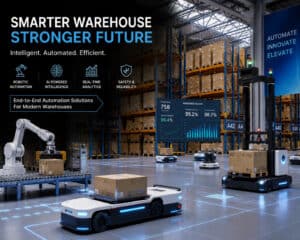
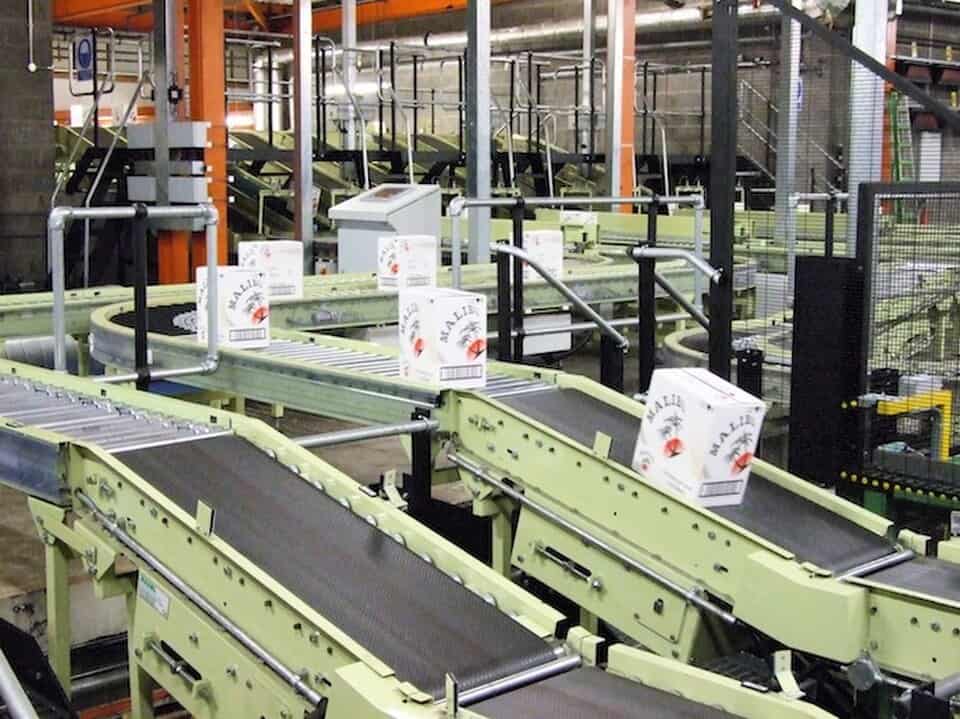
For Century Conveyor Systems, material handling can encompass a much broader system of technologies. Conveyor equipment can continuously move products between operational areas, while robotic solutions such as automated guided vehicles (AGVs) and autonomous mobile robots (AMRs) can transport products without requiring every movement to be performed manually.
This distinction is important because a material handler does not necessarily have to be a person. In an automated warehouse, the material-handling function can be distributed across conveyors, robots, controls, sortation equipment, and employees working together.
How does Century Conveyor Systems approach material handling?
Century approaches material handling as part of the overall flow of a warehouse rather than as an isolated transportation task.
The objective is to understand how products move through a facility from the point they enter the operation through processing and ultimately to shipping. An effective material-handling solution should help reduce unnecessary movement, improve throughput, minimize handling errors, and support consistent order fulfillment.
This can involve combining multiple technologies rather than relying on a single piece of equipment. For example, conveyors may provide continuous transportation between workstations, while robotic equipment handles flexible movements that would be difficult or inefficient to accomplish with fixed conveyor infrastructure.
Century’s capabilities include conveyor systems, robotic fulfillment, controls engineering, mechanical engineering, project management, installation, maintenance, modernization, and other services that can support a complete automation project.
The result is a material-handling strategy designed around the operation instead of simply adding equipment to an existing floor plan.
What types of conveyor systems can support a material handler?
Different products require different methods of transportation, so there is no universal conveyor configuration for every material handler or warehouse.
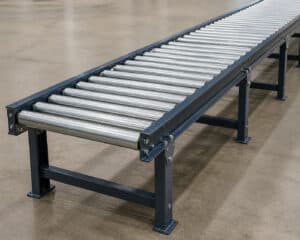
Century works with several conveyor technologies, including live roller and gravity conveyors, belted conveyors, modular belt conveyors, conveyor diverts, accumulation conveyors, extendable conveyors, spiral conveyors, and pallet conveyor systems.
Live roller conveyors, for example, can be useful in packing lines, divert applications, and other areas where powered movement is needed. Gravity conveyors can provide a simpler approach where powered transportation is unnecessary.
Belted conveyors can provide stable transportation for small packages, polybags, irregular cartons, and other products that may not move as reliably on rollers. Modular belt systems offer additional flexibility because individual belt sections can be removed, cleaned, or modified.
For palletized materials and heavier loads, specialized pallet conveyor systems can provide the stability and durability needed for the application.
The important consideration is matching the conveyor technology to the material being handled, the required throughput, and the movement that needs to occur.
Can a material handler system reduce manual interactions?
Yes. One of the major objectives of warehouse automation is to reduce unnecessary manual interactions with products.
Manual handling can require employees to repeatedly walk, lift, carry, transfer, and reposition products. As order volumes increase, these repetitive movements can become a significant part of the fulfillment process.
A properly engineered material-handling system can automate many transportation steps. Conveyors can move products continuously between designated areas, while robotic systems can transport totes, cartons, pallets, or carts throughout a facility.
Reducing manual transportation does not necessarily mean eliminating employees. Instead, it can allow employees to spend more time performing tasks that require judgment, exception handling, customer-specific processing, or other activities that are difficult to automate.
Century’s order fulfillment approach focuses on processing items faster with fewer manual interactions while also working to reduce errors and product damage.
How can material handling affect order fulfillment?
Material handling has a direct effect on how quickly and consistently orders move through a warehouse.
An order fulfillment process includes numerous individual steps, from receiving an order and retrieving the appropriate products to packing and moving completed orders toward the shipping area. Delays in one part of that process can affect everything downstream.
A material-handling system can connect these stages so products move efficiently from one process to another.
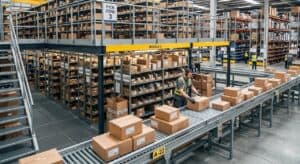
For example, conveyors can transport cartons from picking areas toward packing stations. Diverts can direct products onto different lines based on their destination or processing requirements. Accumulation conveyors can help manage spacing between products. Extendable conveyors can assist with loading activities by bringing transportation equipment directly into a trailer.
When these technologies are designed as part of one coordinated system, material movement becomes an integrated component of fulfillment rather than a series of disconnected manual tasks.
Why is product stability important for a material handler?
A material handler must account for the physical characteristics of the products being transported.
Small packages, polybags, irregular cartons, fragile products, heavy pallets, and oversized loads can all behave differently while moving through a warehouse. A conveyor that works well for one product may not be appropriate for another.
Belted conveyor systems can provide greater stability for certain small or irregular products. Accumulation systems can also be configured to control how products interact with one another.
Zero-pressure accumulation is particularly useful when products should not touch during accumulation. Minimum-pressure accumulation, meanwhile, allows products to slow down and make light contact.
These distinctions can help protect products from unnecessary collisions and damage while also keeping material moving efficiently through the operation.
Can a material handler system handle pallets as well as cartons?
Yes. Material-handling systems can be designed for a wide range of load types, including individual cartons and palletized products.
Pallet handling requires equipment capable of supporting substantially heavier and larger loads than many traditional carton conveyors. Century offers several pallet conveyor approaches, including pallet drag chain, pallet gravity, chain-driven live roller, and Poly-V conveyor sections.
The appropriate technology depends on factors such as pallet weight, load characteristics, required throughput, and whether pallets need to be accumulated, staged, transported, or transferred between processes.
For high-output pallet operations, powered live roller systems can provide the ability to move multiple pallets through an operation. Other configurations can be used for staging or end-of-line accumulation.
This makes material handling adaptable to facilities that manage both individual packages and larger unit loads.
How do robots function as material handlers?
Robots can perform many of the transportation tasks traditionally associated with a human material handler or lift truck.
Century’s robotic fulfillment solutions include automated guided vehicles and autonomous mobile robots.
An AGV typically follows a defined navigation method, such as magnetic tape, QR codes, inductive wires, or laser-based systems. This makes AGVs well suited to applications involving predictable routes and transportation of pallets, cartons, or other loads.
AMRs take a more flexible approach. Rather than following a fixed track, they use sensors and onboard programming to navigate through a facility. This allows them to move totes, cartons, or carts through changing routes.
For goods-to-person operations, AMRs can retrieve inventory containers and bring them to packing or fulfillment personnel. This can reduce the amount of walking required from employees while maintaining flexibility as operational requirements change.
Is a material handler solution scalable?
Scalability is one of the most important considerations when investing in warehouse automation.
A system that works for today’s order volume may not be sufficient if a business expands, adds new product lines, opens additional sales channels, or experiences seasonal increases in demand.
Century’s robotic fulfillment approach emphasizes scalability, particularly because additional robotic units can potentially be implemented as requirements grow. This can provide a different path to expansion compared with systems that require extensive permanent infrastructure.
Conveyor systems can also be designed with future automation opportunities in mind. Additional technologies can potentially be incorporated into a conveyor line as operational requirements change.
The goal is not simply to automate today’s workload. A well-planned material-handling strategy should give a facility room to evolve.
What makes Century Conveyor Systems different from simply buying material-handling equipment?
Equipment is only one component of an effective material-handling solution.
The challenge is determining how different pieces of equipment should work together within the facility. Conveyor selection, product characteristics, controls, layout, throughput requirements, installation, maintenance, and future expansion can all influence the success of an automation project.
Century Conveyor Systems provides engineering and implementation capabilities that span multiple parts of the project. Its services include concepts and design, controls engineering, control panel design and fabrication, mechanical engineering, electrical and mechanical installation, project management, preventative maintenance, repairs, and modernization.
That broader approach can be particularly valuable when a business needs more than an individual conveyor or robot. Instead of viewing a material handler as a standalone piece of equipment, Century can approach material movement as part of the facility’s complete fulfillment architecture.
When should a company consider automating its material handling?
Automation may be worth considering when manual transportation is becoming a constraint on productivity, accuracy, capacity, or consistency.
Signs can include employees spending excessive time walking between work areas, increasing order volumes, repetitive transportation tasks, product damage caused by unnecessary handling, difficulty maintaining throughput during peak periods, or a need to improve the consistency of fulfillment operations.
Automation can also make sense when a facility needs to use its available space more effectively. Technologies such as spiral conveyors can move products between levels while occupying less floor space than some alternative configurations.
The right decision depends on the facility and its operational goals. A material-handling assessment should consider current processes as well as anticipated future requirements.
What should a company consider when selecting a material handler solution?
The most important consideration is that the solution should match the operation.
Companies should evaluate what products need to be moved, how much those products weigh, how frequently they need to move, where they need to go, how quickly they need to get there, and how much human interaction is appropriate.
Throughput is another critical consideration. A system designed for low-volume operations may not perform effectively in a high-output distribution environment.
Facility layout also matters. Available floor space, building height, existing equipment, workstations, loading areas, and traffic patterns can all affect the design.
Finally, companies should consider maintenance and future expansion. A material-handling system is a long-term investment, so reliability, serviceability, and the ability to adapt can be just as important as initial performance.
Can Century Conveyor Systems help modernize an existing material-handling operation?
Yes. Material-handling automation does not necessarily require building an entirely new facility.
Existing conveyor systems and other equipment can sometimes be upgraded, expanded, or integrated with newer technologies. Modernization can be particularly useful when an existing operation is functional but no longer provides the speed, flexibility, or control required by current business demands.
Century offers retrofit and modernization capabilities as part of its broader automation services.
This approach can allow a business to improve an existing material-handling infrastructure rather than treating every automation project as a complete replacement.
What is the main benefit of working with Century on material handling?
The central benefit is the ability to approach material movement as an integrated part of warehouse performance.
A material handler should do more than move an item from one location to another. The overall system should help products move through the facility efficiently, safely, consistently, and with as little unnecessary handling as practical.
Century Conveyor Systems combines conveyor technologies, robotic fulfillment solutions, engineering, controls, installation, service, and modernization to address those requirements.
For companies looking to improve order fulfillment, the material handler is therefore not just an employee, conveyor, or robot. It is part of a larger system designed to connect the different stages of warehouse operations.
How can a company get started with a Century Conveyor Systems material-handling project?
The first step is to evaluate the existing operation and identify where material movement creates bottlenecks, unnecessary manual work, delays, errors, or capacity limitations.
From there, a material-handling strategy can be developed around the facility’s specific products, processes, throughput requirements, available space, and future goals.
Century Conveyor Systems can engineer solutions involving conveyor systems, robotic order fulfillment, controls, and related automation technologies. The company also provides project management, installation, service, and modernization capabilities to support implementation beyond the initial system design.
Ultimately, the best material handler solution is one that fits the way a facility actually operates. By combining the appropriate transportation technology with thoughtful engineering and automation planning, businesses can create a more efficient path from receiving and processing through fulfillment and shipping.