Chain conveyor systems play an important role in modern material handling, helping warehouses, distribution centers, and manufacturing facilities move heavy products and materials efficiently. From transporting pallets and oversized loads to supporting automated order fulfillment operations, chain conveyors offer a durable and dependable way to keep materials moving throughout a facility.
However, choosing the right chain conveyor system involves more than selecting equipment that can move products from one location to another. Businesses must consider load requirements, facility layouts, integration with existing equipment, installation, maintenance, and long-term operational goals.
Century Conveyor Systems provides comprehensive material handling automation solutions, including conveyor system design, mechanical installation, system integration, and ongoing support. With experience serving warehouses and distribution centers, Century helps businesses develop systems that improve productivity, streamline material movement, and support increasingly demanding fulfillment operations.
Below, we answer some of the most frequently asked questions about chain conveyor systems and explain how Century Conveyor Systems can help businesses make the most of their material handling investments.
Table of Contents
1. What Are Chain Conveyor Systems, and How Do They Work?
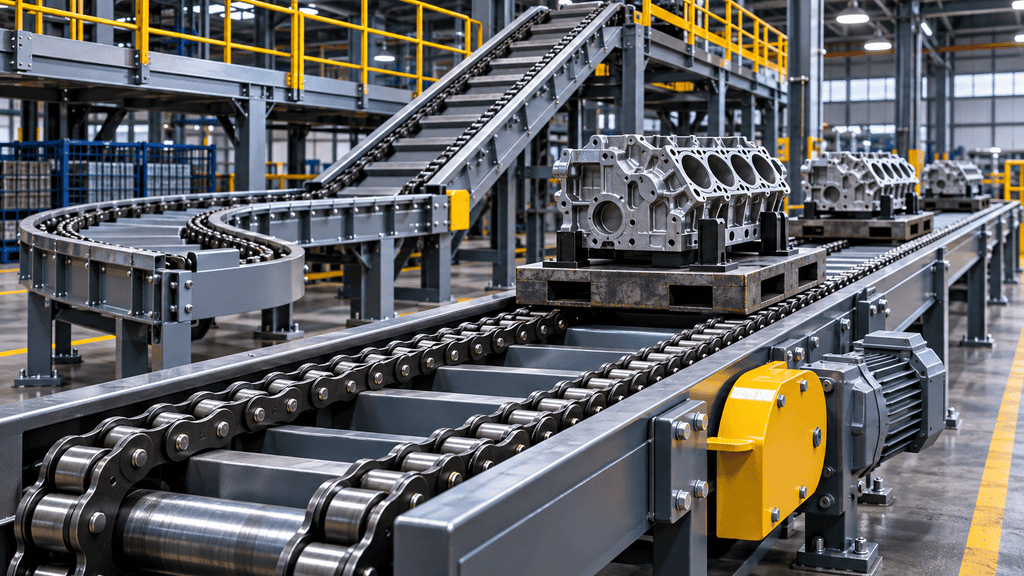
Chain conveyor systems are mechanical material handling solutions that use one or more continuous chains to transport products, materials, or loads along a predetermined path. Unlike traditional belt conveyors, which rely on a moving belt to carry products, chain conveyors use interconnected metal links driven by sprockets and a motorized mechanism.
As the motor turns the drive sprocket, the chain moves along the conveyor’s track or supporting structure. Products placed on the chain, attached to a platform, or supported by rollers move along the designated route.
One of the primary advantages of this design is its ability to handle heavy-duty applications. Chain conveyors are particularly useful when businesses need to transport pallets, large containers, industrial materials, and other products that may be too heavy or cumbersome for conventional conveyor equipment.
For example, pallet drag chain conveyors use a chain-connected platform to move pallets and oversized loads through a facility. The chain pulls the platform along the conveyor section, providing controlled and consistent transportation.
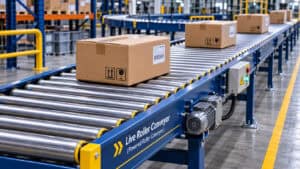
Chain-driven live roller conveyors use a different arrangement. Rather than directly pulling a platform, a chain drives the rollers that move products along the conveyor line. This configuration can support high-output pallet operations and accommodate multiple pallets.
Century Conveyor Systems incorporates different conveyor technologies into its broader material handling and fulfillment solutions. Its conveyor expertise includes pallet handling equipment, live roller conveyors, and pallet drag chain applications for chain conveyor systems.
The important distinction is that chain conveyor systems are not one-size-fits-all solutions. Their configuration should reflect the products being transported, the required throughput, and the overall design of the facility.
2. What Types of Materials and Products Can Chain Conveyor Systems Handle?
One of the biggest reasons businesses invest in chain conveyor systems is their ability to transport heavy, bulky, or oversized products that require additional support.
While standard belt and roller conveyors are commonly used for cartons, packages, and smaller products, chain conveyor applications are particularly valuable in environments where pallets and substantial loads must move reliably.
Depending on the system configuration, chain conveyors can support:
- Palletized products: Pallets containing packaged merchandise, industrial supplies, or other inventory can move between storage, staging, and shipping areas.
- Oversized materials: Large products that require a stable transportation platform can benefit from chain-driven handling equipment.
- Heavy containers: Drums, bulk containers, and other substantial loads may require specialized conveyor configurations.
- Industrial components: Manufacturing and distribution operations can use chain conveyors to transport heavier materials between processing areas.
- Warehouse inventory: Palletized inventory can move through designated transportation routes without requiring associates to manually relocate every load.
The specific conveyor configuration matters because different loads have different handling requirements. Factors such as pallet dimensions, product weight, load distribution, and the condition of the materials being transported all influence equipment selection.
For example, a warehouse transporting consistently sized pallets may benefit from a dedicated pallet drag chain conveyor. A facility that needs to move multiple pallets through a high-output transportation route may find chain-driven live roller equipment more appropriate.
Century Conveyor Systems approaches material handling as an integrated operational challenge. Rather than focusing exclusively on individual pieces of equipment, the company develops solutions around the products moving through a facility and the processes that support their transportation.
This approach helps businesses select conveyor technologies that serve an actual operational purpose instead of investing in equipment that may not fit their long-term requirements.
3. Why Should Businesses Consider Chain Conveyor Systems for Heavy-Duty Material Handling?
Durability and load-handling capabilities are two major reasons businesses consider chain conveyor systems.
In a busy distribution center, material handling equipment may operate throughout multiple shifts while transporting substantial quantities of inventory. Equipment must withstand repeated use without becoming a bottleneck in the overall operation.
Chain conveyors are designed to provide mechanical strength and dependable movement under demanding conditions. Their construction makes them particularly useful for applications involving heavy pallets and oversized materials.
There are several important advantages to consider.
Consistent transportation of heavy loads
Chain-driven systems can provide controlled movement for products that would place excessive demands on lighter-duty conveyor equipment. This makes them particularly useful for pallet handling and other applications involving substantial weights.
Reliable operation in demanding environments
A properly selected and maintained chain conveyor can support repetitive material handling operations. This is especially important in facilities where interruptions to transportation equipment can affect picking, packing, staging, and shipping activities.
Integration with larger material handling systems
Chain conveyors do not have to operate independently. They can be incorporated into larger conveyor networks that include powered rollers, gravity conveyors, belt conveyors, and other automated equipment.
Reduced dependence on manual transportation
Automating pallet movement can reduce the need for employees to manually reposition materials throughout a facility. This allows personnel to concentrate on other operational responsibilities while equipment handles designated transportation tasks.
Support for long-term operational efficiency
Investing in appropriate conveyor technology can help businesses establish a more organized material flow. When equipment is properly integrated, materials can move between operational areas with fewer unnecessary handling steps.
Century Conveyor Systems helps businesses evaluate their material handling requirements and implement equipment that supports their distribution objectives. Its broader approach to system design, installation, and support is particularly valuable when chain conveyor equipment must work alongside other automated solutions.
4. How Can Chain Conveyor Systems Improve Warehouse Order Fulfillment?
Order fulfillment involves considerably more than moving a package toward a shipping dock. It includes receiving inventory, transporting products, picking orders, packing merchandise, sorting shipments, and preparing items for delivery.
Every stage must work together to maintain productivity and minimize errors.
Chain conveyor systems can contribute to this process by automating the transportation of heavy materials, particularly pallets, between designated operational areas.
For example, consider a distribution center that receives palletized inventory and needs to transport it to a storage or processing area. Without an organized material handling system, employees may need to coordinate repeated forklift movements and manual transportation activities.
A properly designed conveyor solution can provide a more consistent transportation route.
Chain conveyors can also support downstream processes by moving pallets toward staging or shipping areas. When integrated with other conveyor technologies, they can become part of a coordinated material handling network.
Century Conveyor Systems recognizes that successful order fulfillment depends on optimizing the entire process rather than improving just one transportation point.
Its order fulfillment solutions focus on improving output performance, reducing errors that contribute to product damage and returns, and processing orders faster with fewer manual interactions.
The company works with different conveyor technologies to address individual warehouse requirements, including:
- Live roller and gravity conveyors.
- Belted conveyors.
- Modular belt conveyors.
- Conveyor diverts.
- Zero-pressure and minimum-pressure accumulation systems.
- Gravity and powered extendable conveyors.
- Pallet conveyor systems, including pallet drag chain and chain-driven live roller applications.
Each technology serves a different purpose. Chain conveyors can address heavy-duty pallet movement, while other conveyor configurations can handle cartons, packages, and individual products.
Combining these technologies allows businesses to develop material handling operations that accommodate multiple product types and transportation requirements.
For companies seeking to increase warehouse throughput, the biggest opportunity may come from coordinating these individual systems into one efficient fulfillment operation.
5. How Does Century Conveyor Systems Help Design and Integrate Chain Conveyor Systems?
Selecting conveyor equipment is only one part of developing an effective material handling operation. Businesses must also determine where equipment should be positioned, how it will connect to existing machinery, and how materials will move between different operational areas.
This is where professional system design and integration become especially important.
Century Conveyor Systems operates as a full-service material handling automation integrator. Its services extend beyond individual conveyor installations to include engineering, system design, project management, mechanical installation, electrical installation, and ongoing support.
For a chain conveyor project, an effective planning process should begin with an understanding of the facility’s existing operations.
Important considerations include:
- The types and dimensions of products being transported.
- Maximum and average load weights.
- Required transportation speeds and throughput.
- Available floor space and building configuration.
- Connections to existing conveyor equipment.
- Employee access and equipment safety requirements.
- Future expansion and automation opportunities.
Once these requirements are understood, the appropriate equipment and layout can be determined.
Century’s engineering capabilities include producing detailed project designs using AutoCAD. This allows the company to develop accurate layouts and coordinate the different elements involved in a material handling installation.
System integration is particularly valuable when chain conveyors must operate alongside other equipment. A pallet transportation system, for example, may need to connect with live roller conveyors, accumulation areas, staging operations, or other automated processes.
Without proper planning, individual pieces of equipment may function correctly while the overall system experiences unnecessary delays or operational inefficiencies.
By coordinating engineering, equipment installation, and project management, Century helps businesses approach material handling improvements as complete facility projects.
6. What Is Involved in Installing Chain Conveyor Systems?
Installing chain conveyor systems involves considerably more than positioning equipment and connecting a motor.
A successful installation requires coordination between mechanical components, electrical connections, supporting structures, existing equipment, and the facility’s overall operational requirements.
Depending on the complexity of the project, installation may involve several important stages.
Initial project planning
Before installation begins, the project team must understand the facility layout, equipment requirements, installation schedule, and operational constraints.
Businesses may need to coordinate installation around active warehouse operations to minimize disruption.
Mechanical installation
Mechanical installation involves assembling and positioning conveyor components, establishing the required supports, aligning equipment, and ensuring the mechanical elements are properly connected.
Chain conveyor systems require particular attention to chain alignment, sprockets, supporting structures, and the relationship between moving components.
Electrical connections
Powered conveyor equipment requires appropriate electrical connections and coordination with its control systems. Depending on the application, this may also involve integration with programmable logic controllers and other automation technologies.
System testing
Once installation is complete, equipment should be tested to verify that it operates as intended. Testing helps identify alignment problems, mechanical issues, and integration concerns before the system enters regular operation.
Project coordination and implementation
Larger installations may involve multiple contractors, engineers, inspectors, and equipment suppliers. Coordinating these responsibilities helps prevent scheduling conflicts and unnecessary project delays.
Century Conveyor Systems provides mechanical installation services for automated material handling systems. Its capabilities include engineering, mechanical work, electrical services, construction, equipment relocation, and project coordination.
The company can also assist with budget development and coordination among engineers, contractors, and inspectors.
This comprehensive approach is useful for businesses installing new chain conveyor equipment, relocating existing systems, or upgrading an established distribution facility.
7. How Can Preventative Maintenance Extend the Life of Chain Conveyor Systems?
Chain conveyor systems are designed for demanding applications, but their long-term performance depends on appropriate maintenance.
Like other mechanical equipment, chain conveyors experience wear as components operate under repeated loads. Without regular inspections and maintenance, small mechanical problems can eventually develop into larger equipment failures.
Preventative maintenance helps businesses identify potential issues before they interrupt daily operations.
Several areas deserve particular attention.
Chain condition and tension
The chain is the central transportation component of the system. Regular inspections can help identify excessive wear, elongation, damage, or improper tension.
A chain that is too loose or too tight can contribute to premature wear and inconsistent operation.
Sprockets and drive components
Sprockets transfer power to the chain. Worn sprocket teeth or damaged drive components can interfere with smooth movement and reduce equipment reliability.
Inspecting these components helps identify issues before they affect the entire conveyor.
Lubrication
Appropriate lubrication helps reduce friction between moving components. The correct lubrication requirements depend on the equipment design and operating environment, so maintenance procedures should follow manufacturer recommendations.
Alignment and structural condition
Conveyor alignment is essential for consistent operation. Supporting structures, guides, and mechanical connections should be inspected for signs of movement, damage, or deterioration.
Motor and electrical performance
Motors, wiring, connections, and controls should also receive appropriate inspections. Electrical problems can affect conveyor performance and may cause unexpected shutdowns.
Century Conveyor Systems offers preventative maintenance, conveyor repair, and replacement parts services.
Its service capabilities include equipment inspections and the development of detailed plans outlining necessary repairs. The company also provides conveyor parts and equipment quotations to help businesses address maintenance requirements.
With more than 40 years of conveyor experience highlighted on its website, Century offers businesses an experienced resource for maintaining the mechanical components of their material handling operations.
For facilities that rely on chain conveyors to transport heavy inventory, establishing a consistent maintenance strategy can help protect equipment investments and reduce unexpected interruptions.
8. Can Chain Conveyor Systems Be Integrated Into Existing Warehouse Operations?
Yes. Chain conveyor systems can be incorporated into existing material handling environments, provided the facility’s layout, equipment specifications, and operational requirements support the installation.
In fact, upgrading an existing facility rather than replacing every piece of equipment can be an effective way to improve material handling capabilities.
For example, a warehouse may already use belt conveyors for carton transportation but lack an efficient method for moving heavy pallets between storage and shipping areas.
Adding a pallet drag chain conveyor or chain-driven live roller section could address that specific transportation requirement.
Other facilities may need to relocate existing equipment, expand a conveyor line, or replace outdated machinery while maintaining as much of their current infrastructure as possible.
Century Conveyor Systems provides retrofit and modernization services designed to help businesses update their material handling operations.
Its capabilities include equipment tear-outs, retrofits, relocations, replacement parts, and mechanical and electrical installation.
This flexibility is important because warehouse automation projects often involve multiple interconnected systems.
Before introducing new chain conveyor equipment, businesses should evaluate:
- Whether the existing floor layout can accommodate the equipment.
- Whether current conveyors can connect to the new system.
- Whether electrical and control infrastructure requires upgrades.
- Whether the existing equipment can support the intended load requirements.
- Whether installation can be completed without excessive operational disruption.
Century’s project management and engineering services help coordinate these considerations.
Rather than approaching modernization as an isolated equipment purchase, businesses can work toward a more cohesive material handling environment that supports current requirements and future operational growth.
9. What Should Businesses Consider When Choosing a Chain Conveyor System?
Choosing the right chain conveyor system begins with understanding what the equipment needs to accomplish.
A system that works well in one distribution center may not be appropriate for another. Different facilities handle different products, operate at different throughput levels, and have different physical constraints.
Several considerations should guide the selection process.
Load capacity and product dimensions
The weight and dimensions of the materials being transported are among the most important equipment selection factors.
Businesses should account for both average operating loads and maximum anticipated loads. Uneven weight distribution and pallet conditions may also influence the conveyor configuration.
Transportation requirements
Some facilities need continuous movement between operational areas, while others require controlled movement between specific workstations.
The required speed, distance, direction, and frequency of transportation should all influence the system design.
Facility layout
Available floor space, building columns, equipment locations, and existing transportation routes can affect conveyor placement.
A well-planned system should fit naturally into the warehouse rather than creating additional obstacles for employees or other equipment.
Integration capabilities
Businesses should consider how the chain conveyor will connect with existing or planned material handling technologies.
This is particularly important for facilities that use a combination of pallet conveyors, belt conveyors, live rollers, sortation equipment, and automated fulfillment solutions.
Maintenance and replacement parts
Long-term ownership costs should include inspections, routine maintenance, replacement components, and potential equipment downtime.
Access to knowledgeable service technicians and appropriate replacement parts can make a meaningful difference in the overall performance of the system.
Future scalability
Warehouse operations rarely remain exactly the same over time. Increasing order volumes, changing inventory requirements, and facility expansions can create new material handling demands.
Selecting equipment with future operational needs in mind can help businesses avoid unnecessary redesigns.
Century Conveyor Systems considers these broader operational requirements when developing material handling solutions. Its combination of engineering, installation, project management, maintenance, and integration services gives businesses access to multiple capabilities throughout the equipment lifecycle.
10. Why Choose Century Conveyor Systems for Chain Conveyor Systems and Material Handling Automation?
Choosing a material handling partner is an important decision because conveyor equipment directly affects warehouse productivity, transportation efficiency, and operational reliability.
Businesses need more than equipment suppliers. They need experienced partners who understand how individual conveyor components fit into the larger distribution environment.
Century Conveyor Systems offers several capabilities that make it a valuable resource for businesses planning conveyor improvements.
Comprehensive project capabilities
Century provides services covering system design, engineering, project management, mechanical installation, electrical installation, and ongoing support.
Having these capabilities coordinated through one provider can simplify project communication and reduce the complexity of managing multiple contractors.
Experience with different conveyor technologies
Effective material handling systems often require several types of equipment working together.
Century’s conveyor solutions include belt and roller conveyors, pallet handling equipment, sortation systems, and other technologies used throughout distribution and fulfillment operations.
This broader experience helps businesses evaluate how chain conveyor applications can fit into an overall automation strategy.
Installation and modernization services
Whether a company is installing new equipment, relocating existing machinery, or modernizing an established warehouse, Century offers mechanical installation and related project services.
Its teams can coordinate engineering, contractors, and inspectors throughout the installation process.
Maintenance and repair support
Conveyor performance depends on ongoing mechanical care. Century provides preventative maintenance, repair services, and replacement parts to help businesses maintain their equipment.
Focus on operational efficiency
Century’s overall approach centers on improving facility output, reducing manual interactions, and creating more effective material handling processes.
For businesses evaluating chain conveyor systems, this means considering how the equipment can contribute to measurable operational improvements rather than simply adding another machine to the warehouse.
Ultimately, the right material handling solution should address the facility’s actual transportation requirements while supporting long-term productivity.
Final Thoughts: Are Chain Conveyor Systems Right for Your Facility?
Chain conveyor systems can be an effective solution for businesses that need dependable transportation of heavy products, pallets, and oversized materials. Their ability to support demanding material handling applications makes them an important part of many modern warehouse and distribution operations.
However, the success of a chain conveyor installation depends on selecting the appropriate equipment, designing an effective layout, integrating the system with existing operations, and maintaining its mechanical components over time.
Century Conveyor Systems offers a comprehensive range of material handling services to help businesses navigate these requirements. From engineering and mechanical installation to conveyor maintenance and complete fulfillment system integration, the company supports projects throughout multiple stages of their development.
Whether your facility needs a new pallet transportation solution, an existing conveyor upgrade, or a more comprehensive warehouse automation project, Century can help evaluate your operational requirements and develop an appropriate path forward.
Ready to explore chain conveyor systems for your warehouse or distribution center? Visit Century Conveyor Systems at https://www.centuryconveyor.com/ to learn more about its material handling solutions and contact its team to discuss your next project.