Efficient sortation depends on more than moving products from one end of a warehouse to another. Distribution centers and fulfillment facilities must also ensure that packages, cartons, and other products reach the correct destinations quickly, accurately, and consistently. This is where sortation becomes an essential part of modern material handling automation.
Century Conveyor Systems provides automated material handling and conveyor integration solutions designed to help warehouses, distribution centers, and fulfillment operations improve productivity. Through engineered sortation conveyors, integrated controls, and comprehensive installation services, Century helps businesses streamline product distribution and optimize their order fulfillment processes.
Whether you are considering your first automated sortation system or looking to improve an existing operation, understanding how sortation works and what makes an effective solution is an important first step.
Below are answers to frequently asked questions about Century Conveyor Systems’ sortation capabilities, the benefits of automated sorting, and how the right material handling solution can improve warehouse performance.
Table of Contents
1. What Is Sortation in a Warehouse or Distribution Center?
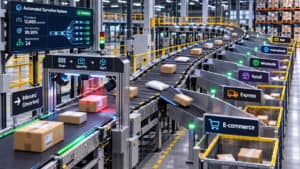
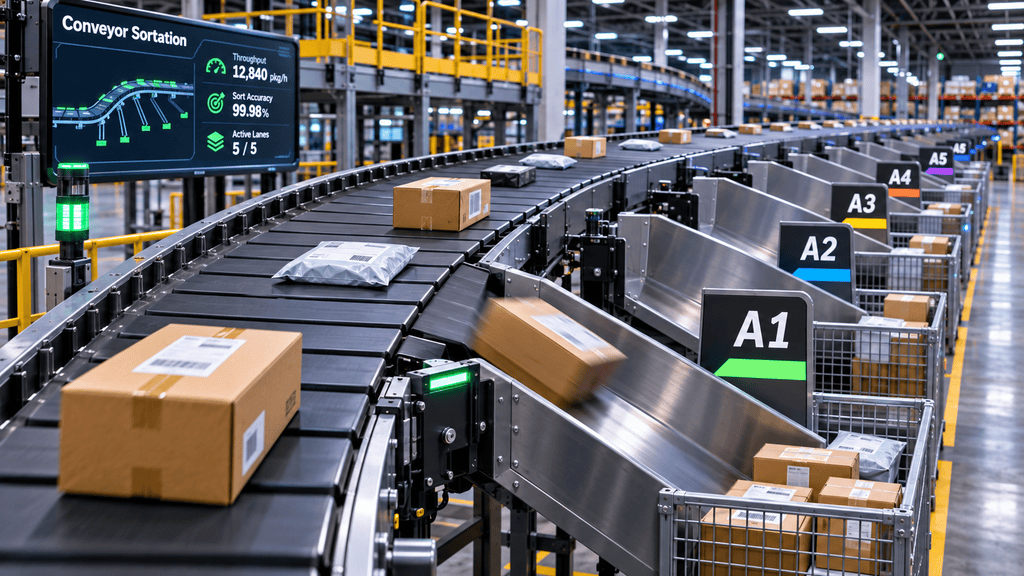
Sortation is the process of identifying, organizing, and directing products or packages to their designated destinations within a warehouse or distribution center. Rather than relying entirely on employees to manually move and separate items, an automated sortation system uses conveyor equipment and integrated controls to direct products along predetermined paths.
For example, a distribution center may receive hundreds or thousands of packages that need to be separated according to shipping destination, customer order, carrier, or delivery route. A sortation system moves these packages through a conveyor network and directs each one to the appropriate destination.
Sortation is particularly important in facilities handling high volumes of products. As order volumes increase, manually separating packages becomes increasingly difficult, time-consuming, and labor-intensive.
Century Conveyor Systems provides rapid-throughput sortation equipment designed to support efficient product distribution. Its sortation solutions include several conveyor technologies, such as shoe, belt, tray, and Bombay distribution systems.
By incorporating the appropriate sortation equipment into a larger material handling operation, businesses can improve the movement of products while reducing unnecessary manual handling.
2. What Are the Main Benefits of Century Conveyor Systems’ Sortation Solutions?
Investing in automated sortation can provide several operational advantages, particularly for businesses managing demanding distribution and fulfillment requirements.
One major benefit is increased throughput. Automated systems can continuously transport and direct products, helping facilities process more packages without depending exclusively on manual sorting. This is especially valuable during seasonal peaks, promotional periods, and other situations when order volumes increase.
Another advantage is improved operational efficiency. Instead of requiring employees to repeatedly transport packages between different sorting locations, conveyors move products through an organized network. Employees can focus on other important responsibilities, including picking, packing, quality control, and shipping preparation.
Sortation can also improve accuracy. When integrated with appropriate controls and warehouse software, automated systems can direct products according to established routing instructions. This helps reduce the potential for packages to reach incorrect destinations.
Additional benefits include:
- Better use of labor: Automation reduces repetitive product movement and allows employees to concentrate on higher-value activities.
- More consistent processing: Conveyor-based sorting supports a continuous, organized flow of products.
- Improved scalability: Properly designed systems can accommodate changing operational requirements.
- Reduced handling: Directing packages through automated pathways can minimize unnecessary movement and product contact.
- Greater shipping efficiency: Organized package distribution helps prepare orders for their next stage in the fulfillment process.
Century’s approach focuses on engineering material handling systems around the operational needs of each facility rather than treating every warehouse as if it has identical requirements.
3. What Types of Sortation Systems Does Century Conveyor Systems Offer?
Different facilities require different sorting capabilities. The ideal equipment depends on factors such as package dimensions, product weight, throughput requirements, available warehouse space, and the number of destinations that need to be serviced.
Century Conveyor Systems offers several types of sortation equipment, including shoe, belt, tray, and Bombay distribution systems.
Each technology provides a different approach to directing products through a material handling operation.
Shoe sortation uses specialized diverting mechanisms, commonly referred to as shoes, to move products toward designated discharge locations. This type of technology is commonly associated with high-volume package sorting applications where products must be distributed across multiple destinations.
Belt sortation uses conveyor belts and associated diverting mechanisms to direct products through a sorting operation. Belt-based solutions can be incorporated into material handling layouts designed around particular package characteristics and operational requirements.
Tray sortation uses individual trays to transport products through a system. Products are carried along the conveyor and directed toward their designated destinations. This approach can support organized product handling in facilities with demanding sorting requirements.
Bombay distribution is another sortation technology included in Century’s equipment offerings. The appropriate application depends on the facility’s product characteristics, layout, and desired distribution process.
Choosing between these technologies requires an understanding of the entire operation. The most effective solution is not necessarily the system with the greatest advertised speed. It is the system that can consistently handle the facility’s actual products and throughput requirements while fitting into the available space.
Century works with businesses to develop material handling solutions that support their specific operational objectives.
4. How Does Sortation Improve the Order Fulfillment Process?
Order fulfillment involves every step required to move an item from the point an order is received to the shipping dock, where it is prepared for delivery.
This process can include picking, packing, labeling, conveying, sorting, staging, and shipping. When these activities are not properly coordinated, bottlenecks can develop and slow down the entire facility.
Sortation helps connect these different stages by directing products to the correct downstream locations.
For example, imagine a fulfillment center processing orders for several different shipping destinations. Once packages are packed and labeled, they can enter a conveyor system. The sortation equipment then directs each package toward its designated shipping lane or processing area.
Without an effective sorting process, employees may need to manually separate packages and transport them to the appropriate locations. As order volumes increase, this can create congestion and delays.
Century Conveyor Systems approaches order fulfillment as a complete material handling process. Its solutions incorporate conveyor systems, robotic fulfillment technologies, and other automation equipment to improve performance throughout the facility.
The objective is to create a coordinated operation that moves products efficiently, minimizes unnecessary manual interaction, and reduces errors that can contribute to returns or damaged items.
Sortation is therefore more than an isolated warehouse function. It is an important component of an effective end-to-end fulfillment strategy.
5. Can Sortation Be Integrated With an Existing Conveyor System?
Yes. Sortation can be incorporated into an existing conveyor network or included as part of a new material handling installation.
Many warehouses already use conveyors to transport cartons, totes, pallets, and other products. However, simply moving products through a facility does not necessarily ensure that they reach the correct destination.
Adding sortation capabilities can help transform a basic conveyor network into a more coordinated distribution system.
The integration process requires evaluating the existing equipment, available floor space, product flow, and operational requirements. Engineers must determine where products enter the system, where sorting decisions occur, and how packages will travel to their final destinations.
Century Conveyor Systems offers a range of conveyor technologies and integration services that can support these projects. Its capabilities include system design, controls engineering, mechanical engineering, electrical installation, and complete system integration.
Depending on the existing facility, a project may involve adding new conveyor sections, installing divert mechanisms, updating controls, or modifying the layout to accommodate increased product flow.
The goal is to create a cohesive system in which the existing equipment and new sortation components work together effectively.
Integrating sortation into an existing operation can also provide an opportunity to modernize outdated equipment and address operational limitations without necessarily replacing every component of the material handling system.
6. How Does Century Conveyor Systems Approach Sortation System Design and Installation?
Successful sortation depends on more than selecting the appropriate conveyor equipment. The system must also be properly designed, installed, connected, and tested to ensure that all components operate together.
Century Conveyor Systems provides comprehensive material handling integration services, helping businesses manage projects from initial planning through installation and startup.
The process begins with understanding the facility’s requirements. This includes evaluating current material handling processes, expected throughput, product characteristics, available space, and future operational goals.
Once the requirements are established, system engineers can develop a layout that addresses product movement and sorting requirements. Detailed engineering and design help determine where equipment should be positioned and how different conveyor sections will connect.
Mechanical and electrical installation are also important parts of the process. Conveyor structures, motors, divert equipment, and associated components must be installed correctly. Electrical connections and controls must be coordinated with the mechanical equipment to support the intended operation.
Century provides mechanical installation, electrical installation, project management, and complete system integration services. Its installation teams can also assist with equipment relocations, warehouse tearouts, and other complex facility projects.
Project coordination is particularly important when several contractors, engineers, inspectors, and installation teams are involved. Having an experienced integration partner oversee these activities can help create a more organized implementation process.
Finally, testing and startup help verify that the installed equipment is functioning as intended before the system becomes part of the facility’s regular operations.
7. What Role Do Controls and Software Play in Automated Sortation?
Conveyor equipment provides the physical movement necessary for automated sorting, but controls and software help determine how products move through the system.
In an automated warehouse, products may need to be directed according to order information, shipping destinations, product identification, or other operational requirements.
Controls coordinate equipment activity and help manage the movement of products throughout the conveyor network.
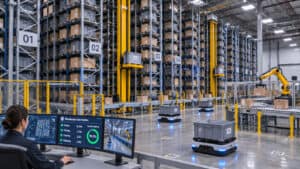
For example, programmable logic controllers (PLCs) can manage equipment functions and coordinate conveyor operations. Sensors and other system components can provide information about product movement, helping the system respond to packages as they travel through different sections.
Warehouse software also plays an important role.
Warehouse Management Systems (WMS) help manage warehouse inventory and order-related activities, while Warehouse Control Systems (WCS) can coordinate automated material handling equipment and product movement.
Century Conveyor Systems offers controls engineering, control panel design and fabrication, programmable logic controls, and warehouse control system solutions.
Bringing these capabilities together can help businesses develop a more coordinated automation environment.
The importance of this integration should not be overlooked. Even an effective mechanical sortation system can experience operational limitations if its controls, software, and upstream processes are not properly coordinated.
A successful implementation considers both the physical conveyor layout and the technology responsible for directing product movement.
8. How Can Sortation Help Reduce Warehouse Labor Costs?
Labor is a significant operating expense for many distribution centers and fulfillment facilities. When employees spend substantial portions of their shifts manually transporting, separating, and organizing packages, fewer resources remain available for other essential tasks.
Automated sortation can help reduce the amount of repetitive manual work required to process products.
Instead of assigning employees to manually separate packages and move them between shipping destinations, a conveyor-based system can perform much of the transportation and routing automatically.
This does not mean that employees are no longer needed. Automated material handling systems still require personnel to monitor operations, manage exceptions, maintain equipment, and perform other warehouse responsibilities.
However, automation can change how labor is allocated.
For example, employees who previously spent significant time moving packages between sorting areas may be reassigned to picking, packing, inventory management, or quality control.
Automation can also help facilities handle increased order volumes without requiring labor to grow at exactly the same rate as throughput.
The actual savings depend on the facility’s existing processes, labor requirements, equipment investment, and operating costs. Businesses should evaluate these factors when determining whether a sortation investment makes financial sense.
Century’s material handling solutions are designed to help improve facility output while reducing unnecessary manual interactions and associated labor costs.
9. Is Sortation Suitable for Facilities With Different Product Sizes and Types?
Yes, but the equipment must be selected according to the products being handled.
Distribution centers rarely process identical packages throughout the day. A facility might handle small polybags, standard cartons, irregularly shaped packages, heavier products, and other items with different handling requirements.
These variations can influence how products move through a conveyor system and which sortation technology is appropriate.
For example, smaller or irregularly shaped packages may require different conveyance characteristics than standard cartons. Product weight, dimensions, stability, and surface characteristics can all affect equipment selection.
Century Conveyor Systems offers multiple conveyor technologies to accommodate different material handling applications.
Its broader conveyor solutions include live roller conveyors, gravity conveyors, belted conveyors, modular belt conveyors, conveyor diverts, and pallet handling equipment.
These technologies can support different stages of a warehouse operation and can be incorporated into an engineered material handling layout.
For instance, belt conveyors can provide stable movement for smaller packages, polybags, and irregular carton sizes. Live roller conveyors are commonly used in packing lines, divert lines, and end-of-line operations.
Conveyor diverts can also direct cartons from a single conveyor line toward different destinations without requiring an entire large-scale sortation system.
The important consideration is matching the equipment to the products and the specific sorting task. A properly engineered solution should account for the full range of items a facility expects to process.
10. Can Century Conveyor Systems Help Modernize or Upgrade an Existing Sortation Operation?
Yes. Modernizing an existing material handling operation can be an effective way to address performance limitations, aging equipment, or changing fulfillment requirements.
As distribution centers grow, their original conveyor layouts and automation capabilities may no longer meet operational demands. Equipment that once supported sufficient throughput may become a bottleneck as order volumes increase.
A modernization project can involve replacing outdated components, modifying conveyor layouts, installing additional equipment, or improving system controls.
Century Conveyor Systems provides retrofit and modernization services, along with mechanical and electrical installation capabilities.
Its teams can assist with equipment tearouts, relocations, replacement parts, and upgrades to existing material handling systems.
For facilities considering a sortation upgrade, the first step is understanding where the current operation is experiencing limitations.
For example, a business may be struggling with insufficient sorting capacity, inefficient package routing, excessive manual handling, or congestion near shipping areas.
An engineering evaluation can help identify the underlying issues and determine which improvements are most appropriate.
Not every facility needs a completely new system. In some cases, targeted upgrades or additional conveyor equipment may provide meaningful improvements.
A modernization strategy should consider both immediate performance needs and the facility’s longer-term growth plans.
11. What Should Businesses Consider Before Investing in a Sortation System?
Investing in sortation is an important operational decision, and selecting the right equipment requires careful planning.
Businesses should begin by evaluating their current and projected product volumes. Understanding average throughput, peak-period demand, and expected future growth helps determine the capacity requirements of the system.
Package characteristics are equally important. Product dimensions, weight, shape, and handling requirements can influence which sortation technologies are appropriate.
Warehouse layout is another major consideration. The system must fit within the available space while maintaining efficient product flow and providing appropriate access for employees and maintenance personnel.
Businesses should also evaluate how the proposed sortation system will interact with existing conveyors, warehouse software, packing stations, and shipping operations.
Other important considerations include:
- Throughput requirements: Determine how many products the system needs to process during normal and peak operating periods.
- Sorting destinations: Identify the number of shipping lanes, destinations, or processing areas the system must support.
- Product variety: Consider the full range of package dimensions, weights, and shapes.
- Integration requirements: Evaluate how new equipment will connect with existing conveyors, controls, and warehouse software.
- Maintenance needs: Understand the service, inspection, and replacement part requirements of the equipment.
- Future expansion: Consider whether the system can accommodate additional capacity or changing fulfillment requirements.
Working with an experienced system integrator can help businesses evaluate these factors before committing to an installation.
Century Conveyor Systems offers engineering, project management, installation, controls, and service capabilities that support the development of integrated material handling solutions.
12. Why Choose Century Conveyor Systems for Sortation?
Choosing a sortation partner is about more than purchasing conveyor equipment. Businesses need an integration partner capable of understanding their operations, developing an appropriate solution, and coordinating the work required to bring the system online.
Century Conveyor Systems provides turnkey conveyor and material handling automation solutions for warehouses, distribution centers, and fulfillment facilities.
One important advantage is its broad range of capabilities. Century supports system design, mechanical engineering, controls engineering, electrical installation, mechanical installation, project management, and ongoing service.
Having these capabilities available through one integration partner can help simplify complex projects that would otherwise require coordinating several different companies.
Another consideration is Century’s experience with different material handling technologies. Its solutions include sortation conveyors, traditional conveyor systems, robotic fulfillment, palletizing, controls and software, and storage modules.
This broader expertise allows sortation to be considered as part of the facility’s entire automation strategy rather than as an isolated equipment purchase.
Century also emphasizes project coordination from initial planning through implementation and testing. Its mechanical installation services include support for engineering, contractors, inspectors, equipment installation, and warehouse relocations.
For businesses looking to improve existing operations, Century also offers retrofit and modernization services, preventative maintenance, and replacement parts support.
Ultimately, the right sortation system should address the specific challenges of a facility while supporting its long-term operational goals. Century Conveyor Systems brings together the equipment, engineering, and integration services needed to help businesses develop more efficient material handling operations.
13. How Can Businesses Get Started With Century Conveyor Systems’ Sortation Solutions?
The first step is identifying the operational challenges your facility needs to address.
Whether you are planning a new distribution center, expanding an existing warehouse, or upgrading an outdated conveyor network, understanding your current material handling requirements will help establish the foundation for a successful project.
Consider gathering information about your facility’s layout, current throughput, product characteristics, shipping destinations, and expected future growth.
It can also be helpful to identify specific bottlenecks. For example, determine whether packages are accumulating before shipping, whether employees spend too much time manually sorting products, or whether existing conveyor equipment is limiting overall throughput.
With this information, Century Conveyor Systems can help evaluate potential material handling improvements and develop an engineered solution.
Its capabilities span the project lifecycle, from system design and validation to mechanical and electrical installation, startup support, and ongoing parts and service.
Businesses interested in improving warehouse productivity can contact Century Conveyor Systems to discuss their project requirements and explore available automation options.
Final Thoughts: Improving Warehouse Performance Through Automated Sortation
Sortation plays a critical role in modern warehouse and distribution center operations. By automating how products are separated and directed, businesses can improve throughput, reduce repetitive manual handling, support more accurate order distribution, and create a more organized fulfillment process.
However, an effective sortation system requires more than the right conveyor equipment. It also depends on thoughtful engineering, appropriate controls, proper installation, and integration with the facility’s broader material handling operations.
Century Conveyor Systems offers a range of sortation technologies and turnkey integration services designed to help businesses address these requirements.
From shoe, belt, tray, and Bombay distribution systems to conveyor integration, controls engineering, mechanical installation, and modernization, Century can help businesses develop solutions that support their operational needs.
For companies looking to improve distribution efficiency and prepare their facilities for future growth, investing in the right sortation strategy can be an important step toward a more productive warehouse.