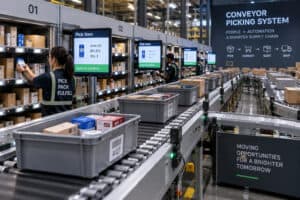
WMS systems are under increasing pressure to fulfill orders faster, improve inventory accuracy, reduce labor costs, and keep operations running smoothly. As order volumes grow and customer expectations rise, businesses need more than traditional material handling equipment to remain competitive. They need intelligent technology that connects warehouse processes, coordinates equipment, and supports efficient order fulfillment.
This is where WMS systems play an important role. Warehouse Management Systems help businesses manage and coordinate essential warehouse activities, while integrating with automation technologies that can improve productivity and operational visibility.
Century Conveyor Systems provides comprehensive warehouse automation and material handling solutions, including Warehouse Management Systems (WMS), Warehouse Control Systems (WCS), conveyor systems, robotic fulfillment, sortation equipment, and customized storage solutions. By bringing these technologies together, Century helps warehouses and distribution centers develop more efficient, scalable operations.
Below, we answer some frequently asked questions about WMS systems, Century Conveyor Systems’ capabilities, and how warehouse automation can help businesses improve their fulfillment processes.
Table of Contents
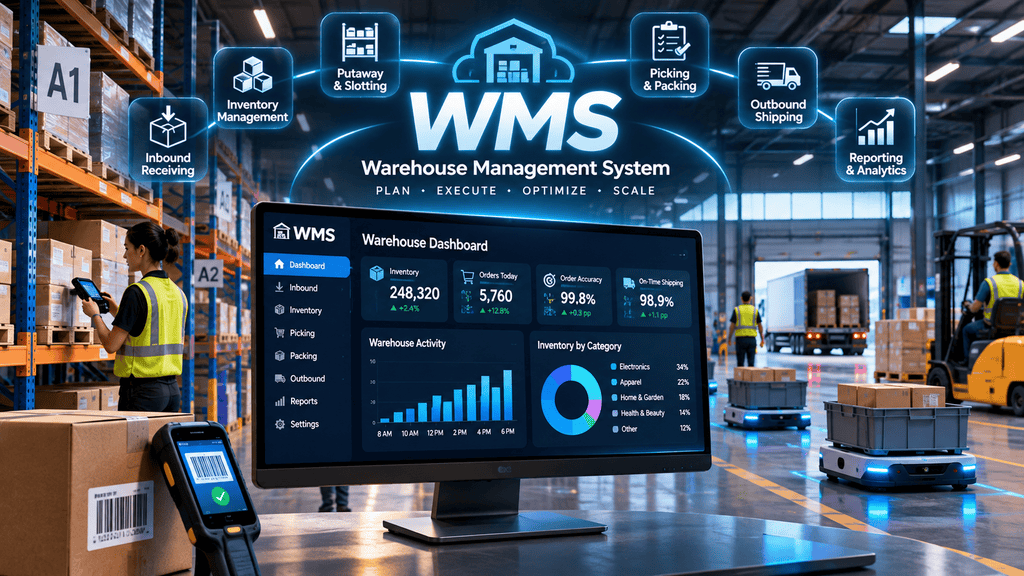
Frequently Asked Questions About WMS Systems
1. What are WMS systems, and why are they important for warehouse operations?
WMS systems, or Warehouse Management Systems, are software solutions designed to help businesses manage and coordinate warehouse activities. They provide an organized approach to overseeing inventory, managing warehouse workflows, and supporting the movement of products through a facility.
A warehouse involves numerous interconnected processes, including receiving, storage, inventory management, picking, packing, and shipping. Without an effective management system, coordinating these activities can become increasingly complicated as order volumes increase.
WMS systems help businesses organize these processes and establish more consistent workflows. They can support inventory visibility, improve the coordination of warehouse activities, and help managers make more informed operational decisions.
Their importance becomes even more apparent in facilities that use automated material handling equipment. When warehouse operations involve conveyors, sortation equipment, robotic systems, and automated storage solutions, effective software coordination becomes essential.
Century Conveyor Systems offers WMS and WCS solutions as part of its broader controls and software capabilities. Rather than treating warehouse software as an isolated investment, Century approaches automation as an integrated system designed around the facility’s operational requirements.
2. How does Century Conveyor Systems help businesses implement WMS systems?
Century Conveyor Systems takes a comprehensive approach to warehouse automation, providing more than individual pieces of material handling equipment. The company works with shipping warehouses, distribution centers, and fulfillment facilities to design, validate, and implement turnkey automation systems.
Its capabilities include controls engineering, software solutions, mechanical engineering, system design, installation, project management, and ongoing support.
When considering WMS systems, businesses should evaluate how software will interact with their existing warehouse infrastructure and future automation plans. A solution must account for the facility’s workflows, equipment requirements, operational capacity, and fulfillment objectives.
Century’s system integration approach helps businesses consider these requirements together. Its engineers work to develop solutions that increase output while reducing labor costs through the deployment of automation.
This integrated approach is particularly valuable for companies that want to modernize multiple areas of their warehouse rather than investing in disconnected technologies that may not work effectively together.
3. What is the difference between a WMS and a Warehouse Control System (WCS)?
Although Warehouse Management Systems and Warehouse Control Systems are closely related, they serve different purposes within an automated warehouse.
A WMS primarily focuses on managing warehouse operations and inventory-related activities. It helps organize the broader processes involved in storing, tracking, picking, and shipping products.
A WCS focuses more directly on coordinating automated material handling equipment and controlling how products move through an automated facility.
For example, a warehouse might use a WMS to support inventory and order management while relying on a WCS to coordinate conveyor movement, sortation processes, and other automated equipment.
Both technologies can contribute to a more efficient operation, but they address different layers of warehouse management and automation.
Century Conveyor Systems offers both WMS and WCS capabilities within its controls and software solutions. This gives businesses the opportunity to consider how warehouse management software and equipment-level controls can work together as part of a larger automation strategy.
Understanding this distinction is important when planning a new warehouse or upgrading an existing facility. Businesses should consider both their operational management requirements and the level of control needed for their automated equipment.
4. Can WMS systems improve order fulfillment efficiency?
Yes. Improving order fulfillment efficiency is one of the most important reasons businesses invest in warehouse management technology and automation.
Order fulfillment involves every step between receiving an order and preparing the products for shipment. This includes locating inventory, retrieving products, transporting items, picking orders, packing packages, sorting shipments, and delivering completed orders to the shipping dock.
When these processes rely heavily on manual labor, bottlenecks and inconsistencies can develop. Employees may spend excessive time walking between picking locations, moving products, or manually sorting packages.
WMS systems can help organize warehouse workflows, while integrated automation can reduce unnecessary manual handling and improve the movement of products throughout the facility.
Century Conveyor Systems specializes in engineering order fulfillment solutions designed to improve output performance, reduce errors that contribute to returns or damaged products, and process items faster with fewer manual interactions.
Its solutions include:
- Conveyor systems that automate the movement of cartons and pallets.
- Robotic fulfillment systems that transport products throughout the warehouse.
- Sortation equipment that directs packages to the appropriate destinations.
- Goods-to-person solutions that bring inventory closer to fulfillment personnel.
- Picking and storage systems designed to support efficient inventory access.
Combining effective warehouse management with these technologies can help businesses develop a more streamlined fulfillment operation.
5. How do WMS systems work with conveyor automation?
Conveyor systems are an important component of many automated warehouses. They provide a continuous method of transporting cartons, packages, and pallets between different operational areas.
However, conveyors do more than simply move products from one location to another. In an automated warehouse, they can support coordinated workflows involving picking, packing, sorting, accumulation, and shipping.
WMS and WCS technologies can contribute to the coordination of these activities, depending on the system architecture and integration requirements.
Century Conveyor Systems designs conveyor solutions around the specific layout and operational needs of each facility. Available equipment includes live roller conveyors, gravity conveyors, belted conveyors, modular belt conveyors, conveyor diverts, pallet conveyors, and extendable conveyors.
Each conveyor type serves a different purpose.
For example, belted conveyors provide stable transportation for small polybags, parcels, and irregularly shaped cartons. Conveyor diverts help direct packages toward different operational lines, while pallet conveyors provide reliable movement for heavier loads.
Accumulation conveyors can also help prevent products from making contact with one another, reducing the potential for damage during transportation.
By integrating the right conveyor equipment with appropriate warehouse management and control technologies, businesses can establish a more coordinated material handling environment.
6. Can WMS systems support robotic warehouse automation?
Yes. WMS systems can form part of a broader technology environment that supports robotic warehouse automation. The specific level of integration depends on the software, robotic equipment, and control architecture selected for the facility.
Robotic automation can reduce the amount of manual transportation required in a warehouse while helping businesses move products more efficiently between operational areas.
Century Conveyor Systems offers robotic order fulfillment solutions that include Automated Guided Vehicles (AGVs) and Autonomous Mobile Robots (AMRs).
AGVs typically follow established navigation routes using technologies such as magnetic tape, QR code stickers, inductive wires, and laser grids. They are particularly useful for transporting pallets, cartons, and other items along predefined routes.
AMRs offer greater flexibility because they navigate their surroundings using sensors and programming rather than relying on fixed physical guidance paths. They can transport totes, cartons, and carts throughout a distribution facility.
Both technologies can support goods-to-person operations and other warehouse workflows.
For businesses considering robotic automation, the important question is how robots will fit into the existing warehouse environment. Software, equipment controls, transportation routes, and employee workflows must all be considered to ensure the technology contributes to the facility’s overall efficiency.
7. Are WMS systems suitable for businesses with growing fulfillment demands?
WMS systems can be valuable for businesses experiencing growth because increasing order volumes often create additional demands on warehouse space, labor, inventory management, and fulfillment processes.
A warehouse that operates efficiently at a lower volume may struggle when order activity increases. Manual processes can become harder to coordinate, employees may spend more time transporting products, and existing material handling equipment may become a bottleneck.
Businesses should therefore consider scalability when evaluating WMS systems and warehouse automation investments.
Century Conveyor Systems offers several automation solutions that can accommodate changing operational requirements.
Its robotic fulfillment solutions, for example, offer flexibility and scalability. Additional robotic systems can be implemented as needed, allowing businesses to expand their automation capabilities over time. Unlike some traditional automation equipment, mobile robots are not permanently fixed to one location.
Conveyor systems can also be designed with different sections and equipment types to accommodate specific warehouse functions.
The goal is to develop an automation strategy that addresses current operational challenges while allowing room for future growth.
Businesses should consider projected order volumes, available warehouse space, product characteristics, and expected changes in fulfillment requirements before selecting a system.
8. How can WMS systems help reduce warehouse labor costs?
Labor is one of the major expenses associated with warehouse operations. Employees are responsible for receiving products, managing inventory, picking orders, packing shipments, transporting goods, and completing numerous other tasks.
When warehouse workflows are inefficient, employees may spend significant portions of their shifts performing repetitive activities that could be supported by automation.
WMS systems help organize warehouse activities, while automated material handling technologies can reduce the physical work required to move products throughout a facility.
For example, conveyor systems can transport cartons between workstations without requiring employees to manually carry or move every package. Robotic systems can transport totes and pallets, while sortation equipment can automate the distribution of packages to designated destinations.
Century Conveyor Systems focuses on designing and implementing automation solutions that increase warehouse output while lowering labor costs.
However, reducing labor costs does not necessarily mean eliminating employees. Instead, automation can allow warehouse personnel to spend less time on repetitive transportation tasks and more time on activities that require human oversight, decision-making, and attention to detail.
For businesses facing labor shortages or increasing fulfillment demands, this can be an important operational advantage.
9. Can WMS systems be integrated into an existing warehouse?
Yes, businesses do not necessarily need to construct an entirely new warehouse to benefit from improved warehouse management and automation.
Many facilities already have conveyors, storage systems, picking stations, and other material handling equipment. However, these systems may have been installed at different times and may not operate as efficiently together as they could.
Modernization and retrofit projects can help businesses improve existing infrastructure while reducing the need for a complete facility redesign.
Century Conveyor Systems offers retrofit and modernization capabilities alongside system design, controls engineering, mechanical engineering, and installation services.
When evaluating an existing warehouse, businesses should examine which processes are creating bottlenecks and determine whether new software, equipment controls, or material handling solutions could improve performance.
For some facilities, improvements may involve updating controls or integrating additional automation equipment. Others may benefit from new conveyor sections, robotic transportation, improved storage configurations, or redesigned picking and packing areas.
The best approach depends on the condition of the existing infrastructure and the facility’s long-term operational goals.
10. What should businesses consider when choosing WMS systems?
Selecting the right WMS system requires more than comparing software features. Businesses should evaluate how the technology will support their specific warehouse operations and whether it can accommodate their future requirements.
Several important factors deserve consideration.
Warehouse size and layout: The physical configuration of a facility affects how inventory is stored, how products move, and where automation equipment can be installed.
Order volume and fulfillment requirements: Businesses handling high order volumes or complex fulfillment processes may require more extensive coordination between software and automated equipment.
Existing technology: Companies should evaluate their current warehouse software, conveyors, controls, storage systems, and other equipment before selecting additional technology.
Integration capabilities: A WMS should fit into the broader technology environment, including any WCS, conveyor controls, robotic systems, and other operational platforms.
Scalability: Businesses should consider whether their investment can accommodate increased order volumes, additional equipment, and changing fulfillment requirements.
Long-term support: Implementation is only one part of an automation project. Maintenance, replacement parts, troubleshooting, and ongoing technical assistance are also important considerations.
Century Conveyor Systems provides a range of services covering system design, controls engineering, project management, installation, startup support, and lifetime parts and service.
Considering these factors together can help businesses select an approach that delivers lasting operational value.
11. Why should businesses choose Century Conveyor Systems for warehouse automation?
Choosing a warehouse automation partner is an important decision because the success of an automation project depends on more than the equipment itself. Businesses need a partner capable of understanding their operational requirements and developing solutions that work together.
Century Conveyor Systems is a full-service material handling automation integrator serving shipping warehouses, distribution centers, and fulfillment facilities.
Its capabilities extend across several important areas of warehouse automation, including:
- Warehouse Management Systems and Warehouse Control Systems.
- Conveyor systems and pallet handling equipment.
- Robotic order fulfillment and mobile robots.
- Automated sortation systems.
- Robotic palletizing and depalletizing.
- Picking modules and storage systems.
- Programmable logic controls and control panel fabrication.
- Mechanical engineering and electrical installation.
- Preventative maintenance, conveyor repair, and replacement parts.
Century manages projects from system design and validation through installation and startup support. This comprehensive approach helps businesses address the different technical and operational requirements involved in warehouse automation.
Rather than purchasing individual technologies without considering how they interact, companies can work toward a more unified material handling solution.
For organizations looking to improve productivity, increase fulfillment capacity, and modernize warehouse operations, this level of system integration can make a meaningful difference.
Final Thoughts: Are WMS Systems the Right Investment for Your Warehouse?
WMS systems play an important role in helping businesses organize warehouse operations, manage inventory, and support efficient order fulfillment. When combined with warehouse control technology and automated material handling equipment, they can contribute to a more productive and coordinated distribution environment.
However, the most effective warehouse automation strategy depends on the individual facility. Factors such as order volume, warehouse layout, existing infrastructure, labor requirements, and future growth expectations should all influence the decision-making process.
Century Conveyor Systems offers a comprehensive range of warehouse automation capabilities, including WMS, WCS, conveyor systems, robotic fulfillment, and sortation solutions. Its engineering and integration services help businesses develop automation strategies designed around their specific operational needs.
Whether you are planning a new distribution facility, upgrading an existing warehouse, or exploring ways to improve order fulfillment, investing in the right combination of warehouse management and automation technology can help position your operation for long-term success.
Ready to explore WMS systems and warehouse automation for your facility? Contact Century Conveyor Systems to discuss your operational requirements and start planning a customized automation solution.