When a warehouse, distribution center, or fulfillment operation needs more than a standalone conveyor, the role of a conveyor system integrator becomes especially important. A system integrator brings together conveyor equipment, controls, robotics, software, engineering, installation, and ongoing service so the individual components operate as one coordinated system.
Century Conveyor Systems approaches material handling automation as a complete system rather than simply an equipment purchase. The company describes itself as a full-service integrator for shipping warehouses, distribution centers, and fulfillment facilities, with capabilities spanning system design, validation, installation, startup support, parts, and service.
Below are frequently asked questions about Century Conveyor Systems and its role as a conveyor system integrator.
Table of Contents
What does a conveyor system integrator do?
A conveyor system integrator helps businesses design and implement a material handling system that fits the way products actually move through a facility.
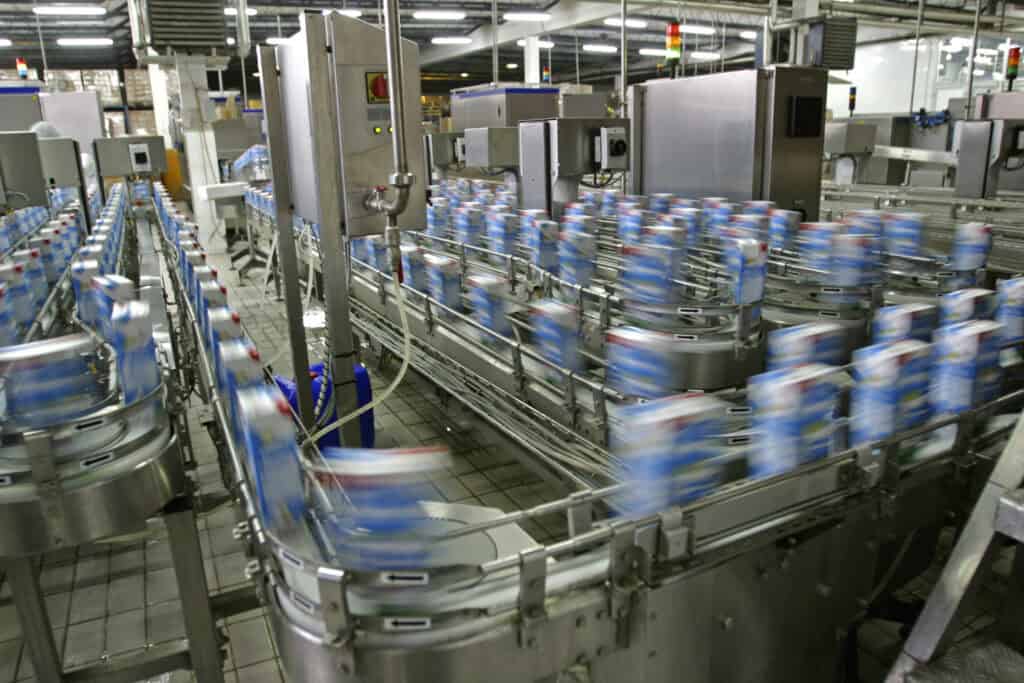
Instead of treating a conveyor as an isolated piece of equipment, an integrator considers the complete workflow. That can include receiving, transportation, accumulation, picking, packing, sortation, pallet handling, order fulfillment, and shipping. The objective is to create a coordinated system in which equipment and controls work together to move products efficiently from one stage to another.
Century Conveyor Systems takes this broader approach. Its services include system design, controls engineering, control panel design and fabrication, electrical installation, mechanical engineering, mechanical installation, project management, and project phasing. The company also provides conveyor preventative maintenance, repair services, and replacement parts.
That combination is important because conveyor projects can involve many interdependent decisions. Conveyor type, product characteristics, throughput requirements, available floor space, controls, operator interaction, and downstream processes can all affect the final design.
For example, a facility handling small polybags may have different conveying requirements from one moving heavy pallets or oversized bulk products. Century identifies several conveyor technologies for different applications, including live roller, gravity, belted, modular belt, pallet, spiral, and extendable conveyors.
In other words, a conveyor system integrator is responsible for helping connect the individual pieces into a functional material handling solution—not simply supplying a conveyor section.
Why work with Century Conveyor Systems instead of purchasing individual conveyor equipment?
One of the primary advantages of working with a conveyor system integrator is having a single organization involved across multiple stages of the project.
A warehouse automation project can require mechanical equipment, electrical infrastructure, controls, software, robotics, installation, testing, and ongoing maintenance. Purchasing each component independently can leave the facility owner responsible for coordinating multiple vendors and determining how those components will interact.
Century’s approach is structured around managing the project as a complete system. The company states that it can manage projects from system design and validation through final installation, startup support, and lifetime parts and service.
This can be particularly relevant when a project involves more than conventional conveyor equipment. Century’s listed capabilities extend into programmable logic controls, warehouse management systems, warehouse control systems, robotic fulfillment, robotic palletizing, sortation, print and apply, storage systems, and retrofit and modernization.
That broader scope allows the conveyor to be considered in relation to the rest of the operation.
For example, a fulfillment center might need conveyors to transport cartons while also requiring automated sortation and robotic movement between work areas. Designing those functions independently could create compatibility or workflow challenges. An integrator can instead look at the movement of products across the entire process and determine how the different technologies should interact.
The result is a project centered on the facility’s material flow rather than on an individual piece of equipment.
What types of conveyor systems can Century Conveyor Systems integrate?
Century works with several conveyor configurations, allowing systems to be designed around the products being handled and the specific processes within a facility.
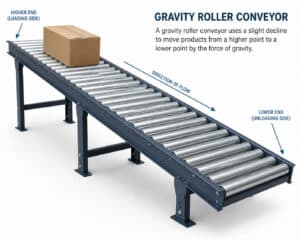
Live roller and gravity conveyors, for example, can be used in packing lines, divert lines, extendable applications, and end-of-line operations. Live roller conveyors use powered rollers, while gravity conveyors rely on gravity to move products.
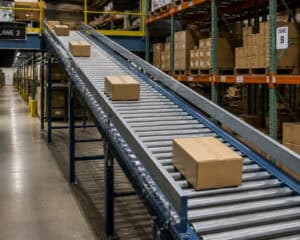
Belted conveyors provide another option when product stability is particularly important. Century notes that belt-over conveyors can be useful for small polybags, parcels, and irregular carton sizes. Their ability to handle inclines, declines, and gapping can also make them useful when faster or more controlled movement is required.
Modular belt conveyors offer another specialized approach. Their individual belt sections can be removed, cleaned, or modified, which can be valuable in applications where cleaning, traction, tight transfers, or accumulation are important considerations.
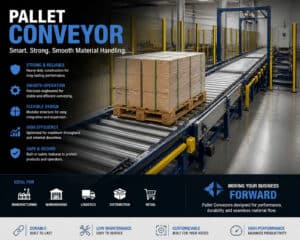
For facilities handling pallets or heavier loads, Century offers several pallet conveyor configurations, including pallet drag chain, pallet gravity, chain-driven live roller, and Poly-V conveyors.
The company also works with conveyor diverts, zero- and minimum-pressure accumulation, telescoping extendable conveyors, and spiral conveyors.
This variety matters because there is no single conveyor design that works equally well for every warehouse. Product dimensions, weight, packaging, speed, accumulation requirements, transfer points, and facility layout all influence the appropriate equipment.
A conveyor system integrator can therefore serve as the engineering layer between the operational requirement and the equipment selection.
Can a conveyor system integrator incorporate robotics into fulfillment operations?
Yes. Modern warehouse automation increasingly combines traditional conveyor systems with robotic technologies, and Century’s fulfillment solutions include both conveyors and robotic order fulfillment.
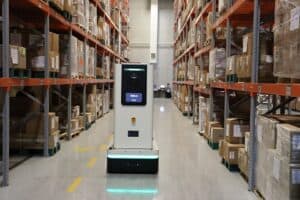
Century identifies automated guided vehicles, or AGVs, and autonomous mobile robots, or AMRs, as robotic fulfillment technologies. These systems can provide transportation capabilities within a facility and can complement conveyor-based material handling.
AGVs can follow defined navigation systems and are suited to applications involving pallets, cartons, or other materials traveling along established routes. Century notes that AGVs can also be equipped with conveyor or cart attachments depending on the products being handled.
AMRs take a different approach. Rather than following a fixed track, they use sensors and programming to navigate through a facility. This makes them useful for applications in which movement patterns need to be more flexible.
The distinction can be important when designing a fulfillment system.
A conveyor is a fixed infrastructure solution. It provides predictable transportation along an engineered route. An AMR, by contrast, can move dynamically through a facility. Combining the two can allow an operation to use fixed conveyor infrastructure where it makes sense while introducing mobile automation where flexibility is more valuable.
Century specifically identifies goods-to-person fulfillment as a use case for AMRs. In such an arrangement, robots can retrieve totes and bring them to packing lines or fulfillment personnel.
For businesses considering warehouse automation, this illustrates why choosing a conveyor system integrator can be more comprehensive than choosing a conveyor manufacturer alone. The integrator can evaluate where conveyors, robots, controls, and other technologies fit within the overall workflow.
How does Century approach order fulfillment automation?
Order fulfillment involves considerably more than transporting a box from one location to another. Products need to move through multiple stages, and each transition can influence throughput, accuracy, labor requirements, and product handling.
Century describes its order fulfillment approach around optimizing the system at each touchpoint. Its stated objectives include improving output performance, reducing errors that can contribute to returns or product breakage, and processing items faster with fewer manual interactions.
Conveyors can form the transportation backbone of this type of operation. They can move cartons between workstations, provide accumulation, create routing opportunities through diverts, and connect different parts of a warehouse.
Sortation can then direct products toward the appropriate destination. Robotic technologies can provide additional transportation or goods-to-person functionality. Controls and software can coordinate equipment and processes.
This creates a layered automation strategy rather than a single piece of machinery.
For example, a fulfillment operation might use belt conveyors for stable movement of small parcels, accumulation conveyors near packing areas, diverts to route orders, and AMRs for flexible transportation between selected zones. The exact configuration would depend on the facility and its operating requirements.
The important point is that an integrator can evaluate those technologies together.
Can Century help modernize an existing conveyor system?
A conveyor system integrator can also play a role when a company does not need an entirely new warehouse.
Existing facilities may have conveyor equipment that remains mechanically useful but lacks the controls, capacity, automation, or flexibility needed for current operations. Replacing the entire system may not always be the only approach.
Century lists retrofit and modernization among its solution capabilities. Its broader services also include controls engineering, programmable logic controls, warehouse control systems, mechanical and electrical installation, and conveyor service.
Modernization can therefore involve evaluating the existing infrastructure and identifying where improvements could have the greatest operational impact.
Depending on the project, that might mean upgrading controls, changing conveyor sections, adding automation, improving sortation, introducing robotic equipment, or modifying the system to accommodate changes in products and workflows.
The advantage of involving an integrator is that the existing system can be considered as part of the larger operation. Rather than simply replacing individual components, the project can be evaluated around the facility’s current requirements and future objectives.
What happens after a conveyor system is installed?
Installation is only one stage of a material handling automation project.
Conveyor equipment operates in demanding environments, and routine maintenance, replacement parts, troubleshooting, and repairs can become important aspects of keeping a facility running.
Century provides conveyor system integrator service and parts capabilities in addition to its engineering and installation services. The company states that it has a conveyor maintenance and service department, service vehicles, and more than 40 years of conveyor experience. Its listed services include preventative maintenance, repair, replacement parts, and equipment installation.
This ongoing support is another reason the role of a conveyor system integrator can extend well beyond the initial project.
A system integrator that understands the original design has context about how the equipment, controls, and related technologies were intended to operate. That knowledge can be useful when maintenance or modifications become necessary later.
Century also describes a parts ordering portal designed to give participating customers visibility into relevant system parts and part numbers, with the goal of simplifying the process of identifying and requesting replacement components.
For a facility dependent on automated material handling, lifecycle support can be an important part of the overall system strategy.
Is Century Conveyor Systems’s conveyor system integrator suitable for large warehouse automation projects?
Century positions itself as a turnkey automation integrator for warehouses, distribution centers, and fulfillment facilities. Its capabilities cover multiple areas of material handling automation, including conveyor systems, sortation, robotic fulfillment, robotic palletizing, controls and software, storage systems, print and apply, and service.
The company’s website also reports more than 1,500 installations over the preceding five years and identifies offices in New Jersey, California, and Kentucky.
Project scale, however, is only one consideration when evaluating an integrator. The more important question is whether the integrator’s engineering, automation, installation, controls, and support capabilities correspond with the requirements of the particular facility.
A warehouse may need a straightforward conveyor expansion, while another operation may require a combination of conveyor transportation, sortation, robotics, warehouse controls, and pallet automation.
A consultation can help establish which combination of technologies is appropriate.
What should a company discuss with a conveyor system integrator before starting a project?
The most productive conversations usually begin with the operation rather than a specific piece of equipment.
A company evaluating automation should be prepared to discuss the products being handled, package dimensions, product weights, current throughput, desired throughput, order profiles, facility dimensions, existing equipment, staffing, bottlenecks, accumulation requirements, shipping processes, and future growth.
It is also useful to identify whether the project involves a new facility, an expansion, or modernization of an existing system.
From there, an integrator can evaluate potential combinations of equipment and automation.
Century’s stated approach of “Design. Build. Support.” reflects this project lifecycle. The company describes capabilities covering system design and validation, installation and startup, and continuing parts and service.
For a business searching for a conveyor system integrator, this broader perspective is ultimately the key consideration: the conveyor should be designed around the material flow and operational objectives of the facility, rather than selecting equipment first and attempting to make it fit afterward.
What makes a conveyor system integrator important for the future of warehouse automation?
Warehouse automation continues to expand beyond conventional conveyor transportation. Facilities increasingly have to consider robotics, controls, software, sortation, goods-to-person processes, automated palletizing, and other technologies alongside traditional conveying.
That makes conveyor system integrator important.
Century Conveyor Systems’s conveyor system interrogators provides capabilities across these different categories, including conventional conveyor systems, robotic fulfillment, palletizing, controls and software, sortation, storage, and ongoing service. Its order fulfillment solutions also demonstrate how fixed conveyor infrastructure can work alongside mobile robotics such as AGVs and AMRs.
The practical value of an integrator is therefore its ability to view automation as a connected system.
For a facility planning a new material handling project, expanding an existing operation, or modernizing an aging system, working with a conveyor system integrator can provide a way to address engineering, equipment, controls, installation, and lifecycle support within one broader project framework.
Century Conveyor Systems’ approach centers on that full-system perspective, helping warehouses and distribution facilities move from individual automation components toward an integrated material handling operation.