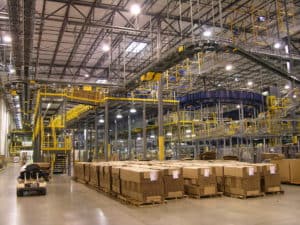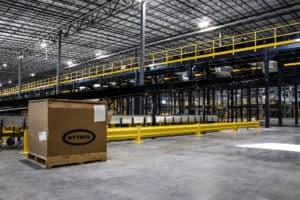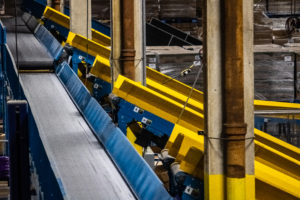
A pallet conveyor system plays a critical role in modern warehouses, manufacturing facilities, and distribution centers where heavy palletized loads need to move safely, efficiently, and consistently. As operations continue to automate, businesses require more than a simple conveyor—they need an integrated solution that supports productivity, scalability, and long-term operational performance.
Century Conveyor Systems specializes in designing and integrating turnkey material handling automation for warehouses and distribution centers. Rather than offering one-size-fits-all equipment, Century engineers pallet conveyor systems that fit each customer’s workflow, facility layout, throughput requirements, and future growth plans. Their pallet handling solutions are often integrated with broader warehouse automation technologies including controls, software, robotic systems, sortation equipment, and autonomous vehicles to create seamless material flow throughout an operation.
Below are answers to some of the most common questions businesses ask about Century Conveyor Systems’ pallet conveyor systems.
Table of Contents

FAQ 1: What is a pallet conveyor system?
A pallet conveyor system is a heavy-duty material handling solution designed to transport palletized loads throughout warehouses, manufacturing facilities, and distribution centers with minimal manual intervention.
Unlike standard package conveyors that move cartons or totes, pallet conveyors are engineered specifically for significantly heavier loads while maintaining stability, durability, and consistent movement.
Century Conveyor Systems offers several pallet handling technologies depending on operational requirements, including:
- Pallet drag chain conveyors
- Pallet gravity conveyors
- Chain-driven live roller conveyors
Each solution serves a different purpose based on pallet weight, traffic volume, accumulation requirements, product dimensions, and facility layout.
Rather than recommending a single conveyor style for every application, Century evaluates how products move through an entire operation before determining the most effective pallet conveyor configuration. This engineering-first approach helps ensure that each system supports overall warehouse efficiency instead of simply moving products from one point to another.
FAQ 2: What makes Century Conveyor Systems’ pallet conveyor systems different?
Many companies can supply conveyor equipment. Century Conveyor Systems differentiates itself by acting as a full-service system integrator rather than simply an equipment provider.
Every pallet conveyor system is engineered as part of a complete material handling solution. Century manages the project from initial system design and validation through installation, startup, ongoing support, replacement parts, and preventative maintenance.
This comprehensive approach allows customers to benefit from:
- Customized engineering
- Turnkey project management
- Integrated controls and software
- Long-term service support
- Future expansion capabilities
Instead of focusing solely on individual conveyor sections, Century designs systems that improve the movement of products across receiving, storage, picking, packing, sortation, palletizing, and shipping operations.
This holistic design philosophy helps reduce bottlenecks while maximizing throughput across the entire facility.
FAQ 3: Which pallet conveyor technologies does Century Conveyor Systems provide?
Century offers multiple pallet conveyor technologies because different operations require different methods of moving heavy loads.
Pallet Drag Chain Conveyors
Drag chain conveyors are designed to transport heavy pallets and oversized loads with exceptional stability.
In this configuration, pallets rest on platforms connected to a chain mechanism. As the chain moves, it pulls the pallet smoothly along the conveyor path.
These systems are particularly useful when handling:
- Heavy manufacturing products
- Industrial components
- Large palletized shipments
- High-weight applications
Their robust construction makes them well suited for demanding environments where durability is essential.
Pallet Gravity Conveyors
Gravity conveyors provide a simple and cost-effective solution where powered transportation is unnecessary.
These conveyors commonly serve as:
- Staging areas
- End-of-line accumulation zones
- Temporary pallet buffers
- Shipping preparation areas
By using gravity instead of powered movement, facilities can reduce energy consumption while maintaining organized pallet flow.
Chain-Driven Live Roller Conveyors
For higher throughput operations, chain-driven live roller conveyors combine powered rollers with drag chain technology.
These systems allow facilities to move multiple pallets efficiently while maintaining precise control over product flow.
Live roller conveyors are especially valuable for operations that process large pallet volumes throughout the day and require continuous movement without sacrificing load stability.
FAQ 4: How does a pallet conveyor system improve warehouse efficiency?
A properly engineered pallet conveyor system does much more than replace forklift travel.
It transforms how materials move throughout an operation by creating continuous product flow between departments.
Instead of relying on employees to manually transport every pallet, conveyors automate repetitive transportation tasks, allowing personnel to focus on higher-value responsibilities.
Key operational improvements often include:
- Faster movement between production areas
- Reduced forklift traffic
- Less manual handling
- More consistent workflow
- Improved throughput
- Reduced product damage
- Better space utilization
- Greater operational visibility
Century Conveyor Systems designs pallet handling solutions with the goal of improving output while minimizing unnecessary manual interactions.
When integrated with broader warehouse automation systems, pallet conveyors become an important component of an optimized fulfillment process that extends from receiving through final shipping.
FAQ 5: Can Century Conveyor Systems integrate pallet conveyors with warehouse automation?
Yes.
One of Century’s core strengths is integrating pallet conveyor systems into larger automation environments rather than treating conveyors as isolated equipment.
Depending on operational goals, pallet conveyors may work alongside:
- Automated Guided Vehicles (AGVs)
- Autonomous Mobile Robots (AMRs)
- Warehouse Control Systems (WCS)
- Warehouse Management Systems (WMS)
- PLC control systems
- Robotic palletizing equipment
- Sortation systems
- Print-and-apply equipment
For example, AGVs can transport pallets along fixed routes before interfacing directly with conveyor lines. Meanwhile, AMRs can navigate dynamically throughout a warehouse to transport totes, cartons, or carts, complementing conveyor-based workflows where greater flexibility is needed.
Because Century engineers these technologies as part of one coordinated solution, facilities can create smoother product flow while reducing operational bottlenecks and supporting future automation initiatives.
FAQ 6: What types of businesses benefit most from a pallet conveyor system?
Virtually any operation handling palletized products can benefit from automation, but certain industries often see particularly significant improvements.
These include:
- Distribution centers
- E-commerce fulfillment operations
- Third-party logistics (3PL) providers
- Manufacturing facilities
- Consumer goods distribution
- Food and beverage operations
- Retail distribution centers
- Industrial product warehouses
Facilities experiencing rapid growth often reach a point where manual pallet transportation becomes a limiting factor.
As order volumes increase, forklifts alone may create congestion, inconsistent workflows, and higher labor requirements.
A professionally engineered pallet conveyor system helps organizations accommodate higher throughput while creating a safer, more predictable material handling process.
FAQ 7: Why is customization so important when selecting a pallet conveyor system?
No two warehouses operate exactly alike.
Differences in building dimensions, product types, pallet weights, shipping methods, storage strategies, and production workflows all influence conveyor design.
Installing generic equipment without considering these factors can create inefficiencies that limit long-term performance.
Century Conveyor Systems begins every project by evaluating the customer’s operational objectives before designing a tailored solution.
Engineers consider factors such as:
- Facility layout
- Available floor space
- Product characteristics
- Throughput goals
- Future expansion plans
- Integration with existing equipment
- Safety requirements
- Maintenance accessibility
This customized engineering process helps ensure that the pallet conveyor system supports both current production needs and future business growth without requiring complete system replacement as operations evolve.
FAQ 8: Why choose Century Conveyor Systems for your next pallet conveyor system?
Choosing a pallet conveyor system is a long-term investment in operational performance.
Century Conveyor Systems combines engineering expertise, turnkey integration, automation knowledge, and ongoing support to deliver solutions that extend beyond basic material transportation.
Customers benefit from a partner that manages every stage of the project, including system design, validation, installation, controls integration, startup assistance, preventative maintenance, replacement parts, and long-term service.
Rather than focusing solely on conveyor equipment, Century engineers complete material handling solutions that improve productivity across the warehouse. By integrating pallet conveyors with automation technologies such as robotics, warehouse software, AGVs, AMRs, and sortation systems, businesses can build scalable operations capable of adapting to increasing demand and evolving fulfillment requirements.
For organizations looking to improve safety, increase throughput, reduce manual handling, and optimize pallet movement across their facilities, Century Conveyor Systems provides customized pallet conveyor solutions designed to support efficient warehouse operations today while remaining flexible for tomorrow’s growth.