If you’ve worked with Century, you know what we bring to the floor. What you may not know is that Century is part of something bigger: a network of five companies built around the same commitment to making material handling operations run better.
That matters for a practical reason. When warehouse automation projects struggle, the trouble usually sits at the seams between vendors. Controls from one company, conveyor from another, robotics from a third, each with its own contract, its own project manager, and its own definition of “done.” When something falls in the gap between two scopes, it becomes your problem.
The LEI Solution Network was built to remove those seams. Each company solves a specific part of the distribution operations puzzle, and when a project needs more than one of them, they work as a single team. Here’s who they are and what each one does.
LaFayette Engineering: The Controls Backbone
Controls engineering | WCS/WMS | PLC & HMI
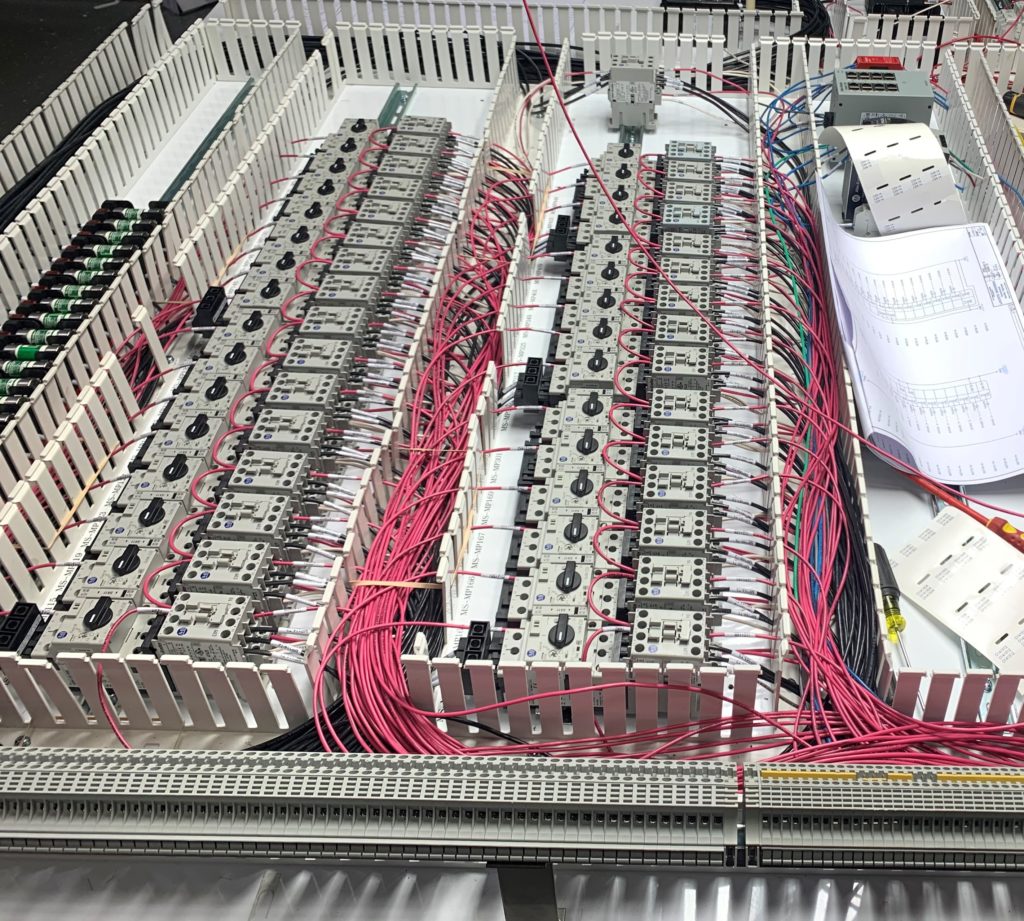
LaFayette Engineering is the parent company of the network and the controls backbone behind it. Their team designs and builds the electrical and software architecture behind high-speed sortation, conveyor systems, and robotic integrations: WCS, WMS, PLC programming, panel fabrication, and HMI development.
If a Century project involves a controls buildout, LaFayette Engineering is the team doing it. Because they’re part of the same family, the controls layer on a network project never turns into a finger-pointing exercise between subcontractors.
Visit lafayette-engineering.com →
Century Conveyor Systems: Full-Service Integration
System integration | Conveyor & sortation | Service & parts
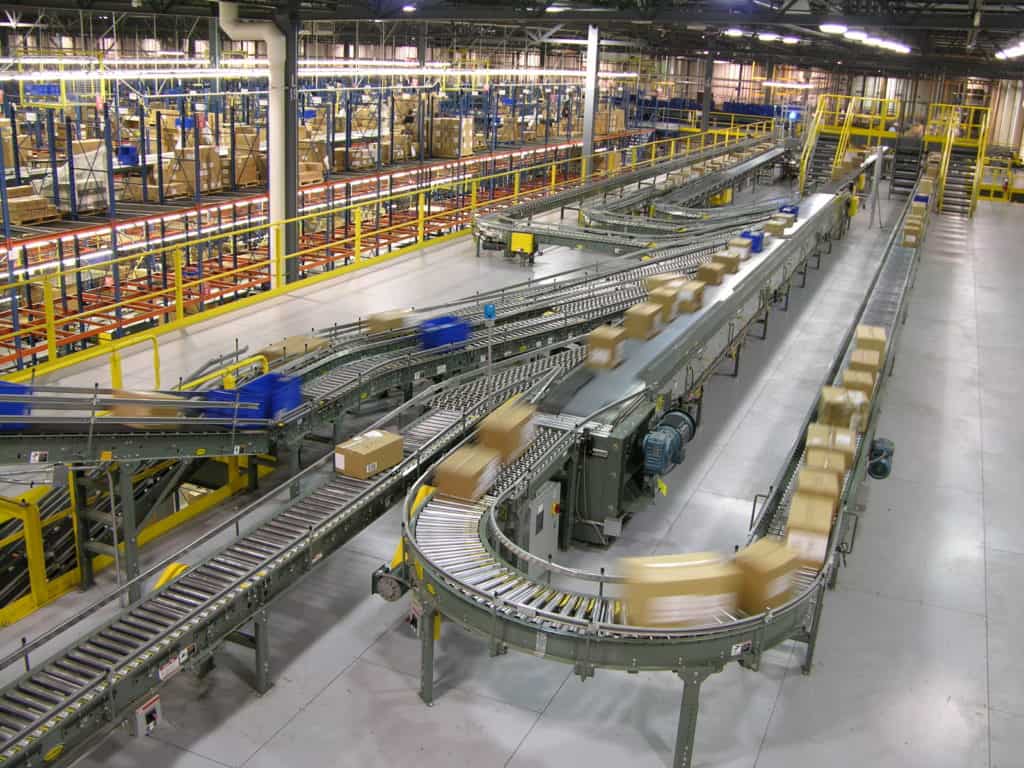
Century is a full-service material handling systems integrator: design, engineering, and installation of conveyor systems, high-speed sortation, robotic fulfillment, pick modules, print and apply, and automated storage for distribution operations across the country.
Just as important is what happens after go-live. Century provides long-term service, parts, and maintenance support for the systems it installs and for equipment from other original equipment manufacturers. If you’ve read our pieces on system audits and planned vs. reactive maintenance, this is the team behind both.
Mesh Automation: Robotics at the End of the Line
Robotic palletizing | Machine tending | End-of-line automation
Since 1999, Mesh Automation has engineered custom robotic systems for industrial and factory environments: robotic palletizing and depalletizing, machine tending, robotic induction and buffering, autonomous mobile robots, and machine vision.
When an operation needs to automate end-of-line product handling, pallet building, or manufacturing line load and unload, Mesh delivers systems engineered to integrate directly with conveyor infrastructure from across the network. The robot cell and the conveyor feeding it are designed to work together from day one.
Kendale Industries: The Parts That Don’t Come Off a Shelf
Ball bearings | Custom brackets | Precision component fabrication
Based in Stanford, Kentucky, Kendale Industries is a US manufacturer of ball bearings and precision industrial components: custom bracket design and fabrication for conveyor and automation systems, beacon and emergency-stop mounting hardware, conduit and disconnect brackets, and other custom-engineered parts built to spec in-house.
Every integrator eventually hits the component that doesn’t exist in a catalog. When a project needs a mechanical part that doesn’t come off a shelf, Kendale builds it domestically, inside the family.
Attabotics: Storage in Three Dimensions
3D robotic storage | ASRS | Autonomous fulfillment
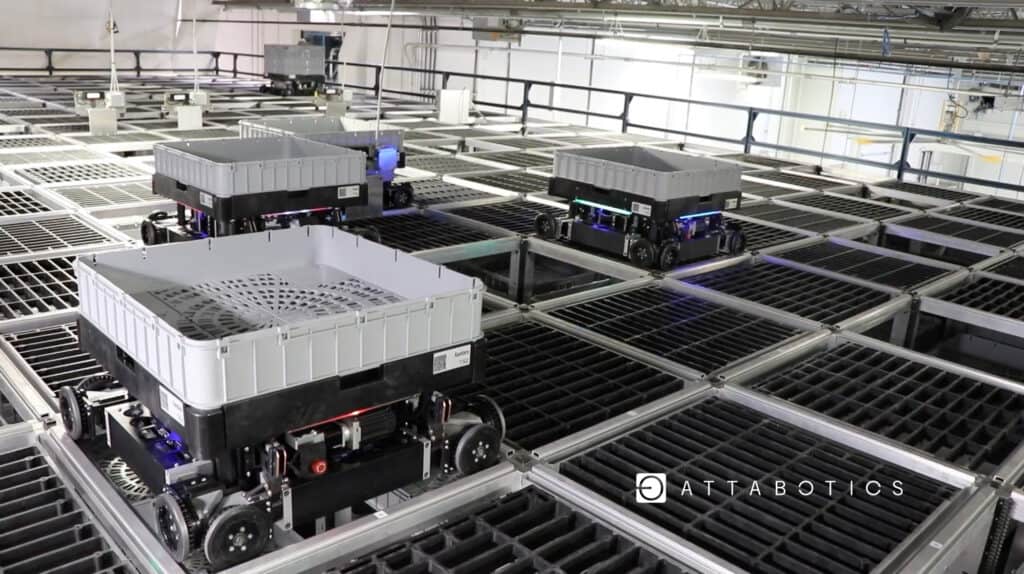
Attabotics builds a 3D robotic storage and retrieval system (ASRS) that replaces traditional rack-and-aisle warehouse storage with a compact, software-driven cube structure. Robots travel both horizontally and vertically through the structure, which shrinks the footprint while raising storage density and item throughput. Attabotics cites up to 85% less fulfillment space than conventional storage.
Because Attabotics is part of the network, its systems integrate directly with conveyor and sortation infrastructure from the rest of the family. The cube, the conveyor, and the controls all speak the same language.
Why One Conversation Beats Five RFPs
Most operations don’t need everything the network offers. But the ones that know the full picture tend to find capabilities they didn’t know they had access to: the controls team already familiar with their sortation, the fabricator who can build the bracket nobody stocks, the robotics group whose palletizer was designed around the conveyor it feeds.
That’s the practical value of a family over a vendor list. One conversation gets you eyes on all of it, and one team owns the result.
Working through a project, a problem, or just planning ahead? Start the conversation. Rick can tell you quickly which parts of the network your challenge actually needs.
Rick Maldonado, Business Development Manager (908) 205-0625 | rmaldonado@centuryconveyor.com
Want articles like this in your inbox? Sign up for the Century email blast.