Warehouse operations are under constant pressure to move products faster and adapt to changing order volumes. That is where automation in warehousing becomes an important part of modern material handling strategy.
For companies evaluating warehouse automation, the challenge is rarely finding a single piece of equipment. A successful automated operation requires multiple systems to work together—from conveyors and sortation equipment to robotics, controls, warehouse software, storage systems, and ongoing service.
Century Conveyor Systems approaches automation as an integrated material handling solution. The company designs and implements automated systems for warehouses, distribution centers, and fulfillment facilities, with capabilities that extend from system design and controls engineering through installation, startup, service, and parts support.
Below are some of the most common questions about Century Conveyor Systems and its approach to automation in warehousing.
Table of Contents
What does automation in warehousing mean for Century Conveyor Systems?
For Century Conveyor Systems, automation in warehousing is about creating a connected material handling system that moves products through a facility with less unnecessary manual intervention.
Rather than treating automation as one machine or one conveyor, Century works across multiple stages of warehouse operations. Its solutions include conveyor systems, sortation, robotic fulfillment, robotic palletizing, controls and software, storage modules, print-and-apply equipment, and related service and maintenance capabilities.
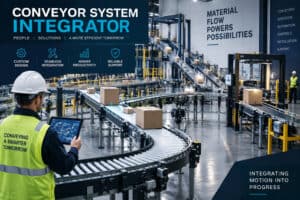
The company describes itself as a full-service system integrator for shipping warehouses, distribution centers, and fulfillment facilities. Its engineers can design, validate, and implement turnkey systems intended to improve output while reducing labor requirements.
That integrated approach matters because warehouse processes are interconnected. A conveyor that moves cartons efficiently is only one part of the operation. Products may also need to be inducted, accumulated, diverted, sorted, picked, packed, labeled, palletized, and transported to shipping. Automation has to account for how each of those activities affects the others.
Century’s approach therefore centers on designing an automation system around the specific flow of goods through a facility rather than treating individual pieces of equipment as isolated upgrades.
How can Century Conveyor Systems automate the movement of products inside a warehouse?
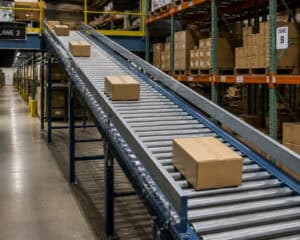
Conveyors form one of the core elements of Century’s approach to warehouse automation. They provide a continuous method for moving cartons, packages, pallets, and other materials between operational areas.
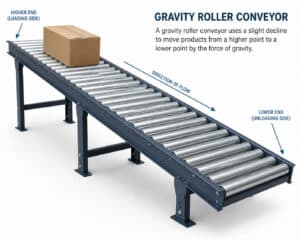
Century offers several conveyor configurations because different products and warehouse processes require different handling characteristics. Live roller and gravity conveyors, for example, can be useful in packing lines, divert areas, extendable applications, and end-of-line operations. Belted conveyors can provide stable handling for smaller parcels, polybags, and irregular carton sizes. Modular belt conveyors offer another option where cleaning, maintenance, traction, or specialized handling requirements are important.
The company also provides conveyor diverts that can route products from one line to another. This can allow cartons to be directed toward specific processing or shipping destinations without necessarily requiring a large standalone sortation system for every application.
Accumulation is another important consideration. Zero-pressure and minimum-pressure conveyor systems can help manage product spacing and reduce contact between items. This is particularly relevant when fragile products need to be moved without unnecessary collisions.
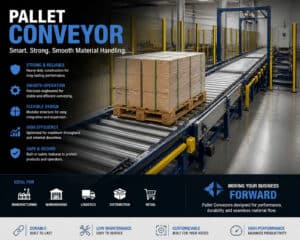
For warehouses handling pallets or oversized loads, Century also provides pallet conveyor solutions, including drag chain, gravity, chain-driven live roller, and Poly-V configurations.
The key point is that conveyor automation is not simply about moving products from Point A to Point B. The conveyor configuration, speed, accumulation strategy, product characteristics, and interaction with other equipment all influence how effectively the overall warehouse operates.
How does robotic automation fit into Century Conveyor Systems’ warehouse solutions?
Robotics provides another layer of automation in warehousing, particularly for facilities that need greater flexibility in transporting goods.
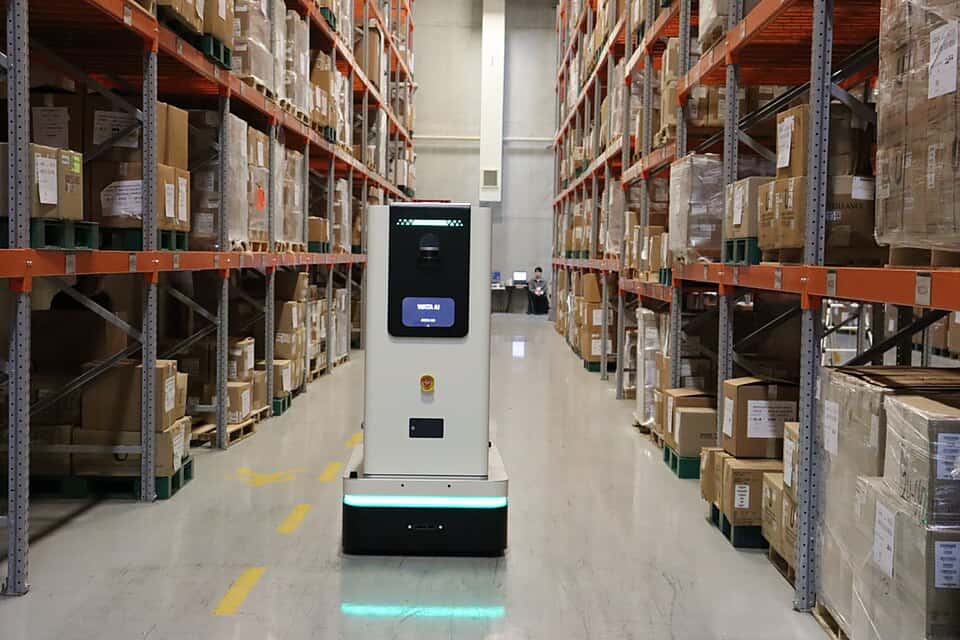
Century’s robotic fulfillment solutions include automated guided vehicles (AGVs) and autonomous mobile robots (AMRs). Both can transport materials around a facility, but they operate differently.
AGVs generally follow defined routes using technologies such as magnetic tape, QR codes, inductive wires, or laser-based systems. They can be configured to transport pallets, cartons, and other materials along established paths. Century notes that AGVs can also be fitted with conveyor or cart attachments and can interface with conveyor systems.
AMRs provide a different approach. Rather than following a fixed track, they use sensors and programming to navigate through a facility. That makes them suitable for environments where routes may need to change or where goods need to be transported between different locations.
Century identifies goods-to-person fulfillment as a key application for AMRs. Instead of requiring an employee to travel throughout a warehouse to retrieve inventory, an AMR can transport totes, cartons, or carts to a workstation or packing area.
This distinction is important when evaluating automation. A fixed conveyor may be appropriate for predictable, high-volume transportation between established points, while mobile robotics can provide additional flexibility where warehouse layouts, workflows, or transportation requirements change.
Can automation in warehousing help improve order fulfillment?
Yes. Order fulfillment is one of the central applications for automation in warehousing, and Century specifically focuses on automating the movement of products throughout the fulfillment process.
Order fulfillment encompasses the activities that occur between receiving an order and getting the product to the shipping dock. Depending on the facility, that can involve picking, transportation, accumulation, sortation, packing, labeling, and loading.
Century’s order fulfillment approach is designed around improving output performance, reducing errors that can contribute to returns or product damage, and processing items with fewer manual interactions.
Conveyor automation can help establish predictable product movement between work areas. Sortation equipment can direct products toward appropriate destinations. Robotic systems can transport totes or cartons. Print-and-apply equipment can automate labeling-related processes, while palletizing systems can automate the placement and preparation of products on pallets.
The value comes from coordinating these technologies rather than simply adding automation wherever space is available.
A warehouse that automates one isolated process may still have bottlenecks elsewhere. For example, faster picking does not necessarily improve total throughput if products then accumulate at packing or shipping. A properly engineered fulfillment system considers the entire flow so that individual improvements support the performance of the broader operation.
What types of automation in warehousing equipment does Century Conveyor Systems offer?
Century’s range of solutions covers several major areas of warehouse material handling.
Conveyor systems are available for cartons, parcels, pallets, and other loads. Sortation systems can distribute products to different destinations. Robotic fulfillment solutions provide automated transportation through AGVs and AMRs.
The company also works with robotic palletizing and depalletizing systems, including robotic arms and cells as well as associated shrink-wrapping and strapping equipment. These technologies can automate repetitive pallet-handling tasks at the beginning or end of a material flow.
Controls and software provide another critical layer. Century lists control panel fabrication, programmable logic controls, warehouse management systems, and warehouse control systems among its capabilities.
Storage solutions include shelving and racking, ergonomic picking and packing systems, automated storage and retrieval systems, mezzanines, platforms, and warehouse structures.
There are also print-and-apply solutions, including case formers, sealers, erectors, dunnage dispensers, fillers, tapers, shipping label applicators, and related terminals.
This breadth allows a warehouse project to address multiple stages of material handling through a coordinated automation strategy instead of relying on disconnected equipment suppliers for every portion of the system.
How does Century approach controls and automation in warehousing software?
Physical automation equipment needs a control layer to coordinate how products move through a warehouse. This is why controls and software are an important part of Century’s automation capabilities.
The company works with programmable logic controls, control panel fabrication, warehouse management systems, and warehouse control systems.
In an automated warehouse, these technologies can help coordinate equipment and communicate information about material movement. The control system can be responsible for determining how equipment responds to sensors, product locations, routing requirements, and other operational inputs.
This is particularly important as a facility becomes more automated. Adding conveyors, robots, sortation, or other machinery without considering how those systems communicate can create operational complexity rather than eliminating it.
Century’s system-integration model brings engineering, controls, equipment, installation, and project management into the same overall project. That provides a framework for considering the control architecture alongside the physical warehouse layout.
For businesses planning automation, this is an important distinction: the goal is not simply to purchase automated equipment, but to create a system in which the equipment, controls, software, and warehouse processes operate together.
Can Century automate an existing warehouse, or is automation in warehousing only for new facilities?
Automation in warehousing does not necessarily require building an entirely new facility. Existing operations can also be candidates for modernization.
Century lists retrofit and modernization among its solution capabilities. This is relevant for companies that already have conveyor systems, controls, storage equipment, or other material handling infrastructure but need to increase capacity or update outdated technology.
A retrofit can take many forms. A warehouse might replace or modify existing conveyors, add new automation to an established line, update controls, introduce robotics, improve sortation, or change the way products move between existing workstations.
The appropriate strategy depends on the condition of the existing system, available floor space, throughput requirements, product characteristics, and the desired future-state operation.
Modernization can also allow businesses to approach automation incrementally. Instead of attempting to replace an entire material handling system at once, certain processes may be upgraded while other infrastructure remains in service.
That makes system assessment an important starting point. Before determining which equipment to add, an integrator can evaluate how the current operation works and identify where automation can fit into the existing environment.
How does Century address maintenance after an automated system is installed?
Automation does not end when equipment is installed and started. Long-term maintenance is an important part of warehouse automation because a conveyor or robotic system that is unavailable cannot provide its intended operational value.
Century provides conveyor repair, preventative maintenance, replacement parts, equipment installation, and service capabilities. The company also identifies 24/7 support, conveyor preventative maintenance, electrical installation, mechanical installation, and project management among its services.
Its service department supports conveyor maintenance and repair, and the company provides replacement conveyor parts and equipment.
This ongoing support can be particularly important in automated facilities because equipment is often interconnected. A problem with one component can affect material flow elsewhere in the system.
Preventative maintenance can help identify wear or developing equipment issues before they become larger operational interruptions. Parts availability can also matter when a component needs to be replaced.
For businesses evaluating automation, service should therefore be considered alongside equipment specifications. The long-term performance of an automated warehouse depends not only on how the system is designed, but also on how it is maintained and supported after commissioning.
What makes Century Conveyor Systems’ approach different from simply buying automation in warehousing equipment?
The distinction is primarily the integration process.
A warehouse can purchase individual conveyors, robots, sorters, controls, or storage systems from different vendors. However, individual equipment purchases do not automatically create an efficient automated workflow.
Century positions itself as a turnkey system integrator, meaning the company can participate across system design, validation, installation, startup support, and ongoing service.
That approach allows the warehouse’s operational requirements to remain central to equipment decisions.
For example, a project might combine conveyors with robotic fulfillment, controls, sortation, pallet handling, storage systems, and print-and-apply equipment. Each technology performs a different job, but the warehouse needs them to function as one material handling process.
The engineering process therefore becomes just as important as the equipment itself. Product dimensions, weights, throughput requirements, facility layout, accumulation requirements, operator interaction, shipping patterns, and future capacity can all influence the final system.
This is one reason automation in warehousing is best considered a systems-engineering challenge rather than simply an equipment-purchasing exercise.
Is automation in warehousing scalable as a company’s needs change?
Scalability is a significant consideration when designing automation, particularly for businesses whose order volumes or product mix can change over time.
Century identifies its robotic fulfillment systems as scalable, noting that additional systems can be implemented as needed. AMRs in particular can provide flexibility because they are not permanently fixed to a conveyor route in the same way as traditional equipment.
Conveyor systems can also be designed with different sections and functions, allowing a warehouse to create a material flow suited to its current requirements while considering future expansion.
Scalability does not mean that every warehouse should automate everything immediately. Instead, it means the initial system should be designed with realistic future requirements in mind.
For example, a facility may initially automate transportation between picking and packing while leaving certain processes manual. As order volume grows, additional robotics, sortation, conveyor capacity, storage automation, or packaging equipment may be incorporated.
A scalable approach can therefore help businesses avoid designing a system that meets today’s requirements but creates significant constraints when the operation expands.
What should a warehouse consider before investing in automation?
The most important starting point is understanding the warehouse’s actual material flow.
Businesses should consider what products they handle, how those products enter and leave the facility, how many orders are processed, where bottlenecks occur, how much manual transportation is involved, what types of errors occur, and what future capacity is expected.
Product characteristics also matter. Cartons, polybags, pallets, drums, oversized products, fragile items, and irregular packages may require different handling methods.
The physical facility is another consideration. Available floor space, ceiling height, existing structures, dock configuration, electrical infrastructure, and current equipment can all affect automation design.
Finally, the warehouse should consider the complete lifecycle of the system. Installation, controls, training, preventative maintenance, replacement parts, service, and future modifications can influence the long-term effectiveness of the investment.
Century’s capabilities span system design, mechanical and electrical installation, controls engineering, project management, automation solutions, and service. That broad scope reflects an important principle of automation in warehousing: the objective is not simply to make individual tasks automatic. It is to create a material handling environment that can reliably move products through the facility while supporting the warehouse’s operational and business requirements.
How can a company begin planning automation in warehousing with Century Conveyor Systems?
The starting point is a discussion about the facility’s current operation and its desired future state.
Century invites businesses to provide project details when beginning an automation optimization project. From there, an automation-focused approach can consider the warehouse layout, material flow, throughput requirements, equipment needs, controls, installation requirements, and ongoing support.
For organizations considering automation in warehousing, the most useful project conversations typically begin with the problem rather than a particular machine.
Instead of starting with “Which conveyor should we buy?” a business can start with questions such as: Where is our operation constrained? Which processes require excessive manual handling? Where do products accumulate? Where do errors occur? What happens when order volume increases? Which processes need to become more flexible? What capacity will the facility require in the future?
Those answers can then guide the selection of conveyors, sortation, robotics, controls, storage, palletizing, print-and-apply equipment, or other automation technologies.
Century Conveyor Systems’ role as an automation in warehousing and material handling integrator is built around that broader process—from designing and validating the system through installation, startup, service, and parts support.
For warehouses looking to modernize, the central question is therefore not simply whether automation should be added. It is how automation can be engineered around the facility’s products, processes, people, space, throughput requirements, and long-term goals. That systems-level perspective is at the heart of effective automation in warehousing.