Hardware distributors, fastener companies, and industrial supply operations carry tens of thousands of SKUs. Fifty thousand is common. Sixty thousand isn’t unusual. Every one of those items needs accurate storage, retrieval, and labeling — and in most of these buildings, a person is still walking to a bin to pick it by hand.
Here’s the strange part: these are probably the most automation-ready companies that haven’t automated yet. The operational profile is almost perfectly matched to proven technology. It’s not that automation doesn’t work for high-mix distribution. It’s that nobody has shown these operations a system that fits how they actually work today and where they’re going next.
This article lays out what that profile looks like, the four pressure points that eventually force the automation decision, and which picking methods actually fit a high-SKU operation.
The High-Mix Profile: Why These Operations Are Built for Automation
The characteristics of hardware and fastener distribution are unmistakable:
- Extremely high SKU counts — 50,000+, with a long tail of slow movers
- Small items stored in bins or drawers
- Piece-picking across multiple zones
- Mixed carton sizes going to retail stores and e-commerce orders out of the same building
- Constant pressure on inventory accuracy
Every one of those characteristics has a proven automation answer. Yet the typical pick error rate in a manual high-SKU environment runs 2 to 5 percent. At 50,000 SKUs and real order volume, that’s tens of thousands of incorrect orders a year — each one generating a return, a re-ship, a replenishment error, or an unhappy retail account.
Meanwhile, goods-to-person automation typically delivers a 60%+ reduction in labor per pick in exactly these environments. The math has been working for years. What’s usually missing is a design that starts from the operation’s actual inventory profile instead of a product brochure.
The Four Pressure Points That Drive the Automation Decision
In our work with high-mix distributors, the decision to automate almost never comes from a single failure. It comes from four pressures compounding until the status quo costs more than the system that would fix it.
1. Inventory accuracy
When you carry 60,000 SKUs and pick by hand, small errors compound. A bin that’s off by ten pieces creates downstream problems in customer orders, replenishment, and returns processing — and nobody catches it until a customer does. Goods-to-person picking eliminates most of that at the source, because the system tracks every retrieval and presentation instead of relying on a picker’s count.
2. Labor spent on low-velocity SKUs
High-SKU operations have a long tail of items that move slowly. Keeping a picker walking to those locations all day is one of the most inefficient things a warehouse can do — you’re paying travel time for items that might get picked twice a week. Zone-based carton flow for fast movers and goods-to-person for the long tail both attack this directly.
3. Mixed carton and order profiles
Retail replenishment, e-commerce, and contractor orders all move through the same building with different carton sizes and different compliance requirements. Handled manually, that means dedicated teams per channel or constant channel-switching. Shipping sortation driven by a warehouse control system makes it manageable in one flow.
4. Replenishment timing
In a high-SKU pick environment, keeping bins stocked without disrupting active picking is a logistics problem in its own right. WCS-controlled replenishment logic handles it automatically — no second team working around the first, no stockouts discovered mid-wave.
If two or more of these are recurring conversations in your operation, the picking method is the underlying issue — not the people running it.
Warehouse Picking Methods That Fit High-SKU Operations
The right system for a 60,000-SKU hardware distributor looks different from the right system for a 5,000-SKU consumer goods operation. Order picking methods aren’t interchangeable — they’re matched to inventory profile, order mix, and throughput. Four capabilities matter most in high-SKU environments.
Goods-to-person picking
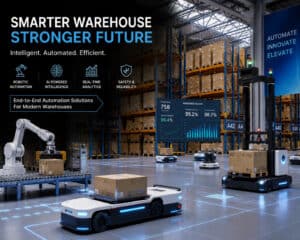
AMR-driven storage and retrieval that brings inventory to the picker instead of sending the picker to inventory. Floor travel — the largest single component of manual pick labor — drops dramatically, and pick accuracy rises because the system presents exactly one location at a time. For the long tail of slow-moving SKUs that defines high-mix distribution, goods-to-person automation is usually the highest-leverage move available.
Carton-flow pick modules with zone picking
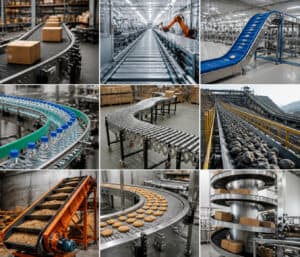
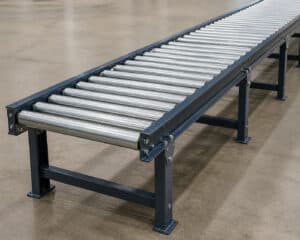
For high-velocity SKUs, zone-based pick modules with carton flow rack shelving concentrate thousands of facings into a compact footprint. Pick-to-light guidance takes the search out of each pick, and tote conveyor integration does the horizontal travel between zones. Critically, this handles the density of a hardware or fastener operation without requiring a complete facility rebuild.
Shipping sortation and WCS controls
Controls-driven sortation routes completed orders to the correct carrier lane, pack station, or staging area automatically. The warehouse control system underneath handles replenishment logic, wave management, and real-time visibility across every zone — the connective tissue that lets retail, e-commerce, and contractor orders share one building without sharing each other’s problems.
Scan, label, and verify
Scan tunnels, dimensioning, and print-and-apply labeling built into the outbound line. For operations serving retail accounts with compliance labeling requirements, this is not optional — and it cannot be an afterthought bolted on after the system is designed. Chargebacks are how retail partners tell you your labeling process needs work.
How to Know It’s Time
Some practical diagnostics for a high-SKU operation still picking manually:
- Your SKU count has grown significantly since your current pick setup was designed
- Inventory accuracy is a recurring issue that never quite gets resolved
- Pickers spend a visible share of the day walking to slow-moving locations
- Peak requires temp labor just to hold your normal error rate
- Retail compliance chargebacks are trending the wrong direction
- Replenishment regularly interrupts active picking
None of these fix themselves at higher volume. They scale with it.
Start With a Site Walk
If your operation carries more SKUs than your current picking system was designed for, the conversation is worth having. A site walk takes an hour. The analysis that comes out of it usually pays for itself before a system is even specified — because it tells you which picking method fits your actual inventory profile, which parts of your operation should stay exactly as they are, and where the practical upgrade path runs.
Ready to look at your operation? Schedule a site walk — no pitch, just an engineering conversation about how your building actually works.
Rick Maldonado works with distribution operations across the country on automation projects ranging from single-zone retrofits to full facility designs.
Rick Maldonado, Director of Business Development (713) 867-5309 | rick.maldonado@centuryconveyor.com
Want case studies and articles like this in your inbox? Sign up for the Century email blast.