Automated sortation plays an essential role in modern warehouse operations, distribution centers, and order fulfillment facilities. As businesses manage increasing order volumes, tighter shipping deadlines, and more complex inventory requirements, manually sorting packages and products can become a significant operational bottleneck. Automated sortation systems help address these challenges by moving products efficiently, directing items to their appropriate destinations, and reducing the amount of manual handling required throughout a facility.
Century Conveyor Systems provides automated material handling and sortation solutions designed to help warehouses and distribution centers improve throughput, streamline workflows, and optimize operational performance. Through engineered conveyor systems, sortation equipment, controls integration, and comprehensive project support, Century helps businesses develop automation solutions that align with their specific material handling requirements.
Whether a facility is upgrading an existing conveyor network or developing a new distribution operation, understanding how automated sortation works and what it can accomplish is an important first step.
Below are frequently asked questions about automated sortation and how Century Conveyor Systems helps businesses improve their material handling operations.
Table of Contents
1. What is automated sortation, and how does Century Conveyor Systems implement it?
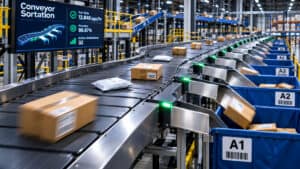
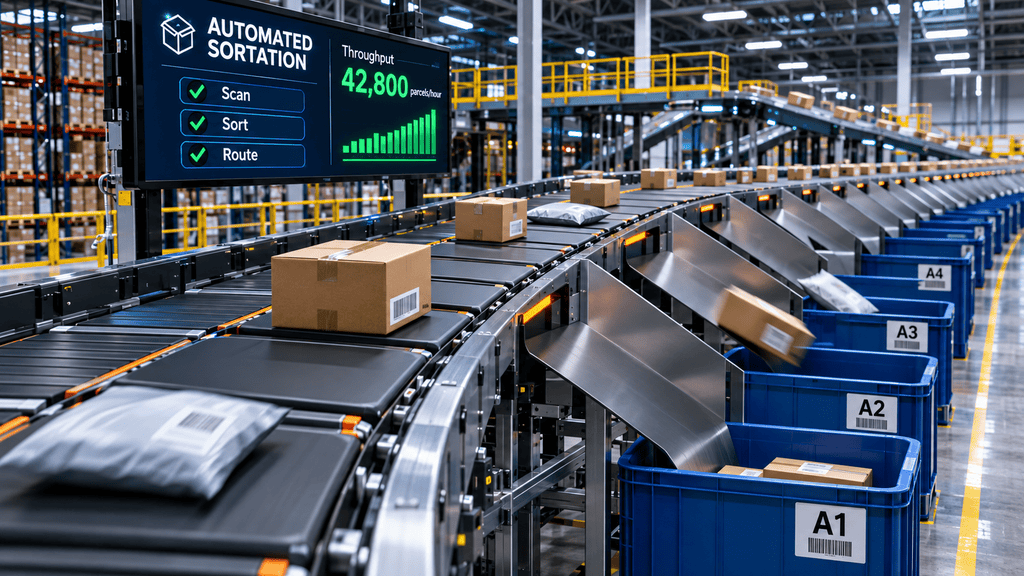
Automated sortation is the process of using mechanical equipment, conveyor systems, and automated controls to identify, organize, and direct products toward designated destinations within a warehouse or distribution center. Instead of requiring employees to manually transport and separate every package, an automated sortation system moves products through predetermined routes and directs them to the appropriate shipping lanes, packing areas, storage locations, or distribution points.
The primary purpose of automated sortation is to make product movement faster, more consistent, and less dependent on repetitive manual labor.
Century Conveyor Systems approaches automated sortation as part of a broader material handling and warehouse automation strategy. Rather than treating sorting equipment as an isolated component, the company engineers solutions that integrate with the facility’s overall conveyor network and operational requirements.
Century offers several types of sortation equipment, including:
- Shoe sortation: A conveyor-based solution that uses mechanical shoes to divert products toward designated destinations.
- Belt sortation: Systems that use moving belts to transport and distribute products through a facility.
- Tray sortation: Solutions that use individual trays to carry and direct products through a sorting process.
- Bombay distribution: A distribution approach included in Century’s sortation equipment offerings for routing products through material handling operations.
The appropriate system depends on factors such as package dimensions, product characteristics, required throughput, available floor space, and the number of destinations a facility needs to support.
By considering these operational variables, Century can engineer a sortation solution that supports the facility’s current requirements while accommodating future automation opportunities.
2. How does automated sortation improve warehouse productivity?
One of the most important advantages of automated sortation is its ability to reduce unnecessary product handling. In a manual sorting environment, employees may need to identify packages, move them between work areas, separate orders, and transport completed groups to their appropriate destinations. As order volume increases, these activities can create congestion and slow down the entire fulfillment process.
Automated sortation helps eliminate many of these repetitive movements by establishing a continuous, organized flow of products throughout the facility.
For example, a distribution center processing thousands of individual packages may need to separate products according to shipping destination, carrier, order number, or another operational requirement. An automated sortation system can move packages along a conveyor network and direct them toward designated lanes without requiring employees to manually carry each item between locations.
Century Conveyor Systems designs material handling solutions with the goal of increasing output while reducing labor costs and unnecessary manual interactions.
The productivity benefits extend beyond the sorting equipment itself. When properly integrated into the warehouse workflow, automated sortation can help:
- Reduce the time products spend moving between processing stages.
- Minimize bottlenecks associated with manual transportation.
- Improve the consistency of package distribution.
- Allow employees to focus on tasks that require human attention.
- Support higher processing volumes without relying exclusively on additional labor.
An important consideration is that productivity improvements depend on the entire system working together. Conveyor placement, sorting equipment, accumulation areas, controls, and downstream processes must all be coordinated. Century’s system integration approach helps businesses address these connected requirements rather than simply adding equipment without considering the broader operation.
3. Can Century Conveyor Systems customize automated sortation for different warehouse operations?
Yes. Automated sortation is not a one-size-fits-all solution. Different warehouses handle different products, process different order volumes, and operate under different physical and logistical constraints.
A facility distributing small individual packages, for example, may have very different sorting requirements from a distribution center handling large cartons, pallets, or oversized products. The number of sorting destinations, available floor space, conveyor configuration, and required processing speeds also influence equipment selection.
Century Conveyor Systems provides engineered material handling solutions designed around the needs of individual facilities.
The customization process can involve evaluating several important operational considerations:
Product characteristics: Package dimensions, weight, shape, and handling requirements influence which conveyor and sortation technologies are appropriate. Small polybags and irregular cartons, for example, may require different conveyor configurations from heavier packages.
Facility layout: Available floor space, building dimensions, existing equipment, and the location of shipping docks all influence how an automated sortation system should be designed.
Processing requirements: Businesses must consider how many products need to be sorted, how frequently orders arrive, and how quickly items must reach their destinations.
Downstream operations: Sortation equipment must connect effectively with other warehouse processes, including picking, packing, labeling, staging, and shipping.
Future growth: A system should account for anticipated changes in order volume, product mix, and operational requirements whenever possible.
Century’s engineering capabilities allow these factors to be considered during the design process. The result is a solution intended to fit the actual workflow of the facility instead of forcing employees to adapt their processes around an unsuitable equipment configuration.
4. How does automated sortation integrate with conveyor systems and order fulfillment?
Automated sortation is most effective when it operates as part of a connected order fulfillment system.
Order fulfillment includes the activities that take place between receiving an order and preparing the associated products for shipment. These activities can include picking, transporting, sorting, packing, labeling, and moving completed orders to the shipping dock.
Conveyor systems provide the transportation infrastructure that connects these processes. Automated sortation equipment builds on that infrastructure by directing products to the correct locations as they move through the facility.
Century Conveyor Systems offers a variety of conveyor and order fulfillment solutions that can support an integrated workflow.
For example, belt conveyors can provide stable transportation for small parcels, polybags, and irregularly sized cartons. Live roller conveyors can support packing lines, divert operations, and end-of-line applications. Conveyor diverts can move cartons from one conveyor line to another using mechanisms such as roller balls, skate wheels, rising platforms, swinging arms, and push trays.
These technologies can serve different purposes within a larger automated sortation operation.
Accumulation equipment can also play an important role. Zero-pressure and minimum-pressure accumulation systems help manage the spacing between products, reducing the potential for items to collide or sustain damage during transportation.
Other equipment, such as spiral conveyors and extendable conveyors, can help connect different facility levels or support loading and unloading operations.
The advantage of working with an integrated material handling provider is that these individual components can be evaluated as parts of one coordinated system.
Rather than focusing exclusively on sorting speed, Century considers how products enter the system, how they move between operational stages, and how they ultimately reach their intended shipping destinations.
5. Can automated sortation help reduce labor costs and operational errors?
Yes. Reducing repetitive manual work is one of the major reasons businesses invest in automated sortation.
Manual sorting requires employees to spend time identifying products, physically separating packages, transporting items, and organizing shipments. These responsibilities can consume substantial labor resources, particularly in high-volume distribution environments.
Automated sortation reduces the need for employees to perform every movement manually. Instead, conveyor systems and automated equipment handle much of the transportation and distribution process.
This can help businesses use their existing workforce more effectively.
For instance, employees who previously spent significant portions of their shifts moving cartons between sorting areas may be able to focus on order verification, exception handling, packing, or other responsibilities that benefit from human involvement.
Automated material handling can also contribute to more consistent product movement. A properly engineered system follows defined transportation paths and sorting configurations, helping reduce the variability associated with manual handling.
Century’s order fulfillment solutions emphasize improving output performance, reducing errors that can cause returns or product breakage, and processing items faster with fewer manual interactions.
However, automation should not be viewed as a complete replacement for operational oversight. System design, controls configuration, maintenance, and employee training remain important factors in achieving reliable results.
The goal is to establish a more efficient division of responsibilities between automated equipment and warehouse personnel.
By reducing unnecessary manual activities and creating more predictable product flows, businesses can work toward lower operating costs and improved fulfillment consistency.
6. What role do controls engineering and warehouse software play in automated sortation?
The mechanical components of an automated sortation system are only part of the overall solution. Controls engineering and software help coordinate equipment operation and ensure products move through the intended processes.
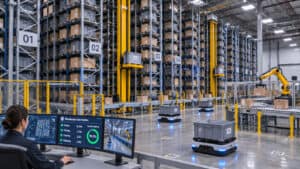
Automated warehouses rely on control systems to manage conveyor movements, equipment interactions, and material handling sequences. Without appropriate controls, even a well-designed conveyor network may struggle to operate as an integrated system.
Century Conveyor Systems offers controls engineering, control panel design and fabrication, programmable logic controls (PLC), and warehouse control system (WCS) solutions.
These capabilities are important because different pieces of equipment must work together to support the desired workflow.
For example, a sorting operation may involve several conveyor sections, multiple divert points, accumulation zones, and shipping destinations. Controls engineering helps coordinate the operation of these components so products can move through the facility in an organized manner.
Warehouse software also contributes to operational coordination.
A warehouse management system (WMS) generally supports inventory and order management activities, while a warehouse control system (WCS) helps coordinate the execution of material handling equipment and processes.
When properly integrated, these technologies can support a more connected relationship between warehouse information and physical product movement.
For businesses considering automated sortation, it is important to evaluate software and controls requirements during the initial design process. Doing so helps ensure that equipment selection, system configuration, and operational objectives are aligned.
Century’s combination of mechanical engineering, controls engineering, and material handling integration capabilities provides businesses with a coordinated approach to developing warehouse automation systems.
7. Can Century Conveyor Systems install automated sortation in an existing warehouse?
Automated sortation does not necessarily require a business to construct an entirely new distribution facility. Existing warehouses may have opportunities to improve performance by upgrading conveyor equipment, introducing automated sorting capabilities, or modernizing older material handling infrastructure.
Century Conveyor Systems provides system design, project management, mechanical engineering, electrical installation, and retrofit and modernization services.
These capabilities are particularly relevant for businesses that want to improve their operations while continuing to use their existing facility.
A retrofit project typically begins with an evaluation of the current material handling environment. This may include reviewing conveyor layouts, identifying workflow bottlenecks, assessing equipment condition, and determining where additional automation could improve performance.
The next step is developing a configuration that addresses the facility’s operational priorities.
For example, a warehouse experiencing congestion around its shipping department might benefit from additional conveyor capacity or improved product diversion. Another facility may need to replace outdated equipment with a more suitable sortation configuration.
Project phasing can also be important. Depending on the facility and project requirements, modernization may need to be organized around operational schedules to help minimize disruption.
Century manages projects from system design and validation through installation and startup support. This turnkey approach allows businesses to work with one integration partner across multiple stages of an automation project.
For facilities with existing infrastructure, the objective is to identify practical opportunities for improvement while considering equipment compatibility, available space, and long-term operational needs.
8. What maintenance and support are available for automated sortation systems?
Long-term system performance depends on more than selecting the right equipment. Automated sortation systems contain mechanical, electrical, and control components that require appropriate maintenance to support reliable operation.
A maintenance strategy helps businesses identify potential equipment issues, address component wear, and reduce the risk of unexpected interruptions.
Century Conveyor Systems offers conveyor preventative maintenance, conveyor repair services, replacement parts, and ongoing technical support.
Its service capabilities include certified conveyor technicians, replacement equipment and parts quotations, and maintenance support. The company also highlights more than 40 years of conveyor experience and a service department equipped to support mechanical conveyor care.
Preventative maintenance is especially important in facilities where conveyor equipment operates throughout the day and plays a central role in shipping and distribution.
A maintenance program may involve inspecting conveyor components, checking mechanical conditions, evaluating electrical systems, and identifying parts that may need attention.
Replacement parts availability is another important consideration. Having access to appropriate components can help facilities address equipment problems and maintain their material handling operations.
Century also offers 24/7 support and parts and service programs as part of its broader service capabilities.
When evaluating an automated sortation investment, businesses should consider maintenance and service requirements alongside initial equipment costs. Understanding how a system will be supported after installation is an important part of evaluating its long-term value.
9. How can businesses determine whether automated sortation is the right investment?
The decision to implement automated sortation should begin with an evaluation of existing operational challenges and future business objectives.
Not every facility requires the same level of automation. Some warehouses may benefit from relatively simple conveyor diverts, while high-volume distribution centers may require more comprehensive sortation equipment and integrated controls.
Businesses should begin by identifying where their current material handling processes are creating inefficiencies.
Common indicators that automated sortation may be worth considering include:
- Increasing order volumes that are becoming difficult to manage manually.
- Labor-intensive sorting and product transportation processes.
- Congestion around packing, staging, or shipping areas.
- Difficulty maintaining consistent order processing times.
- Frequent handling-related errors or product damage.
- Limited capacity to accommodate future operational growth.
After identifying these challenges, businesses should evaluate the potential impact of automation.
This includes considering equipment investment, expected labor savings, throughput improvements, facility requirements, maintenance expenses, and the potential for future expansion.
Century Conveyor Systems approaches automation projects through system design and validation, helping businesses evaluate their operational needs before implementing a solution.
The company also offers multiple material handling technologies, allowing facilities to consider different levels of automation based on their requirements.
For some businesses, the right solution may involve a dedicated sortation conveyor. Others may benefit from combining conveyors, robotic fulfillment, controls integration, and additional order fulfillment equipment.
The most important consideration is whether the proposed system addresses measurable operational challenges and supports the facility’s long-term objectives.
10. Why choose Century Conveyor Systems for automated sortation?
Selecting an automated sortation provider is an important decision because the system can influence nearly every stage of warehouse transportation and distribution.
Businesses need more than equipment. They need a solution that considers facility layout, product characteristics, processing requirements, controls integration, installation, and long-term service.
Century Conveyor Systems offers a full-service approach to material handling automation, supporting projects from initial system design through installation, startup, and ongoing parts and service.
Several capabilities distinguish its approach:
Turnkey project management: Century manages multiple stages of automation projects, including system design, validation, installation, and startup support. This provides businesses with a coordinated project approach.
Broad equipment capabilities: Its solutions include shoe, belt, tray, and bombay sortation, along with conveyor systems, robotic fulfillment, palletizing, and other material handling technologies.
Engineering and controls integration: Mechanical engineering, controls engineering, PLCs, WMS, and WCS capabilities help connect equipment and software into a coordinated warehouse operation.
Order fulfillment expertise: Century designs solutions intended to improve output performance, reduce unnecessary manual interactions, and support more efficient product movement.
Ongoing service capabilities: Preventative maintenance, conveyor repair, replacement parts, and technical support help address the operational requirements that continue after installation.
Century also reports more than 1,500 installations over the past five years, demonstrating its experience delivering material handling projects across different facilities and applications.
Ultimately, choosing Century means working with a systems integrator that considers the broader warehouse environment rather than focusing exclusively on individual pieces of equipment.
Final Thoughts: Is Automated Sortation the Next Step for Your Warehouse?
Automated sortation can help warehouses and distribution centers improve throughput, reduce repetitive labor, organize product movement, and create more efficient order fulfillment operations.
However, achieving these benefits requires selecting equipment that matches the facility’s actual requirements. Conveyor configuration, sorting technology, controls integration, available space, and ongoing maintenance all contribute to the success of an automation project.
Century Conveyor Systems provides engineered automated sortation and material handling solutions designed to address these interconnected challenges. From individual conveyor components to comprehensive turnkey automation projects, its capabilities help businesses develop systems that support their operational goals.
For companies looking to modernize an existing warehouse, expand distribution capacity, or improve order fulfillment performance, automated sortation is worth evaluating as part of a broader material handling strategy.
To explore automated sortation options, businesses can contact Century Conveyor Systems to discuss their facility requirements and begin planning a customized automation solution.