One Relationship. The Full Picture. Inside the LaFayette Engineering Family of Companies.

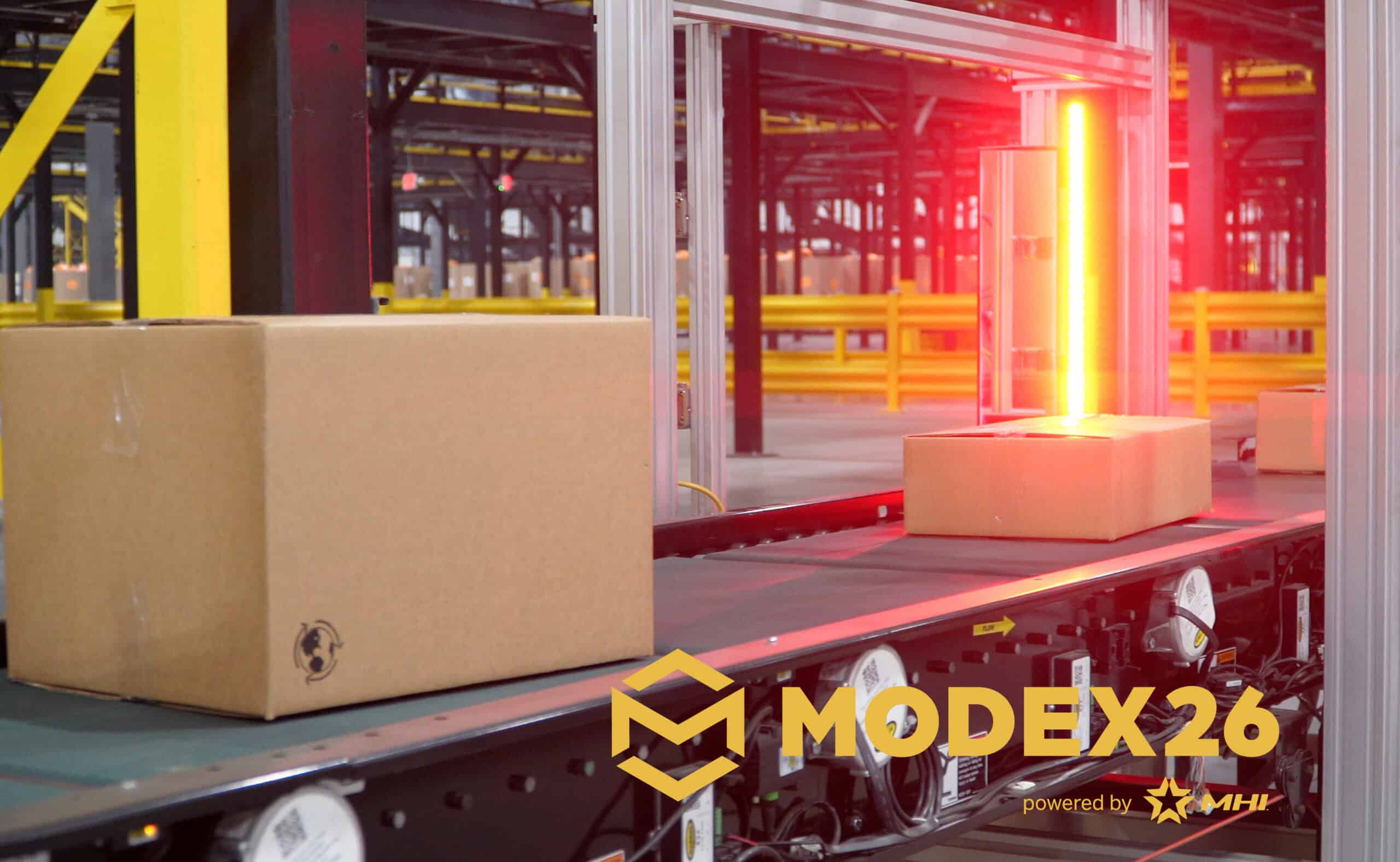
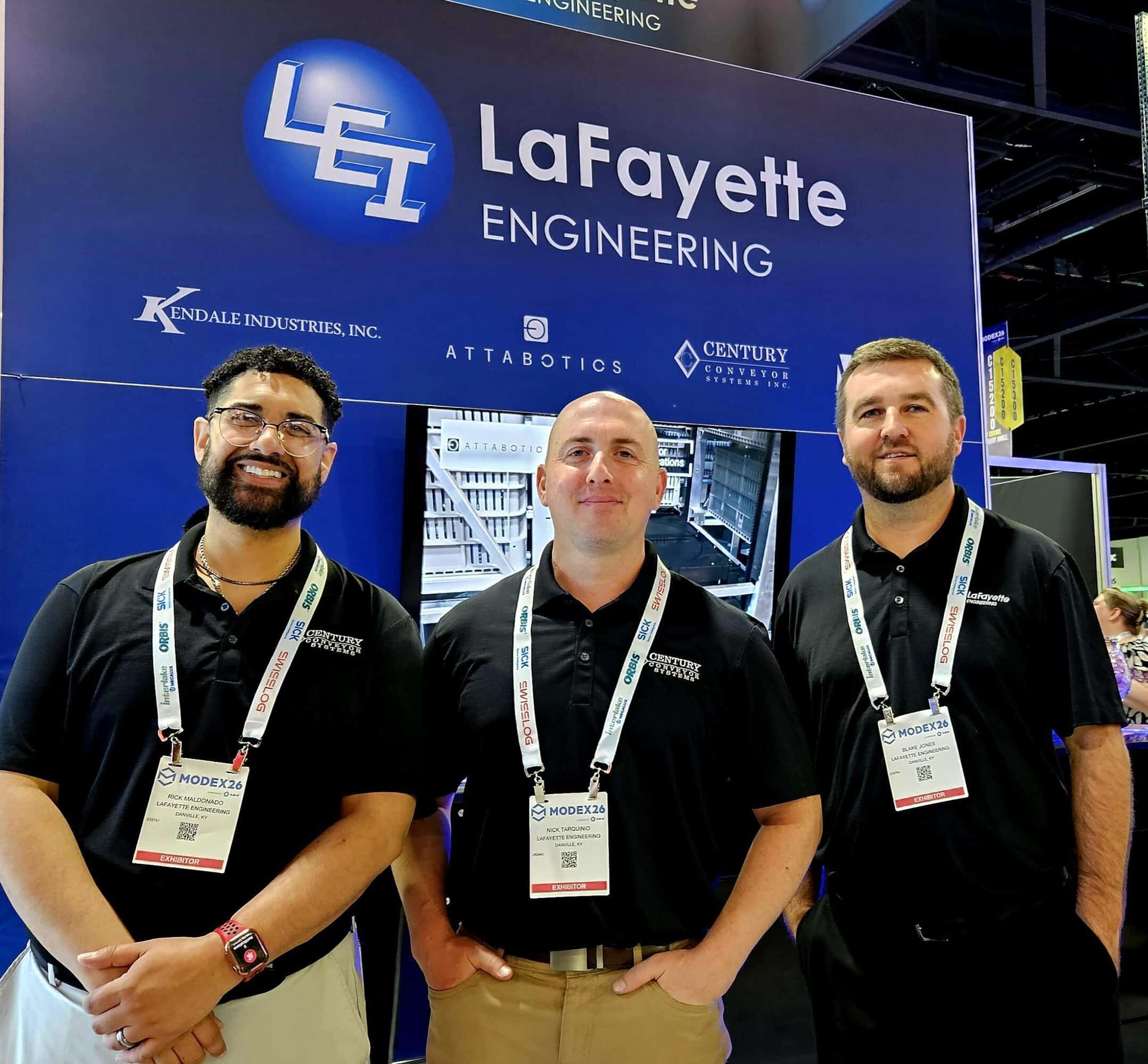
One of the biggest conversations at MODEX 2026 happened the moment a visitor looked around Booth C14787 and asked a question that came up over and over throughout the week:

“Wait — Century, MESH, and Kendale are all connected?”

The answer is yes. And understanding how they fit together is one of the most important things a material handling buyer can know heading into an automation project in 2026.

The LaFayette Engineering Family of Companies

LaFayette Engineering is the parent company behind a family of businesses that together cover the full lifecycle of modern warehouse and distribution automation:

  • Century Conveyor Systems — conveyor, sortation, and material flow systems
  • MESH Automation — controls, robotics integration, and intelligent induction sorting
  • Kendale Industries — fabrication and mechanical engineering depth
  • Attabotics — high-density cube storage and goods-to-person robotics

Each company brings its own expertise. Together, they offer something that very few material handling providers can match: a single relationship that can design, build, integrate, and support a complete automation system — from the physical conveyor line through the software layer that orchestrates it all.

Why Integration Matters More Than It Used To

For most of the past decade, material handling buyers built systems from multiple independent vendors. A conveyor from one company. Controls from another. Robotics from a third. Software from a fourth. And then a systems integrator to stitch it all together — and absorb the blame when the pieces didn’t communicate properly.

MODEX 2026 signaled clearly that this model is losing favor. Buyers want fewer relationships and more accountability. They want a partner who owns the full scope of the system — not just the portion they manufacture. And they want someone who will still pick up the phone three years after installation when something needs attention.

The LaFayette family is built for exactly that conversation.

What Each Company Brings to the Table

Century Conveyor Systems

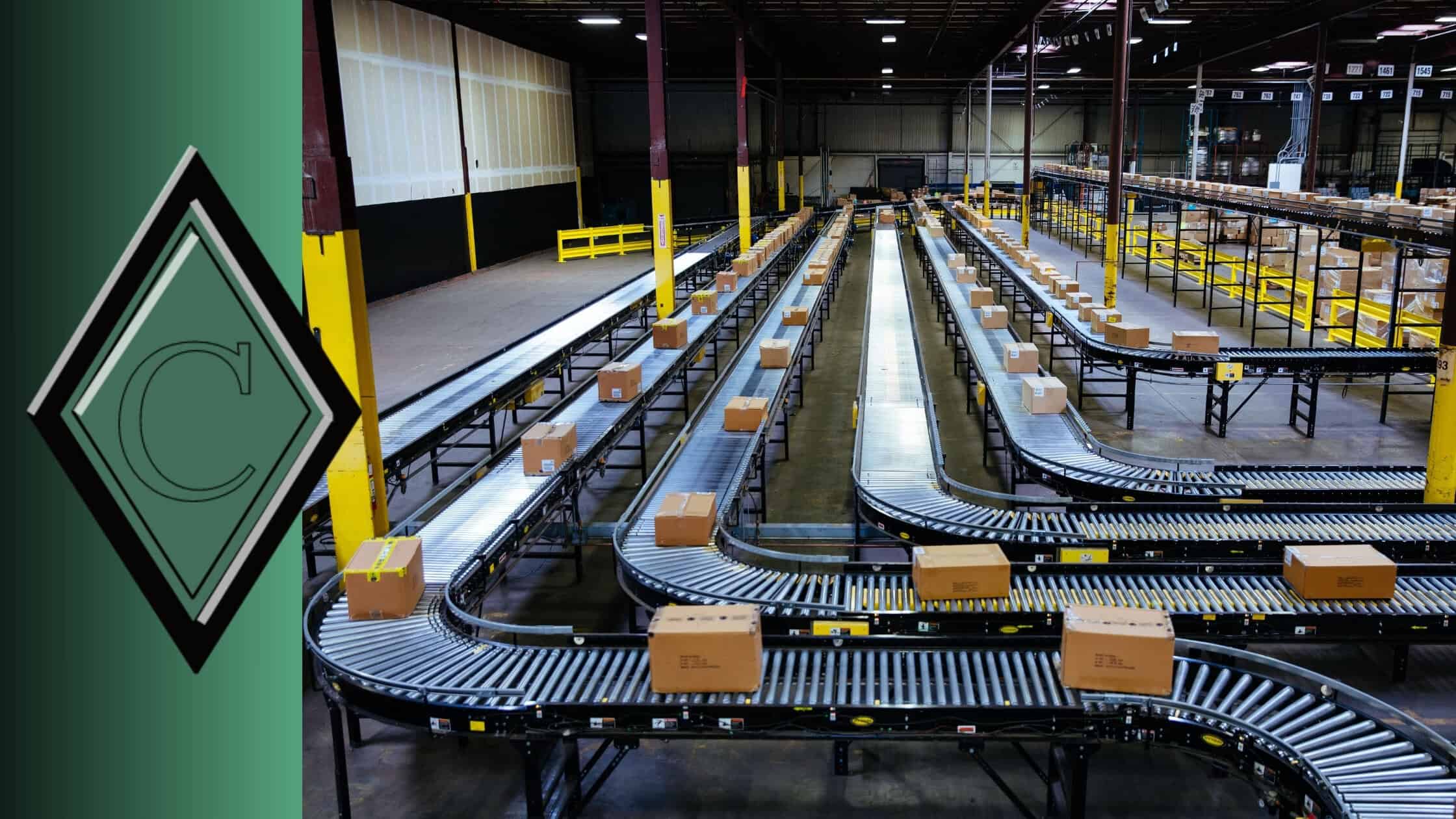
Century’s core is the physical execution layer of a warehouse system: conveyor lines, motor driven roller (MDR) systems, high-speed sortation, print and apply, weighing and dimensioning. These are the systems that move product through a facility — the mechanical backbone of any automated distribution operation.

Century’s portfolio includes 24V zero-pressure accumulation conveyor, high-speed sorters capable of handling mixed SKU streams, and inline data capture systems that eliminate manual scanning and weigh stations. After decades of installations across industries, Century’s product lines are refined and reliable — with a service network to match.

LaFayette Engineering (Controls & Software)

LaFayette Engineering is the intelligence layer — warehouse control systems (WCS), controls engineering, and the software that coordinates the full operation. In an era where robots, conveyors, picking systems, and human labor all need to function as a single coordinated environment, the controls and orchestration layer is increasingly where systems succeed or fail.

LaFayette Engineering’s role in the family isn’t just to wire up the conveyor. It’s to make the entire system think clearly and act fast — managing throughput, labor, SLAs, and exceptions from a single layer of intelligence.

MESH Automation

MESH Automation brings robotics integration and advanced sortation capability — including an induction sorter that drew significant attention on the MODEX floor. MESH fills the gap between the mechanical conveyor system and the robotic platforms that increasingly operate alongside it, handling the controls and integration work that makes mixed-automation environments function smoothly.

Attabotics

Attabotics is the family’s goods-to-person robotics platform — a high-density cube storage system that uses robots to retrieve and deliver items to human operators, dramatically reducing the footprint required for a given storage volume while improving pick accuracy and speed.

Attabotics relaunched under LaFayette Engineering with a sharper focus on deployment discipline: engineering depth, improved customer support infrastructure, and reliability improvements that make the technology more accessible and easier to adopt in real projects. The new integrator partnership program announced at MODEX 2026 expands access to the platform through established integration channels — making it easier for buyers to bring Attabotics into projects alongside existing Century and LaFayette Engineering relationships.

The Practical Meaning for a Buyer

Here’s what the LaFayette Engineering family means in plain terms for a distribution or manufacturing operation evaluating automation:

One conversation can cover the full system. Rather than meeting with four different vendors, getting four different proposals, and trying to reconcile them into a coherent plan, a buyer can work with one team that understands the full architecture.

Integration risk goes down. When the conveyors, controls, robotics, and software come from companies that work together daily, the integration work is less painful, less expensive, and more likely to deliver on the design intent.

Support is coherent. When something needs attention after go-live, there’s one number to call — and the person on the other end understands the full system, not just their piece of it.

The solution can be right-sized. Not every operation needs every piece of the family’s portfolio. Some projects are Century-only. Some add MESH. Some are full-stack builds with Attabotics at the center. The family’s depth means the solution can be matched to the operation — not the other way around.

What MODEX 2026 Confirmed

Three days on the floor at MODEX confirmed what the LaFayette Engineering family has been building toward: the industry is moving toward connected, integrated, serviceable automation — and the demand for a single partner who can deliver the full picture is accelerating, not slowing down.

Century Conveyor Systems is that entry point for a lot of those conversations. It’s where many customer relationships start. And increasingly, it’s where they expand — because the family’s depth means Century can grow with a customer’s operation over time.

If your operation is evaluating automation — whether that’s a first conveyor system, a controls upgrade, a goods-to-person pilot, or a full distribution center build — the Century Conveyor team is the right starting point.

Contact Century Conveyor Systems:

6 Material Handling Trends That Defined MODEX 2026

Every two years, MODEX gives the material handling and supply chain industry a clear read on where the market is headed. In 2026, the message from the Georgia World Congress Center floor was unusually consistent: buyers aren’t chasing flashy technology anymore. They want automation that is connected, intelligent, supportable, and — above all — practical.

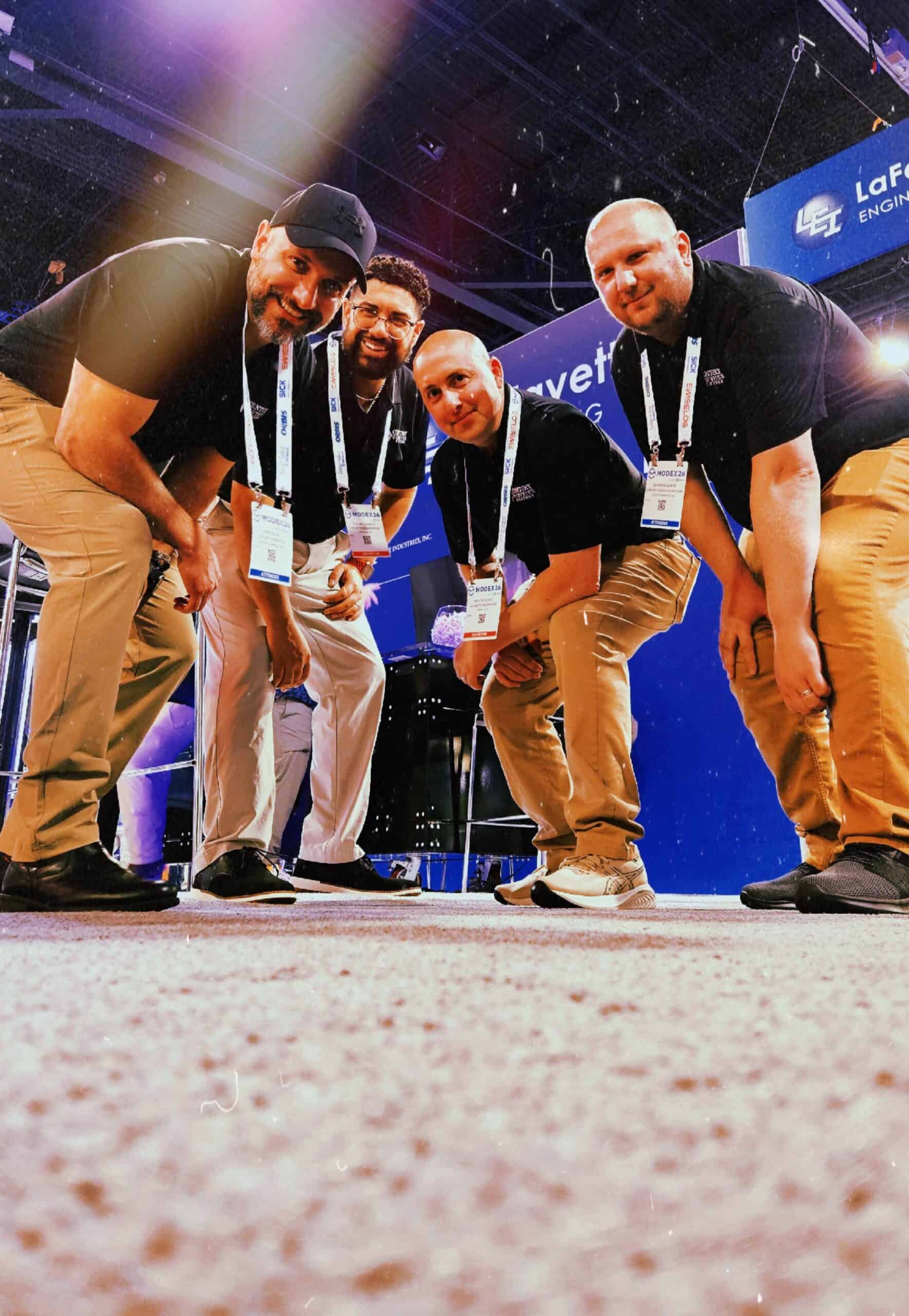
Rick Maldonado, New Business Development Manager at Century Conveyor Systems, spent three days walking the floor and hosting conversations at Booth C14787. Here’s what he saw.

1. The Market Wants Complete Solutions, Not Disconnected Pieces

MODEX 2026 leaned hard into end-to-end supply chain integration. Vendors who showed up with a single product line were getting a different reception than those who could demonstrate how equipment, robotics, software, and execution layers work together.

Buyers are tired of stitching together systems from five different vendors and managing the gaps between them. They want one partner who can own the full picture — from mechanical conveyor and sortation through controls, software, and warehouse execution.

This is the core value proposition of the LaFayette Engineering family. Century Conveyor handles material flow. LaFayette Engineering brings controls, WCS, and software depth. Attabotics adds a differentiated goods-to-person robotics platform. Together, it reads as a genuine integrated solution stack — not a bundled sales pitch, but an architecture that actually fits together.

2. Software Orchestration Across Mixed Automation Is Now Table Stakes

The clearest single theme at MODEX 2026: the warehouse is no longer a collection of independent systems. It’s a coordinated environment — and the intelligence that coordinates it matters as much as the physical hardware.

Buyers want software that can manage robots, conveyors, picking operations, labor, throughput targets, and SLAs from a single layer of intelligence. That capability is LaFayette Engineering’s core competency in controls and warehouse execution systems, and it reinforces Century’s value proposition: mechanical systems are only as good as the intelligence running them.

If your conveyor is fast but your software can’t prioritize, route, and react in real time, you’re leaving throughput on the table.

3. Customers Want Automation That’s Practical and Scalable — Not Overbuilt

The era of over-automating on day one is fading. MODEX 2026 made clear that buyers are still planning to spend on innovation — but with discipline. They want to understand the specific problem they’re solving, how the system performs at scale, and how it adapts as their operation grows or changes.

Right-sized automation, built for the operation you have today with room to grow, is the new standard. That philosophy has always been central to Century’s approach: practical systems, built well, designed to grow with you. It’s not a new position — it’s just the one the market finally caught up to.

4. Reliability, Support, and Safety Have Moved Back to the Top of the List

Speed and throughput aren’t the only metrics operators care about anymore. At MODEX 2026, buyers were asking pointed questions about safety standards, system resilience, maintainability, and what long-term support actually looks like.

This shift matters because it rewards companies that have been doing the unglamorous work — building service networks, investing in parts availability, training teams to respond fast when something breaks. For Century Conveyor and the LaFayette Engineering family, this is a natural strength. A reputation for support and reliability is hard to build and easy to lose. The LaFayette family has it.

Nick Tarquino, Century’s Service Manager, was on the floor at MODEX specifically for these conversations — because for a lot of buyers, support isn’t an afterthought. It’s a deciding factor.

5. Innovation Is Back — But Only If You Can Deploy It

After a period where buyers were skeptical of anything that looked too cutting-edge, MODEX 2026 signaled that innovation is back in favor — with a catch. The question isn’t “is this technology impressive?” It’s “can you actually implement it, support it, and deliver it on time?”

This is exactly where Attabotics’ relaunch under LaFayette Engineering has found traction. The repositioning focused on engineering depth, improved customer support infrastructure, and reliability — not just the novelty of cube storage robotics. Pair that with Century and LaFayette Engineering’s track record of integration and service delivery, and you have a story that’s both forward-looking and credible.

The market rewards innovation that ships. Century and its family of companies deliver both.

6. Partnership and Channel Access Are More Valuable Than Ever

Attabotics’ new integrator partnership program was one of the notable announcements at MODEX 2026, and the reception made clear why: the industry wants broader, easier access to advanced automation through established integration channels. Buyers don’t always want to build a new vendor relationship from scratch — they want to work through partners they already trust.

Century Conveyor and LaFayette Engineering don’t just sell alongside Attabotics. They make Attabotics more deployable, more supportable, and easier to adopt in real projects. That’s a different value proposition than reselling a product — it’s integration depth, and it’s what gives the LaFayette family an advantage in competitive conversations.


What These Six Themes Mean for Your Operation

Every one of these trends points in the same direction: toward connected, intelligent, serviceable automation that is built to last, easy to support, and sized correctly for the operation at hand.

That is the Century Conveyor Systems position in a sentence. And it’s the story that played out across hundreds of booth conversations at MODEX 2026.

If the trends above match the questions you’re asking about your operation — whether it’s a full system build, a controls upgrade, a smarter WMS layer, or something you haven’t quite put into words yet — the team at Century Conveyor is ready to talk.

Contact Century Conveyor Systems:

What MODEX 2026 Was All About

MODEX is the supply chain and material handling industry’s largest North American trade show, held biannually in Atlanta. For companies like Century Conveyor Systems, it’s more than a showcase — it’s a real-time read on where the market is, what buyers are prioritizing, and what challenges are still unsolved on warehouse and distribution floors across the country.

In 2026, the show attracted thousands of attendees across four days at the Georgia World Congress Center. Century Conveyor occupied Booth C14787 in Hall C with a full team of six — engineers, service leads, and sales professionals — ready for focused, technical conversations.

The Team on the Floor

Century brought a cross-functional team to Atlanta that covered every stage of the customer relationship:

  • Bill Ostermeyer, General Manager — 35+ years of material handling experience, guiding customers from concept through execution
  • Shawn Haslach, Engineering Manager — overseeing system design for scalable, practical automation
  • John Silva, Senior Sales Engineer — bridging technical depth with real-world operational problem solving
  • Jim Santore, Senior Sales Engineer — 40+ years building customer relationships and matching operations with the right automation approach
  • Rick Maldonado, New Business Development Manager — identifying where automation creates meaningful ROI for prospective customers
  • Nick Tarquino, Service Manager — focused on uptime, long-term support, and keeping systems running well past installation

Having this range of expertise on the floor meant visitors could have the right conversation — whether they were troubleshooting an existing system, exploring a first automation project, or asking about the capabilities of Century’s parent company, LaFayette Engineering.

The Conversations That Defined the Week

Day one was productive. Day two was packed. Day three was the kind of closer that leaves you with a full pipeline and a list of follow-ups.

The most common question at Booth C14787 wasn’t about a specific product or price — it was about capability. With Attabotics now part of the LaFayette Engineering family alongside Century Conveyor and MESH Automation, visitors wanted to understand the full picture: what does one relationship actually get you?

The answer is a complete automation ecosystem — conveyor and sortation from Century, controls and warehouse execution software from LaFayette Engineering, and high-density goods-to-person technology from Attabotics. One family of companies. One point of contact. The full lifecycle.

Products and Platforms That Drew Attention

Several product lines generated consistent interest throughout the show:

  • 24V conveyor and MDR (Motor Driven Roller) systems — the core of Century’s portfolio, sharper and more refined than ever
  • High-speed sortation — always a draw for distribution center operators managing high SKU counts and time-sensitive throughput
  • Print & apply and weighing & dimensioning — inline data capture systems that reduce manual labor and improve accuracy
  • The LMS (Logistics Management System) platform — Century’s software layer for operational control and real-time visibility
  • MESH Automation’s induction sorter — a high-interest item from the LaFayette family that pairs naturally with Century’s conveyor systems

Why the Timing Matters

One of the most common themes in booth conversations was urgency — specifically, the gap between when a company decides to automate and when a system actually goes live.

Projects like these take 6–9 months from signed purchase order to installation — and that timeline doesn’t include the discovery, engineering, and planning that happens before a contract is signed. For operations planning around Q4 2026 or Q1 2027, the conversation needs to start now.

The capital is there in most operations. The labor market continues to make manual fulfillment difficult to scale. And automation — done right, at the right size for your operation — is more accessible than it’s ever been.

The Show Is Over. The Work Continues.

MODEX 2026 was a great week for Century Conveyor Systems. But the real value of a trade show isn’t the booth traffic — it’s what gets built afterward.

If you were at the show and want to continue a conversation, or if you weren’t able to make it to Atlanta and want to understand what the LaFayette Engineering family can do for your operation, Century’s team is ready.

Contact Century Conveyor Systems:

Century Conveyor at MODEX 2026: What We’re Bringing to the Floor

automated_sortation_equipment_food_distribution

MODEX 2026 is the premier event in material handling and supply chain technology, and every edition makes one thing clear: the industry is moving fast. New automation technologies are maturing, operator expectations are rising, and the pressure to do more with constrained capital and labor resources is intensifying across every market segment.

Century Conveyor is heading to MODEX 2026 with a focused agenda. We’re not there to show you everything—we’re there to have the right conversations with the right people about the real challenges they’re facing on the floor. Here’s a preview of what we’re bringing, what we’ll be discussing, and why this year’s show is particularly relevant for the operations we serve.

The Conversation We Keep Hearing: Retrofit Before You Replace: MODEX 2026

If there’s one theme that has defined our sales conversations over the past several months, it’s this: more operations are asking about retrofitting and modernizing their existing systems than at any point in recent memory.

The reasons aren’t hard to identify. Capital budgets are under pressure. Lead times for new equipment have been unpredictable. And a generation of conveyor systems installed in the 2010s is now reaching the age where controls and software are becoming the limiting factor, even when the mechanical infrastructure is still fundamentally sound.

At our booth, we’re ready to have detailed conversations about what retrofit and modernization actually looks like—and what it costs and delivers compared to full system replacement. This isn’t a canned pitch. It’s a real conversation, grounded in the specifics of what we’re seeing in the field and what we’ve learned from executing retrofit projects across a wide range of facility types and market segments.

If your facility is running on aging PLCs, outdated HMIs, or a controls architecture that’s limiting your visibility and throughput, this is the conversation you should be having at MODEX. Come find us.

HMI Conveyor Works: Modern Interfaces for Any System

One of the solutions we’re discussing at MODEX is Century’s HMI Conveyor Works program—our approach to modernizing the human-machine interface layer of existing conveyor systems.

Operators in many facilities are still working with interfaces that were designed a decade or more ago. They’re interpreting cryptic alarm codes, navigating unintuitive menu structures, and getting far less real-time information than they need to run an efficient operation. When something goes wrong, diagnosing the fault takes longer than it should. And when labor turnover brings new operators into the mix—which is a constant reality in most DCs—the learning curve on legacy systems is steep.

Modern HMIs change all of that. Intuitive graphical interfaces surface system status clearly. Alarm management systems don’t just alert—they log, prioritize, and track faults through resolution. Performance dashboards give supervisors real-time throughput and zone health data. Remote access capability means your controls engineers can diagnose issues without being physically on the floor.

What makes Century’s approach distinctive is that these upgrades are designed to work with your existing conveyor infrastructure. You’re not buying a new system. You’re upgrading the interface and intelligence of the system you already have.

We’ll have materials and demonstrations available at the booth. If your operation is running on aging HMIs, plan to spend some time with our controls team.

The LMS Gen 4: Electromagnetic Switching for Your Existing Sorter

For operations running sliding shoe sortation systems, we’re featuring the LMS Gen 4—a next-generation electromagnetic switch unit developed through our partner network with Lafayette Engineering.

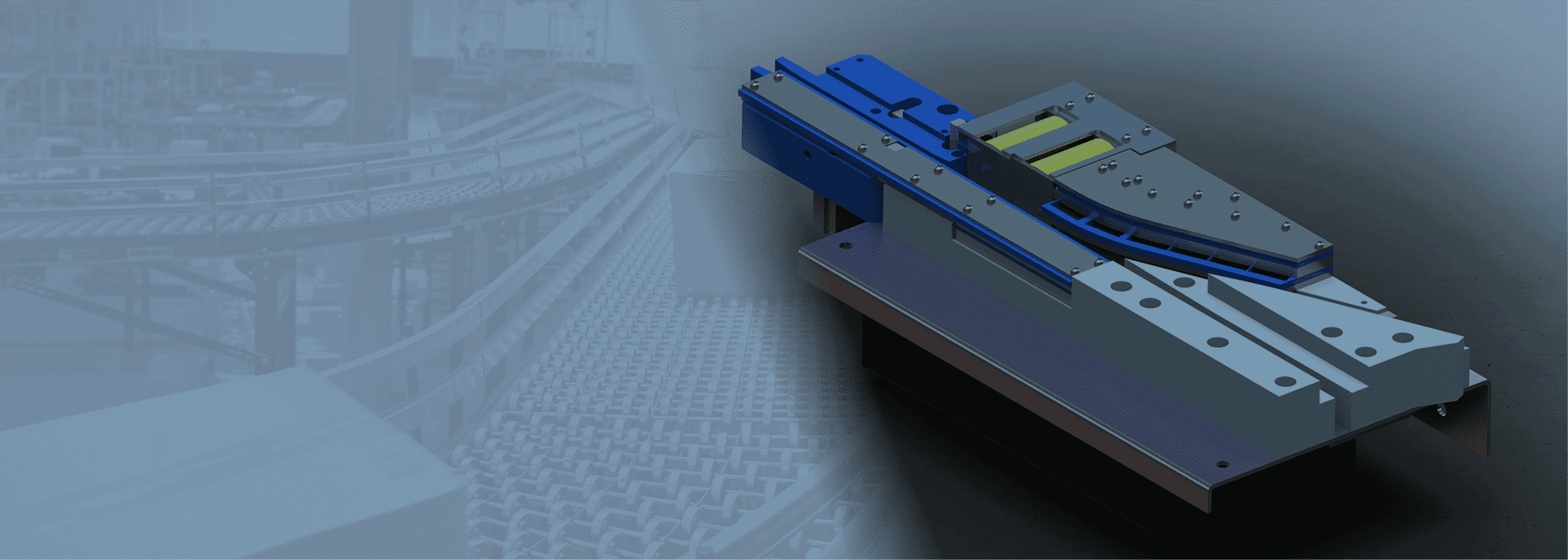
The LMS Gen 4 is designed to address one of the most persistent maintenance challenges in sliding shoe sorters: divert reliability and durability. Traditional mechanical divert switches are subject to wear, misalignment, and maintenance-intensive adjustment. The LMS Gen 4’s electromagnetic actuation mechanism eliminates the mechanical components most prone to failure, delivering faster, more reliable switching with reduced maintenance requirements.

For operations that are running high-volume sortation and dealing with divert reliability issues, the LMS Gen 4 is a targeted fix that doesn’t require replacing the sorter. It’s the kind of precision modernization that extends system life and improves throughput without the cost and disruption of a full sortation system replacement.

We’ll be talking through specific applications and retrofit scenarios at the booth. If you’re running a sliding shoe sorter and dealing with divert issues, bring those questions.

Robotics: What We’re Seeing, What’s Ready Now

Robotics is always a major theme at MODEX, and 2026 is no different. The show floor will be full of robotic solutions at various stages of maturity—from proven technologies with extensive deployment histories to emerging systems that are still finding their footing in real-world operations.

Our team’s perspective on robotics is grounded in what we’re actually deploying and integrating in the field. We work with robotic induction systems, autonomous mobile robots (AMRs) for in-facility transport, and robotic palletizing cells—and we have clear views on where each technology delivers reliable ROI and where the real-world deployment experience doesn’t yet match the trade show presentation.

At MODEX, we’ll be sharing that perspective honestly. If you’re evaluating robotic solutions and want a practical view on readiness, integration requirements, and payback, our team is a good resource. We don’t have a stake in selling you a specific robot brand—we have a stake in building you a system that works.

Come with your specific throughput challenges, your facility constraints, and your questions. That’s the conversation we’re set up to have.

Market Segments We’re Focused On

Century’s MODEX presence this year reflects the range of market segments we’re actively working in. Our conversations and materials are particularly relevant for:

  • 3PL and fulfillment operations managing multi-client environments and variable volume demands
  • Distribution centers evaluating their conveyor infrastructure against modernization and retrofit options
  • E-commerce and direct-to-consumer operations dealing with throughput growth and sortation performance challenges
  • Food and beverage distribution facilities with specific hygiene and durability requirements for conveyor equipment
  • Retail distribution operations dealing with omnichannel complexity and increasing SKU velocity

If your operation falls into any of these categories—or if you’re working on a challenge that doesn’t fit neatly into a category—we want to hear about it.

Schedule Time Before the Show

MODEX is a busy show, and the most productive meetings are the ones that are planned. If you want to have a detailed technical conversation with Century’s engineering team—whether about a specific retrofit opportunity, a new system project, or a challenge you’re working through—reach out before the show to schedule time.

We’ll have project engineers, controls specialists, and operations consultants on site. The conversation you have at the booth can turn into a site assessment, a system concept, or a proposal as quickly as you want it to.

Visit centuryconveyor.com/contact-us to reach out, or come find us at the show. We’ll be there, ready to talk.

Robotic Induction: The Smart Way to Feed Your Sortation System

automation_market_growth_section_image_2026_automation_blog

Every sortation system has a limit. For most facilities, that limit isn’t set by the sorter itself—it’s set by how fast product can be inducted into the sortation system in the first place.

Manual induction is one of the most labor-intensive and throughput-limiting tasks in a warehouse or distribution center. Human induction operators are responsible for placing individual packages, polybags, or small cartons onto the sortation conveyor at a consistent pace and proper orientation. The job is repetitive, physically demanding, and highly sensitive to staffing levels and fatigue.

When induction operators fall behind—because of volume spikes, worker fatigue, staffing shortages, or simply the natural variability of human performance—the sorter slows down or backs up. The downstream operation feels it immediately. Throughput drops. Ship windows get tighter. And the fixes are expensive: more headcount, overtime, or accepting the throughput hit.

Robotic induction solves this problem at the root.

What Is Robotic Induction?

Robotic induction uses automated robotic systems—typically vision-guided robotic arms or gantry systems—to pick individual items from a bulk presentation (typically a conveyor, tote, or bin), identify them, orient them properly, and place them onto the induction conveyor at the controlled pace the sortation system requires.

The process involves several integrated technologies working in concert:

  • Vision systems that identify individual items in a bulk or semi-random presentation
  • AI-powered pick planning that determines the optimal pick sequence and grasp point for each item
  • Robotic arms with appropriate end-of-arm tooling to handle a variety of package types, sizes, and weights
  • Integration with the WCS or sorter controls to maintain proper item spacing and induction rate
  • Barcode scanning and divert logic that routes each item to its correct destination within the sortation system

The result is an induction process that operates at a consistent rate, regardless of staffing levels, time of day, or volume fluctuations. The sorter gets fed at the rate it was designed to run—and it runs there reliably.

Where Robotic Induction Makes the Biggest Impact

Robotic induction is most valuable in operations that share one or more of the following characteristics:

High induction labor costs: Facilities where multiple induction stations are required to keep the sortation system running at target throughput are natural candidates. Each human induction station carries not just direct labor cost, but indirect costs including supervision, ergonomic risk, training time, and variability.

Variable staffing environments: 3PLs, seasonal operations, and facilities with high labor turnover face a chronic challenge maintaining consistent induction performance. Robotic induction provides a stable baseline that doesn’t fluctuate with headcount.

High volume, small item operations: E-commerce fulfillment, apparel distribution, and consumer goods operations moving large volumes of small to medium-sized items are well-suited to current robotic induction technology. The combination of high throughput requirements and relatively manageable item variability makes these applications highly viable.

Sortation systems running below rated throughput: If your sortation system was designed for a higher throughput than you’re currently achieving, and induction is the bottleneck, robotic induction may be the most direct path to realizing the performance your system was built for.

The Technology Has Matured Significantly

For years, robotic induction was constrained by two primary limitations: the ability to handle the diversity of packages encountered in real-world fulfillment operations, and the cycle time required to pick and place each item at sorter-compatible speeds.

Both of those limitations have been substantially overcome by advances in vision technology, AI-powered pick planning, and robotic arm design.

Modern robotic induction systems can handle a significantly broader range of package types than previous generations—including polybags, soft-sided mailers, and irregular shapes that previously required human handling. Vision systems can identify items in bulk presentation and determine grasp strategies in real time. And cycle times have improved to the point where robotic induction is competitive with—and in sustained operation, superior to—human induction rates.

The economics have followed the technology. As robotic induction systems have become more capable and more deployable, the payback period for the investment has compressed. For operations with significant induction labor costs, ROI within 18–36 months is increasingly achievable.

Integration with Existing Sortation Infrastructure

One of the most important practical questions for any facility evaluating robotic induction is whether it can be integrated with an existing sortation system—or whether it requires a full system replacement.

In most cases, robotic induction can be retrofitted into existing sortation infrastructure. The robotic induction cells are designed to interface with the induction conveyor upstream of the sorter, and the controls integration is handled at the WCS layer. The sorter itself doesn’t need to be replaced or significantly modified.

This is significant for operations that have invested in sortation infrastructure that still has mechanical life remaining. The bottleneck—induction—can be addressed directly without disrupting the downstream system that’s performing well.

Century’s controls and integration team manages the full scope of robotic induction projects, from system concept through installation, integration, and commissioning. Our experience with WCS integration ensures that the robotic induction cells communicate properly with the sortation system and that the data flowing back to your WMS and operational dashboards is accurate and actionable.

What to Expect During Deployment

A robotic induction deployment follows a disciplined project sequence that minimizes operational disruption while ensuring the system is properly validated before going live.

The process begins with an operational analysis that characterizes your item mix, throughput requirements, and induction zone layout. From that analysis, Century engineers specify the appropriate robotic induction system configuration—number of cells, robot type, end-of-arm tooling, and vision system requirements.

Integration engineering then maps the controls interface between the robotic system and the existing sortation controls and WCS. This is a critical phase that ensures the induction rate management, item spacing, and exception handling logic all work correctly before the system goes live.

Installation and commissioning are typically sequenced to allow the existing induction process to continue operating while the robotic cells are installed. The transition to robotic induction is staged, with human operators backing up the system during initial operation and stepping back as the system validates its performance.

The Long View

Robotic induction isn’t just a labor-saving investment—it’s an infrastructure investment that positions your operation for sustained throughput growth.

As e-commerce volumes continue to grow and the pressure on fulfillment speed and accuracy intensifies, the facilities that have automated their induction bottlenecks will be better positioned to scale than those still relying on manual induction labor at scale.

If you’re running a sortation system that’s constrained by induction performance, or if you’re planning a new system and want to build robotic induction in from the start, Century’s team is ready to help you evaluate the opportunity and design the right solution.

Contact Century Conveyor to schedule a consultation with our automation engineering team.

The 3PL Operations That Win Are Built to Flex

moving_labor_section_image_2026_automation_blog

Third-party logistics is one of the most operationally demanding businesses in material handling. A 3PL doesn’t just manage one client’s throughput requirements—it manages dozens, often across wildly different product types, packaging formats, order profiles, and seasonal demand curves. And increasingly, the brands choosing 3PL partners are doing so not just on price, but on capability.

Can you handle a 300% volume spike when our TikTok goes viral? Can you process returns at the same rate you ship outbound? Can you turn around same-day orders from clients whose SKU counts change every quarter?

These are the questions that separate 3PLs that win long-term contracts from those that lose them. The answer almost always comes down to how well the operation is built to flex.

The New 3PL Reality: Small Brands, Big Throughput Demands

The growth of social commerce has fundamentally changed the demand profile of many 3PL clients. Companies that are doing their marketing through TikTok, Instagram, and YouTube—and doing it successfully—can go from processing a few hundred orders a day to tens of thousands in a matter of weeks. These aren’t hypothetical scenarios anymore. They’re happening across the industry.

For the 3PL trying to serve these clients, the operational challenge is acute. You can’t build a dedicated facility and staffing model around peak demand that you can’t reliably predict. At the same time, you can’t afford to be the bottleneck that costs a fast-growing brand its momentum during a viral moment.

The 3PL operations that are handling this well have one thing in common: their automation infrastructure is built for scalability, not just steady-state throughput.

Scalable Automation vs. Rigid Automation

There’s an important distinction to make here between automation that scales and automation that simply runs fast.

A conveyor system that’s sized perfectly for 15,000 units per hour is a liability if your client mix suddenly demands 8,000 units per hour across 12 different order profiles. Running high-speed equipment at below-capacity to serve variable demand creates inefficiency, mechanical wear, and control complexity that most operations aren’t set up to manage.

Scalable automation, by contrast, is designed with operational flexibility built in from the start. That means:

  • Zone-based conveyor architecture that can be staged up or down based on active client volume
  • Sortation logic configurable by client, product type, and shipping priority—without requiring a controls engineer to modify the system
  • Pick module and storage configurations that can be reconfigured as client inventory profiles change
  • WCS software that can manage multiple clients’ fulfillment rules simultaneously within a shared physical system

This is the design philosophy that Century brings to 3PL automation projects. The goal isn’t to build the fastest system—it’s to build the most adaptable one.

Sortation: The Backbone of Multi-Client Operations

For most 3PLs, the sortation system is where the operation either works or doesn’t. When you’re processing outbound orders from multiple clients with different carrier requirements, parcel dimensions, and destination profiles, the sortation layer has to be fast, accurate, and configurable.

Century’s sortation system installations cover the full spectrum of sortation technologies: shoe sorters, belt sorters, tray sorters, and bombay-style distribution systems. Each has different strengths depending on product size, throughput speed, and sort accuracy requirements.

For 3PLs with diverse client mixes, we often design hybrid sortation architectures that can handle both small parcel and larger polybag or case-level product in the same system—reducing the need for separate handling lines and the labor costs that come with them.

The WCS layer on top of a modern sortation system is what makes it truly multi-client capable. Rather than hard-coding sortation logic for a single client’s rules, a WCS allows the operation to maintain configurable sort profiles that can be updated without physical changes to the system. Adding a new client doesn’t mean rebuilding the sortation logic. It means configuring a new profile in software.

The Labor Equation

Labor is one of the most persistent challenges in 3PL operations. Hourly labor is expensive, turnover is high, and peak-period staffing is nearly impossible to get right. Automation doesn’t eliminate the labor problem, but it fundamentally changes the equation.

The key shift that well-designed conveyor and sortation automation enables is moving labor away from low-value transport tasks—moving items from A to B—and concentrating human labor on the tasks that actually require human judgment: picking, packing, quality checking, exception handling, and returns processing.

When the conveyor system is handling the movement, sequencing, and sortation of product reliably, your labor hours go further. A pick operation supported by a well-designed conveyor and pick module can outperform a manual operation with significantly fewer headcount—and it does so with more consistency, which matters for 3PLs who are accountable to client SLAs.

Additionally, modern systems with strong WCS and HMI infrastructure make it easier to train new operators quickly. When the interface is intuitive and the system is surfacing status information clearly, the learning curve for new hires is dramatically shorter.

Building for Client Wins, Not Just Current Operations

The best 3PL automation decisions are made not just with current clients in mind, but with future business development in mind. When a prospective client comes to evaluate your facility, what they’re actually evaluating is your capability story.

Can you demonstrate throughput flexibility? Can you show them how their orders would flow through your system? Can you show a WCS interface that gives them real-time visibility into their inventory and order status? Can you show them that their goods won’t be sitting on a manual staging floor next to another client’s products?

The answer to all of those questions is a function of the automation infrastructure you’ve built. 3PLs that have invested in flexible, well-controlled automation have a fundamentally stronger story to tell prospects than those operating primarily on manual processes or rigid, single-client systems.

What a 3PL Automation Assessment Looks Like

Century’s approach to 3PL projects starts with understanding the operation before designing the system. That means a thorough analysis of current client mix, order profiles, volume patterns, SKU characteristics, and growth projections—not just the physical dimensions of the facility.

From that analysis, we develop a system concept that balances current operational needs with the flexibility to scale. We model throughput, map product flow, and validate the design against peak-period scenarios before a single piece of equipment is specified.

If you’re a 3PL operation looking to expand your automation capability, or evaluating your current system against the demands of a changing client mix, Century is ready to engage. Reach out to schedule a conversation with our team.

Your Conveyor System Has More Life Left Than You Think

century_conveyor_homepage_section_1_system_image

Replacing a conveyor system is a major decision. It’s expensive, disruptive, and time-consuming—often requiring months of planning, significant capital budget, and a full operational shutdown. But many facilities operators are quick to assume that when a system starts showing its age, replacement is the only option.

It’s not. In many cases, a well-executed retrofit can give your system another decade of reliable, high-performance life—at a fraction of the cost of a full replacement.

With economic uncertainty creating pressure on capital budgets and lead times for new equipment stretching longer than ever, this is exactly the right time to take a hard look at what modernization can accomplish. Century Conveyor’s retrofit and modernization programs are designed for operations that need performance gains without the price tag of starting over.

conveyor system

Why Retrofitting Is Gaining Momentum Right Now

The current operating environment is pushing more distribution centers and warehouses toward retrofit strategies, and the reasons are straightforward.

First, capital spending is being scrutinized at every level. When budgets tighten, investing in a $2M–$5M new system becomes harder to justify—especially when the core mechanical infrastructure of an existing system is still fundamentally sound.

Second, lead times on new conveyor equipment have been unpredictable. Global supply chain disruptions over the past several years have made it clear that waiting 18–24 months for new equipment carries real operational risk. A retrofit, by contrast, works with what’s already installed and can be phased to minimize disruption.

Third, the controls and software side of material handling has evolved dramatically over the past decade. Even a conveyor system that was built in the 2000s or 2010s may be running on outdated controls that create efficiency bottlenecks, limit visibility, and make troubleshooting difficult. Upgrading the brain of your system—without replacing the body—can unlock significant performance gains.

What a Retrofit Actually Involves

The term “retrofit” covers a wide spectrum. At one end, it might mean replacing worn mechanical components—drives, rollers, belts, and bearings—to restore the system to like-new mechanical condition. At the other end, it means a comprehensive modernization: new controls, new software, new human-machine interfaces, and potentially new functional capabilities layered on top of the existing infrastructure.

Century’s retrofit work typically involves some combination of the following:

  • Mechanical refurbishment: replacing end-of-life components to restore reliability and reduce unplanned downtime
  • PLC (Programmable Logic Controller) upgrades: replacing obsolete controls with current hardware and software platforms that offer better diagnostics, remote access, and integration capability
  • WCS (Warehouse Control System) implementation: adding a software layer that coordinates conveyor zones, sortation logic, and real-time throughput tracking across the entire system
  • HMI (Human Machine Interface) upgrades: replacing outdated operator panels with modern touchscreen interfaces that provide real-time status, alerts, and system performance data
  • Zone retrofits: targeting specific high-failure or bottleneck areas of the system without taking down the entire line

This modular approach is one of the most important things to understand about modern retrofitting. You don’t have to do everything at once. Phased retrofits allow you to spread investment over time, prioritize the areas with the highest impact, and keep operations running throughout the process.

The WCS Advantage: Smarter Control Over Existing Infrastructure

One of the most impactful upgrades Century installs in retrofit projects is a modern Warehouse Control System (WCS). If your facility is running without a WCS—or running on a legacy system that predates modern integration standards—you’re leaving significant performance on the table.

A WCS sits between your Warehouse Management System (WMS) and the physical conveyor and sortation equipment on your floor. It translates high-level order and inventory instructions from the WMS into real-time machine-level commands, and it reports back performance data that your WMS can use to optimize workflows.

Without a WCS (or with a poorly integrated one), operators are often flying blind. They know when something breaks because the line stops. They don’t know that throughput in zone 3 is running 12% below target until the end-of-shift report. They can’t isolate a fault in a sortation divert without walking the floor. They can’t dynamically reroute product flow when one lane goes down.

With a modern WCS in place, all of that changes. Real-time dashboards give supervisors line-of-sight into every zone of the system. Alerts surface problems before they become shutdowns. Throughput data feeds back into order planning and staffing decisions. And when something does go wrong, the fault is isolated and reported with enough specificity to get a technician to the right place fast.

The best part: implementing a WCS doesn’t require replacing your physical conveyors. It’s a controls and software overlay that works with the mechanical infrastructure you already have.

HMI Upgrades: The Interface Your Operators Deserve

If your facility is still running on legacy push-button panels or early-generation touchscreens, your operators are working harder than they need to. And your maintenance team is probably spending time troubleshooting issues that a modern HMI would surface automatically.

Modern Human Machine Interfaces are a significant leap forward from even mid-2000s systems. Today’s HMIs offer:

  • Full-color graphical displays showing system status, product flow, and zone-level performance
  • Alarm management systems that log, prioritize, and track faults—not just alert and reset
  • Integrated maintenance logs and preventative maintenance reminders
  • Remote access capability for off-site monitoring and troubleshooting
  • Intuitive operator interfaces that reduce training time and human error

For operations dealing with high turnover or variable staffing levels—a reality for most DCs and fulfillment centers—this last point matters more than it might seem. An operator who can look at a modern HMI and understand the state of the system in 30 seconds is far less likely to make a costly mistake than one who is interpreting cryptic legacy alarm codes and calling a supervisor for help.

How to Know If Your System Is a Good Retrofit Candidate

Not every system is worth retrofitting. There are cases where the mechanical condition is too far gone, or where the system design is fundamentally mismatched to current operational needs, and the right answer really is replacement. But those cases are less common than you might think.

A system is generally a strong retrofit candidate when:

  • The core mechanical structure—frame, drive systems, and primary conveyor paths—is in solid condition
  • The operational footprint and flow logic still align with your current fulfillment model
  • The primary pain points are controls-related: obsolete PLCs, poor diagnostics, lack of visibility, or aging HMIs
  • A full system replacement would require a major facility shutdown or capital investment that isn’t currently justified

The starting point is always an honest assessment. Century’s engineering team conducts site evaluations that look at the mechanical, electrical, and controls condition of existing systems and deliver a clear picture of what a retrofit would involve, what it would cost, and what performance gains it would deliver.

The Bottom Line

Retrofitting isn’t a compromise. Done right, it’s a strategic investment that extends asset life, improves operational performance, and positions your facility to handle increased throughput without a full system replacement.

With WCS and HMI modernization, facilities that have been running on aging controls can gain visibility and responsiveness that rival brand-new installations—at a fraction of the cost.

If your system is starting to show its age, the question isn’t whether to act. It’s whether replacement is really the most efficient path forward. In many cases, the answer is no.

Century Conveyor’s retrofit and modernization team is available to evaluate your system and put together a clear, phased plan for getting more performance out of what you already have. Contact us to schedule a site assessment.

Why 3PL Operations Are Scaling Faster Than Ever — And What It Means for Warehouse Automation

automation_market_growth_section_image_2026_automation_blog

Third-party logistics providers (3PLs) are experiencing one of the fastest periods of growth in the history of the supply chain industry. As companies across manufacturing, retail, healthcare, and e-commerce increasingly outsource logistics operations, 3PLs are absorbing more freight volume, managing more client complexity, and operating under greater pressure to meet strict service level agreements (SLAs).

warehouse automation
OLYMPUS DIGITAL CAMERA

This shift is fundamentally reshaping how warehouses operate. Distribution centers that once handled predictable flows of goods for a single company are now expected to support dozens of clients, thousands of SKUs, and rapidly fluctuating order volumes. To meet these demands, 3PL operators are turning to warehouse automation, advanced conveyor systems, and intelligent material handling solutions.

For companies operating in distribution, fulfillment, and industrial logistics, understanding this transformation is essential. The growth of 3PL operations is not just an industry trend—it is redefining the future of warehouse design and automation.


The Rapid Expansion of the 3PL Industry

Third-party logistics providers have long played a role in supply chains, but their importance has accelerated dramatically over the last decade.

Today, businesses are relying on 3PL partners for a wide range of services, including:

  • Warehousing and storage
  • Order fulfillment
  • Inventory management
  • Transportation coordination
  • Reverse logistics
  • Packaging and labeling
  • Cross-docking operations

The appeal is straightforward. By outsourcing logistics operations, companies can focus on product development, marketing, and sales while experienced logistics providers manage the operational complexities of moving goods through the supply chain.

As a result, 3PL providers are handling a growing share of global distribution activity.

But with that growth comes operational pressure. Modern 3PL facilities must process high volumes of goods while supporting multiple clients with unique requirements. This environment demands warehouse systems that can scale rapidly and operate with exceptional efficiency.


Why More Companies Are Outsourcing Logistics

Several major forces are driving the rapid adoption of third-party logistics services.

Increasing Supply Chain Complexity

Supply chains have become global and interconnected. Products may be manufactured in one region, assembled in another, and distributed worldwide through complex transportation networks.

Managing these logistics internally requires specialized expertise, advanced technology, and significant infrastructure investment. Many companies prefer to partner with logistics providers that already have these capabilities in place.

3PL operators offer established distribution networks, warehouse systems, and operational teams designed specifically to handle supply chain complexity.


The Rise of E-Commerce

E-commerce has dramatically changed fulfillment expectations.

Consumers now expect:

  • Faster shipping times
  • Real-time order tracking
  • Accurate delivery estimates
  • Simple return processes

Meeting these expectations requires warehouses capable of processing thousands of small parcel shipments every hour.

Many traditional warehouses were never designed for this type of order volume or complexity. 3PL providers have stepped in to fill this gap, building fulfillment centers designed specifically for e-commerce operations.


Capital Investment Challenges

Building and operating a modern distribution center is expensive.

Costs include:

  • Warehouse construction
  • Automation equipment
  • warehouse management systems (WMS)
  • staffing and training
  • maintenance and infrastructure upgrades

Outsourcing logistics allows companies to convert these fixed costs into variable operating expenses. Instead of investing millions in infrastructure, they can partner with a logistics provider that already has the facilities and systems in place.


Rapid Market Expansion

Companies entering new geographic markets often need distribution capabilities quickly. Building new warehouses can take years.

3PL providers offer immediate access to established logistics networks, enabling businesses to expand into new regions without the delay of building new infrastructure.


The Operational Challenges Facing 3PL Providers

While outsourcing logistics creates advantages for clients, it places significant pressure on 3PL operators.

Modern logistics facilities must manage:

  • Multiple clients operating within the same facility
  • Thousands of SKUs with different handling requirements
  • Rapidly changing order volumes
  • Strict delivery deadlines
  • Complex inventory management

In many cases, a single warehouse may handle fulfillment for dozens of different companies simultaneously.

Each client may require different packaging formats, labeling standards, shipping carriers, and reporting processes.

Managing this level of complexity requires systems designed for flexibility and scalability.


The Growing Importance of Service Level Agreements

Service level agreements (SLAs) are central to 3PL operations.

Clients expect logistics providers to meet strict performance targets such as:

  • Order accuracy rates
  • Same-day shipping requirements
  • Inventory accuracy
  • Processing speed
  • Dock-to-stock timelines

Failure to meet these performance metrics can lead to financial penalties, lost business, or damaged relationships.

As client expectations increase, maintaining SLA performance becomes increasingly difficult—especially as order volumes fluctuate.

Automation and intelligent material handling systems play a critical role in maintaining consistent performance under these conditions.


Labor Challenges in Modern Warehousing

Labor availability has become one of the largest operational constraints in logistics.

Distribution centers frequently struggle with:

  • High employee turnover
  • Seasonal labor shortages
  • Rising wage costs
  • Physically demanding work environments

Manual warehouse operations require large numbers of employees performing repetitive tasks such as picking, sorting, labeling, and transporting products.

As order volumes increase, relying entirely on manual labor becomes inefficient and costly.

Automation technologies allow warehouses to reduce manual touches while improving productivity and operational consistency.


How Warehouse Automation Is Transforming 3PL Operations

Automation technologies are rapidly changing how distribution centers operate.

Instead of relying solely on manual processes, modern warehouses integrate automated systems that streamline product movement and reduce operational bottlenecks.

Several key technologies are driving this transformation.


Conveyor Systems: The Backbone of Modern Distribution

Conveyor systems form the foundation of many automated warehouse operations.

These systems transport products efficiently throughout the facility, reducing the need for employees to manually move goods between workstations.

Benefits of conveyor systems include:

  • Faster product movement
  • Reduced employee travel time
  • Increased throughput
  • Improved operational consistency

In high-volume distribution environments, conveyors enable facilities to maintain steady product flow across large warehouse footprints.

Companies such as Century Conveyor specialize in designing conveyor systems tailored to the operational needs of distribution centers, manufacturing facilities, and logistics providers.


High-Speed Sortation Systems

Sortation technology plays a critical role in e-commerce and parcel distribution environments.

Sortation systems automatically direct packages to their correct destinations based on order data.

High-speed sorters can process thousands of items per hour with remarkable accuracy.

These systems are commonly used for:

  • E-commerce fulfillment
  • parcel shipping operations
  • cross-docking environments
  • high-volume distribution centers

By automating sorting processes, warehouses reduce manual handling while improving order accuracy and processing speed.


Automated Induction Systems

In many warehouses, employees manually place products onto conveyor lines for sorting and processing.

Automated induction systems eliminate this manual step.

These systems automatically feed products into conveyor networks, allowing facilities to maintain continuous product flow with fewer labor requirements.

Benefits include:

  • Reduced manual labor
  • consistent product flow
  • improved system throughput
  • lower operational costs

For high-volume operations, induction automation can significantly improve efficiency.


Robotic Picking and Handling

Robotic systems are increasingly used to assist with picking and product handling tasks.

These systems can:

  • retrieve items from storage locations
  • transport products between workstations
  • assist with palletizing and depalletizing
  • support order fulfillment operations

Robotics help warehouses maintain productivity even during labor shortages.


Warehouse Software and Control Systems

Automation hardware works alongside advanced software platforms that manage warehouse operations.

These systems coordinate product movement, manage inventory data, and optimize workflow throughout the facility.

Common technologies include:

  • Warehouse Management Systems (WMS)
  • Warehouse Control Systems (WCS)
  • Warehouse Execution Systems (WES)

These platforms provide real-time visibility into warehouse performance and allow operators to identify inefficiencies quickly.


Why Flexibility Is Essential in 3PL Warehouses

Unlike single-client distribution centers, 3PL facilities must remain flexible.

New clients may introduce:

  • different product sizes
  • varying packaging formats
  • unique order volumes
  • different shipping carriers
  • specialized handling requirements

Automation systems must adapt to these changing conditions without requiring major infrastructure modifications.

Modern material handling systems are often designed with modular architecture, allowing facilities to scale and reconfigure operations as business needs evolve.


Designing Warehouses for Long-Term Growth

Forward-thinking logistics operators design facilities that can scale as demand increases.

Important considerations include:

  • scalable conveyor infrastructure
  • flexible sortation layouts
  • expandable pick modules
  • efficient dock operations
  • integrated warehouse software systems

Facilities designed for expansion avoid costly retrofits and operational disruptions as volumes grow.

Engineering expertise is essential in planning these systems effectively.

Companies like Century Conveyor work with warehouse operators to design material handling solutions that support both current operations and future growth.


Automation as a Competitive Advantage

Automation is no longer simply a tool for improving efficiency—it has become a strategic advantage in the logistics industry.

3PL providers that invest in automation gain the ability to offer:

  • faster order fulfillment
  • higher processing capacity
  • improved order accuracy
  • reduced labor dependency
  • scalable infrastructure for new clients

These capabilities allow logistics providers to remain competitive in an industry where speed and reliability are critical.


The Future of 3PL Logistics

The logistics industry will continue evolving as supply chains become more complex.

Several trends will shape the next generation of distribution centers:

  • Increased adoption of robotics
  • Artificial intelligence for warehouse optimization
  • Advanced data analytics for demand forecasting
  • Integration between warehouse systems and transportation networks
  • Greater reliance on automated material handling systems

As these technologies mature, warehouses will become increasingly intelligent, automated, and adaptable.


Preparing for the Next Era of Distribution

The growth of third-party logistics providers shows no signs of slowing.

As companies continue outsourcing logistics operations, distribution centers must be prepared to handle greater complexity, higher volumes, and stricter performance expectations.

Warehouse automation, intelligent facility design, and advanced material handling systems will play a central role in helping logistics providers meet these demands.

For organizations looking to scale operations efficiently, investing in the right automation infrastructure is essential.

Companies like Century Conveyor provide the expertise needed to design and implement conveyor systems, sortation technology, and automation solutions that keep distribution centers operating at peak performance.

In an industry defined by speed, precision, and adaptability, the right material handling systems can make the difference between simply keeping up—and leading the future of logistics.

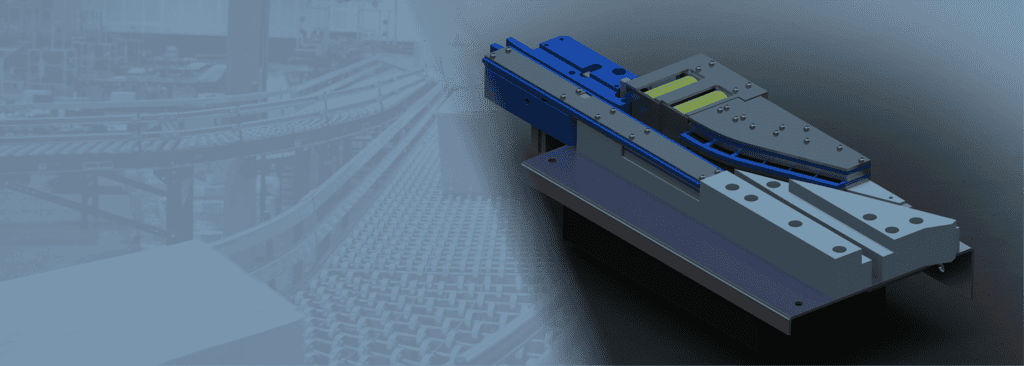
The LMS (Gen 4) Brings Electromagnetic Switching to the Sorter You Already Have

The LMS

Now Available — Retrofit Upgrade – The LMS is ready to improve your productivity.


The LMS

The Problem With Mechanical Switching

Most shoe sorters in operation today rely on a mechanical switching mechanism that was designed for a different era of distribution — one where throughput demands were lower, maintenance windows were longer, and downtime was more forgiving. That era is over.

Mechanical diverters are subject to constant wear. Every cycle puts friction on moving parts. Over time, that means more frequent part replacements, harder-to-predict failures, and maintenance that happens on the sorter’s schedule rather than yours. In high-velocity distribution and fulfillment environments, that’s not a manageable trade-off — it’s a liability.

The good news: replacing the entire sorter isn’t the only path forward.


The Solution: LMS Gen 4 Electromagnetic Switch Upgrade

The LMS Gen 4 (V4) from LaFayette Engineering — integrated and supported by Century Conveyor — is a direct retrofit upgrade engineered to replace your existing switch mechanism with a fully electromagnetic system. It installs into your current sorter and brings next-generation diverting performance without requiring a new conveyor investment.

Rather than relying on moving mechanical components to actuate each divert, the Gen 4 drives every switch electromagnetically — delivering precise, consistent, and controllable actuation on every single cycle. The result is a fundamentally more reliable system with a measurably longer service life.


What the Gen 4 LMS Delivers

⚡ 725 FPM Divert Speed — Capable of diverting every other shoe at 725 FPM, built for the throughput demands of today’s most high-velocity distribution and fulfillment operations.

📈 Longer Operational Lifespan — Electromagnetic diverting eliminates moving parts entirely, dramatically reducing wear and tear to extend the operational lifespan of your sorting system.

🔧 Planned Maintenance — The LMS lets you plan maintenance around your downtime schedule, not the other way around. Shift from reactive repairs to predictable, scheduled service windows you control.

🌎 Multi-Environment Ready — Engineered to perform reliably in temperature-controlled, refrigerated, high-humidity, and specialty environments — including the rigorous demands of liquor distribution.


Why Retrofit Instead of Replace?

A full sorter replacement carries substantial capital cost, extended implementation timelines, and operational disruption during cutover. For many operations, the sorter itself isn’t the problem — the switching mechanism is. The Gen 4 LMS addresses the root cause directly.

By retrofitting electromagnetic switching technology into your existing infrastructure, you preserve the investment you’ve already made while bringing your diverting capability in line with where modern distribution operations need to be. It’s a targeted upgrade with a focused return: faster throughput, fewer surprises, and maintenance on your terms.

Whether you’re running a high-volume e-commerce fulfillment center, a temperature-sensitive food and beverage operation, or a multi-line parcel sortation facility, the Gen 4 is engineered to match the demands of your environment.


See Us at MODEX 2026

We’ll be on the floor in Atlanta to walk you through the LMS retrofit process, answer technical questions, and discuss what a Gen 4 upgrade looks like for your specific operation. No commitment — just a conversation worth having.

  • Dates: April 13–16, 2026
  • Location: Atlanta, GA — Georgia World Congress Center
  • Booth: C14787

Want to set aside time with our team before the show? Availability fills quickly — reach out early and we’ll come prepared with an approach built around your operation.


Ready to Explore a Gen 4 Upgrade for Your Facility?

The Gen 4 LMS is available now as a retrofit upgrade for existing shoe sorters. Whether you’re planning ahead, dealing with rising maintenance costs on an older switch mechanism, or simply want to understand your options, Century Conveyor is ready to walk you through the details.

Can’t make it to the show? We’re available to walk you through upgrade options for your facility at your convenience. Schedule time with our team.

Warehouse Layout Management: Why a LaFayette Magnetic Sortation (LMS) Is Critical for Modern Conveyor & Automation Projects

The LMS
LMS

Walk into almost any established warehouse or distribution center and ask a simple question:

“Do we have a fully accurate, up-to-date facility layout?”

Most of the time, the answer is complicated.

There’s a CAD file from years ago. A PDF that’s been marked up and re-marked up. A mezzanine that was added but never properly documented. Conveyor lines that were extended during peak season. Utilities that were rerouted to solve a short-term problem and never updated in the drawings.

Individually, these changes seem minor. Collectively, they introduce risk—risk that quietly compounds until the next major conveyor expansion, automation retrofit, or system integration project exposes the gap.

For warehouse managers, operations directors, and industrial engineers, warehouse layout management is no longer a clerical task. It is a strategic function that directly impacts cost, speed, scalability, and long-term ROI.

This is where a professionally implemented LaFayette Magnetic Sortation (LMS)—like the one offered by Lafayette Engineering—changes the conversation.


The Foundation of Every Conveyor and Automation Project

Every successful conveyor system planning effort starts with a basic truth: you must know exactly what exists before you design what comes next.

When Century Conveyor begins a new project—whether it involves sortation, pallet conveyor, robotics, or broader material handling system design—the first step is understanding the real-world constraints of the facility. That includes column grids, clear heights, structural load capacities, egress paths, utilities, and the precise location of existing equipment.

If that information is inaccurate, incomplete, or outdated, the design team is forced to compensate. Sometimes they design conservatively, building in extra clearance to avoid unknown conflicts. Other times, they discover issues only after installation begins—when field crews find that a beam is lower than expected or that an undocumented utility line runs directly through the planned conveyor route.

The result is almost always the same: rework, delay, cost escalation, and frustration.

The Project Management Institute consistently identifies poor documentation and scope misalignment as major contributors to project overruns.
Project Management Institute – https://www.pmi.org

In industrial environments, those overruns are not theoretical. They show up as expedited freight, field modifications, redesign hours, and extended downtime.

The irony is that many of these issues are preventable. The missing ingredient is facility layout accuracy.


The Quiet Cost of Outdated Drawings

Warehouses are living systems. They evolve continuously.

A new pick module is installed to handle e-commerce growth. A temporary conveyor extension becomes permanent. Racking is relocated to increase density. A mezzanine is added to accommodate seasonal labor. A maintenance team reroutes compressed air or electrical lines to solve an operational bottleneck.

Each change makes sense at the time. But if documentation does not keep pace, the facility’s “official” layout gradually diverges from reality.

Over time, that divergence becomes more than an inconvenience. It becomes operational and financial exposure.

Consider safety compliance. OSHA regulations require safe working environments, including proper egress and equipment clearance.
OSHA Standards – https://www.osha.gov/laws-regs

If emergency exit paths or equipment clearances are inaccurately documented, audits become more complicated. Risk increases.

Now consider capital planning. When leadership evaluates automation upgrades—robotics, AS/RS systems, high-speed sortation—they rely on layout data to assess feasibility and ROI. If that data is unreliable, capital decisions are made on shaky ground.

According to McKinsey research, advanced warehouse automation can improve productivity by up to 30%.
McKinsey Supply Chain Insights – https://www.mckinsey.com/capabilities/operations/our-insights

But automation success depends on precise spatial understanding. You cannot accurately simulate throughput, density, or workflow without a trustworthy baseline.

Outdated drawings quietly undermine strategic growth.


From Static Drawings to Strategic Asset

This is where the concept of a LaFayette Magnetic Sortation (LMS) becomes transformative.

An LMS is not simply a shared folder of CAD files. It is not a one-time drafting update. It is a structured, controlled approach to managing the physical intelligence of an industrial facility.

Think of it this way: just as operations teams use warehouse management systems (WMS) to control inventory and workflows, an LMS governs the physical environment itself.

A well-implemented LMS centralizes and standardizes:

  • Facility layouts
  • Conveyor routing
  • Equipment positioning
  • Racking configurations
  • Structural elements
  • Utilities and service pathways

Instead of static drawings that slowly degrade in relevance, the facility becomes a documented, version-controlled, continuously updated system.

For operations leaders, that shift is powerful. The facility is no longer a black box that engineers must rediscover every time a project begins. It becomes a known, measurable asset.


How Lafayette Engineering Approaches LMS

Lafayette Engineering developed its LMS offering specifically for industrial and material handling environments. Their background in material handling system design and automation engineering shapes how they approach layout management.

The process begins with clarity.

Rather than relying on assumptions or legacy drawings, Lafayette Engineering focuses on capturing the true current state of the facility. That may involve on-site verification, dimensional confirmation, and structured updates to ensure that structural elements, conveyor systems, elevations, and utilities reflect real-world conditions.

But the real value is not just in the initial capture. It is in how the information is organized and maintained.

Lafayette Engineering structures layout data in a way that supports long-term scalability. The documentation is standardized so it can be used effectively for:

  • Future conveyor expansions
  • Warehouse automation initiatives
  • Maintenance planning
  • Capacity modeling
  • Structural feasibility analysis

Changes are tracked. Versions are controlled. Updates are integrated into the master documentation.

In short, the LMS transforms industrial facility documentation from an afterthought into a managed system.

To explore the full scope of the service, visit:
Lafayette Engineering LMS – https://www.lafayette-engineering.com/lms/


The Strategic Advantage for Warehouse Leaders

For warehouse managers and supply chain executives, the benefits of disciplined warehouse layout management extend far beyond cleaner drawings.

First, risk decreases. When Century Conveyor evaluates a new conveyor installation or system integration project, accurate layout data reduces the likelihood of field surprises. Projects move faster and with greater confidence.

[Internal Link: Conveyor Systems Page]

Second, planning accelerates. Instead of spending weeks reconciling outdated documents, engineering teams can begin analysis immediately. Budget estimates become more accurate. ROI calculations become more credible.

Third, long-term capital strategy improves. With reliable layout data, leadership can model phased automation rollouts rather than pursuing reactive, piecemeal upgrades. Mezzanine additions, pick module expansions, and sortation retrofits can be evaluated in the context of a documented roadmap.

Fourth, cross-functional alignment strengthens. Maintenance teams, engineering departments, and executive leadership reference the same controlled documentation. Discrepancies decrease. Decision-making becomes faster and more informed.

When viewed holistically, an LMS is not a drafting expense. It is a risk management tool and a strategic planning platform.


Why Layout Accuracy Is a Competitive Differentiator

The broader industry trend is clear. Organizations like the Council of Supply Chain Management Professionals (CSCMP) emphasize agility and infrastructure readiness as critical competitive factors.
CSCMP – https://cscmp.org

Agility depends on visibility. Visibility depends on accurate data.

Facilities that invest in layout precision are positioned to:

  • Scale automation quickly
  • Adapt to shifting demand
  • Integrate robotics and new technologies
  • Reduce downtime during upgrades
  • Attract investment with confidence

Facilities operating from outdated documentation must rediscover their constraints each time change occurs.

Over time, that difference compounds.


A Stronger Partnership Between Century Conveyor and Lafayette Engineering

Century Conveyor is known for delivering engineered material handling solutions that solve real operational challenges. But even the most advanced conveyor system design depends on accurate foundational data.

By leveraging Lafayette Engineering’s LMS capabilities, Century Conveyor clients gain a strategic advantage before the first piece of equipment is installed.

Designs are grounded in reality. Risks are identified early. Installation proceeds with greater certainty. Future expansion paths are clearer.

The result is not just a successful project—it is a stronger, more resilient facility.


From Reactive Documentation to Proactive Strategy

Industrial operations are under constant pressure to move faster, handle more SKUs, manage labor volatility, and justify capital investments.

In that environment, facility layout accuracy cannot remain an afterthought.

A disciplined LaFayette Magnetic Sortation (LMS) transforms documentation from a reactive exercise into a proactive strategy. It supports smarter conveyor system planning, more effective warehouse automation, and stronger long-term operational performance.

If your facility drawings are outdated, fragmented, or inconsistent, now is the time to address it—before your next automation initiative exposes the gap.

Explore Lafayette Engineering’s LaFayette Magnetic Sortation to see how engineered layout precision can reduce risk and strengthen your facility’s future:

👉 Learn more about Lafayette Engineering’s LMS:
https://www.lafayette-engineering.com/lms/

Or connect with Century Conveyor to discuss how accurate layout management can improve your next material handling initiative:

In modern distribution environments, precision is not optional.

It is competitive advantage.