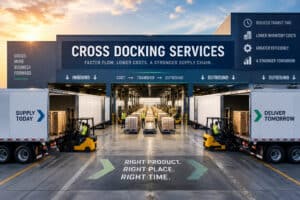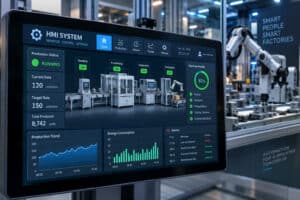
Warehouse fulfillment is a critical part of modern supply chain operations. As customer expectations for faster deliveries, accurate orders, and reliable shipping continue to grow, warehouses and distribution centers must find ways to improve productivity without continually increasing labor costs. Efficient warehouse fulfillment requires more than simply picking products and preparing packages. It involves coordinating inventory movement, order processing, sorting, packing, and shipping through a well-designed material handling system.
Century Conveyor Systems helps businesses improve warehouse fulfillment through engineered conveyor systems, robotic automation, material handling equipment, and integrated warehouse technologies. By designing solutions around the specific needs of each facility, Century helps warehouses increase throughput, reduce unnecessary manual handling, and create more efficient fulfillment operations.
Below are some frequently asked questions about Century Conveyor Systems and its approach to warehouse fulfillment.
Table of Contents
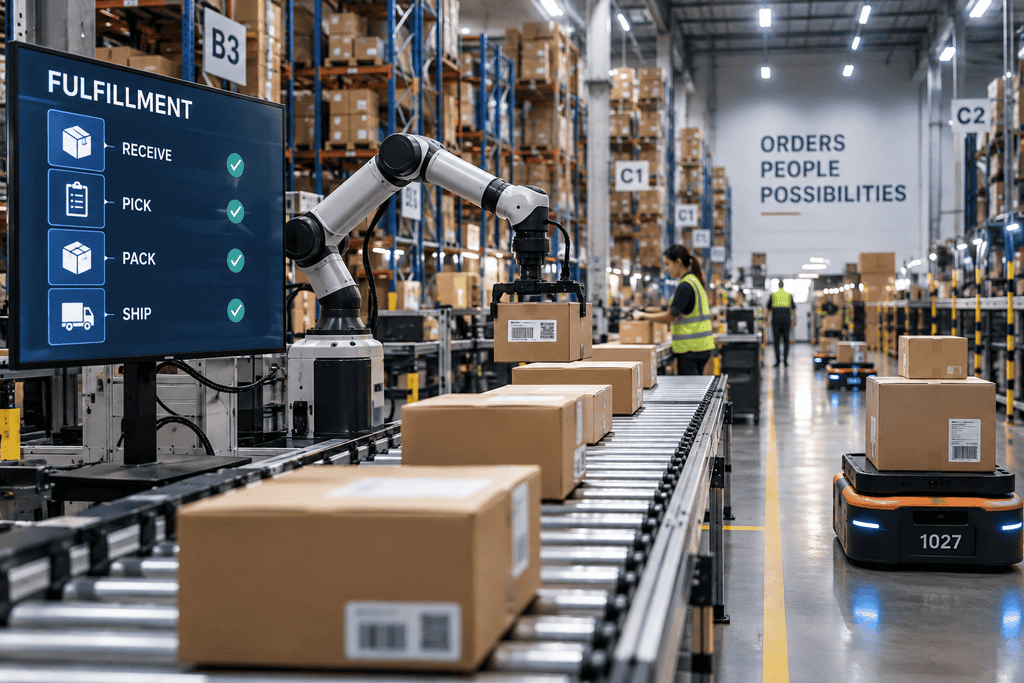
1. What Is Warehouse Fulfillment, and How Does Century Conveyor Systems Improve the Process?
Warehouse fulfillment refers to the complete process of receiving, processing, picking, packing, sorting, and preparing customer orders for shipment. It begins when an order enters the fulfillment operation and continues until the products reach the shipping area, where they are loaded for delivery.
Every step must work together to ensure orders are processed accurately and efficiently. When a warehouse relies heavily on manual transportation, repetitive handling, or disconnected processes, bottlenecks can develop. These inefficiencies can slow down order processing, increase labor requirements, and create opportunities for shipping errors.
Century Conveyor Systems addresses these challenges by engineering automated material handling solutions that connect different stages of warehouse fulfillment. Its solutions include conveyor systems, robotic fulfillment equipment, sortation systems, warehouse controls, and storage modules.
Rather than treating each piece of equipment as an isolated improvement, Century approaches warehouse automation as an integrated operation. Its engineers design, validate, and implement systems that support the movement of products throughout the facility.
This approach helps businesses improve productivity at multiple points in the fulfillment process. Products can move between workstations with fewer manual transfers, orders can be directed toward the appropriate processing areas, and warehouse employees can focus on tasks that require more direct involvement.
The ultimate objective is to create a warehouse fulfillment operation that processes more orders while minimizing unnecessary labor, handling, and operational delays.
2. Why Are Conveyor Systems Important for Warehouse Fulfillment?
Conveyor systems are one of the most important components of an automated warehouse fulfillment operation because they provide a consistent way to transport products throughout a facility.
Without an effective transportation system, employees may need to move cartons, totes, and pallets manually between picking, packing, sorting, and shipping areas. This can consume valuable labor hours and create unnecessary travel throughout the warehouse.
Century Conveyor Systems engineers conveyor solutions designed to match the layout, product characteristics, and processing requirements of individual facilities.
Depending on the application, a conveyor system can transport small parcels, irregular cartons, heavy products, or full pallets. Different conveyor sections can also perform specific functions, including accumulation, product transfers, diverting, and elevation changes.
One important advantage of conveyor automation is its ability to create a continuous flow of products. Instead of relying on employees to transport every item between workstations, conveyors move products along predetermined routes.
Century offers several conveyor technologies for different warehouse fulfillment applications, including:
- Live roller conveyors: Powered roller conveyors that move cartons through packing lines, divert areas, and end-of-line operations.
- Gravity conveyors: Non-powered conveyors that use gravity to move products, making them useful for staging and manual handling applications.
- Belt conveyors: Provide stable transportation for small parcels, polybags, and irregularly sized cartons.
- Modular belt conveyors: Feature removable belt sections that can simplify cleaning, maintenance, and modifications.
- Pallet conveyors: Provide durable transportation for pallets and heavier loads.
- Extendable conveyors: Extend directly into trailers to help move packages toward loading associates.
Selecting the appropriate conveyor technology allows businesses to create a transportation system that supports their specific fulfillment requirements.
3. How Can Warehouse Automation Reduce Labor Costs?
Labor is one of the most significant operational expenses for many warehouses and distribution centers. As fulfillment volumes increase, businesses often need additional employees to transport products, move materials, sort packages, and complete repetitive handling tasks.
However, adding more employees does not necessarily solve the underlying inefficiencies in a warehouse. If workers spend a considerable amount of time walking between stations or moving products manually, productivity can remain limited.
Warehouse automation helps address this problem by reducing the amount of repetitive manual work required to process orders.
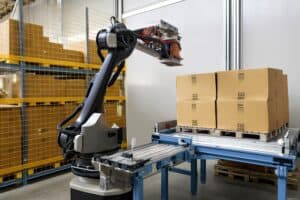
Century Conveyor Systems focuses on designing systems that allow products to move efficiently between different stages of the fulfillment process. Conveyor equipment can automate transportation, while robotic systems can assist with moving cartons, totes, and pallets.
For example, an automated conveyor network can transport packages from packing stations to sorting equipment without requiring employees to manually move each carton. Similarly, automated mobile robots can retrieve products or transport materials between designated areas.
These improvements allow employees to spend more time on activities that require decision-making, quality control, and direct supervision.
The goal is not necessarily to eliminate employees from warehouse operations. Instead, it is to make better use of available labor by reducing repetitive transportation and handling responsibilities.
For facilities experiencing labor shortages, rising labor expenses, or increasing order volumes, this can be an important component of a long-term warehouse fulfillment strategy.
4. What Role Do Robotics Play in Century Conveyor Systems’ Warehouse Fulfillment Solutions?
Robotics provide another layer of automation that can improve warehouse fulfillment by handling transportation activities that would otherwise require manual equipment or employee involvement.
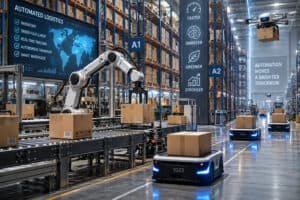
Century Conveyor Systems offers robotic fulfillment solutions using two primary technologies: Automated Guided Vehicles (AGVs) and Autonomous Mobile Robots (AMRs).
Although both technologies transport materials throughout a facility, they operate differently and serve different applications.
Automated Guided Vehicles (AGVs) follow established navigation paths using technologies such as magnetic tape, QR codes, inductive wires, and laser grids. They are particularly useful for predictable transportation requirements involving pallets, cartons, and other materials.
AGVs can also be equipped with carts or conveyor attachments to accommodate different types of products. They are often integrated with conveyor systems to support transportation between automated and manual processing areas.
Autonomous Mobile Robots (AMRs) offer greater navigation flexibility. Rather than following a fixed physical route, AMRs use sensors and programming to navigate throughout a facility.
This flexibility makes them particularly useful for goods-to-person operations. An AMR can retrieve a tote or container and transport it to a packing line or fulfillment employee, reducing the need for workers to travel throughout the warehouse searching for inventory.
Robotic automation also provides scalability. Businesses can introduce additional robots as fulfillment requirements change rather than committing to a completely fixed transportation infrastructure.
For warehouses seeking greater flexibility, robotics can complement conveyor automation and create a more adaptable fulfillment environment.
5. How Does Century Conveyor Systems Help Improve Order Accuracy and Reduce Product Damage?
Order accuracy and product condition are essential parts of warehouse fulfillment. Shipping the wrong product, sending an incomplete order, or damaging merchandise during transportation can lead to returns, additional expenses, and dissatisfied customers.
Many fulfillment problems originate from inefficient material handling processes. Products may be transferred between workstations multiple times, handled unnecessarily, or transported through poorly designed accumulation areas.
Century Conveyor Systems addresses these challenges through equipment designed to improve product movement and reduce unnecessary handling.
For example, conveyor diverts can automatically direct cartons toward their appropriate destinations. This reduces the need for employees to manually reposition every package as it moves through the facility.
Accumulation conveyors can also help protect products during transportation. Century offers zero-pressure and minimum-pressure accumulation solutions that use sensors and controlled spacing to manage how products move along a conveyor.
Zero-pressure accumulation prevents products from touching one another, while minimum-pressure accumulation allows products to make light contact. These technologies are particularly useful when handling fragile merchandise or products that could be damaged by excessive contact.
Belt conveyors provide another advantage by offering stable transportation for smaller parcels, polybags, and irregularly shaped cartons.
By combining appropriate conveyor equipment, automated routing, and controlled product movement, warehouses can create fulfillment processes that reduce avoidable handling errors and product damage.
6. Can Century Conveyor Systems Design a Warehouse Fulfillment System Around an Existing Facility?
Yes. Warehouse automation should reflect the physical characteristics and operational requirements of the facility where it will be installed.
Every warehouse has different constraints, including available floor space, ceiling height, product dimensions, shipping volumes, existing equipment, and employee workflows. A standardized system may not address these requirements effectively.
Century Conveyor Systems provides system design and engineering services to develop material handling solutions around individual warehouse operations.
Its approach includes evaluating the facility, determining the appropriate equipment, validating system designs, and managing implementation.
For example, a warehouse with limited floor space may benefit from vertical transportation solutions such as spiral conveyors. These systems move products between different facility levels using a compact spiral configuration.
A facility with extensive pallet transportation requirements may need a combination of pallet gravity conveyors, chain-driven live roller conveyors, and pallet drag chain systems.
Meanwhile, a fulfillment center handling smaller parcels may benefit from belt conveyors, roller conveyors, and automated sortation equipment.
The important consideration is how the equipment works together. A successful warehouse fulfillment system should support the movement of products from one operational stage to the next without creating unnecessary congestion or inefficient work patterns.
By engineering solutions around existing facility requirements, Century helps businesses pursue automation without assuming that every warehouse needs the same equipment configuration.
7. What Is the Difference Between Conveyor Automation and Robotic Fulfillment?
Conveyor automation and robotic fulfillment both improve warehouse productivity, but they solve different material handling challenges.
Conveyor systems typically move products along established transportation paths. They are particularly effective when products need to travel between predictable locations, such as packing stations, sorting equipment, accumulation areas, and shipping docks.
Robotic fulfillment equipment provides more flexible transportation capabilities. AGVs and AMRs can move products, totes, and pallets through warehouse environments without requiring every transportation route to be built into a fixed conveyor network.
The main difference is how products are transported.
Conveyors provide continuous movement along an engineered pathway, while mobile robots offer point-to-point transportation and greater flexibility when navigating changing warehouse environments.
Neither technology is automatically the better choice for every application.
A high-volume distribution center may benefit from conveyors because they can continuously transport large quantities of products through established processing areas. Another facility may benefit more from AMRs because its inventory movement requirements involve multiple destinations and changing transportation needs.
In many cases, combining both technologies produces the most effective result.
Century Conveyor Systems offers conveyor and robotic fulfillment solutions that can work together as part of a broader warehouse automation strategy.
8. How Does Century Conveyor Systems Support Different Types of Products and Order Volumes?
Warehouses rarely handle only one type of product. Depending on the industry, a fulfillment operation may process small polybags, standard cartons, irregular packages, drums, oversized products, or heavy pallets.
Each product category creates different material handling requirements.
Small packages may require stable belt transportation, while heavier products may need roller conveyors or specialized pallet handling equipment. Fragile items may require controlled accumulation to prevent products from colliding during transportation.
Century Conveyor Systems offers different equipment configurations to accommodate these varying requirements.
For example, modular belt conveyors are useful for applications that require specialized belt characteristics, easy cleaning, or simplified maintenance. Live roller conveyors provide powered transportation for cartons, while gravity conveyors can support staging and manual processing areas.
For larger loads, pallet conveyors provide stable transportation based on the weight and characteristics of the materials being handled.
System flexibility also matters when order volumes fluctuate. A warehouse may experience significant seasonal demand, promotional surges, or long-term business growth.
An appropriately engineered warehouse fulfillment system should account for these changes. Businesses can benefit from selecting equipment that supports current operations while allowing opportunities for future expansion.
Century’s robotic fulfillment solutions also offer scalability, allowing additional mobile robots to be introduced as operational requirements increase.
9. Does Century Conveyor Systems Provide Warehouse Controls and Software Integration?
Yes. Warehouse automation requires more than physical equipment. Controls and software help coordinate the movement of products and ensure that different components of an automated system operate together.
Century Conveyor Systems provides controls and software solutions that include control panel fabrication, Programmable Logic Controls (PLC), Warehouse Management Systems (WMS), and Warehouse Control Systems (WCS).
These technologies support the coordination of warehouse equipment and operational processes.
Programmable Logic Controls help manage equipment behavior, including conveyor movement, sensors, product transfers, and automated sequences.
Warehouse Management Systems support broader warehouse activities, including inventory management and order processing.
Warehouse Control Systems help coordinate automated material handling equipment and direct product movement throughout the facility.
Integrating the appropriate controls and software is important because disconnected systems can create operational inefficiencies. Equipment may function independently while failing to support the overall movement of products through the warehouse.
A properly designed automation solution considers both the mechanical equipment and the controls responsible for coordinating its operation.
For businesses investing in warehouse fulfillment automation, this integrated approach can help establish a more consistent and manageable operation.
10. How Does Preventative Maintenance Affect Warehouse Fulfillment Performance?
Even a well-designed warehouse automation system requires regular maintenance to maintain reliable performance.
Conveyor breakdowns, worn components, electrical problems, and equipment malfunctions can interrupt product movement and create bottlenecks throughout a fulfillment operation.
Because conveyor systems often connect multiple warehouse processes, a problem in one section can affect several downstream operations.
Preventative maintenance helps reduce the likelihood of unexpected equipment failures by identifying potential problems before they develop into major disruptions.
Century Conveyor Systems offers conveyor preventative maintenance, repair services, replacement parts, and ongoing support.
Its service capabilities include mechanical and electrical installation, conveyor repairs, and maintenance programs designed to support material handling equipment.
Century also provides 24/7 support services and parts assistance for conveyor systems.
The company highlights more than 40 years of conveyor experience and maintains a service department with technicians serving the New Jersey, Pennsylvania, and New York metropolitan area.
Maintenance should be considered during the initial planning of a warehouse fulfillment project rather than treated as an afterthought. Equipment accessibility, replacement components, and service requirements can all influence the long-term performance of an automated system.
A proactive maintenance strategy helps businesses protect their automation investment and maintain consistent warehouse operations.
11. Can Century Conveyor Systems Help a Warehouse Expand Its Automation Capabilities Over Time?
Yes. Warehouse automation does not always need to happen as one large installation.
Many businesses prefer to introduce automation in phases, particularly when they need to maintain existing operations during implementation or manage capital expenditures carefully.
Century Conveyor Systems offers project management, system design, project phasing, and installation services that support warehouse automation projects.
A phased approach allows businesses to prioritize the areas experiencing the greatest operational challenges.
For example, a distribution center might begin by automating transportation between packing stations and shipping areas. Once that system is operating effectively, the business may introduce additional sortation equipment or robotic transportation.
Another facility may prioritize pallet movement before investing in smaller-package fulfillment automation.
The advantage of this approach is that businesses can address immediate operational needs while planning for future improvements.
However, future expansion should be considered during the initial system design. Equipment placement, available floor space, control architecture, and transportation pathways can all affect how easily additional automation can be introduced.
Century’s scalable conveyor and robotic fulfillment solutions provide opportunities for businesses to develop their automation capabilities as their operational needs evolve.
12. Why Choose Century Conveyor Systems for Warehouse Fulfillment Automation?
Choosing an automation partner is an important decision because warehouse fulfillment equipment affects productivity, labor requirements, shipping performance, and long-term operating costs.
Century Conveyor Systems positions itself as a full-service material handling automation integrator for warehouses, distribution centers, and fulfillment facilities.
One of its main advantages is its ability to support multiple aspects of an automation project through a single provider.
Rather than focusing exclusively on conveyor installation, Century offers a broader range of capabilities, including:
- System engineering: Designing material handling solutions around warehouse layouts, product characteristics, and operational requirements.
- Conveyor automation: Providing belt, roller, pallet, extendable, and specialized conveyor systems.
- Robotic fulfillment: Integrating AGVs and AMRs for automated transportation and goods-to-person applications.
- Sortation solutions: Helping warehouses direct packages toward appropriate processing and shipping destinations.
- Controls engineering: Providing PLC systems, control panels, and warehouse software integration.
- Storage solutions: Offering shelving, racking, picking modules, mezzanines, and automated storage solutions.
- Project management: Coordinating project design, validation, installation, and implementation.
- Maintenance and service: Supporting conveyor equipment through repairs, preventative maintenance, and replacement parts.
This range of capabilities allows Century to consider the entire warehouse fulfillment process when developing an automation strategy.
The company also emphasizes a turnkey project approach, managing activities from system design and validation through installation and start-up support.
For businesses looking to improve fulfillment performance, working with an integrator that understands both individual equipment and the larger material handling system can make a meaningful difference.
Final Thoughts: Improving Warehouse Fulfillment With Century Conveyor Systems
Warehouse fulfillment is becoming increasingly demanding as businesses work to process orders faster, manage labor expenses, and maintain reliable shipping operations. Improving performance requires more than adding individual pieces of equipment. It requires an integrated approach to material handling, transportation, automation, and warehouse controls.
Century Conveyor Systems provides engineered warehouse fulfillment solutions that combine conveyor technology, robotic automation, sortation equipment, controls, and ongoing service capabilities.
Whether a facility needs to automate carton transportation, improve pallet handling, introduce goods-to-person robotics, or modernize an existing conveyor system, the right automation strategy starts with understanding the specific challenges within the operation.
By designing systems around individual warehouse requirements and considering opportunities for future expansion, Century helps businesses build more efficient material handling operations.
For organizations evaluating their next warehouse fulfillment project, Century Conveyor Systems offers an opportunity to work with an experienced automation integrator focused on improving warehouse performance from design through implementation and ongoing support.