Modern warehouses, distribution centers, and fulfillment facilities depend on conveying systems movement to keep orders flowing. As product volumes increase and customer expectations for fast shipping continue to rise, businesses are looking beyond manual transportation methods and investing in automated conveying systems.
Century Conveyor Systems provides engineered material handling and automation solutions designed around the way products move through a facility. Rather than treating a conveyor as an isolated piece of equipment, Century approaches conveying as part of a broader operational system that can incorporate conveyors, sortation, robotics, controls, software, storage, and other automation technologies.
This FAQ explains how Century Conveyor Systems approaches conveying systems, the different technologies available, and how those technologies can support order fulfillment and warehouse operations.
Table of Contents
What are conveying systems, and how does Century Conveyor Systems approach them?
Conveying systems are material handling solutions designed to move products from one location to another within a facility. Depending on the application, they can transport cartons, totes, pallets, polybags, drums, oversized products, and other materials between different stages of an operation.
At Century Conveyor Systems, conveying systems are designed around the specific requirements of the facility rather than selected as a generic piece of equipment. The company describes its approach as turnkey system integration, meaning the project can encompass system design, validation, installation, startup, controls, automation, and ongoing service.
This distinction matters because the most appropriate conveyor depends on more than the physical product being moved. Factors such as product dimensions, weight, required speed, accumulation needs, facility layout, manual workstations, sortation requirements, and future automation plans can all influence the design.
For example, a packing area may benefit from live roller or gravity conveyors that interface effectively with manual induction. A line handling small or irregular parcels may require belted conveying for greater product stability. A high-output pallet operation may need chain-driven live roller equipment or another heavy-duty pallet conveying solution.
The objective is to create a coordinated flow through the facility instead of simply placing conveyor sections wherever space is available.
What types of conveying systems does Century Conveyor Systems provide?
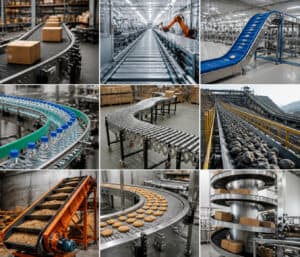
Century works with several types of conveying systems, with each technology suited to different material handling requirements.
Live Roller and Gravity Conveyors
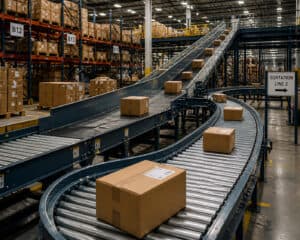
Live roller conveyors use powered rollers to move products, while gravity conveyors rely on gravity rather than a motor. According to Century, these systems can be used in areas such as packing lines, divert lines, extendable conveyor applications, and end-of-line operations.
Gravity conveying can be useful where powered transportation is unnecessary, while live roller equipment can provide controlled powered movement where the application calls for it.
Belted Conveyors
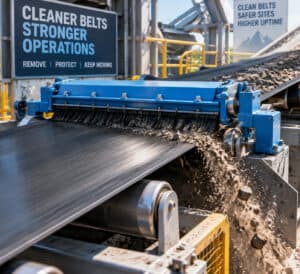
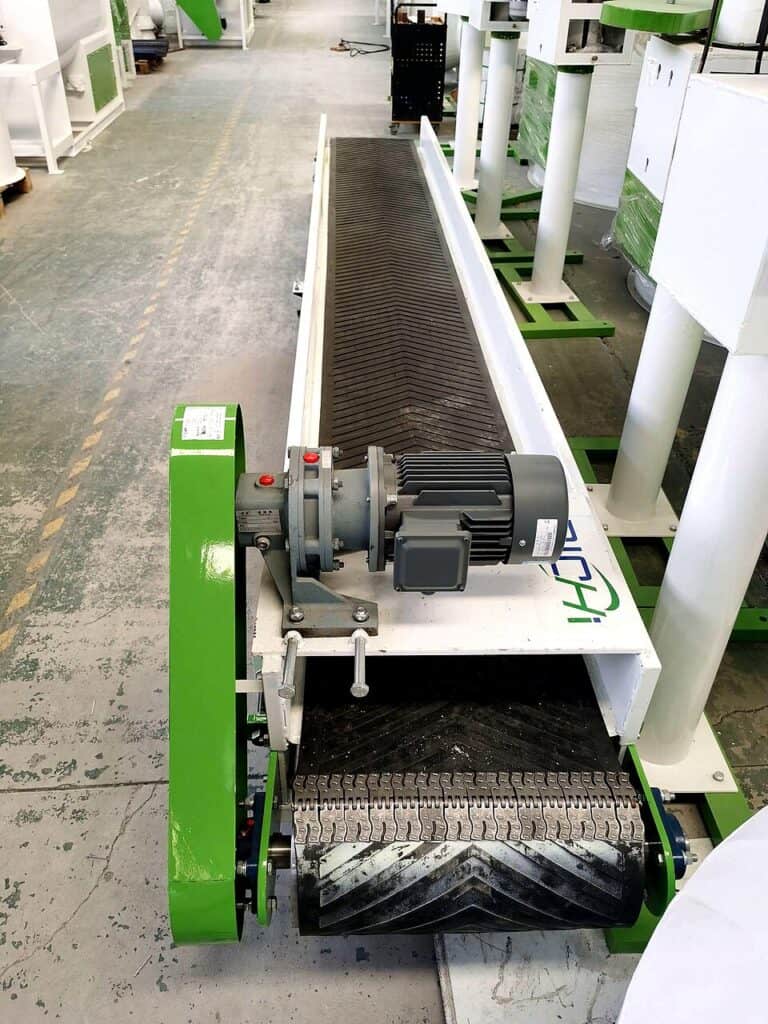
Belted conveyors provide a stable conveying surface for products that may not move effectively on rollers. Century specifically identifies belt-over applications as useful for small polybags, parcels, and irregular carton sizes.
Belted conveying can also provide advantages for inclines, declines, gapping, and applications where maintaining product stability is important.
Modular Belt Conveyors
Modular belts are constructed from individual sections rather than one continuous vulcanized belt. The modular construction can make individual sections easier to remove, clean, or modify.
Century identifies modular belt conveying as a solution for specialized handling applications, including operations requiring additional traction, tight transfers, or easier accumulation. The company also notes applications involving food handling and other specialized product flows.
Conveyor Diverts
Diverts allow products to move from one conveyor line to another without necessarily requiring a large standalone sortation system.
Depending on the application, divert mechanisms can include roller-ball systems, skate wheels, rising platforms, swinging arms, push trays, and other configurations. This gives system designers different ways to route cartons to their intended destinations.
Zero- and Minimum-Pressure Conveyors
Accumulation is an important consideration when products need to wait temporarily without disrupting the rest of a line.
Century describes zero-pressure accumulation as a configuration designed to keep products from touching one another. Minimum-pressure accumulation allows products to slow down and lightly contact each other.
These technologies can be particularly useful when products are fragile or when controlled spacing is necessary before another stage of fulfillment.
Extendable Conveyors
Extendable conveyors can telescope into and out of areas such as trailers. They can help bring the conveying point closer to the associate loading or unloading the vehicle.
Century identifies both gravity-powered and powered extendable configurations. Gravity versions can use skate wheels, while powered versions can use telescoping belts.
Spiral Conveyors
Spiral conveying systems move products vertically through a gradual curved incline. This allows a facility to connect different elevations without relying exclusively on long straight inclines or other vertical transportation methods.
For facilities where floor space is limited, vertical conveying can be an important part of the overall layout.
Pallet Conveyors
Pallet conveying systems are designed for heavier and larger loads. Century identifies several pallet-handling technologies, including pallet drag chain conveyors, pallet gravity conveyors, chain-driven live roller conveyors, and Poly-V conveyor sections.
The appropriate configuration depends on factors such as pallet characteristics, weight, throughput, staging requirements, and the desired movement pattern.
Together, these options allow conveying systems to be configured around the requirements of individual areas rather than forcing every product through the same conveyor technology.
Why are conveying systems important for order fulfillment?
Order fulfillment involves much more than transporting a package from point A to point B. Products may need to move through receiving, storage, picking, packing, labeling, sortation, and shipping before an order leaves the facility.
Century describes warehouse conveyor systems as the backbone of automated operations because they provide continuous movement between these different stages.
The value of conveying systems comes from connecting processes. When products must be manually transported between workstations, employees can spend significant amounts of time moving material instead of performing tasks that directly contribute to order processing.
An engineered conveyor system can automate much of that transportation.
For example, products can move from one processing station to another without requiring an employee to push a cart or carry individual packages across the facility. Conveyors can also be combined with accumulation, diverting, sortation, scanning, controls, and other technologies to coordinate how products move through the operation.
Century’s order fulfillment approach focuses on optimizing output, reducing errors that can contribute to returns or product damage, and processing items with fewer manual interactions.
The result is not simply a faster conveyor. It is a material flow strategy in which transportation becomes an integrated part of the fulfillment process.
How can Century’s conveying systems work with warehouse robotics?
Conveyors and robotics do not necessarily compete for the same role. In an automated fulfillment environment, they can perform complementary functions.
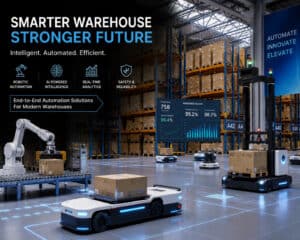
Century offers robotic fulfillment solutions involving automated guided vehicles (AGVs) and autonomous mobile robots (AMRs).
AGVs generally follow defined navigation methods and are suited to applications involving repeatable routes. Century notes that AGVs can transport pallets, cartons, and non-conveyable products and can be equipped with attachments that allow them to interface with the material being handled.
AMRs offer a different type of flexibility. They navigate without fixed tracks and use sensors and programming to move through a facility. This makes them suitable for applications in which products or totes need to travel through changing routes.
For example, an AMR can support goods-to-person fulfillment by retrieving totes and bringing them to packing or order fulfillment personnel.
Conveyors can provide the fixed, continuous transportation infrastructure within an operation, while robots can provide flexible transportation where fixed conveyor paths may not be practical.
This combination is particularly relevant to facilities that want automation without relying exclusively on permanently installed transportation equipment.
Can conveying systems be customized for different products and workflows?
Yes. Customization is one of the most important considerations when designing a conveying system.
A carton, polybag, pallet, drum, and irregularly shaped package can have very different conveying requirements. Even two facilities handling similar products may require different designs because their layouts, throughput requirements, labor models, storage systems, and order profiles differ.
Century’s system engineering approach accounts for these differences when designing material handling solutions.
For smaller parcels, a belted conveyor may provide the stability required to maintain consistent movement. For palletized products, heavy-duty conveying technologies may be more appropriate. In another section of the facility, gravity conveying may be sufficient for staging or manual operations.
Conveyor diverts can create routing points, accumulation sections can regulate product flow, and spiral conveyors can connect different levels.
This modular approach means the conveying system can be built around the workflow instead of forcing the workflow to conform to one conveyor type.
How do conveying systems support automation beyond transportation?
A conveyor is only one part of a modern material handling ecosystem.
Century’s broader solutions include sortation systems, robotic palletizing, controls and software, print-and-apply equipment, storage systems, and other automation technologies.
Controls can coordinate conveyor movements and equipment interactions, while warehouse management and warehouse control systems can help connect operational requirements with physical material movement.
Sortation equipment can direct products toward different destinations. Print-and-apply equipment can support labeling processes. Robotic palletizing can automate the handling of completed cases or other loads.
This interconnected approach is important because adding a conveyor does not automatically create an automated warehouse. Automation depends on how individual technologies communicate and work together.
For example, a product may enter the facility, travel through a conveyor network, be routed through a divert or sortation system, receive a label, and eventually reach a packing or shipping area. Each stage has a specific function, but the conveying system provides the physical movement that connects those processes.
What should a company consider before investing in conveying systems?
The first consideration should be the operational problem the conveying system is intended to solve.
Companies should evaluate the types of products being moved, their dimensions and weights, current and projected throughput, facility layout, accumulation requirements, manual touchpoints, destinations, and integration requirements.
It is also important to consider what the facility may look like several years after installation. A conveyor designed only around today’s volume may require substantial modification if product volumes, SKU profiles, or fulfillment processes change.
Other questions include:
- Where are the largest sources of manual transportation?
- Which products require special handling?
- Where are bottlenecks occurring?
- How much accumulation is required?
- Are products fragile or irregularly shaped?
- Will robotics eventually be added?
- Does the system need to interface with existing controls or software?
- Could the facility require additional capacity later?
- What maintenance and replacement-parts support will be needed?
Answering these questions before equipment selection helps create a system based on operational requirements rather than simply selecting a conveyor based on its physical specifications.
Does Century Conveyor Systems provide support after installation?
Century’s services extend beyond system design and installation. The company states that it provides ongoing parts and service support, including conveyor repair and preventative maintenance.
This is an important consideration for facilities that depend on conveying systems as part of daily operations. Conveyor equipment can become a critical link between receiving, fulfillment, packing, and shipping, so maintenance becomes part of maintaining overall operational continuity.
Century lists services including conveyor preventative maintenance, repair and parts, mechanical and electrical installation, controls engineering, project management, and 24/7 support.
A lifecycle approach also means that the relationship does not necessarily end when a new conveyor system is started. Maintenance, replacement parts, troubleshooting, modernization, and future automation can all become part of the system’s operating life.
How can conveying systems prepare a warehouse for future automation?
A well-designed conveying system can provide a foundation for additional automation.
Century notes that automation can be added to conveyor lines and describes its robotic fulfillment solutions as scalable, allowing additional systems to be implemented as needed.
This is particularly relevant for businesses that are automating in stages. A company may initially automate transportation between a few high-volume work areas and later add robotics, sortation, automated storage, palletizing, or other technologies.
Planning for that progression from the beginning can help avoid designing a system that works only as a standalone conveyor installation.
Future-oriented conveying design can consider available space, controls architecture, connection points, throughput requirements, product changes, and potential integration with robotic equipment.
The goal is not necessarily to automate every process immediately. Instead, the conveying infrastructure can be designed as part of a broader material handling strategy that can evolve as operational requirements change.
What makes Century Conveyor Systems a systems integrator rather than simply a conveyor provider?
The distinction comes down to the scope of the solution.
Century describes itself as a full-service integrator that can combine conveyor systems with robotics, warehouse management systems, reporting software, storage, sortation, controls, and other material handling technologies.
That means the focus is on the complete workflow rather than on selling a single conveyor component.
A project can begin with system design and validation and continue through equipment integration, installation, startup, service, and maintenance. This gives businesses one broader framework for addressing the movement of materials throughout their facilities.
For an operation considering conveying systems, that approach can be useful when the material flow problem involves more than transportation alone. If bottlenecks involve picking, sortation, packing, storage, palletizing, or software coordination, the conveyor may need to be designed alongside those processes.
What is the main takeaway about Century Conveyor Systems’ conveying systems?
Conveying systems can serve as the physical foundation connecting different stages of a modern warehouse or fulfillment operation. The most effective solution depends on the products being moved, the required throughput, facility layout, accumulation needs, automation objectives, and long-term plans.
Century Conveyor Systems approaches conveying as part of a larger material handling system. Its solutions encompass technologies ranging from belt, roller, gravity, modular, spiral, extendable, divert, and pallet conveyors to robotics, sortation, controls, software, and ongoing service.
For businesses evaluating conveying systems, the central question is therefore not simply which conveyor to purchase. It is how material should move through the facility today, how that movement can be automated, and how the system can support the operation as requirements evolve.
By engineering conveying around the broader workflow, businesses can create a material handling environment in which transportation, automation, and fulfillment processes operate as connected parts of the same system.