As warehouses, distribution centers, and fulfillment operations continue toward automated material handling, businesses are searching for ways to increase throughput, improve order accuracy, and reduce manual handling. One of the most effective ways to accomplish these goals is through automated material handling.
Century Conveyor Systems specializes in designing and integrating turnkey automated material handling systems that combine conveyors, robotics, sortation equipment, warehouse controls, and software into a single, optimized solution. Rather than providing standalone equipment, Century develops customized systems that fit each customer’s workflow, operational goals, and future growth plans.
Below are answers to the most frequently asked questions about Century Conveyor Systems’ automated material handling solutions.
Table of Contents
FAQ 1: What is automated material handling?
Automated material handling refers to the use of conveyors, robotics, software, sensors, and intelligent controls to move products throughout a warehouse or distribution facility with minimal manual intervention.
Instead of employees transporting products between receiving, storage, picking, packing, sorting, and shipping, automated systems continuously move inventory through each stage of the operation. The result is a smoother workflow that minimizes unnecessary handling while supporting faster processing.
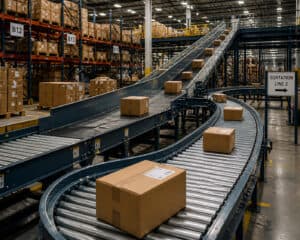
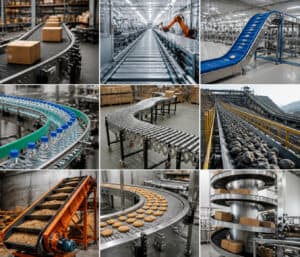
Century Conveyor Systems engineers complete automated material handling solutions that are customized to each facility. Their systems can transport cartons, totes, pallets, drums, polybags, and other products using the right combination of conveyor technologies, robotic solutions, warehouse controls, and automation software.
Because every operation is different, Century begins with an evaluation of the customer’s existing processes before designing a solution that improves efficiency without disrupting daily operations. Their focus is not simply on installing conveyors—it is on creating an integrated system that improves overall warehouse performance.
FAQ 2: Why should businesses choose Century Conveyor Systems for automated material handling?
Many automation providers sell equipment. Century Conveyor Systems delivers complete system integration.
Instead of selecting individual pieces of equipment independently, Century engineers an entire automated material handling solution that allows every component to work together seamlessly.
Their projects typically include:
- Conveyor systems
- Automated sortation equipment
- Robotic palletizing
- AGVs (Automated Guided Vehicles)
- AMRs (Autonomous Mobile Robots)
- PLC controls
- Warehouse Control Systems (WCS)
- Warehouse Management System (WMS) integration
- Installation
- Startup support
- Ongoing maintenance and service
This turnkey approach simplifies implementation because customers work with one experienced integration partner throughout the project—from initial design through long-term support.
Century also validates system performance during the engineering phase to ensure the finished solution aligns with operational goals such as increased throughput, lower labor costs, and improved reliability.
FAQ 3: How does automated material handling improve order fulfillment?
Order fulfillment is much more than moving products from one location to another. Every order must pass through receiving, storage, picking, packing, labeling, sorting, and shipping before reaching the customer.
Whenever products pause between these processes, bottlenecks develop. Employees spend valuable time walking products across the warehouse instead of completing higher-value tasks, and fulfillment speed suffers.
Century Conveyor Systems addresses these challenges by designing automated material handling systems that create continuous product flow throughout the warehouse.
Their order fulfillment solutions help businesses:
- Increase processing speed
- Reduce unnecessary product handling
- Improve order accuracy
- Minimize bottlenecks
- Support faster shipping
- Reduce product damage caused by excessive manual movement
Rather than relying on isolated automation, Century integrates conveyors, robotics, sortation systems, controls, and software into one coordinated operation. This allows products to move efficiently between departments without unnecessary delays.
The result is a warehouse capable of maintaining consistent performance during both normal operations and seasonal demand spikes.
FAQ 4: What technologies are included in Century Conveyor Systems’ automated material handling solutions?
Automated material handling involves much more than conveyors alone.
Century Conveyor Systems combines multiple technologies into one integrated solution depending on each customer’s operational requirements.
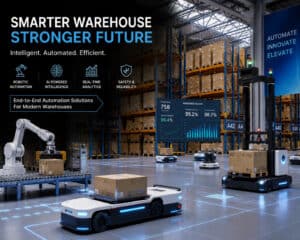
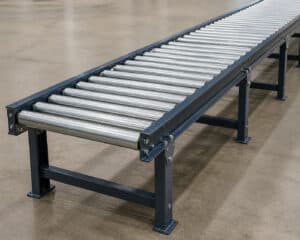
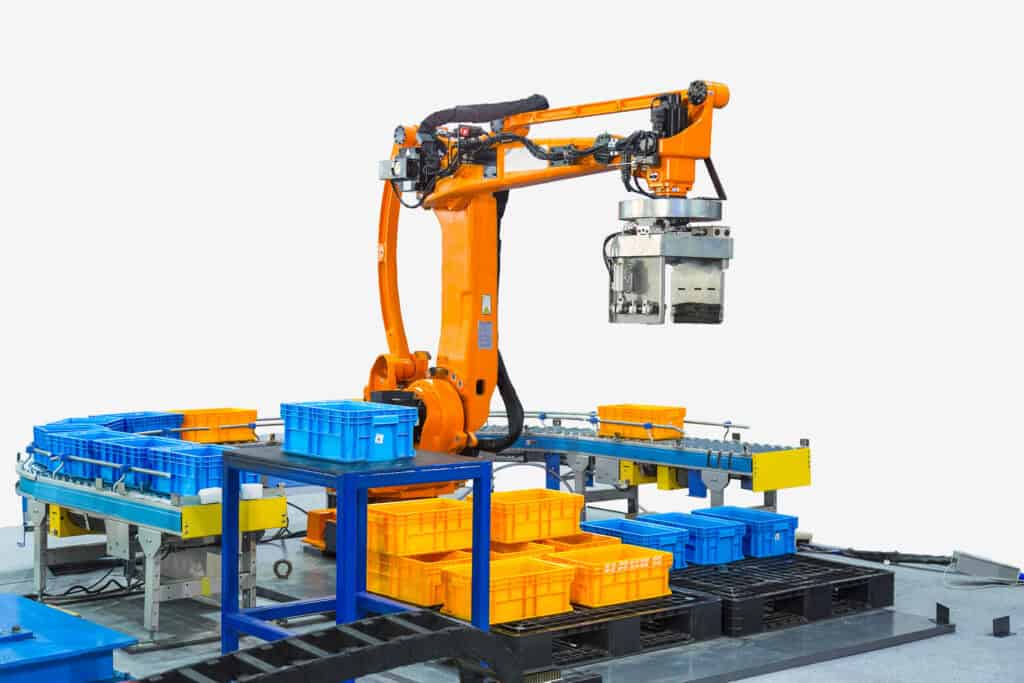
These technologies may include conveyor systems for transporting cartons, totes, and pallets; automated sortation equipment for directing products to the correct destination; robotic palletizing systems that automate repetitive end-of-line tasks; and autonomous mobile robots (AMRs) or automated guided vehicles (AGVs) that transport materials throughout the facility.
Century also integrates advanced controls and software, including programmable logic controllers (PLCs), Warehouse Control Systems (WCS), and Warehouse Management Systems (WMS), allowing equipment to communicate and operate as one coordinated system.
Additional solutions such as print-and-apply labeling, case forming, storage modules, shelving, racking, and automated storage and retrieval systems (AS/RS) can also be incorporated to create a comprehensive warehouse automation strategy.
Because Century designs every project around the customer’s workflow, businesses receive only the technologies that provide measurable operational value rather than unnecessary equipment.
FAQ 5: Can Century Conveyor Systems’ automated material handling solutions grow with a business?
Yes. Scalability is one of the most important considerations during system design.
Warehouse operations rarely remain static. New product lines, additional customers, seasonal demand, and expanding order volumes all place greater demands on material handling systems over time.
Century engineers automation with future growth in mind.
Their systems can often be expanded by adding additional conveyor zones, robotic equipment, sortation capacity, or autonomous mobile robots without requiring a complete redesign of the facility.
This phased approach allows businesses to invest in automation that meets current operational needs while maintaining flexibility for future expansion.
Instead of forcing customers into oversized systems on day one, Century develops solutions that can evolve alongside the business.
This long-term perspective helps maximize return on investment while minimizing disruption during future upgrades.
FAQ 6: How does automated material handling reduce labor challenges without replacing employees?
One common misconception is that warehouse automation exists solely to replace workers.
In reality, automated material handling is primarily designed to eliminate repetitive transportation tasks that consume employee time.
Without automation, warehouse staff may spend significant portions of each shift pushing carts, transporting totes, or moving cartons between departments.
Century Conveyor Systems automates these repetitive transportation activities, allowing employees to focus on higher-value responsibilities such as quality control, exception handling, equipment supervision, customer service, and inventory management.
This can help businesses:
- Reduce unnecessary walking throughout the warehouse
- Improve employee productivity
- Lower physical strain
- Support safer operations
- Maintain consistent throughput during labor shortages
Rather than replacing people, automation enables existing teams to accomplish more with the resources already available.
For organizations facing hiring challenges or fluctuating labor availability, this operational efficiency can become a significant competitive advantage.
FAQ 7: Which industries benefit most from Century Conveyor Systems’ automated material handling solutions?
Automated material handling provides value across a wide range of industries that process high volumes of products.
Century Conveyor Systems designs customized solutions for warehouses, distribution centers, fulfillment operations, and manufacturers that require efficient product movement.
Industries that commonly benefit include:
- E-commerce fulfillment
- Third-party logistics (3PL)
- Retail distribution
- Consumer packaged goods
- Manufacturing
- Food and beverage distribution
- Pharmaceutical distribution
- Industrial products
- Packaging operations
Because Century’s solutions are engineered around each customer’s workflow rather than a standardized design, they can accommodate a wide variety of products, handling requirements, and facility layouts.
Whether a business handles cartons, pallets, totes, drums, or polybags, Century develops an automation strategy that aligns with operational objectives while improving throughput and overall efficiency.
FAQ 8: What support does Century Conveyor Systems provide after installation?
Successful automated material handling extends well beyond installation day.
Century Conveyor Systems supports customers throughout the entire lifecycle of their automation investment.
After implementation, Century provides startup assistance, conveyor service, preventative maintenance, replacement parts, equipment support, and ongoing technical expertise.
Their experienced service team helps customers maintain peak system performance while minimizing downtime through proactive maintenance and responsive service.
This long-term partnership ensures businesses continue receiving value from their automation investment long after the original project has been completed.
For organizations that rely on continuous warehouse operations, dependable service and technical support are just as important as the original system design.
Century’s commitment to lifetime support allows customers to operate with confidence while adapting their systems as operational requirements evolve.
Final Thoughts
Automated material handling has become an essential component of modern warehouse and distribution operations. As order volumes increase and customer expectations continue to rise, businesses need systems that improve speed, accuracy, and operational efficiency without sacrificing flexibility.
Century Conveyor Systems approaches warehouse automation as a fully integrated solution rather than a collection of individual machines. By combining conveyors, robotics, sortation equipment, warehouse controls, software integration, and long-term support, the company designs automated material handling systems that are tailored to each customer’s specific goals.
Whether your organization is planning its first automation project or expanding an existing facility, Century Conveyor Systems provides the engineering expertise, system integration, and ongoing service needed to build an automated material handling solution that supports long-term operational success.