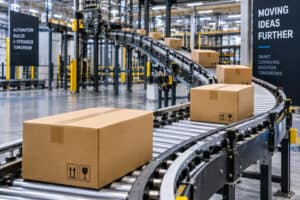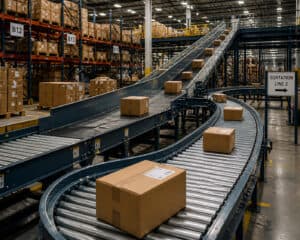
Robots for warehouse is no longer limited to traditional conveyor equipment. As fulfillment operations become more demanding, businesses are looking for flexible ways to move cartons, totes, pallets, and other products while improving throughput and reducing unnecessary manual handling. Robots for warehouse operations can play an important role in that transition.
Century Conveyor Systems provides robotic fulfillment solutions as part of its broader approach to automated material handling. The company works with warehouses, distribution centers, and fulfillment facilities to design and implement automation systems, including automated guided vehicles (AGVs) and autonomous mobile robots (AMRs).
Below is a FAQ covering the most important questions about Century Conveyor Systems’ robots for warehouse applications, including how the technology works, where it fits, and why a customized approach matters.
Table of Contents
1. What are robots for warehouse operations?
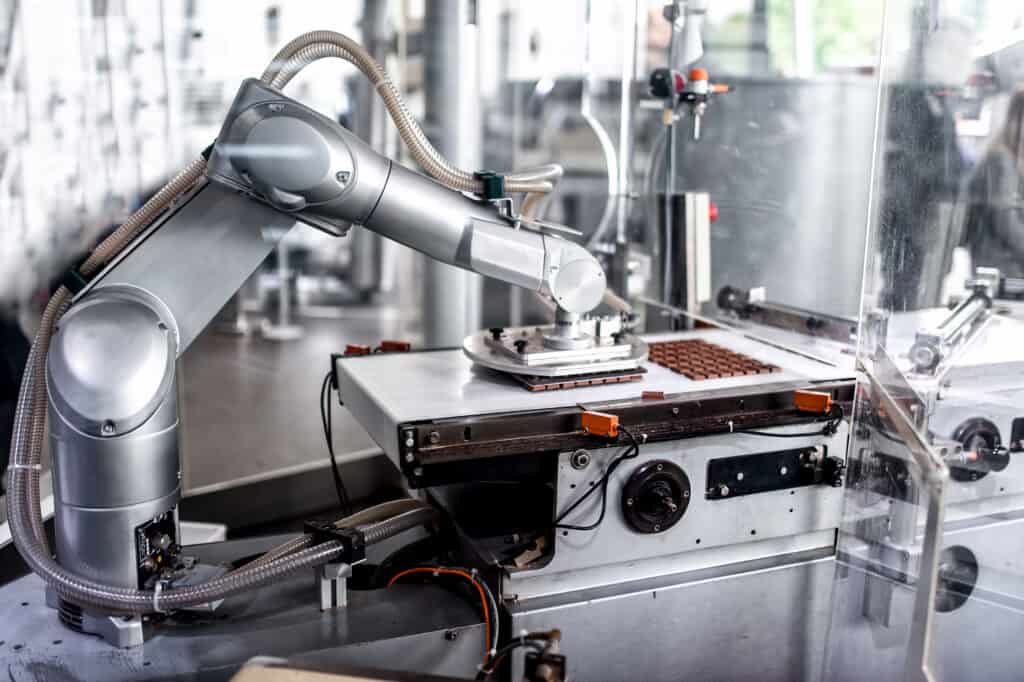
Robots for warehouse operations are automated machines designed to transport or handle materials with less manual intervention. At Century Conveyor Systems, robotic fulfillment includes two primary categories: automated guided vehicles (AGVs) and autonomous mobile robots (AMRs).
These technologies are designed to provide transportation capabilities similar to those traditionally performed by lift trucks or other material-handling equipment. The difference is that robotic systems can automate the movement of products between different areas of a facility.
Century describes AGVs and AMRs as solutions for warehouse robotic fulfillment, with applications ranging from transporting pallets and cartons to supporting goods-to-person order fulfillment.
Rather than treating a robot as an isolated piece of equipment, Century approaches robotic fulfillment as part of a larger automation system. That distinction matters because the value of a warehouse robot depends on how effectively it works with conveyors, storage, controls, software, packing operations, and the overall flow of goods.
2. What is the difference between an AGV and an AMR?
The biggest difference is how the robot navigates its environment.
An automated guided vehicle (AGV) follows a defined navigation system. Century notes that AGVs can use technologies such as magnetic tape, QR codes, inductive wires, and laser grids to navigate. They are particularly well suited to transporting pallets, cartons, or non-conveyable products along established routes. AGVs can also be equipped with conveyor or cart attachments depending on the material being handled.
An autonomous mobile robot (AMR) is more flexible. AMRs do not require a fixed track and instead use sensors and programming to navigate through a facility. This allows them to move totes, cartons, and carts through a distribution environment with greater freedom.
For a warehouse considering robots, the choice is therefore less about deciding which technology is universally better and more about determining which technology fits the facility’s workflow. A predictable, static transportation route may favor an AGV, while an operation requiring more dynamic movement may benefit from AMRs.
3. Why use robots for warehouse order fulfillment?
Robots can reduce unnecessary manual transportation while helping a facility process orders more efficiently.
Century’s order fulfillment approach focuses on optimizing operations for output performance, reducing errors that can contribute to returns or damaged products, and processing items faster with fewer manual interactions.
This is especially relevant in goods-to-person environments. Instead of requiring employees to spend substantial time walking through a facility to retrieve inventory, AMRs can transport totes or cartons to designated areas and support the movement of products toward packing or fulfillment personnel. Century specifically identifies goods-to-person operations as a favored use case for AMRs.
The benefit is not simply that a robot replaces a particular manual task. The larger opportunity is to redesign the flow of work so employees can spend more time on productive fulfillment activities while automated equipment handles repetitive transportation.
That can be particularly valuable in operations where order volumes fluctuate, travel distances are significant, or warehouse layouts make manual transportation inefficient.
4. Are Century’s robots for warehouse applications scalable?
Yes. Scalability is one of the key advantages Century identifies for robotic fulfillment.
Traditional automation can sometimes require substantial fixed infrastructure. Century points out that robotic systems are flexible because they are not “bolted down” in the same way as many other automation solutions. The company also describes robotic fulfillment systems as scalable, meaning additional systems can be implemented later as operational requirements change.
This can be important for a growing warehouse.
A facility does not necessarily know exactly what its throughput requirements will look like several years from now. Order volume may increase, product lines may change, or a company may expand into additional fulfillment channels. A scalable robotic strategy can provide a way to increase automated transportation capacity as those requirements develop.
For that reason, robots for warehouse applications can be considered not only as an immediate productivity tool but also as part of a longer-term automation strategy.
5. Can robots for warehouse work with conveyor systems?
Yes. In fact, integrating robots with conveyors can create a more complete material-handling system.
Century Conveyor Systems specializes in both conveyor systems and robotic fulfillment, which allows these technologies to be considered together rather than independently. Its conveyor solutions include belt, roller, modular belt, pallet, spiral, divert, accumulation, and extendable conveyor applications.
AGVs, for example, can be deployed in environments where they interface with conveyor systems. Century notes that AGVs can also be fitted with conveyor or cart attachments for the products they handle.
This integration can be valuable because different parts of a warehouse often have different transportation requirements. A conveyor may efficiently move packages along a high-volume fixed route, while a robot may be better suited to moving products between areas where installing permanent conveyor infrastructure would be less practical.
The result can be a hybrid system in which fixed automation and mobile automation each perform the tasks they are best suited to handle.
6. What warehouse tasks can Century’s robots for warehouse handle?
Century’s robotic fulfillment solutions can support several types of material transportation, depending on the system design and application.
AGVs can transport pallets, cartons, and non-conveyable items along established routes. AMRs can move totes, cartons, and carts throughout a facility. Century also identifies end-of-line and goods-to-person operations as applications for automated warehouse robots.
This makes robotic fulfillment relevant to more than one warehouse function. A system could potentially support the movement of inventory within a distribution facility, transport goods toward packing operations, or help move materials between automated and manual work areas.
The important consideration is that the robot should be selected around the material and workflow rather than simply choosing a robot because it is technologically advanced. Product dimensions, weight, transportation routes, operating volumes, interfaces with other equipment, and facility layout all influence the appropriate solution.
7. How does Century approach warehouse robotics differently from buying a standalone robot?
Century approaches robotics as part of a broader material-handling automation project.
The company describes itself as a full-service system integrator for shipping warehouses, distribution centers, and fulfillment facilities. Its stated process encompasses system design, validation, implementation, installation, startup support, and ongoing parts and service.
That systems perspective can be particularly important when introducing robots into an existing warehouse.
A robot does not operate in isolation. It may need to interact with conveyors, controls, warehouse management systems, warehouse control systems, storage systems, packing equipment, or other automated machinery. Century’s broader solution portfolio includes conveyor systems, robotic fulfillment, robotic palletizing, controls and software, storage modules, print-and-apply equipment, and service and parts.
In other words, the objective is not merely to place robots inside a warehouse. The objective is to engineer an automated material flow in which the individual components work together.
8. Can robots for warehouse applications be customized?
Yes. Century specifically identifies customization as a benefit of its robotic fulfillment solutions.
Different warehouses have different products, layouts, order profiles, throughput requirements, and operational constraints. A robot designed for pallet transportation, for example, may have very different requirements from an AMR moving totes to a packing area.
Century states that its robotic systems can be customized for specific handling solutions.
Customization can involve determining the appropriate robotic technology, navigation approach, attachments, transportation routes, interfaces, and relationship between robotic equipment and other automation. This is why application engineering is such an important part of warehouse robotics.
A properly designed system starts with the operational problem and works backward toward the technology.
9. Are robots the right choice for every warehouse?
Not necessarily—and determining that is part of the automation design process.
Robots can provide flexibility and scalable transportation, but they are one component of a much larger range of warehouse automation technologies. Century offers conveyors, sortation systems, robotic palletizing, controls and software, storage modules, and other solutions alongside robotic fulfillment.
For some transportation paths, a conveyor may provide the most efficient solution. For another part of the facility, an AGV or AMR may offer the flexibility needed. A high-volume shipping operation might benefit from sortation equipment, while pallet operations could require specialized pallet conveyors or robotic palletizing.
The strongest automation strategy is therefore not necessarily the one with the most robots. It is the one that uses the right technology for each part of the workflow.
10. How can a warehouse determine whether it needs robots?
Start by examining the movement of materials, not by starting with the robot itself.
A warehouse should evaluate where products enter the facility, where they are stored, how they are picked, how they reach packing stations, how orders move toward shipping, and where employees spend significant amounts of time transporting materials.
Century describes order fulfillment as the sequence of activities from receiving an order through getting the item to the shipping dock. Its stated objective is to optimize the system for output, reduce errors and damage, and increase processing speed while reducing manual interactions.
That perspective provides a useful framework for evaluating robots.
If employees spend substantial time repeatedly moving totes between the same locations, an automated transportation solution may be worth investigating. If products need to travel through a fixed, high-volume route, conveyors may be more appropriate. If transportation requirements change frequently or goods need to move dynamically throughout a facility, AMRs may offer a better fit.
The right question is therefore not simply, “Do we need robots?” It is, “Where is automation capable of creating the greatest operational improvement?”
11. Why consider Century Conveyor Systems for robots for warehouse projects?
Century combines robotic fulfillment with decades of material-handling and systems-integration experience.
Century says it has more than 40 years of conveyor experience and provides full-service automation covering design, validation, installation, startup support, and lifetime parts and service. The company also reports more than 1,500 installations over the past five years.
For businesses exploring robots for warehouse operations, that broader experience can matter because successful automation requires more than selecting equipment. It requires understanding how equipment, software, controls, facility layout, product characteristics, and human workflows interact.
Century’s portfolio allows robotic fulfillment to be evaluated alongside conveyors, sortation, palletizing, storage, controls, and other technologies. That can help businesses develop an automation strategy based on the complete material flow rather than a single piece of equipment.
12. What is the first step toward implementing robots in a warehouse?
The first step is to evaluate the warehouse’s current material flow and identify where robotic transportation can deliver measurable value.
Century encourages businesses to provide project details so an automation expert can help determine the next steps for a distribution-facility automation optimization project.
A useful evaluation should consider factors such as product types, weights and dimensions, order volume, transportation distances, existing conveyor infrastructure, storage configuration, employee workflows, peak demand, and future growth.
From there, an integrator can determine whether AGVs, AMRs, conveyors, or a combination of technologies makes the most sense.
For organizations searching for robots for warehouse applications, that systems-level evaluation is often the most important starting point. The goal is not automation for its own sake. The goal is a warehouse that moves products more efficiently, scales with demand, minimizes unnecessary manual handling, and supports reliable order fulfillment.
Century Conveyor Systems’ robotic fulfillment solutions provide a flexible approach to that objective, with AGVs and AMRs that can be engineered around the specific requirements of a warehouse or distribution facility.
To explore Century’s robots for warehouse capabilities and begin discussing a potential project, visit Century Conveyor Systems or its Conveyor Systems and Robotic Fulfillment page.