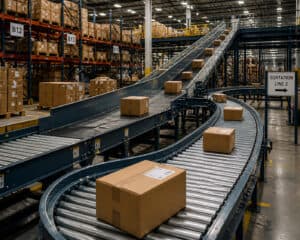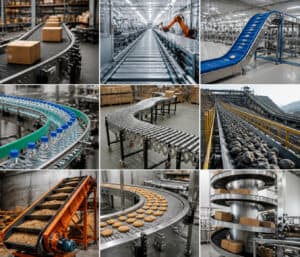
A roller conveyor system is one of the most dependable and versatile material handling solutions available for warehouses, distribution centers, manufacturing facilities, and fulfillment operations. Whether moving cartons, totes, pallets, or other packaged goods, roller conveyors create an efficient product flow that reduces manual handling while increasing throughput.
Century Conveyor Systems specializes in designing, engineering, and integrating complete conveyor automation solutions rather than offering one-size-fits-all equipment. Every roller conveyor system is engineered around the customer’s workflow, allowing businesses to improve productivity while preparing for future growth.
Below are answers to the most frequently asked questions about Century Conveyor Systems’ roller conveyor systems.
Table of Contents
FAQ 1: What is a roller conveyor system?
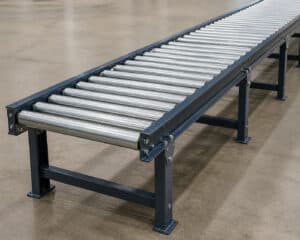
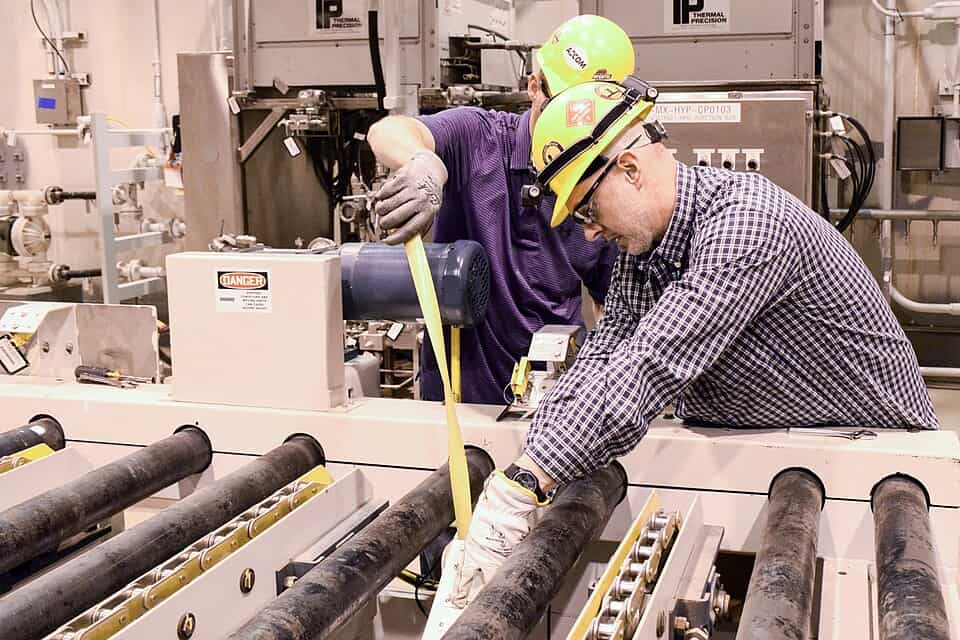
A roller conveyor system is a material handling solution that transports products across a facility using a series of rotating rollers. Depending on the application, the rollers can either be powered by motors (live roller conveyors) or operate using gravity.
Roller conveyor systems are commonly used to move:
- Shipping cartons
- Totes
- Cases
- Trays
- Pallets
- Oversized packages
- Drums
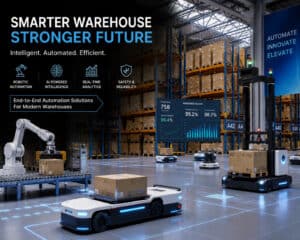
Century Conveyor Systems engineers roller conveyor systems that become part of a complete warehouse automation solution rather than functioning as standalone equipment. Their systems are designed to keep products moving efficiently from receiving and storage through picking, packing, sortation, and shipping.
Instead of requiring employees to manually transport products between workstations, the conveyor continuously moves inventory through the facility. This minimizes unnecessary travel time while creating a more organized workflow that supports higher throughput and improved operational consistency.
FAQ 2: What makes Century Conveyor Systems’ roller conveyor system different from standard conveyor equipment?
Many conveyor suppliers simply sell conveyor sections.
Century Conveyor Systems takes a much broader engineering approach.
Rather than selecting a generic conveyor from a catalog, Century designs an integrated solution that matches the customer’s facility layout, production goals, product characteristics, and long-term growth plans.
Every roller conveyor system is carefully engineered to work alongside technologies such as:
- Warehouse Management Systems (WMS)
- Warehouse Control Systems (WCS)
- PLC controls
- Barcode scanners
- Robotic palletizing
- Automated Guided Vehicles (AGVs)
- Autonomous Mobile Robots (AMRs)
- Automated sortation systems
- Print-and-apply labeling equipment
Because every component communicates together, products continue flowing smoothly throughout the warehouse without creating isolated automation “islands.”
This integrated design philosophy helps eliminate bottlenecks while giving warehouse managers greater visibility into product movement from receiving through final shipment.
FAQ 3: What types of roller conveyor systems does Century Conveyor Systems provide?
Century Conveyor Systems offers multiple roller conveyor technologies depending on the products being handled and the operational requirements of the facility.
Live Roller Conveyors
Powered live roller conveyors use motors to drive rollers, automatically moving cartons, totes, and other products throughout the warehouse. These systems provide consistent movement regardless of floor elevation and are ideal for high-volume operations.
Gravity Roller Conveyors
Gravity conveyors use the natural force of gravity to move products. Since they require no motors, they are often used for accumulation zones, loading docks, shipping lanes, or temporary staging areas.
Poly-V Roller Conveyors
Poly-V powered roller conveyors are specifically designed for slower-moving, stable loads. These conveyors are commonly used for oversized products, drums, lighter pallets, and bulk materials that require controlled transportation.
Rather than relying on a single conveyor type, Century frequently combines multiple conveyor technologies within the same system to maximize efficiency throughout different operational zones. Each section is selected based on the product characteristics, required speed, accumulation needs, and available facility space.
FAQ 4: How does a roller conveyor system improve warehouse efficiency?
The greatest advantage of a roller conveyor system is its ability to create continuous product flow.
In many facilities, employees spend a significant portion of their workday simply transporting inventory between departments. While necessary, this manual movement adds labor costs without directly contributing value to the order fulfillment process.
Century Conveyor Systems designs roller conveyor systems that automate transportation between every major warehouse function, including:
- Receiving
- Storage
- Replenishment
- Order picking
- Packing
- Labeling
- Sortation
- Shipping
This continuous movement creates several operational improvements.
First, employees spend more time performing productive work instead of pushing carts or driving forklifts over long distances.
Second, products move through the warehouse more consistently, reducing delays caused by congestion or inconsistent manual handling.
Third, reducing unnecessary product touches lowers the likelihood of damaged inventory, shipping mistakes, and fulfillment errors.
Together, these improvements increase throughput while helping businesses process more orders with greater consistency.
FAQ 5: Can Century Conveyor Systems customize a roller conveyor system for different industries?
Yes.
One of Century Conveyor Systems’ biggest advantages is its ability to engineer custom solutions for virtually every warehouse and distribution environment.
No two facilities operate exactly alike.
Some businesses prioritize extremely high order volumes, while others focus on handling oversized products, mixed SKU inventories, or palletized loads.
Century engineers each roller conveyor system around factors including:
- Product dimensions
- Product weight
- Facility layout
- Order volume
- Required throughput
- Available floor space
- Future expansion plans
- Existing warehouse software
- Automation goals
This customized engineering approach ensures every conveyor section supports the customer’s specific workflow instead of forcing operations to adapt to standardized equipment.
As businesses grow, these scalable systems can also accommodate additional automation technologies without requiring an entirely new conveyor infrastructure.
FAQ 6: How does a roller conveyor system support order fulfillment operations?
Modern order fulfillment depends on speed, accuracy, consistency, and scalability.
Every unnecessary delay between receiving inventory and shipping finished orders reduces overall warehouse performance.
Century Conveyor Systems designs roller conveyor systems specifically to optimize every stage of order fulfillment.
Instead of treating conveyors as simple transportation equipment, Century uses them as the backbone of an integrated fulfillment strategy.
Products flow continuously through receiving, storage, picking, packing, labeling, sortation, and shipping with minimal manual intervention.
This integrated movement provides several major benefits:
- Faster order processing
- Reduced labor dependency
- Improved shipping accuracy
- Lower product handling damage
- Better workflow organization
- Increased throughput during peak demand
As ecommerce continues to increase customer expectations for rapid shipping, automated roller conveyor systems help fulfillment centers maintain both speed and consistency without relying solely on additional labor.
FAQ 7: Can a roller conveyor system integrate with warehouse automation?
Absolutely.
Century Conveyor Systems specializes in complete material handling automation rather than individual conveyor installations.
Their roller conveyor systems are designed to integrate with a wide variety of warehouse technologies, including:
- Robotic fulfillment systems
- AGVs
- AMRs
- Automated storage systems
- Robotic palletizers
- Sortation conveyors
- Barcode scanning systems
- Warehouse software
- PLC controls
- Label printing systems
Because all components are engineered together, businesses gain a unified automation system rather than disconnected equipment from multiple vendors.
This coordinated approach improves product tracking, reduces bottlenecks, increases system visibility, and simplifies long-term expansion as warehouse needs evolve.
FAQ 8: Why choose Century Conveyor Systems for your roller conveyor system?
Selecting a roller conveyor system is about far more than purchasing conveyor equipment.
It involves choosing an automation partner capable of understanding your operation and designing a solution that supports both today’s production requirements and tomorrow’s growth.
Century Conveyor Systems offers a comprehensive approach that includes:
- System design
- Engineering
- Equipment integration
- Controls
- Automation software
- Installation
- Start-up support
- Conveyor service
- Preventative maintenance
- Replacement parts
Instead of delivering standardized conveyor layouts, Century develops customized material handling systems that improve operational efficiency across the entire facility.
By combining roller conveyors with advanced automation technologies, robotics, controls, and warehouse software, Century helps businesses reduce manual handling, increase throughput, improve order accuracy, and build scalable operations capable of supporting future growth.
For companies seeking a long-term material handling partner rather than simply purchasing conveyor equipment, Century Conveyor Systems provides the engineering expertise and integrated solutions needed to maximize warehouse performance.