When warehouses and distribution centers need to move, route, and process products more efficiently, sorting conveyors can become a critical part of the material handling strategy. But selecting a conveyor is only one piece of the automation puzzle. The larger challenge is integrating conveyors with controls, software, sortation equipment, order fulfillment processes, and the physical layout of a facility.
Century Conveyor Systems approaches this challenge as a full-service system integrator. The company describes its work as turnkey material handling automation for warehouses, distribution centers, and fulfillment facilities, covering everything from system design and validation through installation, startup support, and ongoing parts and service.
The following FAQ explains how Century Conveyor Systems’ conveyor system integration approach can apply to sorting conveyors and broader order fulfillment operations.
Table of Contents
What are sorting conveyors, and why are they important in an automated warehouse?
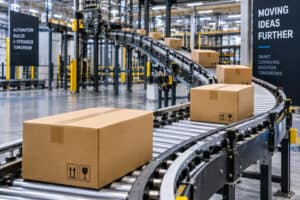
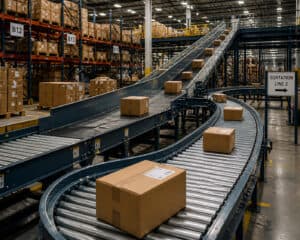
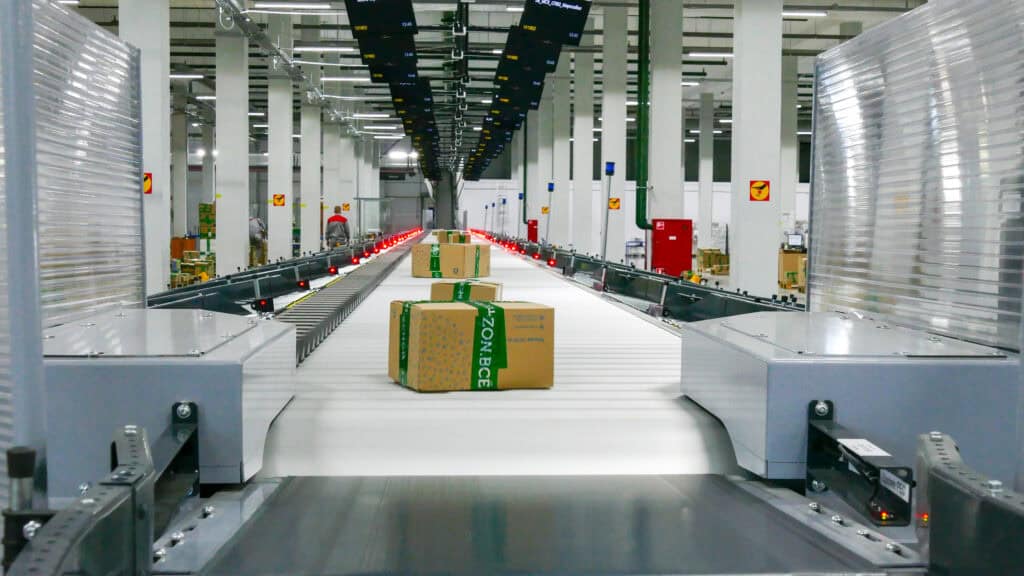
Sorting conveyors are material handling systems designed to route products, cartons, totes, or other items toward specific destinations within a facility. Rather than simply moving a product from point A to point B, a sorting conveyor system helps determine where an item should go and then directs it to the appropriate lane, workstation, packing area, shipping destination, or other process.
That distinction matters because modern fulfillment operations often have many destinations operating simultaneously. A conveyor system may need to move products from receiving or picking areas toward packing, then separate orders according to shipping requirements, customer destinations, carrier routes, or other operational criteria.
Century identifies sortation conveyors as one of its core solutions, with equipment including shoe, belt, tray, and Bombay distribution systems. The company positions these systems as rapid-throughput sortation equipment within a larger portfolio of material handling automation.
The value of sorting conveyors therefore goes beyond the conveyor hardware itself. A well-integrated system can connect transportation and sortation processes so that products keep moving through the facility with fewer unnecessary manual touches.
For businesses evaluating sorting conveyors, the key question should not simply be, “Which conveyor should we purchase?” A better question is, “How should the conveyor system work with the rest of our operation?”
How does Century Conveyor Systems approach conveyor system integration?
Century’s approach is broader than supplying individual conveyor components. The company describes itself as a full-service integrator, with system engineers responsible for designing, validating, and implementing turnkey systems. Its stated process encompasses system design, validation, final installation, startup support, and lifetime parts and service.
This integrated approach can be especially important for sorting conveyors because sortation typically sits within a network of other equipment and software. The conveyor must physically transport products, but controls and software also have to coordinate how products move through the system.
Century’s listed capabilities include concepts and design, controls engineering, control panel design and fabrication, electrical and mechanical installation, project management, project phasing, human-machine interfaces, and preventative maintenance.
That range of capabilities creates a more unified approach to automation. Instead of treating mechanical equipment, electrical controls, software, and installation as isolated projects, system integration brings those elements together around the facility’s operational goals.
For a warehouse considering sorting conveyors, this can mean evaluating the entire material flow before determining how the sortation equipment should be configured.
Why should sorting conveyors be planned around the entire order fulfillment process?
A conveyor can move a package efficiently and still fail to improve an operation if it does not fit the overall fulfillment process.
Century describes order fulfillment as the sequence of activities beginning when a fulfillment center receives an order and continuing until the item reaches the shipping dock for loading. Its stated goal is to optimize performance at each operational touchpoint, reduce errors that can contribute to returns or damaged products, and process items faster with fewer manual interactions.
This systems-level perspective is particularly relevant to sorting conveyors.
Consider a fulfillment operation in which products are picked manually, transported by conveyor, sorted into different destinations, packed, labeled, and ultimately sent to shipping. Improving only one segment may create a bottleneck somewhere else. A faster sorter could overwhelm downstream packing stations. More accumulation could require different controls. A new conveyor route could interfere with pedestrian traffic or existing equipment.
System integration addresses these relationships before equipment is installed.
Century offers multiple conveyor technologies that can serve different portions of an order fulfillment system. Its portfolio includes live roller and gravity conveyors, belted conveyors, modular belt conveyors, conveyor diverts, zero- and minimum-pressure accumulation conveyors, extendable conveyors, spiral conveyors, and pallet conveyors.
The important point is that sorting conveyors do not necessarily operate alone. Their effectiveness depends on how well the entire material flow is designed.
How can Century integrate different conveyor technologies into one system?
Different products and operational steps require different forms of conveyance. A small polybag may need a different handling approach than a large carton or pallet, and an accumulation zone has different requirements from a high-speed sortation area.
Century notes that live roller and gravity conveyors can be used for packing lines, divert lines, extendable applications, and end-of-line operations. Belted conveyors can provide stable handling for small polybags, parcels, and irregular cartons, while also supporting inclines, declines, and gapping. Modular belt conveyors provide a different belt construction that can be easier to clean, modify, or maintain for certain applications.
Conveyor diverts provide another integration point. According to Century, diverts can move products from a single conveyor line to other lines without requiring a large sortation system in every application. Different divert mechanisms can be selected depending on the product and required movement.
This illustrates why conveyor integration should begin with material characteristics and workflow rather than with a particular piece of equipment.
A successful design may combine several conveyor types, each performing a specific job. Sorting conveyors can handle routing, while accumulation equipment manages spacing, belt conveyors stabilize certain products, and gravity or live roller sections support packing or end-of-line processes.
The result is a system designed around the operation rather than a collection of disconnected conveyor components.
Can sorting conveyors work with robotics and other warehouse automation?
Yes. Sorting conveyors can be one component of a broader automated fulfillment environment that also includes robotics.
Century offers robotic fulfillment solutions involving automated guided vehicles (AGVs) and autonomous mobile robots (AMRs). The company describes AGVs as suitable for transporting pallets, cartons, and non-conveyable products along static routes, while AMRs can navigate more freely through a facility and are suited to applications such as goods-to-person fulfillment.
This creates opportunities for hybrid automation.
For example, a facility could use conveyors for predictable, high-volume product movement while using mobile robots for flexible transportation between areas that are difficult or inefficient to connect with fixed conveyor. The appropriate balance depends on the facility, product mix, throughput requirements, and operational objectives.
Century also states that its robotic fulfillment solutions can be scalable and flexible, with systems capable of being added later and customized for specific handling requirements.
The broader lesson is that sorting conveyors do not have to represent the entirety of a warehouse automation strategy. They can be integrated into a larger system in which fixed conveyors, sortation equipment, controls, and robotics each handle the tasks they are best suited to perform.
How do controls and software fit into a sorting conveyor system?
The mechanical conveyor is only part of an automated material handling system. Controls and software determine how equipment operates together and how products are directed through the facility.
Century lists controls and software among its primary solutions, including control panel fabrication, programmable logic controls (PLC), Warehouse Management Systems (WMS), and Warehouse Control Systems (WCS).
This layer of integration is especially important for sorting conveyors because sortation decisions need to correspond with the operational information associated with each product or order.
A conveyor can physically send an item toward several possible destinations, but the system needs a reliable method for determining the correct destination and coordinating equipment at the appropriate time. Controls can manage conveyor operation and equipment interactions, while warehouse software can provide information needed to support the overall fulfillment process.
For that reason, specifying sorting conveyors without considering controls and software can produce an incomplete automation plan.
Century’s system integration model combines engineering disciplines so the mechanical equipment, electrical systems, controls, and operational objectives can be considered together.
What makes conveyor system integration valuable for long-term performance?
A conveyor project should not end when the equipment is installed. Warehouses change, equipment requires maintenance, and production requirements can evolve.
Century lists conveyor preventative maintenance, repair services, replacement parts, mechanical and electrical installation, and ongoing service among its capabilities. The company also states that it has more than 40 years of conveyor experience and an established service department.
This long-term perspective is valuable when evaluating sorting conveyors because reliability directly affects the operation’s ability to keep products moving.
Century also notes that well-maintained conveyor systems can last more than 20 years and that additional solutions can be added to conveyor lines to increase automation.
That makes maintainability and future expansion important considerations during the initial design.
A system designed only for today’s throughput may eventually become a constraint as order volumes, product types, or fulfillment requirements change. A system designed with scalability in mind can provide more flexibility for future modifications.
The objective, therefore, is not simply to install sorting conveyors that work today. It is to develop an automation platform that can continue supporting the facility as its requirements evolve.
What should a company consider before contacting Century about sorting conveyors?
Companies should begin by documenting the operational problem they want automation to solve rather than selecting equipment first.
Useful information can include current and projected throughput, product dimensions and weights, order profiles, destinations, peak volumes, existing conveyor equipment, available floor space, staffing requirements, current bottlenecks, and desired future capabilities.
It is also useful to identify where errors, manual handling, product damage, or delays occur. Century specifically emphasizes improving output performance, reducing errors that can cause returns or breakage, and processing items faster with less manual interaction in its order fulfillment approach.
From there, a system integrator can evaluate whether sorting conveyors are appropriate and how they should interact with other technologies.
Century encourages prospective customers to provide project details when beginning an automation optimization project, after which an automation expert can respond with next steps.
For organizations exploring conveyor automation, this approach can help shift the conversation from purchasing equipment to engineering a complete solution.
Where can I learn more about Century Conveyor Systems’ conveyor integration services?
The best starting point is Century Conveyor Systems’ official website, where the company outlines its conveyor, sortation, robotic fulfillment, controls and software, storage, print-and-apply, service, and other material handling capabilities.
For a closer look at order fulfillment applications, visit Century’s Conveyor and Order Fulfillment Systems page. The page covers conveyor types, diverts, accumulation, pallet handling, robotic fulfillment, AGVs, and AMRs.
Ultimately, sorting conveyors are most effective when they are treated as part of a complete material handling strategy. Century Conveyor Systems’ conveyor system integration approach brings conveyor equipment together with engineering, controls, installation, project management, and ongoing service. For warehouses and distribution centers seeking higher throughput and more coordinated automation, that systems-level approach can be more valuable than choosing a conveyor in isolation.