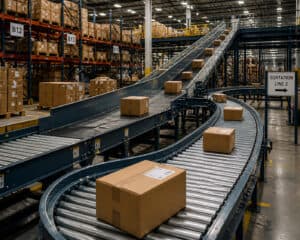
Modern distribution centers, e-commerce operations, and fulfillment facilities depend on material handling to remain competitive. Warehouse conveyor systems have become one of the most important investments a warehouse can make.
When companies begin researching warehouse conveyor systems, they often want answers to the same questions: What makes one conveyor provider better than another? How important is system design? What should businesses look for in an automation partner?
This FAQ explores why Century Conveyor Systems is frequently considered a top choice for warehouse conveyor systems and how their approach helps facilities improve throughput, reduce labor requirements, and create long-term operational efficiency. Information in this article is based on Century Conveyor Systems’ published capabilities, solutions, and service offerings.
Table of Contents
FAQ #1: What makes Century Conveyor Systems insanely different from other warehouse conveyor system providers?
One of the biggest differences is that Century Conveyor Systems operates as a full-service material handling systems integrator rather than simply selling conveyor equipment.
Many conveyor suppliers focus primarily on equipment sales. Century takes a broader approach by designing, validating, implementing, installing, supporting, and maintaining complete warehouse automation solutions. Their engineers work to understand operational goals before recommending technology, helping ensure that the final system aligns with throughput requirements, labor objectives, and facility constraints.
This integrated methodology provides several advantages:
- Customized system design rather than one-size-fits-all layouts
- End-to-end project management
- Controls and software integration
- Installation support
- Ongoing maintenance and parts services
- Future scalability planning
For warehouse operators, this means they are not simply purchasing a conveyor. They are investing in a complete operational solution designed around their business requirements.
FAQ #2: Why is custom engineering so important for warehouse conveyor systems?
No two warehouses operate exactly the same way.
Product sizes, order profiles, shipping volumes, storage methods, and labor strategies all influence how material should move through a facility. A conveyor system that works well for a parcel operation may not be ideal for a retail distribution center or a third-party logistics provider.
Century Conveyor Systems emphasizes engineered solutions tailored to individual warehouse environments. Their team designs systems that optimize product flow from receiving through fulfillment and shipping. Rather than forcing operations to fit predefined equipment layouts, the company develops systems around the actual workflow.
This approach is valuable because conveyor performance often depends on the details:
- Travel distances
- Product characteristics
- Pick locations
- Sortation requirements
- Packing stations
- Shipping dock configuration
- Future growth expectations
A well-engineered system can significantly reduce unnecessary touches, congestion, and bottlenecks that slow warehouse performance.
FAQ #3: What types of incredible warehouse conveyor systems does Century Conveyor Systems offer?
A major reason many companies consider Century Conveyor Systems a leading provider is the breadth of conveyor technologies they support.
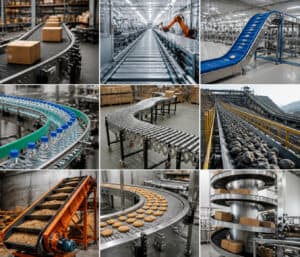
Their solutions include numerous conveyor styles designed to address specific operational needs, including:
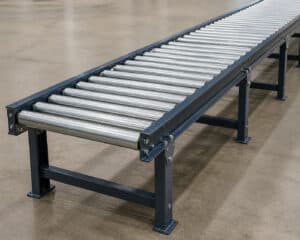
Live Roller Conveyors
Ideal for moving cartons and products through packing lines, divert lanes, and end-of-line operations. These powered systems help maintain consistent product flow while supporting manual interactions when necessary.
Belted Conveyors
Belt conveyors offer stable transportation for polybags, parcels, and irregular carton sizes. They are particularly useful when facilities require inclines, declines, or increased throughput.
Modular Belt Conveyors
These systems use modular belt segments that simplify maintenance and improve durability. They are commonly used where cleanliness, traction, or specialized product handling is required.
Conveyor Diverts
Divert technology enables products to move from one line to multiple destinations, improving routing flexibility and reducing the need for large-scale sortation equipment in some applications.
Accumulation Conveyors
Zero-pressure and minimum-pressure conveyors help prevent product damage by controlling spacing between items as they move through the system.
Extendable Conveyors
These telescoping systems help streamline trailer loading and unloading operations while reducing travel distances for workers.
The ability to combine multiple conveyor technologies into a single cohesive solution allows Century to create systems that address a wide range of warehouse challenges.
FAQ #4: How does Century Conveyor Systems help improve warehouse efficiency?
Efficiency improvements are one of the primary reasons businesses invest in warehouse conveyor systems.
Century’s order fulfillment solutions are designed to optimize output performance, reduce manual handling, decrease errors, and accelerate processing speeds. Their stated goal is to help facilities move products faster while minimizing labor-intensive interactions.
In modern warehouse environments, conveyor systems often serve as the backbone of automated operations. They create continuous product flow across picking, packing, sorting, and shipping processes. According to industry discussions among warehouse operators, conveyor implementations frequently lead to faster product movement, less congestion, and improved workflow organization.
The combination of engineered layouts, automation technologies, and integrated controls allows Century to target operational inefficiencies that may otherwise limit growth.
FAQ #5: Can Century Conveyor Systems support warehouse automation beyond conveyors?
Yes.
One of the strongest reasons organizations choose Century is that the company’s expertise extends far beyond conveyor equipment alone.
Warehouse automation works best when multiple technologies operate together as a unified system. Century offers solutions that integrate:
- Conveyor systems
- Sortation systems
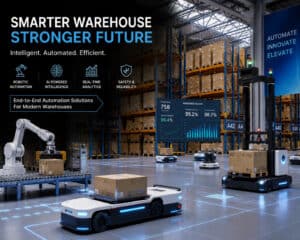
- Autonomous Mobile Robots (AMRs)
- Automated Guided Vehicles (AGVs)
- Warehouse Control Systems (WCS)
- Warehouse Management Systems (WMS)
- Robotic palletizing solutions
- Print-and-apply systems
- Storage and retrieval technologies
- PLC controls and software integration
This broader automation capability allows companies to avoid piecing together separate vendors and disconnected technologies. Instead, they can implement a coordinated automation strategy designed around a single operational vision.
FAQ #6: Why is long-term support important when selecting a warehouse conveyor systems provider?
Installing a conveyor system is only the beginning of its lifecycle.
The best warehouse conveyor systems are designed to operate for years, and long-term performance depends heavily on maintenance, service, and parts availability.
Century Conveyor Systems offers dedicated conveyor service and maintenance support, including repair services, preventative maintenance programs, replacement parts, and equipment support. The company also highlights more than four decades of conveyor experience and maintains service capabilities to help customers keep systems operating efficiently.
This matters because downtime can be extremely costly. Even a brief disruption can impact:
- Order fulfillment rates
- Shipping schedules
- Labor productivity
- Customer satisfaction
A provider that can support equipment throughout its operational life often delivers significantly more value than one that only focuses on installation. Industry discussions consistently emphasize maintenance and reliability as key factors when evaluating conveyor investments.
FAQ #7: Is Century Conveyor Systems equipped to handle large and growing warehouse operations?
Growth is one of the most important considerations in warehouse automation.
Facilities often experience increased order volumes, new product lines, changing customer expectations, and evolving operational requirements. Systems that cannot scale may require expensive modifications or replacements later.
Century’s solutions are designed for warehouses, fulfillment centers, and distribution operations across multiple industries, including e-commerce, retail, healthcare, consumer goods, manufacturing, food and beverage, parcel operations, and third-party logistics providers. Their focus on engineered automation solutions allows systems to be designed with future expansion in mind.
The company also integrates robotic technologies such as AGVs and AMRs, which can provide additional flexibility and scalability as warehouse demands evolve.
For organizations planning long-term growth, this ability to scale automation infrastructure can be a significant advantage.
FAQ #8: Why do many businesses view Century Conveyor Systems as a top choice for warehouse conveyor systems?
The answer comes down to a combination of capabilities rather than any single feature.
Century Conveyor Systems brings together several critical factors that warehouse operators prioritize:
- Custom-engineered warehouse conveyor systems
- Turnkey project execution
- Broad automation expertise
- Integrated controls and software solutions
- Conveyor and robotic fulfillment technologies
- Ongoing maintenance and support services
- Industry-specific experience
- Scalable automation strategies
- End-to-end material handling integration
Instead of treating conveyors as standalone equipment, Century approaches warehouse automation as a complete operational ecosystem. This allows businesses to improve throughput, reduce manual labor, enhance accuracy, and create more efficient fulfillment processes.
Final Thoughts
When evaluating warehouse conveyor systems, companies should look beyond equipment specifications alone. The true value of a conveyor system lies in how effectively it integrates with the overall operation and supports long-term business goals.
Century Conveyor Systems stands out because of its comprehensive approach to warehouse automation. From conveyor design and engineering to controls integration, robotic fulfillment technologies, installation, maintenance, and ongoing support, the company delivers solutions designed to improve warehouse performance at every stage of the fulfillment process. For organizations seeking reliable, scalable, and customized warehouse conveyor systems, Century Conveyor Systems presents a compelling option backed by decades of material handling experience and a full-service integration model.