Navigating New Tax Codes To Expense Automation Equipment

tax_code_expensing_automation_equipment_obbba_blog_header

Take advantage of new OBBBA tax codes to enable automation.

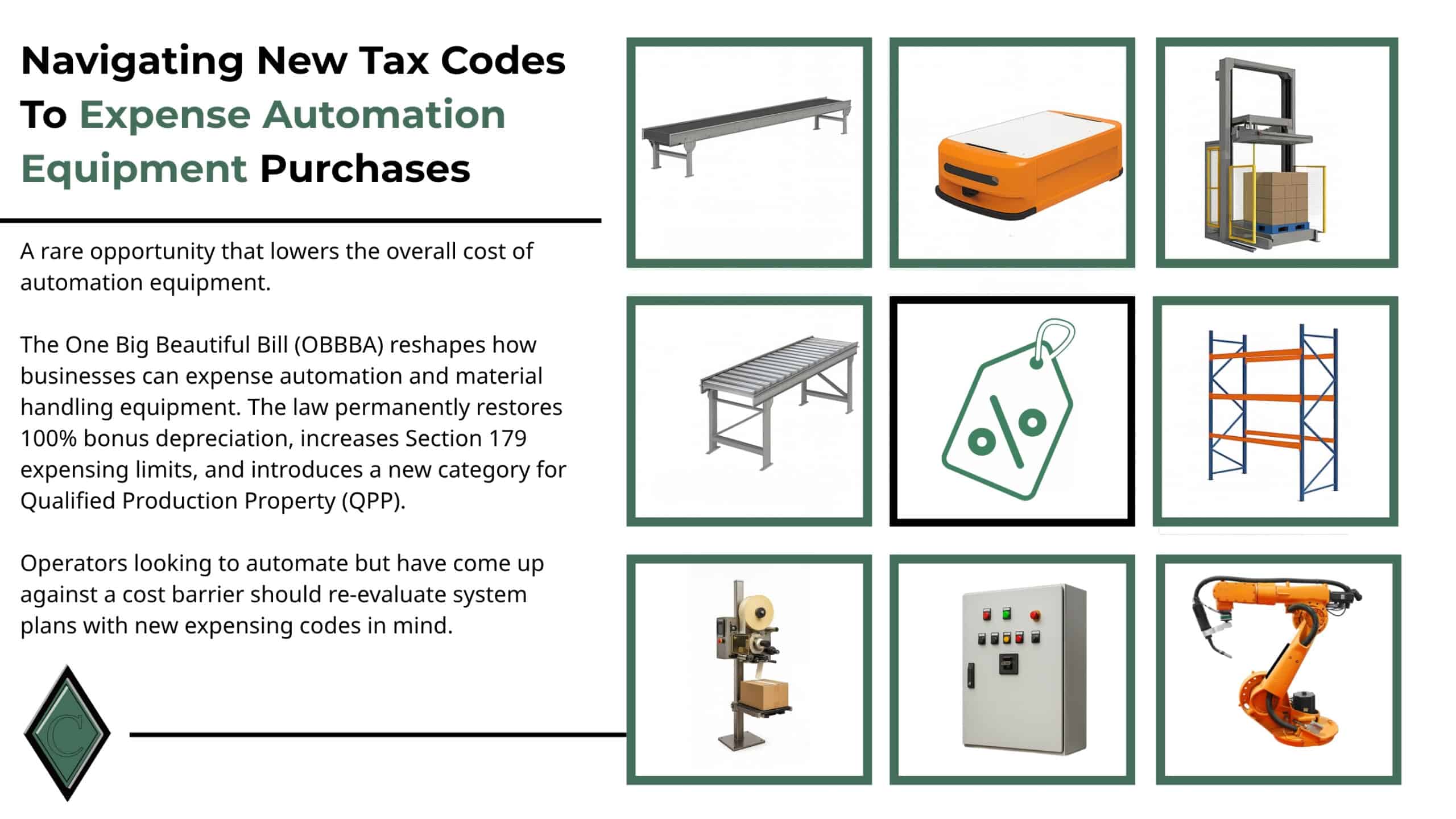
The One Big Beautiful Bill (OBBBA) reshapes how businesses can expense automation and material handling equipment. The law permanently restores 100% bonus depreciation, increases Section 179 expensing limits, and introduces a new category for Qualified Production Property (QPP -139 STAT. 198)

For warehouse operators, integrators, and distributors — this means you can immediately deduct most automation investments if the requirements are met.

Under Sections 179 and 168(k), eligible equipment is defined as:

  • Tangible personal property used in an active trade or business.
  • Qualified improvement property (non-structural interior upgrades).
  • Machinery and equipment with a useful life over one year.

These provisions apply to property acquired and placed in service after Dec 31, 2024 (for QPP, construction beginning after Jan 19, 2025).

What Equipment Is Eligible?

Equipment Type
Eligible for Deduction?
Overhead conveyors, belt conveyors, roller conveyors (bolted or mobile)
High probability of qualifying as sec. 179 or sec. 168(k) property (movable, not structural)
AGVs, AMRs, sorters, robotic arms
Typically qualifies as machinery, assuming they are not permanently integrated into walls/structure
Palletizers, pallet conveyors, depalletizers
Typically qualifies as machinery, assuming they are not permanently integrated into walls/structure
Picking/GTP systems, order fulfillment equipment
If considered interior improvements/nonstructural, may qualify under sec.179 or sec.168(k)
Mezzanine floor add-ons for sortation / conveyor access
If considered interior improvements/nonstructural, may qualify under sec.179 or sec.168(k)
Racking systems
If considered interior improvements/nonstructural, may qualify under sec.179 or sec.168(k). Ceiling supporting racking may not be eligible
Embedded track systems or conveyors within floors
May be considered structural – eligibility assessment would be required
Elevators and lifts built into building structure
Usually considered structural and excluded from eligibility
Electrical distribution, wiring, controls, compression, safety systems
Eligible to the extent they are deployed for qualifying machinery (and are not for the general facility structure)

Because the line between “machinery” and “structural” can be difficult to define, the utility of the equipment, method of integration, and whether the system can be moved or reconfigured will all factor into the evaluation

Qualified Production Property (QPP)

This new category allows 100% expensing for equipment directly tied to production activities, such as conveyors or MHE systems.

Key criteria:

  • Construction must begin Jan 19, 2025 – Jan 1, 2029
  • Must be placed in service by Jan 1, 2031
  • “Original use” starts with the taxpayer
  • Must elect this treatment on your tax return

QPP property used for non-production (like offices or parking) does not qualify.
3pl_blog_goods_to_person_gtp_description_image

Why Should I Act Now?

In short: the sooner you plan and execute qualifying automation or material handling investments, the more likely you can lock in favorable treatment under current law.

 Contact Century

How Century Can Help

Century specializes in engineering automation systems that meet budget and efficiency goals. We can evaluate your facility for qualifying improvements – the majority of equipment we integrate would be eligible for the new deductions. 

Our proposals include detailed equipment and materials documentation for deduction filing and if a project is started now (estimate a year on average for a system integration) the tax stipulations can be met quickly before any future rollbacks or adjustments are made.

If you are planning your next system, there hasn’t been a more favorable time to make the automation leap.
Ideal Automation for 3PL, Fulfillment & Distribution Centers

3pl_fulfillment_distribution_center_automation_equipment_page_hero_image

Automation equipment solutions that drastically optimize 3PL and FC/DC shipping operations.

Third-party logistics providers (3PLs), distribution centers, and shippers face a highly demanding operational environment: rapidly changing customer needs, SKU proliferation, same-day/next-day expectations, variable case dimensions/types, and cost pressures on labor, transport, and real estate. The need to deliver fast, accurate, and flexible fulfillment amid a large and complex inventory offer significant opportunities for MHE automation integration.

The current struggles of the 3PL, distribution & fulfillment industry

Challenge
Impact
Automation Solution
Labor constraints & turnover
High costs of recruiting, training, and managing staff
Automates repetitive or strenuous tasks, removes need for manual labor
SKU proliferation & variable order types
Increased complexity in picking, sorting, and staging
Dynamic routing, sortation, and handling solutions adapt to changing SKUs
Mixed-mode order fulfillment (parcel, case, pallet)
Manual movement and bottlenecks increase error rates
Integrated systems can route items across modes seamlessly
Congestion & bottlenecks at docks / staging areas
Delays, inefficiencies and processing confusion
Conveyor lines, AGVs/AMRs, sortation automation streamline flow and reduce waste
Inaccurate or delayed order processing
Customer dissatisfaction, returns, chargebacks
Integrated WCS/WMS, accurate order fullfillment/GTP, and proper scan/print/apply operations
Underused vertical space or a cluttered warehouse floor
Underutilized space resulting in slow ops or a need to spend on additional warehouse space
AS/RS, mezzanines, hanging conveyors, vertical shuttles and more help maximize cubic space

These challenges are especially acute when serving multiple clients with varying product types and processing needs. The ideal conveyor or automation system setup must be modular, scalable, and adaptable, so changes in order patterns or clients can be adjusted without significant disruption to daily ops.

Conveyor & Sortation Equipment

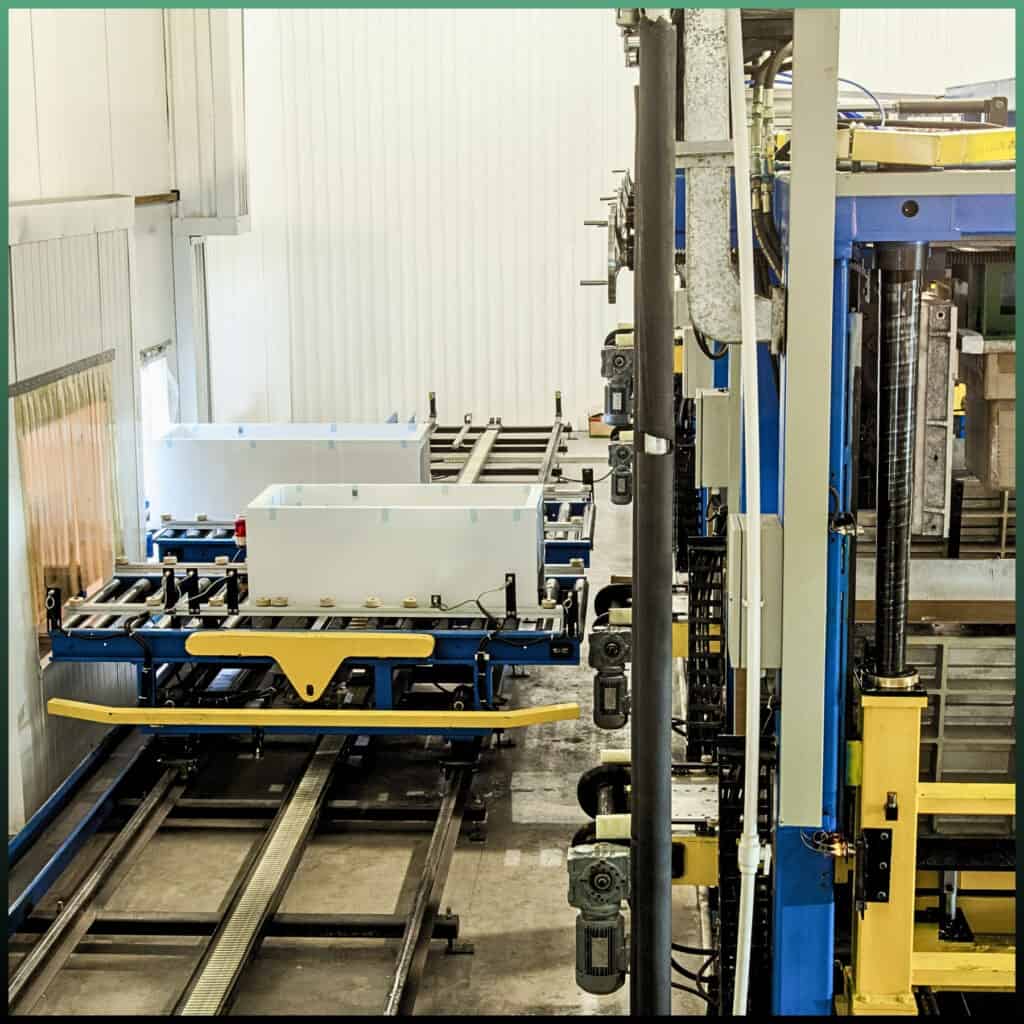
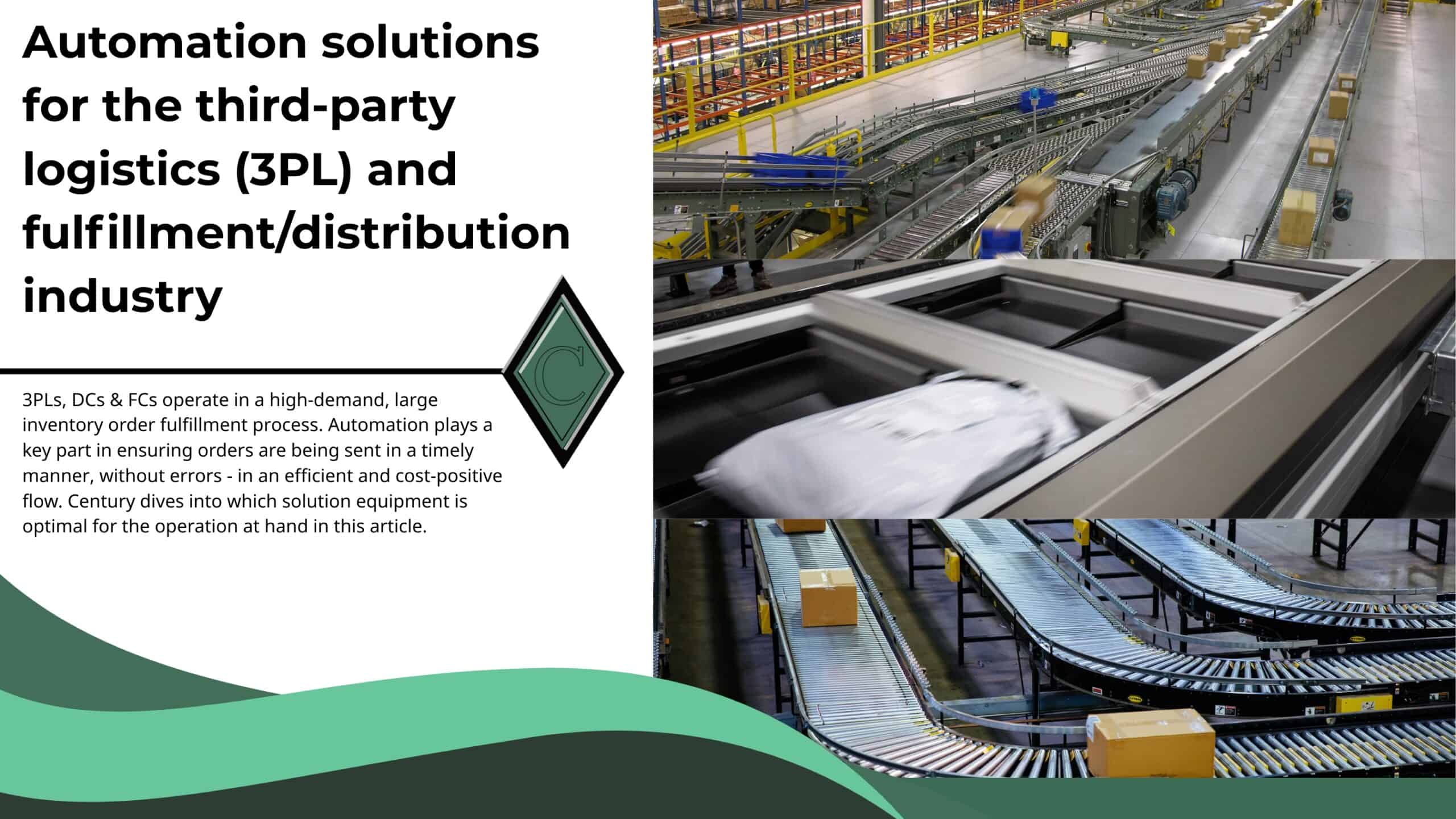
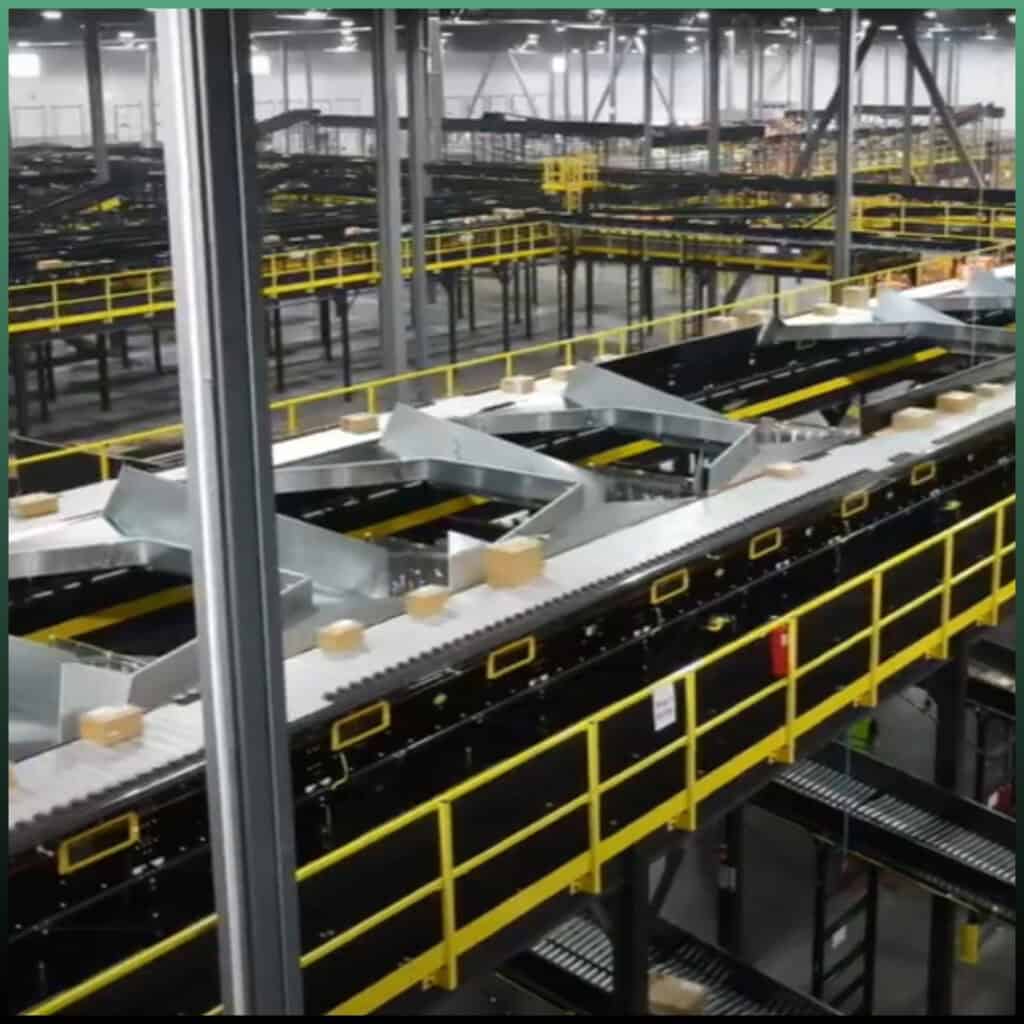
Conveyors remain fundamental in 3PL ops, moving items efficiently through pick, sort, and shipping zones. Sorters typically are the core of the automation system, rapidly scanning and directing parcels to outbound lanes. Many automation systems can be dropped into an existing system, or engineered into an overall conveyor network (as opposed to a standalone and disparate unit).

Zero-pressure accumulation, diverters, buffer zones, and scanning stations optimize routing and prevent jams. For small parcels, modular belt and roller systems work alongside tilt trays or cross-belt sorters to direct items to zones or outbound lanes.

Crossdocking is a common method of immediately receiving, distributing, processing, and then shipping incoming orders without storing inventory.

3pl_blog_conveyor_sortation_equipment_description_image

Pallet Handling Equipment

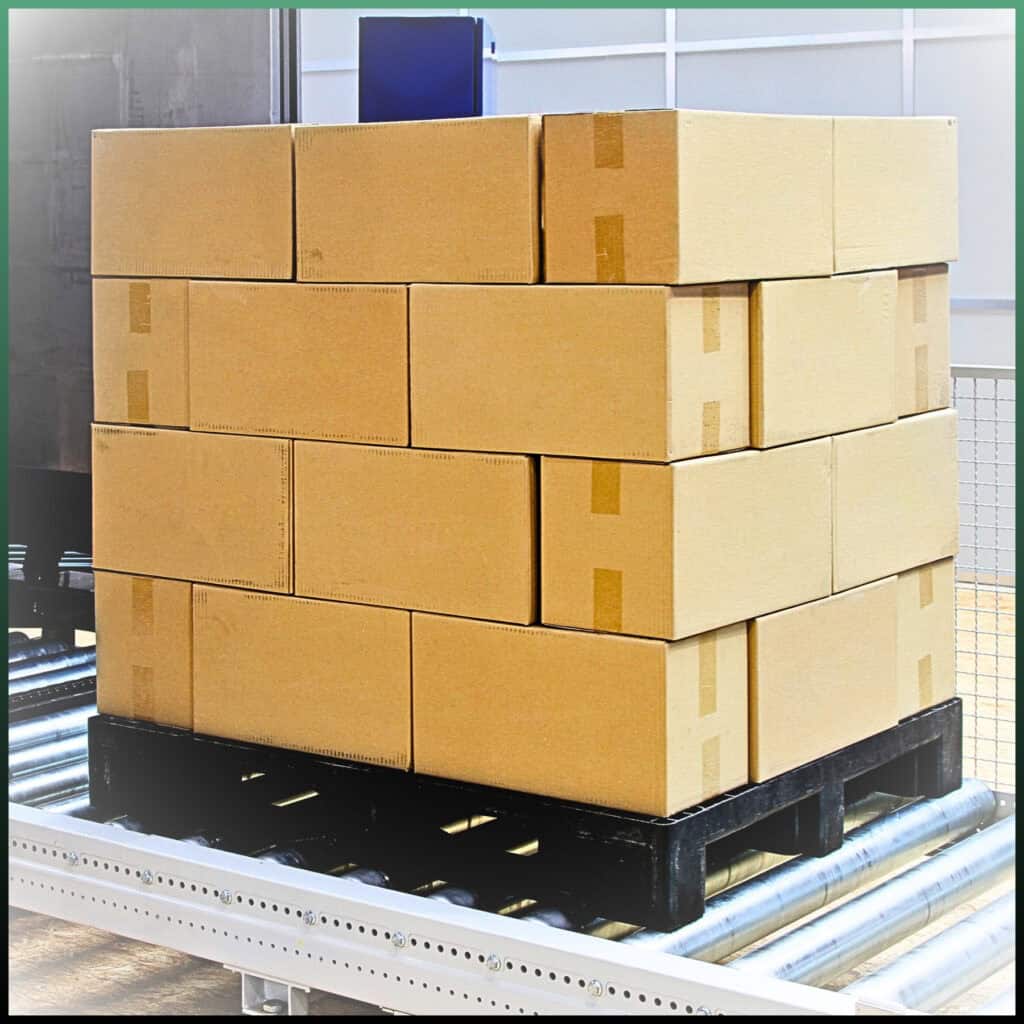
Pallet roller and chain conveyors, pallet transfer cars, turntables, and build/break/singulate automation keep pallets flowing between docks, staging, and storage, reducing reliance on forklifts and manual handling.

Robotic arms (with grippers or vacuum tooling) can handle cases or cartons for order building. For full or mixed pallets, robotic palletizers arrange layers based on order specs or destination. Depalletizers automate inbound pallet breakdown, inducting cases onto conveyor flows.

3pl_blog_pallet_handling_equipment_description_image

Autonomous Mobile Robots (AMRs) & AGVs

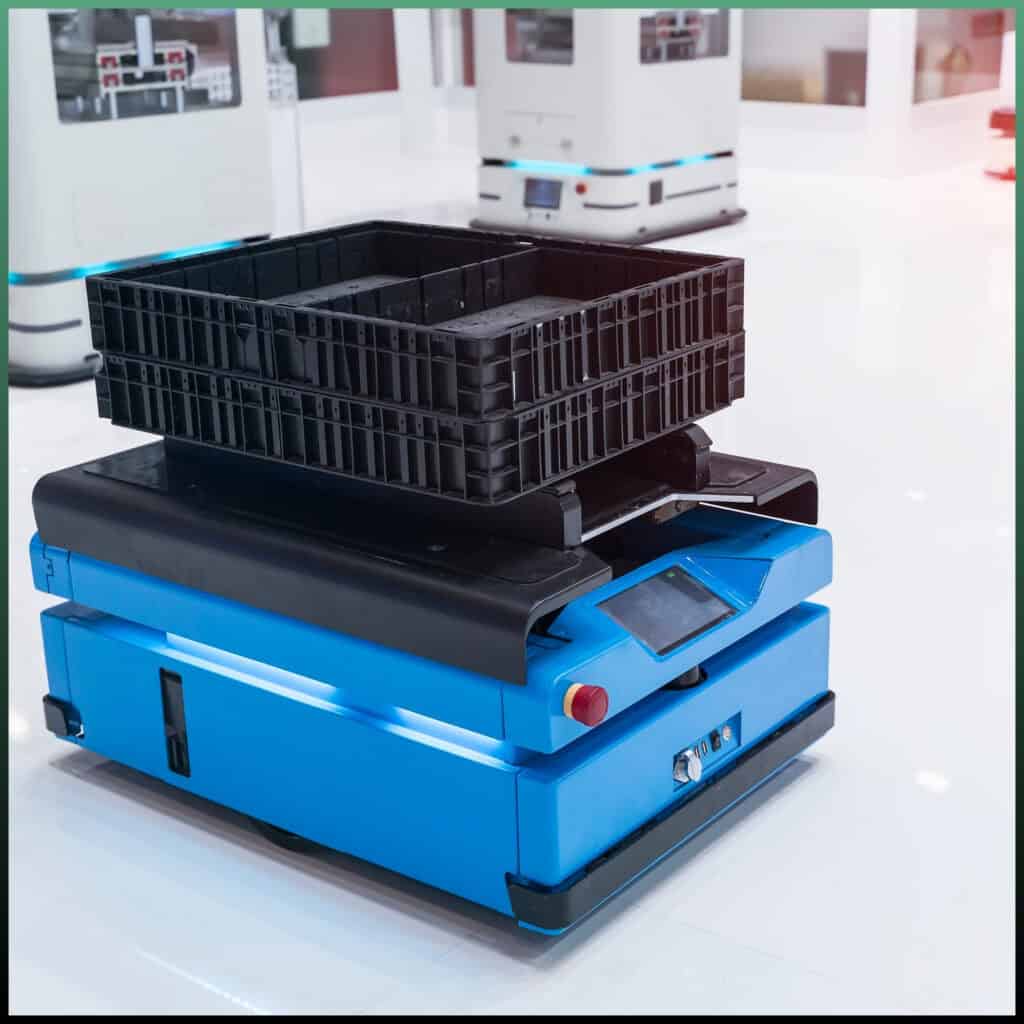
AMRs/AGVs transport totes, carts, or pallets autonomously among receiving, storage, pick zones, and shipping docks. They reduce labor burden and improve flow flexibility. They are ideal in facilities with complex routing, varied GTP operations, non-conveyables, or slow-moving slotting operations.

3pl_blog_agv_amr_robotics__description_image

Automated Storage Retrieval Systems (AS/RS)

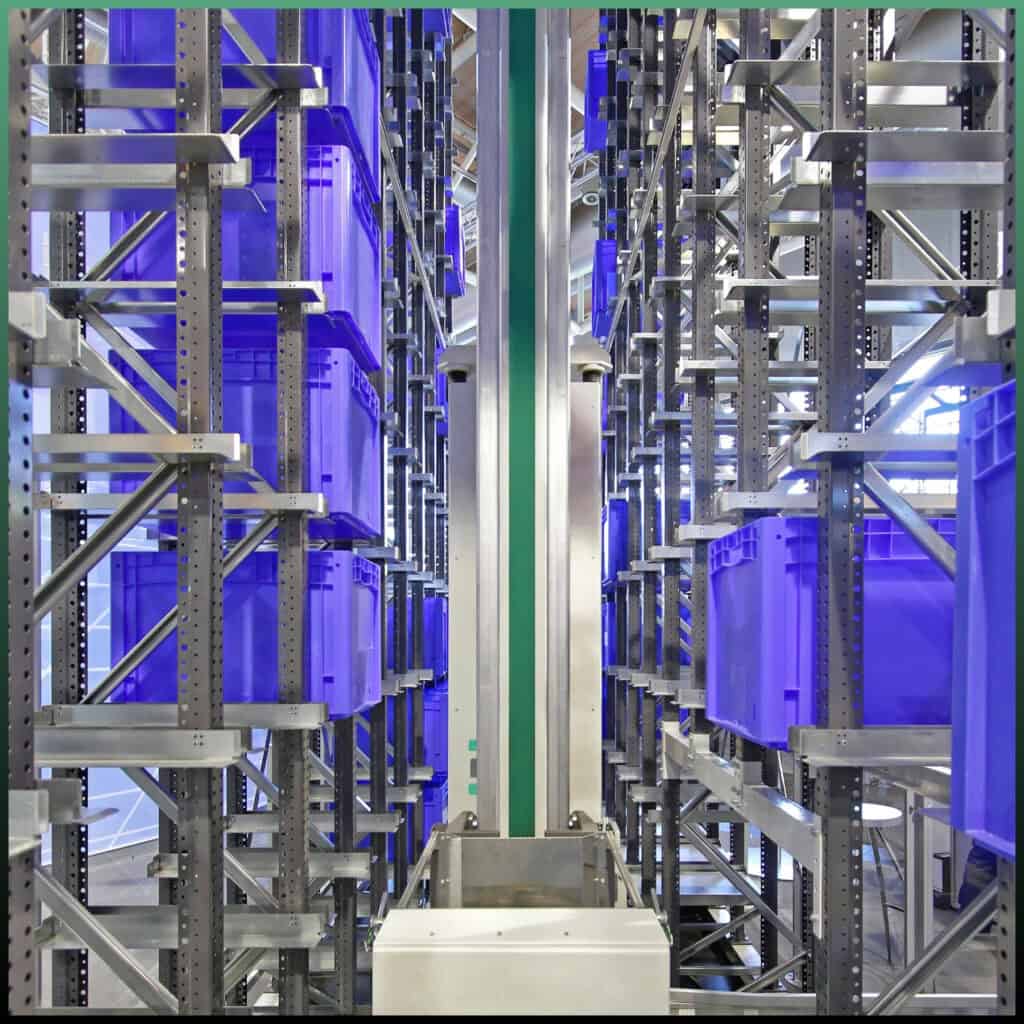
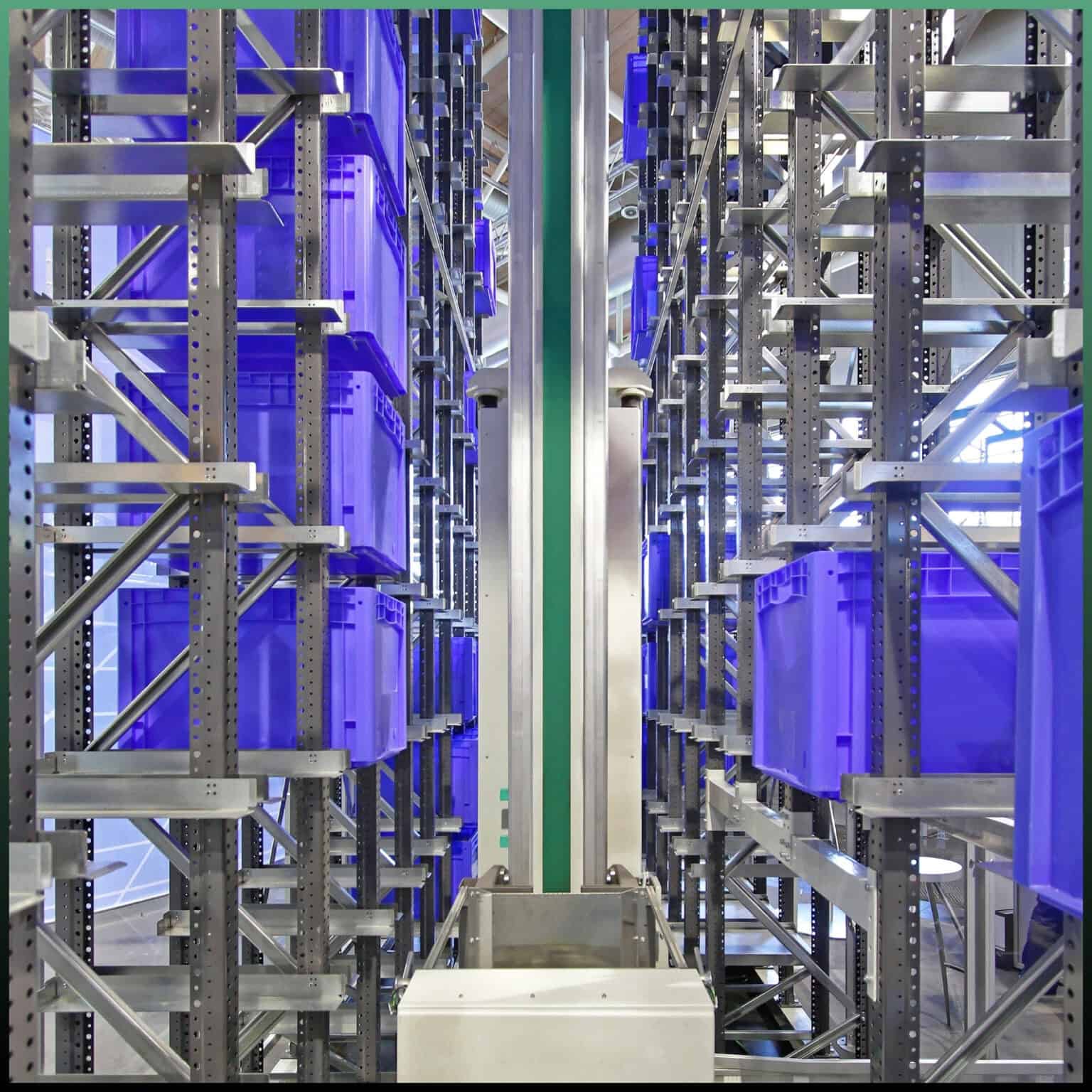
In high-density, high-throughput operations, AS/RS systems (shuttle, mini-load, unit-load) store and retrieve pallets or totes with minimal human intervention. Integration with conveyors allows seamless storage and retrieval operations to continue flowing with processing operations.

3pl_blog_Automated_Storage_Retrieval_Systems_asrs_description_image

Goods-to-Person (GTP) Systems

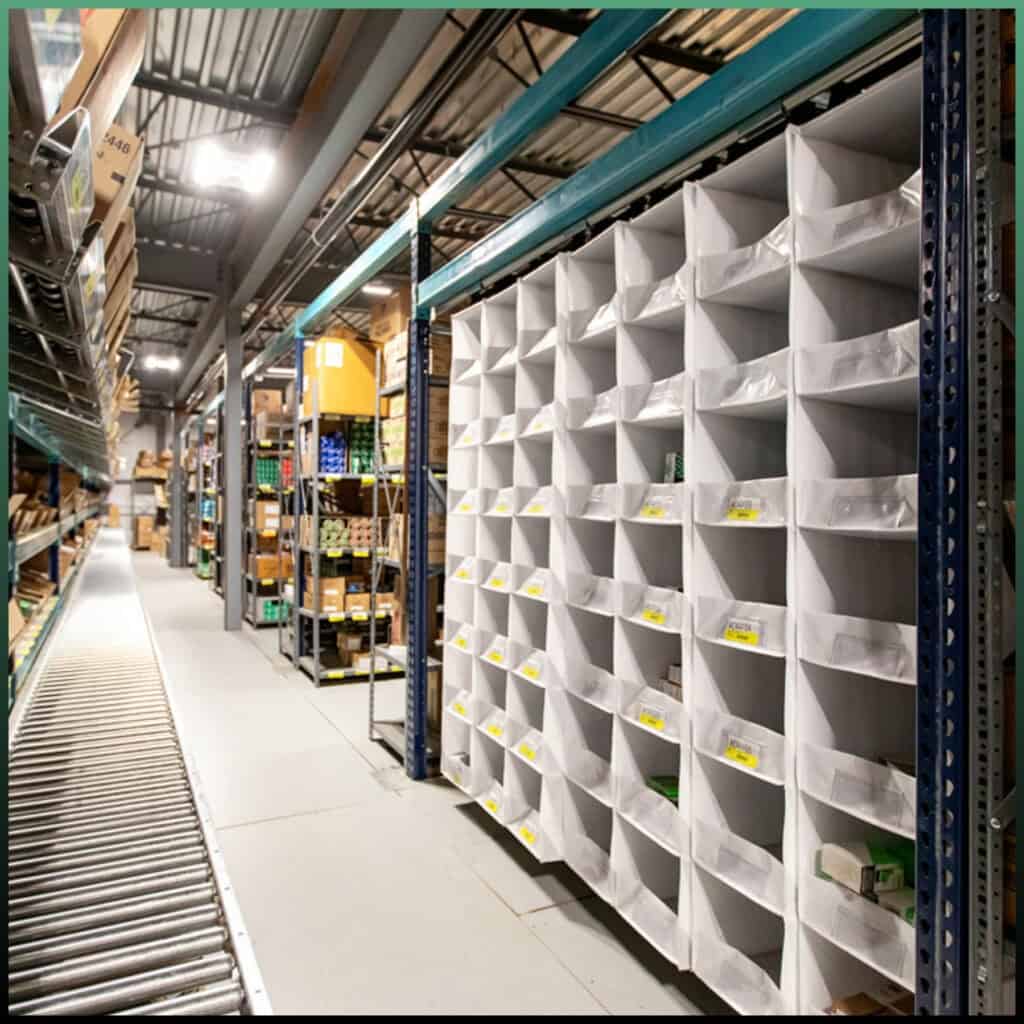
Goods-to-Person systems eliminate walking and searching by bringing stored inventory directly to the operator. Totes or trays are automatically retrieved and delivered to ergonomic pick stations via shuttles, lifts, or conveyors. This setup shortens pick paths, increases throughput, and improves accuracy. GTP systems are ideal for high-SKU 3PLs that manage diverse client inventories with rapid order turnaround.

3pl_blog_goods_to_person_gtp_description_image

Picking Systems

Picking automation improves speed and accuracy across order fulfillment processes. Technologies such as pick-to-light, voice-directed picking, and robotic piece-picking arms guide operators or perform picks autonomously. Integrated scanning and verification reduce errors, while conveyor or AMR-assisted movement ensures efficient replenishment. These systems help 3PLs handle fluctuating order volumes and SKU variety with consistency and reduced labor dependency.

3pl_blog_picking_systems_description_image

Order Fulfillment Automation

Order fulfillment systems coordinate picked goods into complete, labeled, and ready-to-ship orders. Automated or manned sortation, packing, and labeling stations streamline the final stages of processing. Integration with WMS/WCS software provides real-time visibility into order status, inventory, and carrier routing. For 3PLs, this ensures fast, accurate shipments across multiple clients, improving SLA performance and reducing handling time per order.

3pl_blog_order_fulfillment_automation_description_image

See a Century 3PL system in action

Making it All Come Together

Investing in automation is not a plug-and-play undertaking. Century completes significant planning to understand your facility, the product handled, goals and objectives, ROI, budget, demand forecasting, future installations, barriers or sources of waste, and many more factors before engineering begins.

Once those key insights are captured, Century engineers will design preliminary system layout drawings with automation equipment recommendations that best fit.

 Contact Century

Let’s Talk Automation for Your Distribution Operation

3PL, distribution centers and fulfillment centers are under constant pressure to adapt faster, deliver better, and expand profitability. Strategic automation can offer that competitive edge. Century engineers assemble the puzzle that is your automation system in a cost-minded yet efficiency-guided manner. Our goal is to provide the most optimal system for you, not sell the most expensive or overperforming one.

Contact us to explore how we can transform your operation with automation