Gravity Conveyor FAQ 101: Everything You Need to Know About Century Conveyor Systems’ Gravity Conveyor Solutions

gravity conveyor

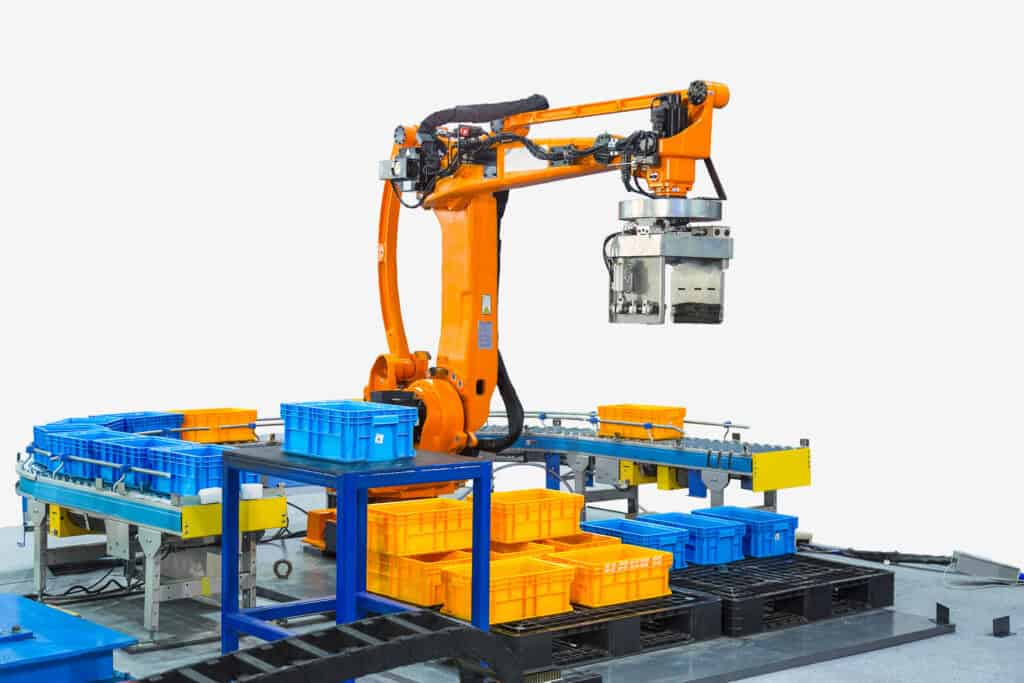
When warehouses and distribution centers need to move cartons, packages, totes, or other products efficiently, a gravity conveyor can be a practical and cost-conscious component of a larger material handling system. Unlike powered conveyor equipment, a gravity conveyor does not rely on a motor to move products. Instead, gravity and the design of the conveyor allow products to travel along the conveyor path.

Century Conveyor Systems works with warehouses, distribution centers, shipping operations, and fulfillment facilities to engineer conveyor and material handling solutions around the specific needs of each operation. Its conveyor offerings include gravity conveyors as well as powered conveyors, sortation equipment, robotic fulfillment systems, controls, and other automation technologies.

Below are answers to some of the most common questions businesses may have when considering a gravity conveyor from Century Conveyor Systems.

gravity conveyor

What is a gravity conveyor?

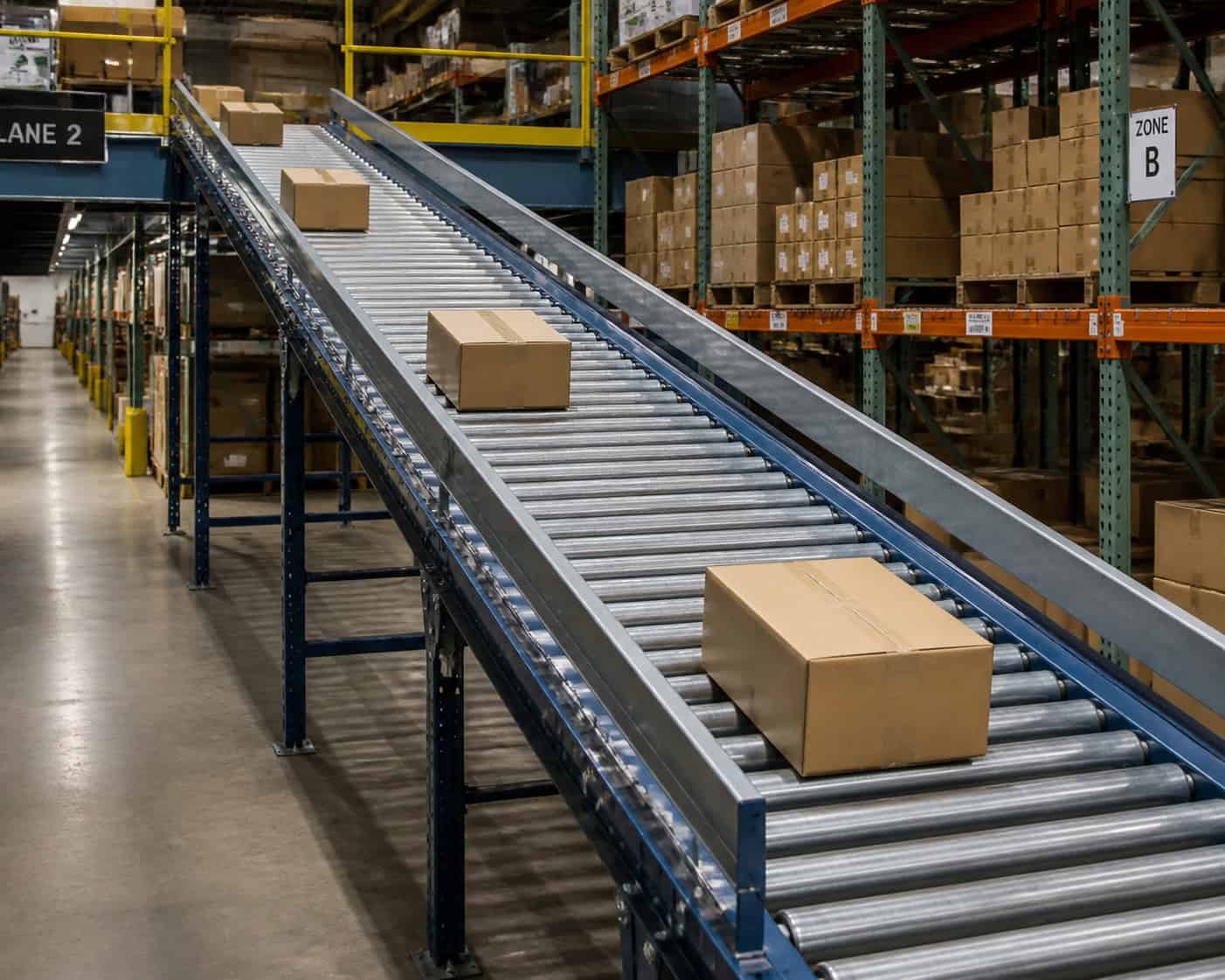
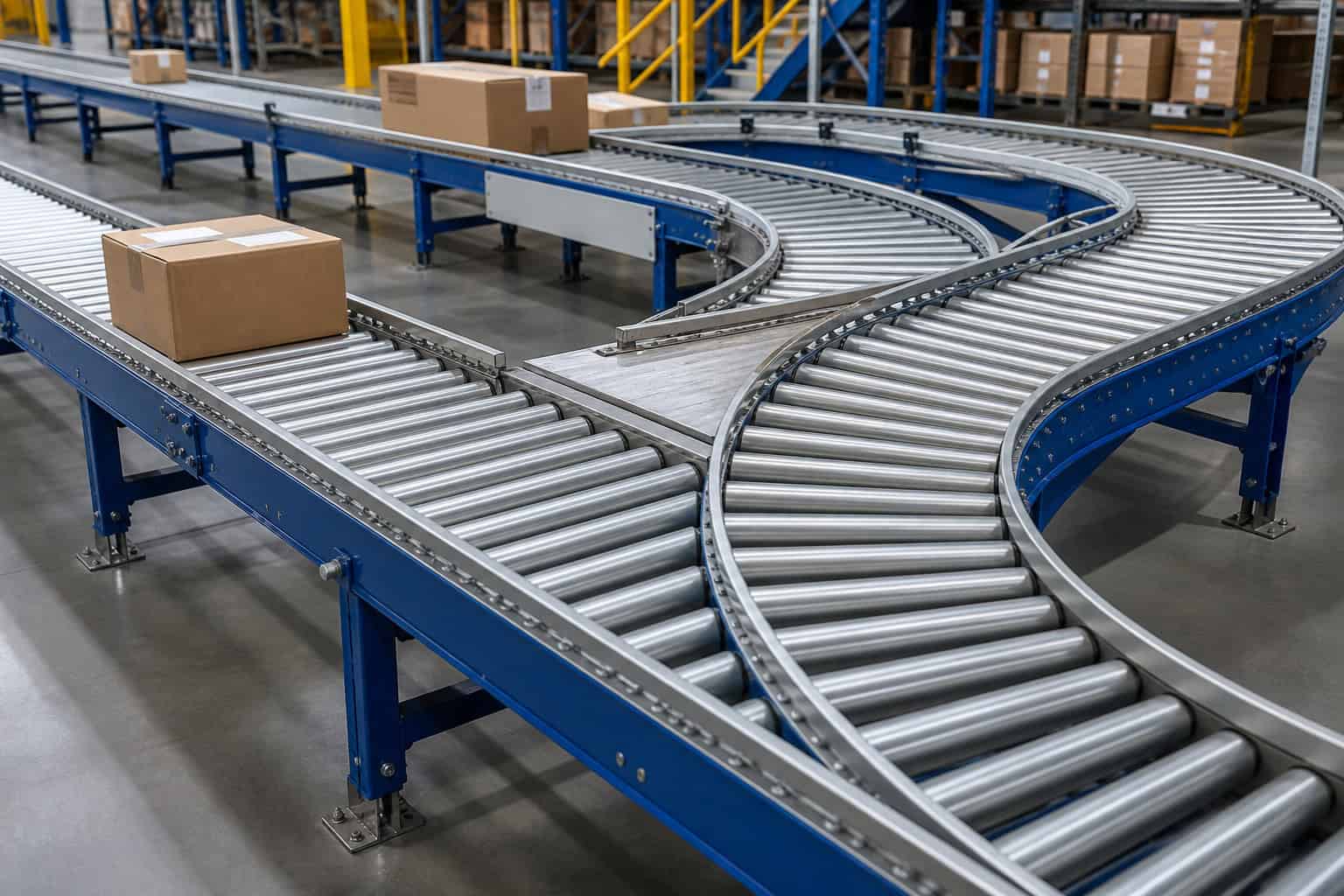
A gravity conveyor is a type of roller conveyor that moves products without a powered motor driving the conveyor rollers. Instead, products travel along the conveyor through gravity, generally with the conveyor positioned at an appropriate incline, or through manual movement by an operator.

Century Conveyor Systems describes gravity conveyors as using cylindrical rollers to help propel cartons and products forward. Unlike live roller conveyors, which use a motor to power the rollers, gravity conveyors operate without a motor.

This difference is important because it makes a gravity conveyor fundamentally different from many automated conveyor systems. Rather than continuously driving products through a facility, gravity conveyors are particularly useful in applications where controlled, relatively slower product movement is appropriate.

For example, a gravity conveyor can be incorporated into packing lines, divert lines, extendable conveyor applications, and end-of-line operations. These environments often benefit from equipment that can interface naturally with employees who are manually placing, removing, inspecting, packing, or redirecting products.

The simplicity of a gravity conveyor also makes it useful as one component within a larger material handling strategy. A facility does not necessarily have to choose between gravity and automation throughout the entire operation. Instead, gravity sections can be integrated with powered conveyor, sortation, robotic, and other technologies where each solution makes the most operational sense.

Why would a warehouse choose a G conveyor instead of a powered conveyor?

The biggest reason to consider a gravity conveyor is that not every material movement task requires powered transportation.

A powered conveyor is valuable when products need to be moved automatically over a defined path, particularly when consistent throughput, controlled movement, accumulation, or integration with automated controls is required. A gravity conveyor, on the other hand, can be appropriate when slower movement and direct interaction with workers are more important.

This makes gravity conveyor equipment particularly relevant to packing and end-of-line areas. Employees can interact with products as they move through the line rather than relying entirely on automated equipment to perform every movement.

A gravity conveyor can also complement a facility’s existing automation. For example, a warehouse might use powered conveyor equipment to transport cartons through the primary processing areas and then transition to gravity sections near a packing or shipping workstation. The gravity section can provide a convenient area for workers to receive, handle, inspect, or redirect products.

The important consideration is not whether gravity conveyor technology is universally better than powered conveyor technology. It is whether gravity is appropriate for a particular section of the workflow.

Century Conveyor Systems approaches conveyor projects as engineered systems rather than simply selecting one conveyor type for an entire facility. Its broader conveyor capabilities include belt and roller conveyors, pallet handling conveyors, sortation systems, robotic fulfillment, controls, and other material handling solutions. That allows gravity conveyor sections to be considered as part of the overall warehouse process.

Where are G conveyors commonly used?

Gravity conveyors are particularly useful in applications where products need to move at a controlled pace and where employees need to interact with those products.

Century identifies several applications where gravity conveyors can be useful, including packing lines, divert lines, extendable conveyors, and end-of-line operations.

Packing lines are a natural application because workers frequently need to receive cartons or products, perform a task, and then send the product onward. A gravity conveyor can provide a straightforward transportation surface between workstations without requiring a motorized drive for every section.

End-of-line operations are another important use. Products may need to be accumulated, staged, inspected, packed, or prepared for shipping after passing through other areas of the warehouse. A gravity conveyor can help connect these activities while maintaining a relatively simple material flow.

Gravity conveyor sections can also be used in divert applications where products need to be redirected to another path. Depending on the system design, additional conveyor components can be used to help route cartons toward their intended destinations.

Extendable conveyor applications are another consideration. Gravity-powered extendable equipment can provide flexibility when products need to be moved into or out of trailers or other temporary loading areas. Because the conveyor can be extended and contracted, it can adapt to changing loading and unloading requirements.

The correct application ultimately depends on the products being conveyed, their dimensions and weight, the desired flow rate, the available space, and how employees interact with the system.

Can a G conveyor be part of an automated warehouse?

Yes. A gravity conveyor does not have to mean that an entire material handling operation is manual.

Modern warehouses frequently combine different conveyor and automation technologies. The goal is to select the right technology for each stage of the process.

For example, a facility could use powered conveyors for high-throughput transportation, automated sortation for directing cartons, robotic systems for moving goods between areas, and gravity conveyor sections at packing or end-of-line workstations.

This approach can be especially useful when some processes benefit from automation while others require human judgment or direct product handling.

Century Conveyor Systems offers a broader range of automation capabilities alongside gravity and other conveyor types. Its solutions include robotic fulfillment using automated guided vehicles (AGVs) and autonomous mobile robots (AMRs), as well as controls and software capabilities involving programmable logic controllers, warehouse management systems, and warehouse control systems.

That broader capability matters when designing a material handling system because the best solution may involve several technologies working together.

Rather than asking whether a gravity conveyor is “automated enough,” warehouse operators should ask what function a particular section of the material handling system needs to perform. If a section primarily requires straightforward product movement and employee interaction, gravity may be appropriate. If it requires high-speed transportation, automatic accumulation, complex routing, or system-controlled movement, powered or automated equipment may be more suitable.

What products can move on a G conveyor?

Gravity conveyors can be used for a variety of cartons and products, but the appropriate conveyor configuration depends heavily on the physical characteristics of the items.

Product weight, dimensions, bottom surface, shape, packaging, and overall stability all affect how a product will behave on a gravity conveyor. A package that moves smoothly along rollers may behave differently from a small, lightweight, irregularly shaped, or flexible package.

That is one reason conveyor selection should be based on the actual application rather than simply choosing equipment based on a general product category.

Century notes that different conveyor types are designed for different materials and goods. Its broader conveyor portfolio includes roller conveyors, belt conveyors, modular belt conveyors, pallet conveyors, spiral conveyors, divert equipment, accumulation systems, and other specialized solutions.

For applications involving small polybags, irregular carton sizes, or products requiring additional stability, for example, a belted conveyor may provide advantages that a traditional gravity conveyor cannot. Similarly, palletized or unusually heavy loads may require a conveyor configuration specifically designed for pallet handling.

The right question is therefore not simply, “Can a gravity conveyor move my product?” It is, “Can a gravity conveyor move my product safely, consistently, and efficiently within my particular process?”

A conveyor systems integrator can evaluate those factors as part of the overall system design.

How does Century Conveyor Systems approach gravity conveyor projects?

Century Conveyor Systems positions itself as a full-service material handling automation integrator. Rather than focusing only on supplying individual conveyor components, the company provides services spanning system design, engineering, installation, startup support, and ongoing service.

That approach can be particularly valuable when gravity conveyor equipment is only one part of a larger warehouse project.

A material handling system needs to work as a connected process. Conveyor layout, product flow, employee workstations, automation, controls, sortation, storage, and shipping operations can all influence one another. A gravity conveyor that works well in isolation may not be the best solution if it creates a bottleneck elsewhere in the operation.

Century’s engineering approach considers the warehouse as a complete system. The company states that its engineers design, validate, and implement turnkey material handling systems for shipping warehouses, distribution centers, and fulfillment facilities.

The company also provides conveyor maintenance, repair, and parts services. Its service capabilities are relevant to facilities that want ongoing support after a conveyor system has been installed, particularly because conveyor performance can affect the productivity of an entire operation.

This full-system perspective is one of the most important considerations when evaluating a gravity conveyor solution. The objective should not simply be to install a conveyor. The objective should be to create a material flow system that supports the facility’s operational goals.

Is a gravity conveyor right for my facility?

A gravity conveyor can be a strong choice when an application calls for straightforward product movement, slower controlled flow, manual interaction, or an economical conveyor section that does not require motorized transportation.

It may be particularly worth considering for packing areas, end-of-line operations, divert lines, staging areas, and certain extendable conveyor applications.

However, gravity is not automatically the right answer for every conveyor application. High-throughput transportation, precise product control, complex accumulation, steep inclines or declines, specialized product handling, and highly automated processes may require other conveyor technologies.

The best solution depends on the entire workflow.

Century Conveyor Systems can evaluate the role a gravity conveyor should play within a larger material handling system and determine where other technologies may provide a better fit. Its broader capabilities include powered conveyor systems, sortation, robotic fulfillment, pallet handling, controls and software, storage systems, and conveyor service.

For warehouse operators, this means the decision does not have to be framed as a choice between a gravity conveyor and a fully automated system. A well-engineered facility can use gravity where it makes sense and automation where automation delivers the greatest operational benefit.

What should I consider before choosing a gravity conveyor?

Before selecting a gravity conveyor, consider the products being moved, the desired throughput, conveyor length, available floor space, elevation, loading and unloading points, employee interaction, and how the conveyor will connect with other equipment.

It is also important to consider what the operation may look like in the future. A conveyor system designed only for today’s volume may become a constraint as order volume, product variety, or automation requirements increase.

Century Conveyor Systems emphasizes designing solutions around warehouse output, efficiency, and the reduction of manual interactions where automation can provide value. Its conveyor systems can also incorporate additional solutions as operational requirements evolve.

A gravity conveyor may therefore be most valuable when it is treated as part of a larger system design rather than as a standalone piece of equipment.

For companies evaluating a new warehouse, distribution center, fulfillment operation, or conveyor upgrade, the starting point should be the material flow itself: What needs to move, where does it need to go, how quickly does it need to get there, and where do people or automated systems need to interact with it?

Once those questions are answered, a gravity conveyor can be evaluated alongside powered conveyors, sortation, robotics, accumulation, and other material handling technologies to determine the most appropriate configuration.

Final Thoughts on Gravity Conveyor Solutions

A gravity conveyor offers a straightforward way to move products without relying on motorized conveyor drives. Its ability to work well with manual induction and slower-speed applications makes it especially useful in areas such as packing, diverting, extending, staging, and end-of-line operations.

The greatest value, however, comes from placing gravity conveyor equipment in the right part of the overall material handling process.

Century Conveyor Systems provides gravity and live roller conveyor solutions alongside a much broader range of conveyor, automation, robotics, controls, and service capabilities. That allows businesses to consider gravity conveyor technology as one component of a complete warehouse strategy.

For facilities looking to improve material flow, the right question is not simply whether they need a gravity conveyor. It is where gravity conveyor technology can provide the most practical, reliable, and efficient movement within the operation—and how it can work alongside the rest of the facility’s material handling system.
Roller Conveyor FAQ 101: Understanding Century Conveyor Systems’ Roller Conveyor Solutions

roller conveyor

When warehouses, distribution centers, and fulfillment operations need to move cartons, packages, pallets, or other products efficiently, a roller conveyor can provide a practical foundation for material handling automation. Century Conveyor Systems designs and integrates conveyor solutions around the specific needs of a facility, combining roller conveyor technology with other equipment, controls, and automation where appropriate.

Below are some of the most important questions to ask when evaluating a roller conveyor for an order fulfillment or distribution operation.

roller conveyor

What is a roller conveyor?

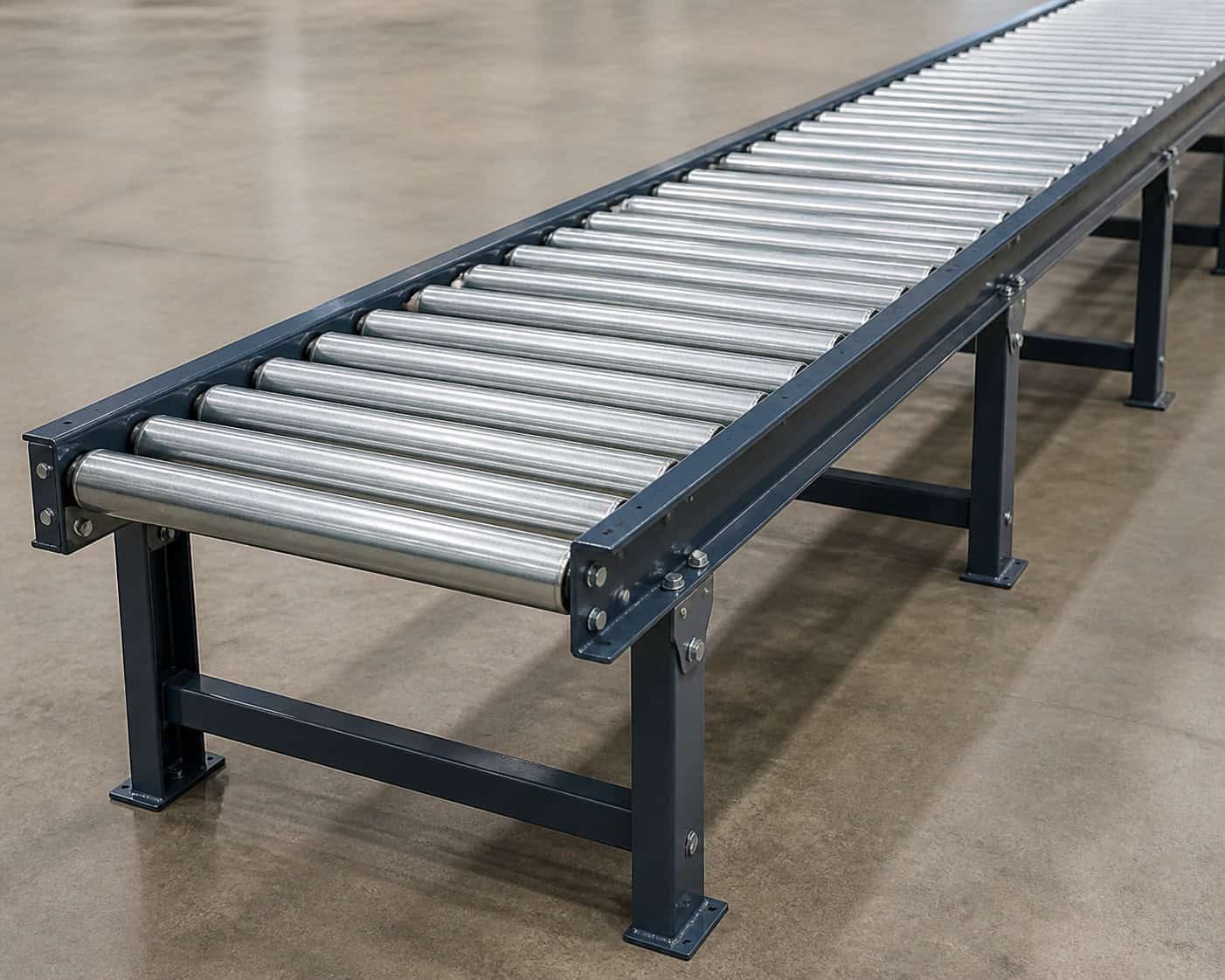
A roller conveyor is a material handling system that uses cylindrical rollers to move products along a defined path. Depending on the application, the rollers can be powered or unpowered.

Century Conveyor Systems describes two major roller-based approaches for order fulfillment: live roller conveyors and gravity conveyors. Live roller sections use a motor to power the rollers, while gravity conveyors rely on gravity rather than a motor to move products.

This distinction is important because the right conveyor depends on what is being moved, how quickly it needs to move, how much control operators need over the product, and where the conveyor sits within the overall fulfillment process.

Rather than treating a roller conveyor as a standalone piece of equipment, Century approaches conveyor systems as part of a larger warehouse automation strategy. A conveyor line can incorporate different sections and technologies based on the function each area needs to perform.

Why would a warehouse choose a roller conveyor?

One of the biggest advantages of a roller conveyor is its versatility. Roller-based equipment can be used to transport products through different stages of a warehouse or fulfillment operation without requiring employees to manually carry products from one workstation to another.

Century notes that warehouse conveyor systems serve as the backbone of automated operations by continuously moving cartons or pallets through processing, sortation, and distribution. A properly engineered system can therefore reduce unnecessary manual transportation while helping an operation maintain a consistent flow of material.

Roller conveyors can be especially useful in applications where products need to travel between packing, diverting, accumulation, or end-of-line areas. They can also interface effectively with manual workstations, making them useful in facilities that combine automated transportation with human-operated processes.

The important consideration is not simply whether a facility needs a conveyor. It is how the conveyor should interact with the rest of the operation.

What is the difference between a live roller conveyor and a gravity roller conveyor?

The primary difference is how the rollers move the product.

A live roller conveyor uses powered rollers. A motor provides the force necessary to move cartons or other products along the conveyor. This makes live roller systems appropriate when an operation needs controlled, powered transportation.

A gravity roller conveyor, on the other hand, does not use a motor to propel products. Instead, products move through the conveyor using gravity, generally along an appropriately designed incline or through manual pushing.

These two approaches can serve different purposes within the same facility. A powered roller section may be useful where products must be transported automatically from one process to another, while a gravity section can be appropriate for staging or manual handling.

Century specifically identifies live roller and gravity conveyors as solutions commonly used in packing lines, divert lines, extendable applications, and end-of-line operations. Their relatively slower operating characteristics and ability to interface with manual induction make them particularly useful in these environments.

Where are Century’s roller conveyors commonly used?

Roller conveyors can be integrated into several points of an order fulfillment operation.

Century identifies packing lines, divert lines, extendable conveyors, and end-of-line operations as common applications for live roller and gravity conveyor technology.

A packing line, for example, may require a dependable way to move cartons between manual packing activities and subsequent processes. A divert line may need to move products toward different destinations. At the end of the operation, conveyors can help organize products as they approach shipping or loading.

This flexibility is one reason conveyor design should be based on the workflow of the entire facility rather than on a single equipment specification.

Century’s order fulfillment approach focuses on optimizing each touchpoint in the operation, with an emphasis on increasing output, reducing errors and product damage, and processing items with fewer manual interactions. A roller conveyor can therefore be one component of a broader system engineered around those objectives.

Can a roller conveyor be part of an automated order fulfillment system?

Yes. A roller conveyor does not have to operate independently.

In a modern fulfillment facility, conveyors can work alongside sortation equipment, controls, warehouse software, robotic systems, and other material handling technologies. Century provides conveyor and order fulfillment systems designed to connect these different elements into a coordinated operation.

For example, a facility might use roller conveyor sections to transport cartons from a manual packing area toward a divert or sortation process. Other conveyor technologies could then be used where different product characteristics or operational requirements call for them.

Century also offers programmable logic controls, warehouse management system and warehouse control system capabilities, as well as robotic fulfillment solutions. This means a roller conveyor can be considered as part of the facility’s automation architecture rather than simply as a transportation device.

That distinction becomes increasingly important as fulfillment volumes grow. The conveyor itself moves the product, but controls and system integration help determine when, where, and how that product should move.

How does Century determine which roller conveyor solution a facility needs?

The appropriate roller conveyor configuration depends on the products being handled and the role the conveyor needs to play.

Important considerations can include product dimensions, product weight, packaging type, required throughput, accumulation requirements, manual interaction, available floor space, and the relationship between the conveyor and other equipment.

Century emphasizes engineered layouts in which different conveyor sections are selected according to function. In other words, a warehouse may not need one conveyor type throughout the entire facility. One area may benefit from live roller technology, while another may require belted conveying, modular belting, pallet conveying, divert equipment, or a different solution altogether.

This approach helps prevent the common mistake of selecting equipment first and attempting to adapt the warehouse process around it.

Instead, the process can be evaluated first, followed by the engineering and integration necessary to support it.

Is a roller conveyor suitable for fragile products?

It can be, but the specific conveyor configuration matters.

Century offers several conveyor approaches for different product-handling requirements. For applications where products need additional separation to prevent contact and potential damage, the company describes zero-pressure and minimum-pressure accumulation systems.

Zero-pressure accumulation is designed so products do not touch each other, while minimum-pressure accumulation allows products to slow down and make light contact.

This illustrates an important point about roller conveyor selection: simply moving products from one location to another is not always enough. In a fulfillment environment, the system may also need to control spacing, accumulation, acceleration, and product interaction.

For fragile or damage-sensitive goods, those characteristics can be just as important as basic transportation.

How does a roller conveyor compare with a belt conveyor?

Neither technology is universally better. The better choice depends on the application.

Roller conveyors can be particularly useful when handling cartons and products in packing, divert, end-of-line, and similar applications. Belted conveyors, meanwhile, can provide a more stable conveying surface for certain products.

Century points out that belt-over conveyors can offer advantages for small polybags, parcels, and irregular carton sizes because the belt provides greater conveyance stability. Belt conveyors can also be advantageous for inclines, declines, and gapping applications.

That means a facility may benefit from using both technologies.

A well-designed material handling system does not necessarily try to standardize every conveyor section. Instead, it assigns the appropriate technology to each task. Roller conveyor technology may handle one portion of the product journey, while belted or modular belt conveyor technology handles another.

Can roller conveyors handle pallets?

Yes. Century offers multiple pallet conveyor solutions, including pallet gravity, chain-driven live roller, and Poly-V conveyor sections.

Pallet handling has different requirements from carton handling because pallets can be considerably heavier and may require greater stability and durability. Century identifies chain-driven live roller conveyors as an option for high-output pallet operations, where multiple pallets need to be moved using a drag chain to operate the rollers.

Poly-V powered live roller conveyors are also described as solutions for stable, slow-moving bulk items, including drums, lighter pallets, and oversized bulk loads.

Consequently, the phrase “roller conveyor” can encompass substantially different equipment depending on the load being transported. A conveyor designed for lightweight cartons should not automatically be assumed to be appropriate for heavy pallet handling.

Can roller conveyors improve warehouse productivity?

A properly engineered conveyor system can help improve productivity by reducing unnecessary manual transportation and establishing a consistent flow of goods.

Century states that its order fulfillment solutions are designed to increase output, reduce errors that can lead to returns or item breakage, and process products faster with fewer manual interactions.

The productivity benefit comes from more than simply increasing conveyor speed. A high-performing system must coordinate movement between different processes. If products move quickly through one area but accumulate at the next workstation, for example, the overall operation may not become more productive.

That is why conveyor layout, accumulation, diverting, controls, workstation design, and downstream processes all matter.

The goal is to create a balanced material flow rather than simply install the fastest possible conveyor.

How long can a roller conveyor system last?

Longevity depends on equipment selection, operating conditions, maintenance, usage, and the quality of the overall installation.

Century states that a well-maintained warehouse conveyor system can last more than 20 years. Preventative maintenance is therefore an important part of protecting the investment in conveyor equipment.

Century also provides conveyor repair, replacement parts, and preventative maintenance services. Its service department supports conveyor systems and can provide replacement conveyor parts and equipment.

For a facility that depends on conveyors every day, maintenance should be viewed as part of the system’s lifecycle rather than an afterthought. Regular attention can help identify wear before it develops into a larger operational problem.

What makes Century Conveyor Systems different when selecting a roller conveyor?

Century’s role extends beyond supplying individual conveyor equipment. The company positions itself as a full-service material handling systems integrator, handling activities ranging from system design and validation through installation, startup support, and ongoing parts and service.

That integrated approach can be particularly valuable when a roller conveyor is only one component of a much larger automation project.

A warehouse may need conveyors, sortation, controls, robotics, pallet handling, storage systems, or other technologies to work together. Designing those components as an interconnected system can help ensure that one piece does not become a bottleneck for another.

Century’s capabilities include concepts and design, mechanical engineering, controls engineering, mechanical and electrical installation, project management, conveyor preventative maintenance, repair, and parts.

For organizations planning a new fulfillment operation or modernizing an existing facility, this broader expertise can simplify the process of moving from an initial conveyor concept to a functioning material handling system.

Is a roller conveyor a good investment for a growing fulfillment operation?

It can be, particularly when the system is designed with future requirements in mind.

Warehouse automation does not necessarily have to be installed as one enormous project. A facility can evaluate its current bottlenecks, identify where automation can provide the greatest return, and develop a system that supports future growth.

Century describes conveyor systems as durable solutions that can accommodate additional automation and notes that different conveyor technologies can be combined according to operational needs.

This scalability matters because fulfillment requirements can change. Order volume can increase, product dimensions can change, new shipping requirements can emerge, and labor availability can fluctuate.

A roller conveyor system designed with those possibilities in mind can provide a foundation for future modifications instead of becoming a limitation.

What should a company consider before contacting Century about a roller conveyor?

The most useful starting point is a clear understanding of the operation the conveyor needs to support.

Companies should consider what products need to move, where those products currently create bottlenecks, how much material must be transported, where employees interact with the process, and what the desired future throughput looks like.

It is also helpful to identify whether the project involves cartons, polybags, totes, pallets, drums, or oversized loads, since product characteristics influence conveyor selection.

From there, an automation integrator can evaluate the workflow and determine whether roller conveyor technology is appropriate—and where other conveyor or automation technologies should be incorporated.

For Century Conveyor Systems, the objective is not simply to install a roller conveyor. The larger goal is to engineer an efficient material handling system that supports the facility’s fulfillment requirements from receiving an order through processing, packing, sorting, and shipping.

What is the main takeaway about Century Conveyor Systems’ roller conveyor solutions?

The biggest takeaway is that a roller conveyor should be evaluated as part of an entire material handling strategy, not as an isolated piece of equipment.

Century Conveyor Systems uses live roller and gravity conveyor technology for applications including packing, diverting, extendable conveyor operations, and end-of-line processes. At the same time, its broader fulfillment capabilities allow roller conveyors to be combined with belted conveyors, modular belts, pallet conveyors, sortation equipment, controls, robotics, and other technologies.

That systems-level approach can help warehouses address the challenges that matter most: moving products efficiently, reducing unnecessary manual handling, controlling product flow, supporting throughput, minimizing errors and damage, and preparing the operation for future growth.

For companies evaluating a roller conveyor project, the right question is therefore not simply, “Which conveyor should we buy?” A better question is, “What material handling system will allow our entire operation to perform better?”

That is where an experienced conveyor systems integrator can add value—by connecting equipment selection to the actual workflow, performance goals, and long-term requirements of the facility.

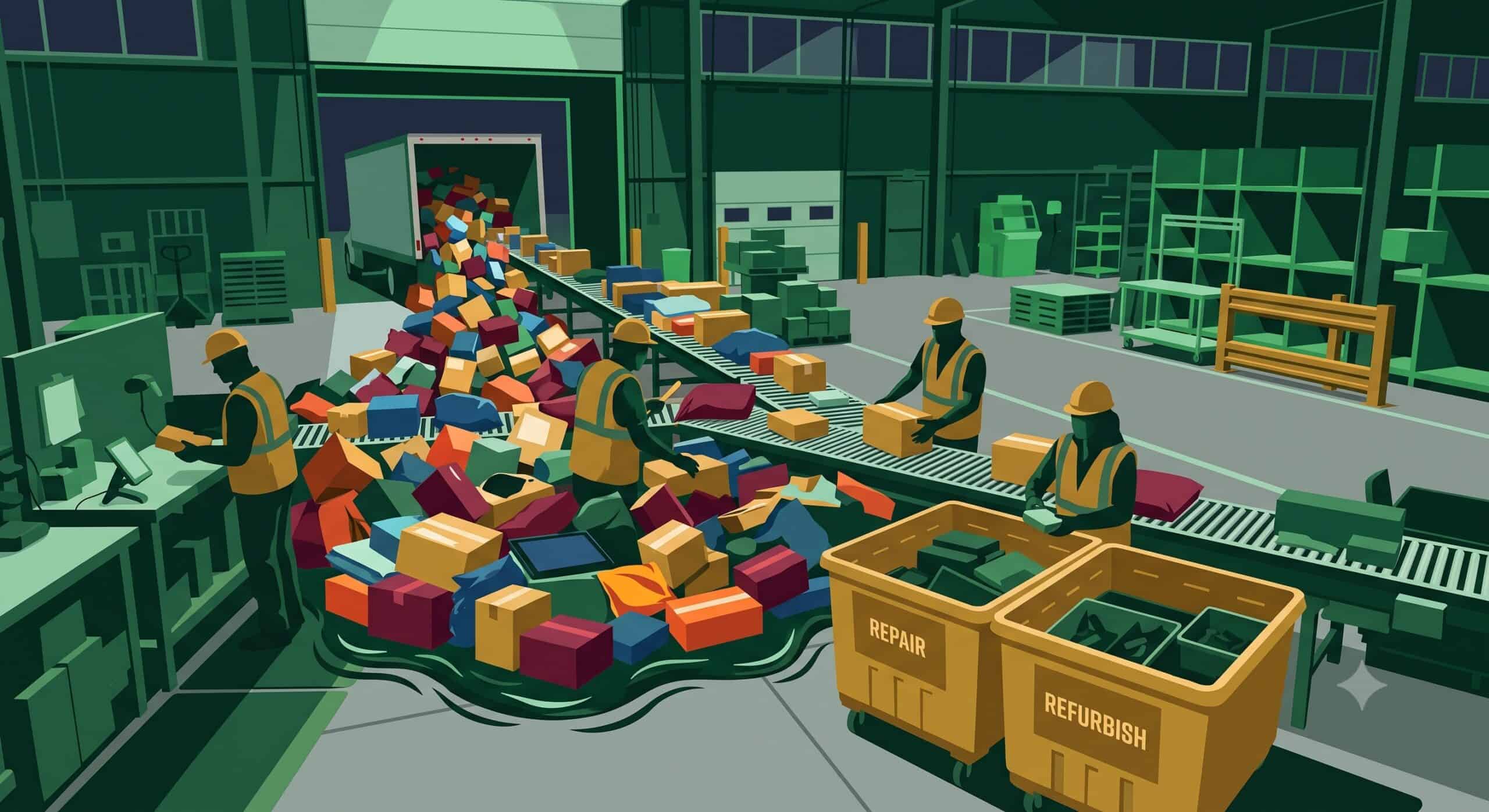
The Audit Nobody Scheduled: What a 30-Year-Old Conveyor System Audit Taught Us About Deferred Maintenance

A lot of warehouse conveyor systems share the same biography. Installed when the business was booming. Expanded once, maybe twice. Then the maintenance budget got trimmed, the tech who knew the system best retired, and the equipment kept running — because it had to.

The problem isn’t that aging systems fail. It’s that nobody knows exactly how close they are to failing until something forces the question.

For one of our customers, a mid-size apparel manufacturer, that something was a facility-wide power outage. This is the story of what a formal conveyor system audit found, what a controls takeover is fixing, and how to know if your operation is quietly carrying the same risk.

conveyor system audit

The Setup: 30 Years of Equipment, Zero Audits

The customer’s conveyor system was installed in the early 1990s. The last significant expansion wrapped in 2006. In the two decades since, preventive maintenance was gradually scaled back until a single on-site technician was managing the entire system — largely on instinct, memory, and routine.

That’s not unusual. In our experience, it’s closer to the norm than the exception for legacy material handling systems. Three patterns show up over and over:

Legacy equipment with no documented baseline. Original manufacturers change ownership. Panel components go obsolete. Replacement parts get harder to source — quietly, and then suddenly. When the veteran tech retires, the institutional knowledge walks out the door with him.

Reactive maintenance disguised as a maintenance plan. When it breaks, you fix it. When it doesn’t, you move on. This works until it doesn’t — and the moment it doesn’t is almost always during the worst possible week of the year.

No visibility when something goes wrong. A blocked photo eye, a failing sensor, an intermittent fault. Without modern controls, diagnosing any of these means waiting for a technician to drive out, assess, and report back. That’s a lot of downtime for a solvable problem.

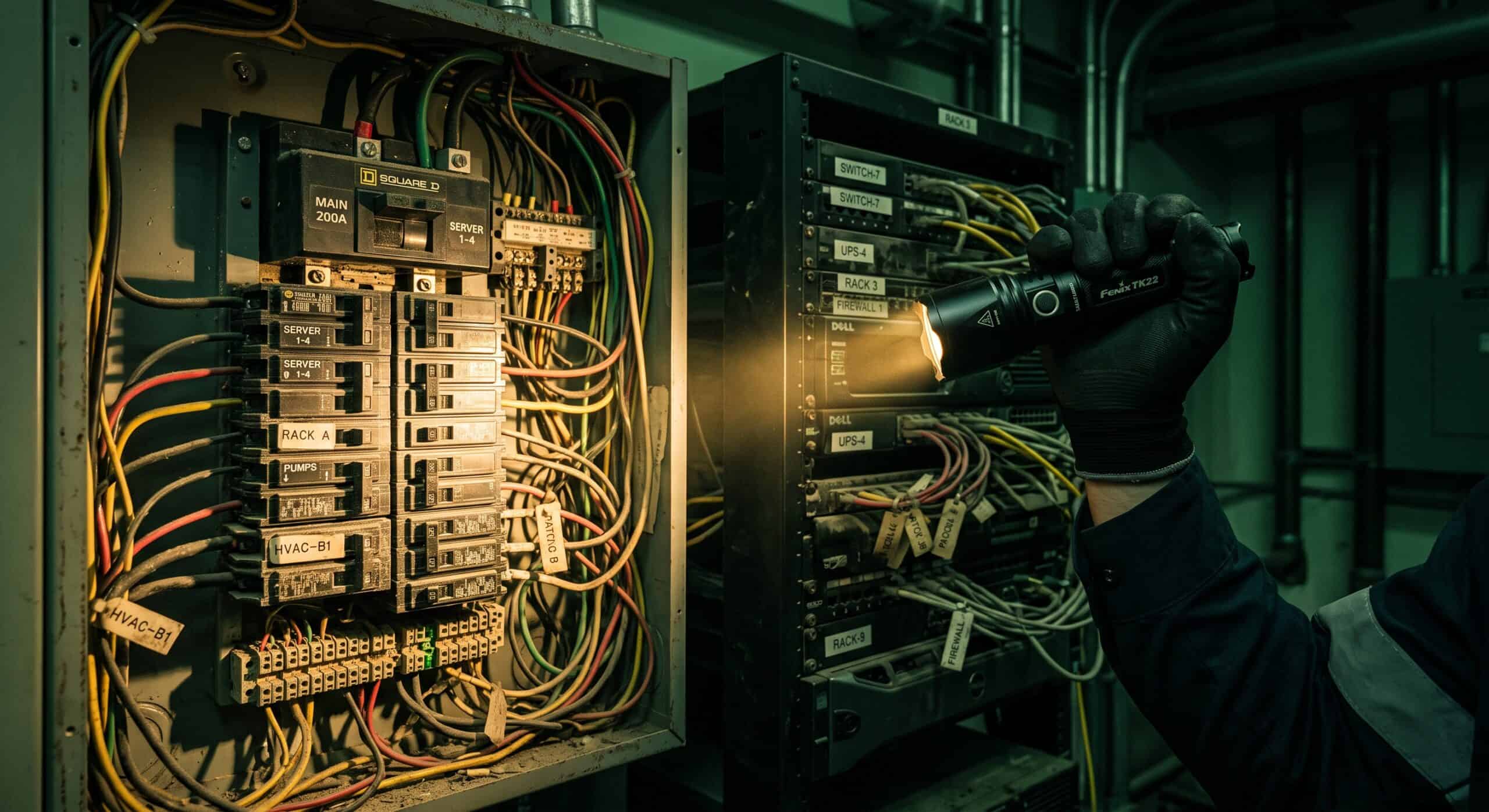
Then the power went out. The system — aging, under-maintained, running on 1990s-era panel infrastructure — didn’t handle the disruption gracefully. What should have been a routine recovery exposed how fragile the operation had become. Our team made multiple site visits and brought in our service group for a formal system audit: the first comprehensive assessment the facility had ever had.

What a Conveyor System Audit Actually Covers

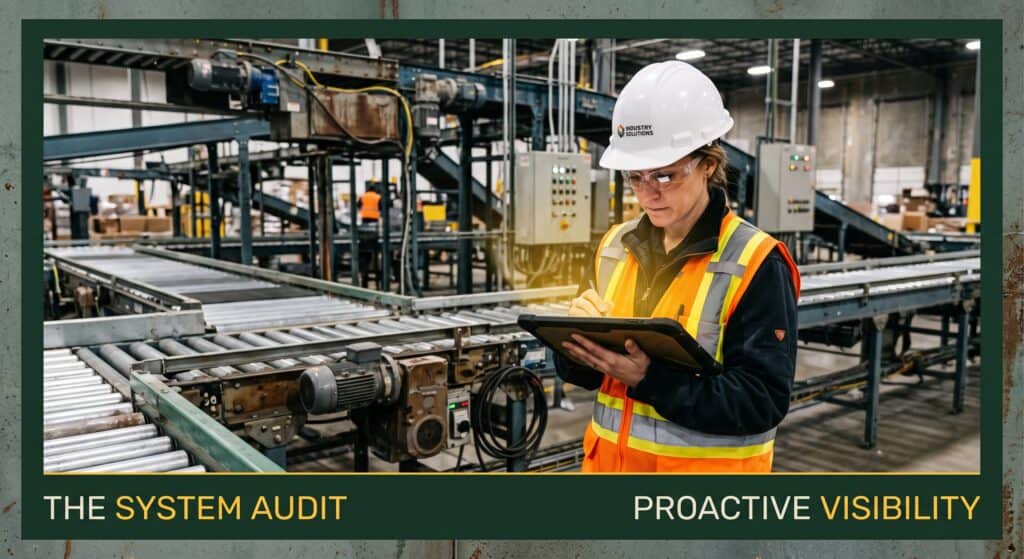
A conveyor system audit is a full-facility assessment of your material handling infrastructure. Not what it was spec’d to do in 1998 — what it’s actually doing now, and what it needs to keep doing it. Ours covers three core deliverables.

Equipment status review

A complete accounting of what’s in the facility: what condition each piece is in, how close it is to end of life, and where the single points of failure are hiding. For most legacy operations, this is the first time anyone has written it all down.

Repair vs. upgrade assessment

Not everything needs to be replaced — but some things do. The audit produces a clear breakdown of what falls into each bucket, prioritized by risk and operational impact. That distinction matters, because it’s the difference between a targeted capital project and a blank-check rebuild.

A documented starting point

For operations that have never had a formal audit, this alone is transformative. You now have a baseline: something to maintain, something to measure against, and something to hand to the next person in the role instead of hoping the knowledge transfers by osmosis.

[INTERNAL LINK: /services “Century Conveyor service and support”]

Controls Modernization: Replacing the Brains, Not the Building

For this customer, the audit was step one. Step two is a controls takeover — and this is where the real transformation happens.

The legacy panels in the facility are running on antiquated internal components: the guts of the system’s brains. We’re replacing that infrastructure with modern LaFayette controls — serviceable, documented, and built for remote access.

Here’s the part that surprises people: the conveyor structure itself usually doesn’t need to go. Rollers, frames, and belts are mechanical and fixable. The intelligence driving them is what goes obsolete. A controls retrofit — new PLCs, new panel internals, modern networking — modernizes the system for a fraction of the cost of a rip-and-replace.

[INTERNAL LINK: /conveyor-systems “warehouse conveyor systems”]

Remote Diagnostics: What Changes When Someone Can Actually See Your System

Once modern controls are in place, our technicians can connect to the system remotely via VPN from our Danville facility. The entire conveyor infrastructure — real-time status, fault conditions, operational data — becomes visible on a screen without anyone stepping on-site.

Take a blocked photo eye. The old way: call for service, schedule a truck, wait for a tech to drive out, assess, and drive back. The new way: a technician opens a laptop, connects through the VPN, pulls up the system, and tells you exactly what broke and how to fix it — over the phone or a Teams call, often in the same conversation the fault is reported.

For an operation that previously had one person managing a 30-year-old system on memory and routine, that’s a fundamental change in what “support” means.

Four Outcomes That Actually Stick

No more guessing. You know exactly what your system is, what shape it’s in, and where the risk lives. The first audit is the hardest one; every audit after that is maintenance.

Faster response times. Remote VPN access means a technician can be looking at your system in minutes, not days.

Modern serviceability. Current-era components, documented configurations, and a support team that can actually see what you’re running.

Capital planning you can defend. Replace what needs replacing now, plan the rest over time. The audit gives you a prioritized roadmap that makes the case to leadership — before the next outage makes it for you.

Is Your System Overdue?

If any of these sound familiar, an audit is worth a conversation:

  • Your system is 15+ years old and has never had a formal assessment
  • Maintenance knowledge lives in one or two people’s heads
  • Replacement parts are getting harder to source
  • Faults require an on-site visit just to diagnose
  • Your maintenance plan is “fix it when it breaks”

You don’t need a power outage to find out what your system is hiding.

FAQ

What is a conveyor system audit?

A conveyor system audit is a comprehensive on-site assessment of a facility’s conveyor and material handling equipment. It documents the condition of every component, identifies end-of-life equipment and single points of failure, and produces a prioritized repair-vs-upgrade roadmap.

How do I know if my conveyor system needs a controls upgrade?

Common signs include obsolete PLCs or panel components that are no longer manufactured, difficulty sourcing replacement parts, faults that can’t be diagnosed remotely, and reliance on one or two people’s institutional knowledge to keep the system running.

Do I have to replace my whole conveyor system to modernize it?

Usually not. The mechanical structure — frames, rollers, belts — often has decades of life left. A controls retrofit replaces the aging panel internals and PLCs with modern, serviceable components, typically at a fraction of the cost of full system replacement.

What is remote conveyor diagnostics?

With modern controls in place, technicians connect to your conveyor system through a secure VPN and view real-time status and fault data from off-site. Many issues are diagnosed — and resolved — in a single phone or Teams call instead of an on-site service visit.

How long does a system audit take?

It depends on facility size and system complexity, but most audits involve one or more site visits followed by a documented findings report. Contact us for a scope and timeline for your operation.

Start With a System Audit

If you’re running a legacy conveyor system and haven’t had a formal assessment in years — or ever — we can help you understand exactly what you have, what it needs, and what it will take to modernize it for the next decade.

Schedule a System Audit →

Rick Maldonado, New Business Development Manager (908) 205-0625 | rmaldonado@centuryconveyor.com

The Aftermarket Is Growing. Is Your Warehouse Keeping Up?

The U.S. auto-care industry is projected to grow 5.4% in 2026, with the light-vehicle aftermarket close behind at 5.2%. Those are healthy numbers — the kind that show up in board decks and press releases as unambiguously good news.

But growth in the aftermarket doesn’t arrive as a clean, evenly distributed lift. It arrives as more SKUs, more order lines, tighter delivery promises, and more returns flowing back through the same building you were already running at capacity. The distribution operations supplying this market are working harder than ever, and not all of their warehouse systems are keeping pace.

If your parts DC was designed for the order profile you had five years ago, growth is not going to feel like a win. It’s going to feel like overtime.

Parts Warehouses Are Not Generic Warehouses

There’s a tendency in material handling to treat all distribution centers as variations on a theme: receive, store, pick, ship. In practice, an automotive aftermarket facility has a distinct operational profile that generic warehouse design handles badly.

Consider what a regional parts DC is actually managing:

Extreme SKU density. A regional parts distribution center commonly carries 50,000 or more active SKUs. Filters, sensors, brake components, gaskets, electrical parts, body panels — items that vary wildly in size, weight, velocity, and value, all needing to coexist in one pick strategy.

Small-carton and tote formats. Aftermarket order lines skew small. A typical outbound order is a handful of pieces destined for a jobber, a dealership, or an installer bay — not a pallet. That changes everything about how the pick face should be built and how product should move between zones.

Multiple picking zones with wildly different velocities. The top 5% of SKUs may account for half your order lines. The bottom 40% may turn twice a year. Running both through the same pick methodology means either overbuilding for slow movers or starving your fast movers of the density they need.

Time-sensitive outbound alongside slow-moving warranty parts. The same building that has to hit a 4:00 PM cutoff for next-day delivery also has to process warranty parts and cores moving on a completely different clock.

Legacy systems inherited through M&A. This one is increasingly common. Private-equity-backed rollups in the aftermarket space have consolidated a lot of regional distributors, and each acquisition brings a building full of equipment installed by a different integrator, at a different time, running different controls. The result is a network where no two sites operate the same way and nobody has a consolidated view of throughput.

The pressure to run these operations more efficiently is real — and it’s growing right alongside the market.

Four Systems That Determine Whether Your DC Scales

When Century and the LaFayette Engineering family of companies evaluate a parts distribution operation, four areas consistently separate facilities that absorb growth from facilities that buckle under it.

1. Pick Modules Designed for Small-Carton and Tote Movement

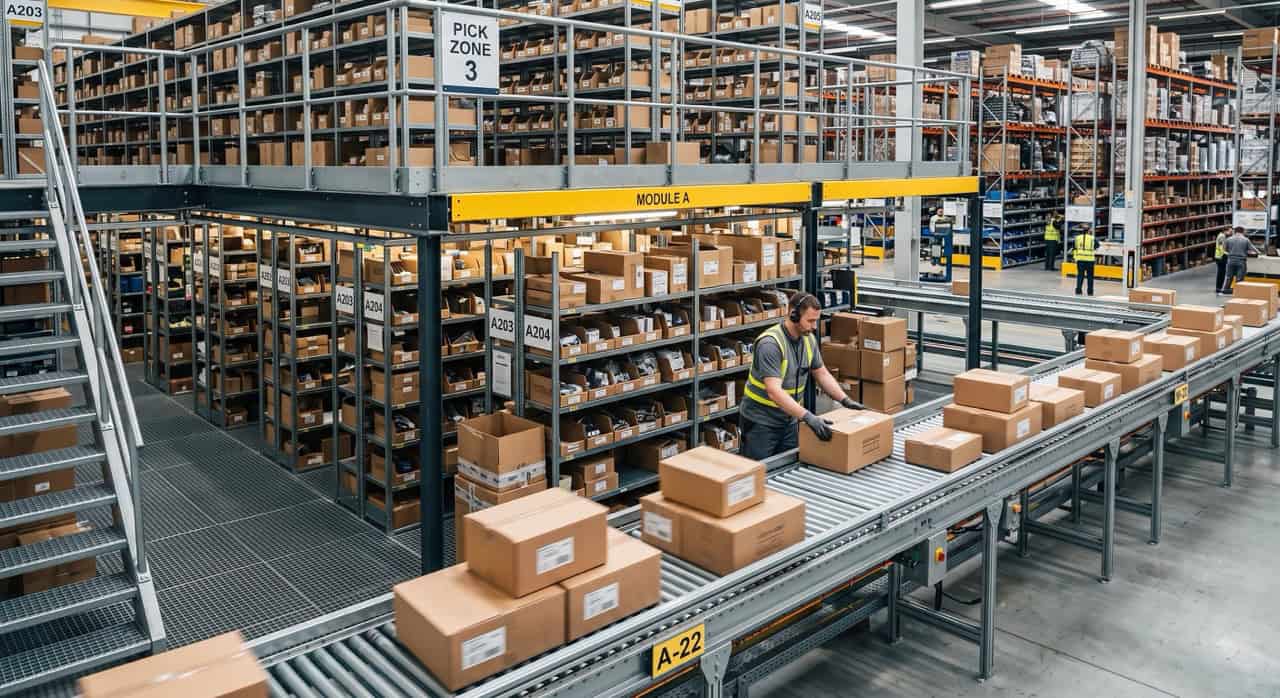
The pick module is where an aftermarket DC either earns or loses its productivity. High-density zone picking — carton-flow racks, live storage, and integrated conveyor takeaway — is purpose-built for exactly the SKU density and small-piece order profile that defines this vertical.

The design questions that matter: How many facings can you present per operator per hour without excessive travel? Is replenishment happening from behind the pick face so it doesn’t interrupt picking? Are your zones balanced so no single operator becomes the bottleneck for every order? Can you re-slot seasonally without rebuilding the module?

A well-designed multi-level pick module concentrates thousands of facings into a compact footprint with conveyor doing the horizontal travel instead of people. That’s the single biggest labor lever in most parts DCs.

2. Shipping Sortation and Print-and-Apply for High-Velocity Outbound

Outbound is where growth pressure shows up first and most visibly. When volume climbs, manual sortation to shipping lanes becomes the constraint — and the failure mode isn’t just slowness, it’s mis-sorts that turn into service failures and returns.

Automated shipping sortation paired with inline scan tunnels and print-and-apply labeling keeps outbound moving accurately at shift-peak volumes. Scan tunnels capture dimensional and identification data without an operator handling the carton. Print-and-apply removes the label station as a discrete step. Together they let you push more cartons through the same shipping dock footprint with fewer touches and better carrier compliance.

If your operation currently absorbs peak by adding a second shift or temp labor at the shipping end, that’s a sortation problem wearing a labor costume.

3. Returns and Warranty Processing Built Into the Flow

Returns are not an edge case in the automotive aftermarket. They’re structural. Warranty claims, core returns, and incorrect-part returns are a permanent, significant inbound stream — and in a lot of facilities they’re handled in whatever floor space happened to be available when the volume got noticeable.

That improvisation has a cost. When returns processing shares dock doors, staging space, or conveyor with outbound, inbound exceptions stall outbound throughput. A properly designed returns lane — with its own receiving point, inspection stations, and disposition paths back to stock, to scrap, or to the supplier — keeps that interference from happening.

Designing returns into the flow from the start is dramatically cheaper than retrofitting it after the fact.

4. WCS Controls Upgrades for Legacy and Acquired Systems

This is the quiet one, and often the highest-leverage.

When an operator acquires facilities, they inherit equipment from multiple original integrators, installed across a span of years, running whatever controls platform was current at the time. Site A has one vendor’s PLC logic, Site B has another’s, and neither talks to the WMS the same way. Corporate has no consistent throughput reporting, and troubleshooting requires institutional knowledge that lives in one maintenance tech’s head.

A Warehouse Control System upgrade brings visibility and consistency across a consolidated footprint. LaFayette WCS is designed to sit on top of existing mechanical assets — meaning you can standardize controls, reporting, and diagnostics without ripping out serviceable conveyor and sortation.

The financial argument is straightforward: a controls upgrade typically costs a fraction of a mechanical replacement and often unlocks meaningful throughput from equipment you already own. Before you budget for new steel, it’s worth knowing what your current system can do under better control.

Signs Your Warehouse Is Falling Behind the Market

Some practical diagnostics. If several of these are true, your systems are constraining your growth rather than supporting it:

  • Peak season requires a second shift or significant temp labor to hit the same cutoff you used to hit on straight time
  • Your pick module was designed before your SKU count grew 30%+ and you’ve been absorbing new items into whatever space existed
  • Returns and warranty processing happen in space that was never designed for it
  • You’ve acquired facilities and can’t produce a consolidated throughput report across sites
  • Mis-ships and carrier compliance chargebacks are trending up
  • Your maintenance team is sourcing parts for equipment the original integrator no longer supports
  • Nobody can confidently answer “what’s our actual maximum daily order-line capacity in this building?”

That last one is telling. If you don’t know your ceiling, you’ll find it the hard way — usually during your busiest week of the year.

What Century and LaFayette Bring to a Parts DC

Whether you’re expanding an existing operation, consolidating sites after an acquisition, or modernizing a legacy system, the Century and LaFayette Engineering family of companies covers the full spectrum of what a parts distribution center needs:

  • Pick modules and carton-flow systems
  • Shipping sortation
  • Scan tunnels and dimensioning
  • Print-and-apply label systems
  • WCS and HMI controls upgrades
  • Returns and warranty lane design
  • Preventive maintenance programs
  • System audits for acquired facilities

That last item deserves emphasis. If you’ve recently acquired a facility and inherited a system you didn’t specify, a system audit gives you an objective read on what you have, what it’s capable of, and where the practical upgrade path runs — before you commit capital.

From Pick Module to Final Mile

The aftermarket’s growth is a genuine opportunity. Capturing it depends on whether your distribution operation can convert additional demand into shipped orders without proportionally adding cost, labor, and error.

That’s a design question, and it’s answerable. Whether you’re expanding, consolidating, or running a legacy system that’s starting to show its age, the Century and LaFayette family of companies can help you design a smarter, faster, and more serviceable parts operation.

Ready to talk through your parts distribution challenge? Start the conversation — no pitch, just an honest look at what your operation needs and what it takes to build it right.


Growth figures: Auto Care Association, 2026 projections.

Robots for Warehouse 101: FAQ About Century Conveyor Systems’ Robotic Fulfillment Solutions

robots for warehouse

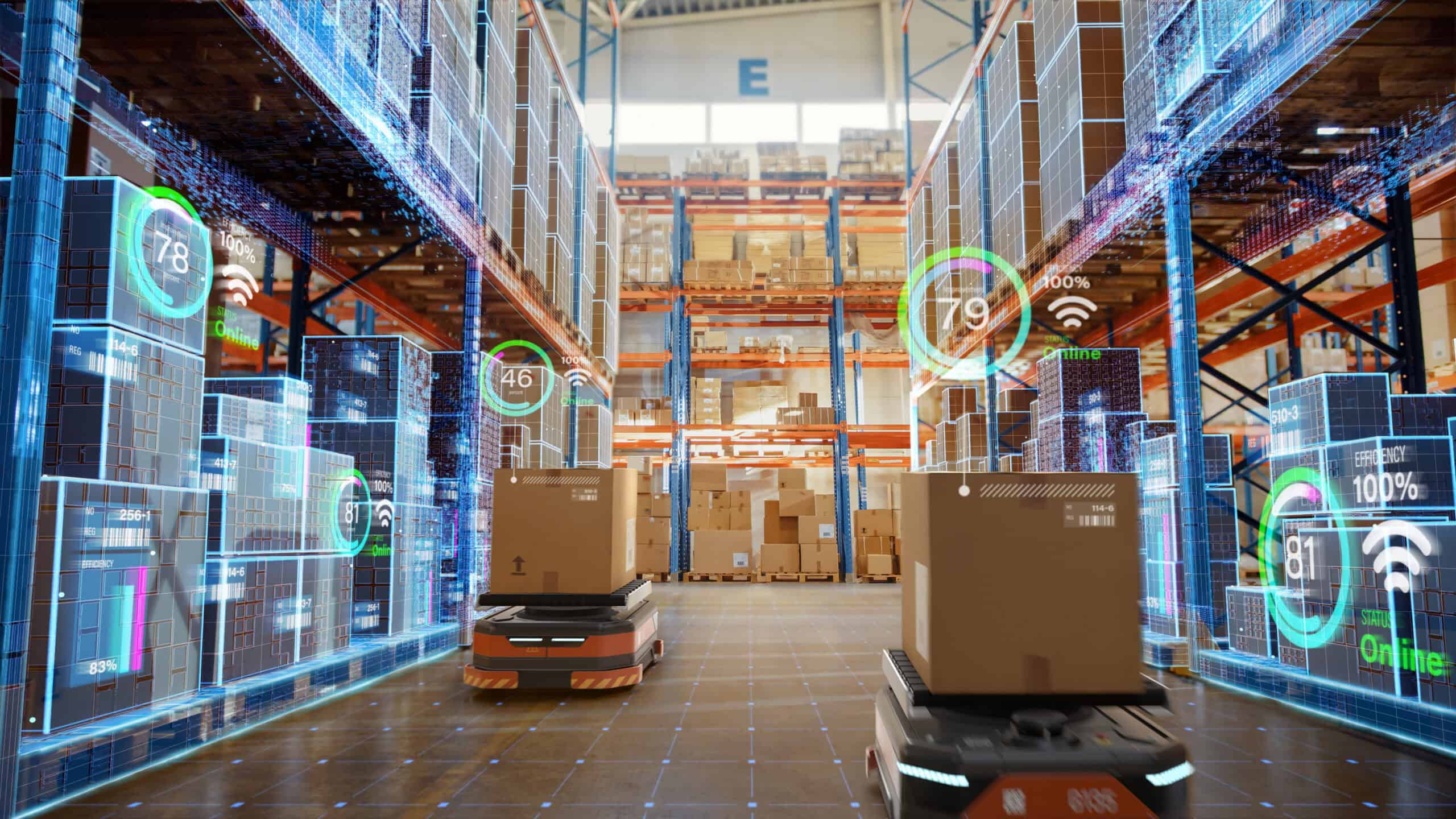
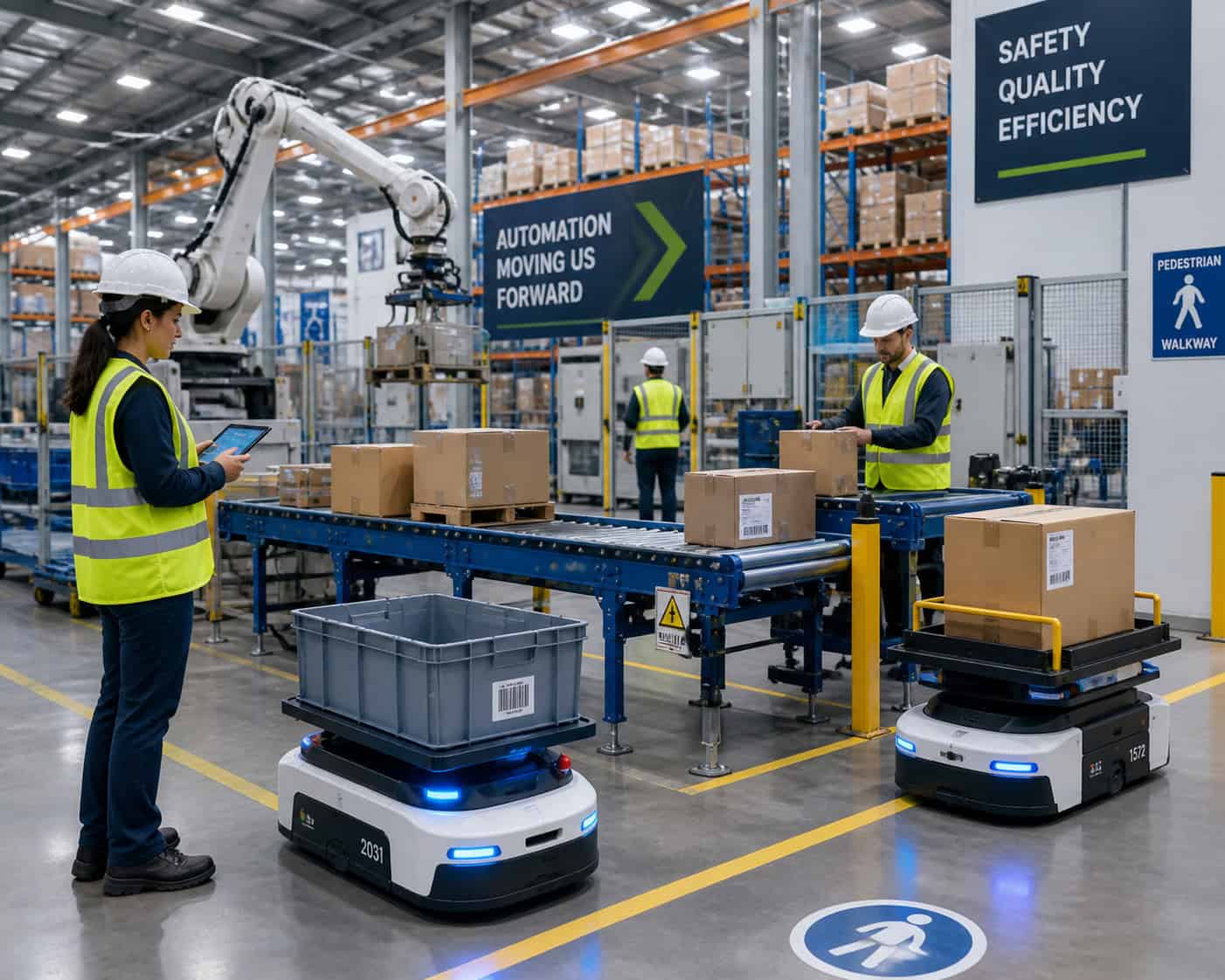
Robots for warehouse is no longer limited to traditional conveyor equipment. As fulfillment operations become more demanding, businesses are looking for flexible ways to move cartons, totes, pallets, and other products while improving throughput and reducing unnecessary manual handling. Robots for warehouse operations can play an important role in that transition.

Century Conveyor Systems provides robotic fulfillment solutions as part of its broader approach to automated material handling. The company works with warehouses, distribution centers, and fulfillment facilities to design and implement automation systems, including automated guided vehicles (AGVs) and autonomous mobile robots (AMRs).

Below is a FAQ covering the most important questions about Century Conveyor Systems’ robots for warehouse applications, including how the technology works, where it fits, and why a customized approach matters.

robots for warehouse

1. What are robots for warehouse operations?

Robots for warehouse operations are automated machines designed to transport or handle materials with less manual intervention. At Century Conveyor Systems, robotic fulfillment includes two primary categories: automated guided vehicles (AGVs) and autonomous mobile robots (AMRs).

These technologies are designed to provide transportation capabilities similar to those traditionally performed by lift trucks or other material-handling equipment. The difference is that robotic systems can automate the movement of products between different areas of a facility.

Century describes AGVs and AMRs as solutions for warehouse robotic fulfillment, with applications ranging from transporting pallets and cartons to supporting goods-to-person order fulfillment. 

Rather than treating a robot as an isolated piece of equipment, Century approaches robotic fulfillment as part of a larger automation system. That distinction matters because the value of a warehouse robot depends on how effectively it works with conveyors, storage, controls, software, packing operations, and the overall flow of goods.

2. What is the difference between an AGV and an AMR?

The biggest difference is how the robot navigates its environment.

An automated guided vehicle (AGV) follows a defined navigation system. Century notes that AGVs can use technologies such as magnetic tape, QR codes, inductive wires, and laser grids to navigate. They are particularly well suited to transporting pallets, cartons, or non-conveyable products along established routes. AGVs can also be equipped with conveyor or cart attachments depending on the material being handled. 

An autonomous mobile robot (AMR) is more flexible. AMRs do not require a fixed track and instead use sensors and programming to navigate through a facility. This allows them to move totes, cartons, and carts through a distribution environment with greater freedom. 

For a warehouse considering robots, the choice is therefore less about deciding which technology is universally better and more about determining which technology fits the facility’s workflow. A predictable, static transportation route may favor an AGV, while an operation requiring more dynamic movement may benefit from AMRs.

3. Why use robots for warehouse order fulfillment?

Robots can reduce unnecessary manual transportation while helping a facility process orders more efficiently.

Century’s order fulfillment approach focuses on optimizing operations for output performance, reducing errors that can contribute to returns or damaged products, and processing items faster with fewer manual interactions. 

This is especially relevant in goods-to-person environments. Instead of requiring employees to spend substantial time walking through a facility to retrieve inventory, AMRs can transport totes or cartons to designated areas and support the movement of products toward packing or fulfillment personnel. Century specifically identifies goods-to-person operations as a favored use case for AMRs. 

The benefit is not simply that a robot replaces a particular manual task. The larger opportunity is to redesign the flow of work so employees can spend more time on productive fulfillment activities while automated equipment handles repetitive transportation.

That can be particularly valuable in operations where order volumes fluctuate, travel distances are significant, or warehouse layouts make manual transportation inefficient.

4. Are Century’s robots for warehouse applications scalable?

Yes. Scalability is one of the key advantages Century identifies for robotic fulfillment.

Traditional automation can sometimes require substantial fixed infrastructure. Century points out that robotic systems are flexible because they are not “bolted down” in the same way as many other automation solutions. The company also describes robotic fulfillment systems as scalable, meaning additional systems can be implemented later as operational requirements change.

This can be important for a growing warehouse.

A facility does not necessarily know exactly what its throughput requirements will look like several years from now. Order volume may increase, product lines may change, or a company may expand into additional fulfillment channels. A scalable robotic strategy can provide a way to increase automated transportation capacity as those requirements develop.

For that reason, robots for warehouse applications can be considered not only as an immediate productivity tool but also as part of a longer-term automation strategy.

5. Can robots for warehouse work with conveyor systems?

Yes. In fact, integrating robots with conveyors can create a more complete material-handling system.

Century Conveyor Systems specializes in both conveyor systems and robotic fulfillment, which allows these technologies to be considered together rather than independently. Its conveyor solutions include belt, roller, modular belt, pallet, spiral, divert, accumulation, and extendable conveyor applications. 

AGVs, for example, can be deployed in environments where they interface with conveyor systems. Century notes that AGVs can also be fitted with conveyor or cart attachments for the products they handle. 

This integration can be valuable because different parts of a warehouse often have different transportation requirements. A conveyor may efficiently move packages along a high-volume fixed route, while a robot may be better suited to moving products between areas where installing permanent conveyor infrastructure would be less practical.

The result can be a hybrid system in which fixed automation and mobile automation each perform the tasks they are best suited to handle.

6. What warehouse tasks can Century’s robots for warehouse handle?

Century’s robotic fulfillment solutions can support several types of material transportation, depending on the system design and application.

AGVs can transport pallets, cartons, and non-conveyable items along established routes. AMRs can move totes, cartons, and carts throughout a facility. Century also identifies end-of-line and goods-to-person operations as applications for automated warehouse robots.

This makes robotic fulfillment relevant to more than one warehouse function. A system could potentially support the movement of inventory within a distribution facility, transport goods toward packing operations, or help move materials between automated and manual work areas.

The important consideration is that the robot should be selected around the material and workflow rather than simply choosing a robot because it is technologically advanced. Product dimensions, weight, transportation routes, operating volumes, interfaces with other equipment, and facility layout all influence the appropriate solution.

7. How does Century approach warehouse robotics differently from buying a standalone robot?

Century approaches robotics as part of a broader material-handling automation project.

The company describes itself as a full-service system integrator for shipping warehouses, distribution centers, and fulfillment facilities. Its stated process encompasses system design, validation, implementation, installation, startup support, and ongoing parts and service.

That systems perspective can be particularly important when introducing robots into an existing warehouse.

A robot does not operate in isolation. It may need to interact with conveyors, controls, warehouse management systems, warehouse control systems, storage systems, packing equipment, or other automated machinery. Century’s broader solution portfolio includes conveyor systems, robotic fulfillment, robotic palletizing, controls and software, storage modules, print-and-apply equipment, and service and parts. 

In other words, the objective is not merely to place robots inside a warehouse. The objective is to engineer an automated material flow in which the individual components work together.

8. Can robots for warehouse applications be customized?

Yes. Century specifically identifies customization as a benefit of its robotic fulfillment solutions.

Different warehouses have different products, layouts, order profiles, throughput requirements, and operational constraints. A robot designed for pallet transportation, for example, may have very different requirements from an AMR moving totes to a packing area.

Century states that its robotic systems can be customized for specific handling solutions. 

Customization can involve determining the appropriate robotic technology, navigation approach, attachments, transportation routes, interfaces, and relationship between robotic equipment and other automation. This is why application engineering is such an important part of warehouse robotics.

A properly designed system starts with the operational problem and works backward toward the technology.

9. Are robots the right choice for every warehouse?

Not necessarily—and determining that is part of the automation design process.

Robots can provide flexibility and scalable transportation, but they are one component of a much larger range of warehouse automation technologies. Century offers conveyors, sortation systems, robotic palletizing, controls and software, storage modules, and other solutions alongside robotic fulfillment. 

For some transportation paths, a conveyor may provide the most efficient solution. For another part of the facility, an AGV or AMR may offer the flexibility needed. A high-volume shipping operation might benefit from sortation equipment, while pallet operations could require specialized pallet conveyors or robotic palletizing.

The strongest automation strategy is therefore not necessarily the one with the most robots. It is the one that uses the right technology for each part of the workflow.

10. How can a warehouse determine whether it needs robots?

Start by examining the movement of materials, not by starting with the robot itself.

A warehouse should evaluate where products enter the facility, where they are stored, how they are picked, how they reach packing stations, how orders move toward shipping, and where employees spend significant amounts of time transporting materials.

Century describes order fulfillment as the sequence of activities from receiving an order through getting the item to the shipping dock. Its stated objective is to optimize the system for output, reduce errors and damage, and increase processing speed while reducing manual interactions.

That perspective provides a useful framework for evaluating robots.

If employees spend substantial time repeatedly moving totes between the same locations, an automated transportation solution may be worth investigating. If products need to travel through a fixed, high-volume route, conveyors may be more appropriate. If transportation requirements change frequently or goods need to move dynamically throughout a facility, AMRs may offer a better fit.

The right question is therefore not simply, “Do we need robots?” It is, “Where is automation capable of creating the greatest operational improvement?”

11. Why consider Century Conveyor Systems for robots for warehouse projects?

Century combines robotic fulfillment with decades of material-handling and systems-integration experience.

Century says it has more than 40 years of conveyor experience and provides full-service automation covering design, validation, installation, startup support, and lifetime parts and service. The company also reports more than 1,500 installations over the past five years. 

For businesses exploring robots for warehouse operations, that broader experience can matter because successful automation requires more than selecting equipment. It requires understanding how equipment, software, controls, facility layout, product characteristics, and human workflows interact.

Century’s portfolio allows robotic fulfillment to be evaluated alongside conveyors, sortation, palletizing, storage, controls, and other technologies. That can help businesses develop an automation strategy based on the complete material flow rather than a single piece of equipment.

12. What is the first step toward implementing robots in a warehouse?

The first step is to evaluate the warehouse’s current material flow and identify where robotic transportation can deliver measurable value.

Century encourages businesses to provide project details so an automation expert can help determine the next steps for a distribution-facility automation optimization project.

A useful evaluation should consider factors such as product types, weights and dimensions, order volume, transportation distances, existing conveyor infrastructure, storage configuration, employee workflows, peak demand, and future growth.

From there, an integrator can determine whether AGVs, AMRs, conveyors, or a combination of technologies makes the most sense.

For organizations searching for robots for warehouse applications, that systems-level evaluation is often the most important starting point. The goal is not automation for its own sake. The goal is a warehouse that moves products more efficiently, scales with demand, minimizes unnecessary manual handling, and supports reliable order fulfillment.

Century Conveyor Systems’ robotic fulfillment solutions provide a flexible approach to that objective, with AGVs and AMRs that can be engineered around the specific requirements of a warehouse or distribution facility. 

To explore Century’s robots for warehouse capabilities and begin discussing a potential project, visit Century Conveyor Systems or its Conveyor Systems and Robotic Fulfillment page.

Sorting Conveyors FAQ 101: Understanding Century Conveyor Systems’ Amazing Conveyor System Integration

sorting conveyors

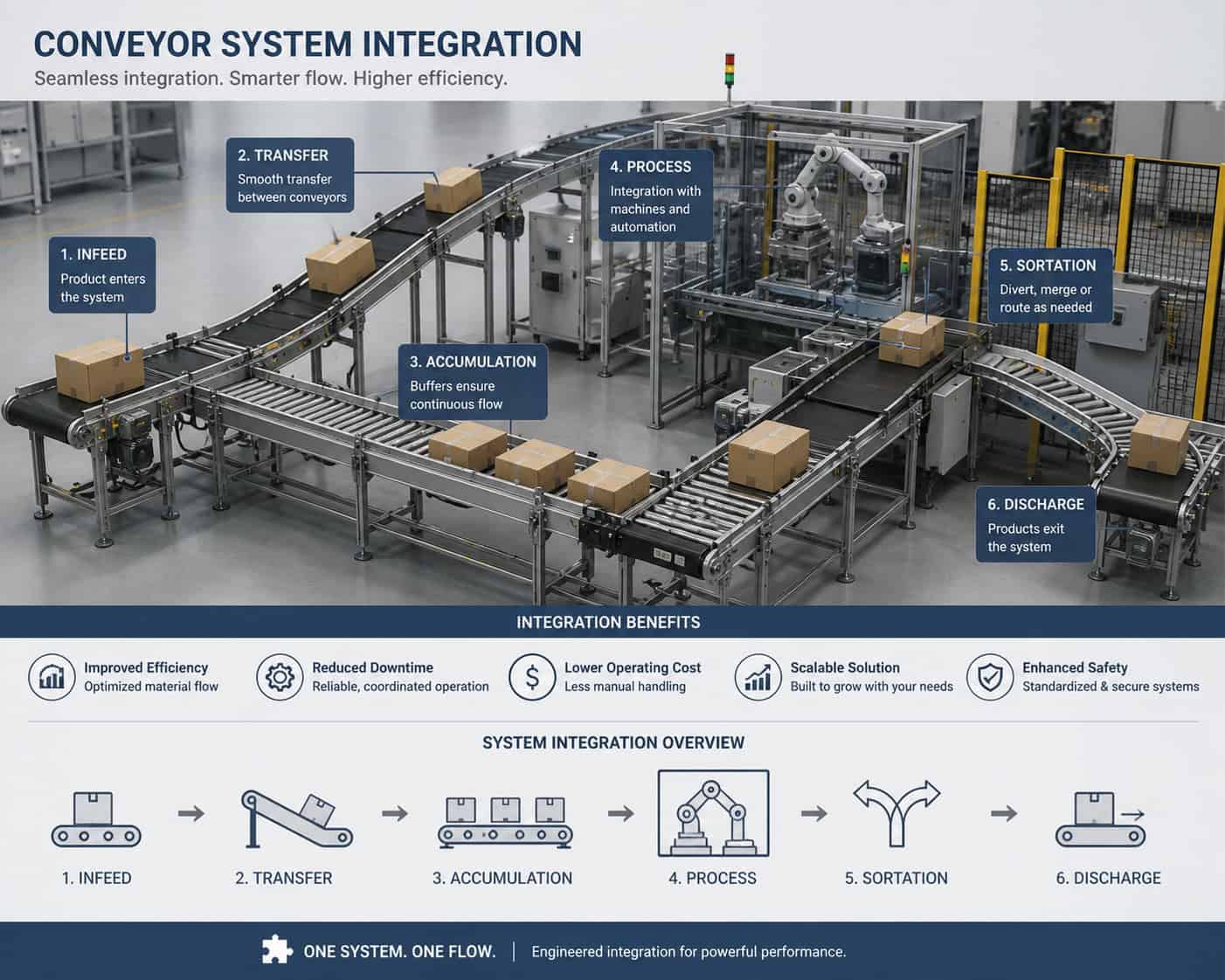
When warehouses and distribution centers need to move, route, and process products more efficiently, sorting conveyors can become a critical part of the material handling strategy. But selecting a conveyor is only one piece of the automation puzzle. The larger challenge is integrating conveyors with controls, software, sortation equipment, order fulfillment processes, and the physical layout of a facility.

Century Conveyor Systems approaches this challenge as a full-service system integrator. The company describes its work as turnkey material handling automation for warehouses, distribution centers, and fulfillment facilities, covering everything from system design and validation through installation, startup support, and ongoing parts and service.

The following FAQ explains how Century Conveyor Systems’ conveyor system integration approach can apply to sorting conveyors and broader order fulfillment operations.

sorting conveyors

What are sorting conveyors, and why are they important in an automated warehouse?

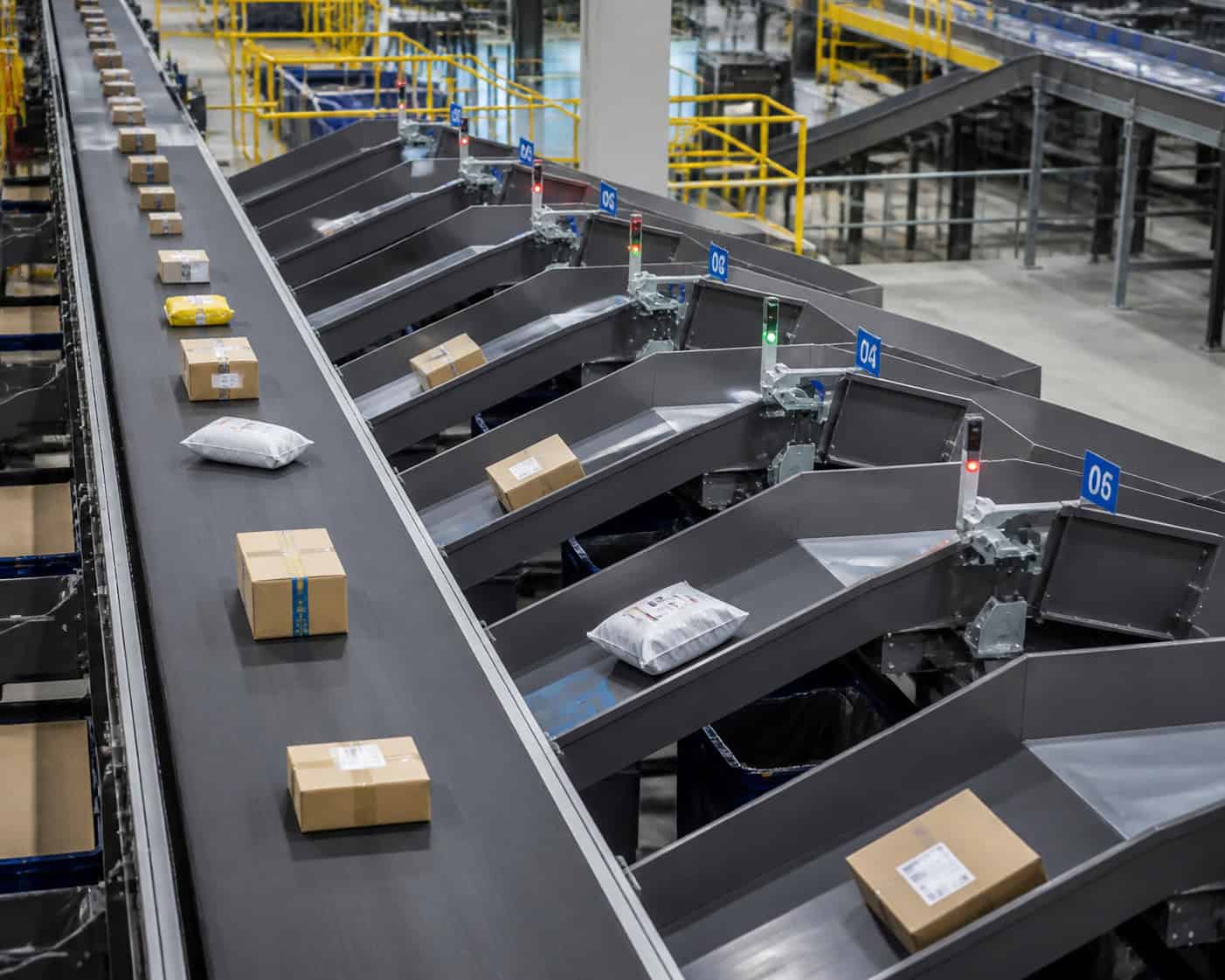
Sorting conveyors are material handling systems designed to route products, cartons, totes, or other items toward specific destinations within a facility. Rather than simply moving a product from point A to point B, a sorting conveyor system helps determine where an item should go and then directs it to the appropriate lane, workstation, packing area, shipping destination, or other process.

That distinction matters because modern fulfillment operations often have many destinations operating simultaneously. A conveyor system may need to move products from receiving or picking areas toward packing, then separate orders according to shipping requirements, customer destinations, carrier routes, or other operational criteria.

Century identifies sortation conveyors as one of its core solutions, with equipment including shoe, belt, tray, and Bombay distribution systems. The company positions these systems as rapid-throughput sortation equipment within a larger portfolio of material handling automation.

The value of sorting conveyors therefore goes beyond the conveyor hardware itself. A well-integrated system can connect transportation and sortation processes so that products keep moving through the facility with fewer unnecessary manual touches.

For businesses evaluating sorting conveyors, the key question should not simply be, “Which conveyor should we purchase?” A better question is, “How should the conveyor system work with the rest of our operation?”

How does Century Conveyor Systems approach conveyor system integration?

Century’s approach is broader than supplying individual conveyor components. The company describes itself as a full-service integrator, with system engineers responsible for designing, validating, and implementing turnkey systems. Its stated process encompasses system design, validation, final installation, startup support, and lifetime parts and service.

This integrated approach can be especially important for sorting conveyors because sortation typically sits within a network of other equipment and software. The conveyor must physically transport products, but controls and software also have to coordinate how products move through the system.

Century’s listed capabilities include concepts and design, controls engineering, control panel design and fabrication, electrical and mechanical installation, project management, project phasing, human-machine interfaces, and preventative maintenance.

That range of capabilities creates a more unified approach to automation. Instead of treating mechanical equipment, electrical controls, software, and installation as isolated projects, system integration brings those elements together around the facility’s operational goals.

For a warehouse considering sorting conveyors, this can mean evaluating the entire material flow before determining how the sortation equipment should be configured.

Why should sorting conveyors be planned around the entire order fulfillment process?

A conveyor can move a package efficiently and still fail to improve an operation if it does not fit the overall fulfillment process.

Century describes order fulfillment as the sequence of activities beginning when a fulfillment center receives an order and continuing until the item reaches the shipping dock for loading. Its stated goal is to optimize performance at each operational touchpoint, reduce errors that can contribute to returns or damaged products, and process items faster with fewer manual interactions.

This systems-level perspective is particularly relevant to sorting conveyors.

Consider a fulfillment operation in which products are picked manually, transported by conveyor, sorted into different destinations, packed, labeled, and ultimately sent to shipping. Improving only one segment may create a bottleneck somewhere else. A faster sorter could overwhelm downstream packing stations. More accumulation could require different controls. A new conveyor route could interfere with pedestrian traffic or existing equipment.

System integration addresses these relationships before equipment is installed.

Century offers multiple conveyor technologies that can serve different portions of an order fulfillment system. Its portfolio includes live roller and gravity conveyors, belted conveyors, modular belt conveyors, conveyor diverts, zero- and minimum-pressure accumulation conveyors, extendable conveyors, spiral conveyors, and pallet conveyors.

The important point is that sorting conveyors do not necessarily operate alone. Their effectiveness depends on how well the entire material flow is designed.

How can Century integrate different conveyor technologies into one system?

Different products and operational steps require different forms of conveyance. A small polybag may need a different handling approach than a large carton or pallet, and an accumulation zone has different requirements from a high-speed sortation area.

Century notes that live roller and gravity conveyors can be used for packing lines, divert lines, extendable applications, and end-of-line operations. Belted conveyors can provide stable handling for small polybags, parcels, and irregular cartons, while also supporting inclines, declines, and gapping. Modular belt conveyors provide a different belt construction that can be easier to clean, modify, or maintain for certain applications.

Conveyor diverts provide another integration point. According to Century, diverts can move products from a single conveyor line to other lines without requiring a large sortation system in every application. Different divert mechanisms can be selected depending on the product and required movement.

This illustrates why conveyor integration should begin with material characteristics and workflow rather than with a particular piece of equipment.

A successful design may combine several conveyor types, each performing a specific job. Sorting conveyors can handle routing, while accumulation equipment manages spacing, belt conveyors stabilize certain products, and gravity or live roller sections support packing or end-of-line processes.

The result is a system designed around the operation rather than a collection of disconnected conveyor components.

Can sorting conveyors work with robotics and other warehouse automation?

Yes. Sorting conveyors can be one component of a broader automated fulfillment environment that also includes robotics.

Century offers robotic fulfillment solutions involving automated guided vehicles (AGVs) and autonomous mobile robots (AMRs). The company describes AGVs as suitable for transporting pallets, cartons, and non-conveyable products along static routes, while AMRs can navigate more freely through a facility and are suited to applications such as goods-to-person fulfillment.

This creates opportunities for hybrid automation.

For example, a facility could use conveyors for predictable, high-volume product movement while using mobile robots for flexible transportation between areas that are difficult or inefficient to connect with fixed conveyor. The appropriate balance depends on the facility, product mix, throughput requirements, and operational objectives.

Century also states that its robotic fulfillment solutions can be scalable and flexible, with systems capable of being added later and customized for specific handling requirements.

The broader lesson is that sorting conveyors do not have to represent the entirety of a warehouse automation strategy. They can be integrated into a larger system in which fixed conveyors, sortation equipment, controls, and robotics each handle the tasks they are best suited to perform.

How do controls and software fit into a sorting conveyor system?

The mechanical conveyor is only part of an automated material handling system. Controls and software determine how equipment operates together and how products are directed through the facility.
Century lists controls and software among its primary solutions, including control panel fabrication, programmable logic controls (PLC), Warehouse Management Systems (WMS), and Warehouse Control Systems (WCS).

This layer of integration is especially important for sorting conveyors because sortation decisions need to correspond with the operational information associated with each product or order.

A conveyor can physically send an item toward several possible destinations, but the system needs a reliable method for determining the correct destination and coordinating equipment at the appropriate time. Controls can manage conveyor operation and equipment interactions, while warehouse software can provide information needed to support the overall fulfillment process.

For that reason, specifying sorting conveyors without considering controls and software can produce an incomplete automation plan.

Century’s system integration model combines engineering disciplines so the mechanical equipment, electrical systems, controls, and operational objectives can be considered together.

What makes conveyor system integration valuable for long-term performance?

A conveyor project should not end when the equipment is installed. Warehouses change, equipment requires maintenance, and production requirements can evolve.

Century lists conveyor preventative maintenance, repair services, replacement parts, mechanical and electrical installation, and ongoing service among its capabilities. The company also states that it has more than 40 years of conveyor experience and an established service department.

This long-term perspective is valuable when evaluating sorting conveyors because reliability directly affects the operation’s ability to keep products moving.

Century also notes that well-maintained conveyor systems can last more than 20 years and that additional solutions can be added to conveyor lines to increase automation.

That makes maintainability and future expansion important considerations during the initial design.

A system designed only for today’s throughput may eventually become a constraint as order volumes, product types, or fulfillment requirements change. A system designed with scalability in mind can provide more flexibility for future modifications.

The objective, therefore, is not simply to install sorting conveyors that work today. It is to develop an automation platform that can continue supporting the facility as its requirements evolve.

What should a company consider before contacting Century about sorting conveyors?

Companies should begin by documenting the operational problem they want automation to solve rather than selecting equipment first.

Useful information can include current and projected throughput, product dimensions and weights, order profiles, destinations, peak volumes, existing conveyor equipment, available floor space, staffing requirements, current bottlenecks, and desired future capabilities.

It is also useful to identify where errors, manual handling, product damage, or delays occur. Century specifically emphasizes improving output performance, reducing errors that can cause returns or breakage, and processing items faster with less manual interaction in its order fulfillment approach.

From there, a system integrator can evaluate whether sorting conveyors are appropriate and how they should interact with other technologies.

Century encourages prospective customers to provide project details when beginning an automation optimization project, after which an automation expert can respond with next steps.

For organizations exploring conveyor automation, this approach can help shift the conversation from purchasing equipment to engineering a complete solution.

Where can I learn more about Century Conveyor Systems’ conveyor integration services?

The best starting point is Century Conveyor Systems’ official website, where the company outlines its conveyor, sortation, robotic fulfillment, controls and software, storage, print-and-apply, service, and other material handling capabilities.

For a closer look at order fulfillment applications, visit Century’s Conveyor and Order Fulfillment Systems page. The page covers conveyor types, diverts, accumulation, pallet handling, robotic fulfillment, AGVs, and AMRs.

Ultimately, sorting conveyors are most effective when they are treated as part of a complete material handling strategy. Century Conveyor Systems’ conveyor system integration approach brings conveyor equipment together with engineering, controls, installation, project management, and ongoing service. For warehouses and distribution centers seeking higher throughput and more coordinated automation, that systems-level approach can be more valuable than choosing a conveyor in isolation.

Reverse Logistics: Why a Returns Process Isn’t a Returns System

Everybody promises easy returns. Very few operations can actually back that up.

Ask most warehouse and distribution leaders how they handle returns and you’ll hear some version of the same answer: “We deal with them as they come in.” That’s a process. It is not a system — and in reverse logistics, that distinction is where the money is won or lost.

Returns have quietly become one of the most consequential and least planned parts of modern warehousing and distribution. The expectations set by the largest players in e-commerce have created a world where customers assume returns are seamless. The reality on the warehouse floor is almost always more complicated. This article breaks down why reverse logistics is so hard, the three ways an undesigned returns process silently costs you, and what a real returns operation looks like when it’s built on purpose.

Returns Are Accelerating — and the Numbers Are Big

Returns are not going away. They are accelerating. A few figures put the scale in perspective:

  • $743 billion in merchandise was returned to U.S. retailers in 2023, according to the National Retail Federation (NRF).
  • On average, roughly 1 in 6 purchases is returned — and e-commerce return rates run about 3x higher than brick-and-mortar.
  • A properly designed returns operation typically routes incoming product through at least three disposition zones to sort and route what comes back.

For any operation moving meaningful volume, returns are no longer a rounding error. They’re a category of work large enough to demand its own design.

Every Warehouse Has a Returns Process. Very Few Have a Returns System.

The expectations set by the biggest e-commerce brands have trained customers to assume returns are effortless. Behind the scenes, that seamlessness is expensive and hard to reproduce.

Consider how much variance a single returns dock absorbs. A mattress cannot be resold. A returned pair of jeans probably can. An electronics return might go to a certified reseller. Damaged goods need assessment before you even know what to do with them. Every category is different, every industry handles it differently, and most of the time nobody designed the process — it just accumulated.

If your team is figuring it out item by item, you are not behind. You are in the majority. But being in the majority doesn’t mean it isn’t costing you. It usually means the cost is simply invisible.

Three Ways an Undesigned Returns Process Costs You

When returns are handled by improvisation instead of design, the cost shows up in three predictable places.

1. No Clear Intake Process

Returns arrive and everyone improvises. Every item is handled the same way regardless of its condition, category, or disposition path. The result is inconsistency you cannot measure and therefore cannot fix. Without a defined intake step, there’s no reliable way to know what came back or what should happen to it next.

2. Inventory That Goes Dark

Product comes back into your facility and stops being tracked. You don’t know what is resellable, what needs repair, or what is sitting in a pile taking up floor space. Returned inventory becomes invisible inventory — and invisible inventory is expensive inventory. Every unit that can’t be found or assessed is working capital you’ve already paid for but can’t recover.

3. Space and Labor With No Defined Output

You’re dedicating floor space and team hours to returns, but there’s no defined workflow, no throughput metric, and no connection to your forward fulfillment operation. That’s not a returns operation. That’s a costly holding area wearing the label of one.

Why Reverse Logistics Is Harder Than Forward Fulfillment

The challenge that makes reverse logistics fundamentally different from forward fulfillment is inconsistency.

Standard warehouse automation is designed for uniform product moving in one predictable direction. Returns are the exact opposite. Every item comes back in a different condition, a different size, and with a different disposition path. The same system that excels at shipping identical SKUs outbound can choke on the unpredictable mix coming back in.

That’s why designing a returns operation isn’t just “forward fulfillment in reverse.” It requires workflows and technology built to expect variance rather than fight it.

Technology That Handles Variance

Newer approaches are built specifically for this problem. Tote-based robotic storage systems — such as the 3D robotic storage approach from Attabotics, a Century technology partner — handle returns without requiring standardized product dimensions or a uniform SKU footprint. You place items in a tote and the system handles the rest. The mix doesn’t matter. The size variance doesn’t matter. The tote accepts it, the system routes it, and your team always knows exactly where each item is and what stage it’s in.

Century partners with Attabotics to design returns workflows that work the way your product actually behaves — not the way an automation textbook says it should. As one operator described it: when all different types of things are coming back in random sizes and conditions, you put them in a tote and the system does the rest, regardless of what’s in it. The reported impact of designing returns this way is significant — meaningful space reduction, dramatically faster order fulfillment, and a large share of labor liberated for higher-value work.

What a Real Returns Operation Looks Like

For operations that have built a proper reverse logistics workflow, the difference isn’t just operational — it changes how the whole team thinks about the back end of the business. Returns go from being a cost center nobody wants to own to a measurable, manageable part of the operation.

The shift is cultural as much as mechanical. As one distribution-center operations manager put it, teams that once dreaded “returns day” reach a point where it’s just another part of the workflow: they know what’s coming in, they know where it goes, and they know what’s sitting in the returns area at any given time.

When You Build It Right, Returns Become a Resource

A designed returns system converts a liability into leverage in four ways.

Recovered inventory value. Returns that used to sit unassessed are identified, routed, and recovered — back to the shelf, to a reseller, or to a vendor credit. Product stops disappearing into a pile.

Faster throughput. Returns move through your building on a timeline you control, not a timeline dictated by accumulation. A system creates a cadence, and a cadence creates predictability.

Labor with a purpose. Your team processes returns in a defined workflow with clear steps and measurable output. Every hour spent on returns produces a tracked result, not a vague sense of progress on an undefined pile.

Visibility you can report on. You know what came back, why it came back, and what happened to it. That data shapes purchasing decisions, vendor relationships, and customer policy — none of which is possible when returns are invisible.

How to Start Designing Your Returns System

Moving from process to system doesn’t require solving everything at once. A practical sequence:

  1. Define a single intake step. Every return gets logged and assessed the same way before anything else happens.
  2. Establish disposition zones. Decide the routes — resell, repair/refurbish, recycle, vendor return — and sort against them consistently.
  3. Make returned inventory visible. Track it the moment it re-enters the building so it never goes dark.
  4. Set a throughput metric. Measure returns like any other operation, with a defined output per hour and per shift.
  5. Connect returns to forward fulfillment. Recovered product should flow back into sellable inventory quickly and predictably.

Frequently Asked Questions

What is reverse logistics? Reverse logistics is the set of processes for moving goods back from the customer through your facility — receiving returns, assessing condition, and routing each item to its best disposition (resale, repair, refurbishment, recycling, or vendor return). It’s the “backward” counterpart to forward fulfillment.

What’s the difference between a returns process and a returns system? A returns process handles items as they arrive, usually through improvisation. A returns system uses a defined intake, disposition zones, tracked inventory, and a throughput metric so results are consistent, measurable, and improvable.

Why are e-commerce return rates so high? Customer expectations for easy, free returns — set by the largest online retailers — encourage more frequent returns. E-commerce return rates run roughly three times higher than brick-and-mortar, which makes designed reverse logistics far more important for online and omnichannel operations.

Can warehouse automation handle returns? Traditional automation is built for uniform product moving one direction, so it struggles with returns. Systems designed for variance — such as tote-based robotic storage — handle mixed sizes and conditions without standardized dimensions, which makes them well suited to reverse logistics.

Turn Your Returns Into a Resource

Every reverse logistics challenge is different. If you want to talk through what your returns operation currently looks like — and what it could look like — that’s exactly the kind of conversation Century is built for. Returns don’t have to be the part of the business nobody wants to own. Designed well, they become a source of recovered value, predictable throughput, and real visibility.

Want more operations insights like this delivered to your inbox? Sign up for our email list at centuryconveyor.com/email/.


Century Conveyor Systems provides turnkey material handling automation and reverse logistics design for warehouse, distribution, and fulfillment operations. NJ | CA | KY.

Automated Material Handling FAQ 101: Everything You Need to Know About Century Conveyor Systems’ Solutions

automated material handling

As warehouses, distribution centers, and fulfillment operations continue toward automated material handling, businesses are searching for ways to increase throughput, improve order accuracy, and reduce manual handling. One of the most effective ways to accomplish these goals is through automated material handling.

Century Conveyor Systems specializes in designing and integrating turnkey automated material handling systems that combine conveyors, robotics, sortation equipment, warehouse controls, and software into a single, optimized solution. Rather than providing standalone equipment, Century develops customized systems that fit each customer’s workflow, operational goals, and future growth plans.

Below are answers to the most frequently asked questions about Century Conveyor Systems’ automated material handling solutions.

automated material handling

FAQ 1: What is automated material handling?

Automated material handling refers to the use of conveyors, robotics, software, sensors, and intelligent controls to move products throughout a warehouse or distribution facility with minimal manual intervention.

Instead of employees transporting products between receiving, storage, picking, packing, sorting, and shipping, automated systems continuously move inventory through each stage of the operation. The result is a smoother workflow that minimizes unnecessary handling while supporting faster processing.

Century Conveyor Systems engineers complete automated material handling solutions that are customized to each facility. Their systems can transport cartons, totes, pallets, drums, polybags, and other products using the right combination of conveyor technologies, robotic solutions, warehouse controls, and automation software.

Because every operation is different, Century begins with an evaluation of the customer’s existing processes before designing a solution that improves efficiency without disrupting daily operations. Their focus is not simply on installing conveyors—it is on creating an integrated system that improves overall warehouse performance.


FAQ 2: Why should businesses choose Century Conveyor Systems for automated material handling?

Many automation providers sell equipment. Century Conveyor Systems delivers complete system integration.

Instead of selecting individual pieces of equipment independently, Century engineers an entire automated material handling solution that allows every component to work together seamlessly.

Their projects typically include:

  • Conveyor systems
  • Automated sortation equipment
  • Robotic palletizing
  • AGVs (Automated Guided Vehicles)
  • AMRs (Autonomous Mobile Robots)
  • PLC controls
  • Warehouse Control Systems (WCS)
  • Warehouse Management System (WMS) integration
  • Installation
  • Startup support
  • Ongoing maintenance and service

This turnkey approach simplifies implementation because customers work with one experienced integration partner throughout the project—from initial design through long-term support.

Century also validates system performance during the engineering phase to ensure the finished solution aligns with operational goals such as increased throughput, lower labor costs, and improved reliability.


FAQ 3: How does automated material handling improve order fulfillment?

Order fulfillment is much more than moving products from one location to another. Every order must pass through receiving, storage, picking, packing, labeling, sorting, and shipping before reaching the customer.

Whenever products pause between these processes, bottlenecks develop. Employees spend valuable time walking products across the warehouse instead of completing higher-value tasks, and fulfillment speed suffers.

Century Conveyor Systems addresses these challenges by designing automated material handling systems that create continuous product flow throughout the warehouse.

Their order fulfillment solutions help businesses:

  • Increase processing speed
  • Reduce unnecessary product handling
  • Improve order accuracy
  • Minimize bottlenecks
  • Support faster shipping
  • Reduce product damage caused by excessive manual movement

Rather than relying on isolated automation, Century integrates conveyors, robotics, sortation systems, controls, and software into one coordinated operation. This allows products to move efficiently between departments without unnecessary delays.

The result is a warehouse capable of maintaining consistent performance during both normal operations and seasonal demand spikes.


FAQ 4: What technologies are included in Century Conveyor Systems’ automated material handling solutions?

Automated material handling involves much more than conveyors alone.

Century Conveyor Systems combines multiple technologies into one integrated solution depending on each customer’s operational requirements.

These technologies may include conveyor systems for transporting cartons, totes, and pallets; automated sortation equipment for directing products to the correct destination; robotic palletizing systems that automate repetitive end-of-line tasks; and autonomous mobile robots (AMRs) or automated guided vehicles (AGVs) that transport materials throughout the facility.

Century also integrates advanced controls and software, including programmable logic controllers (PLCs), Warehouse Control Systems (WCS), and Warehouse Management Systems (WMS), allowing equipment to communicate and operate as one coordinated system.

Additional solutions such as print-and-apply labeling, case forming, storage modules, shelving, racking, and automated storage and retrieval systems (AS/RS) can also be incorporated to create a comprehensive warehouse automation strategy.

Because Century designs every project around the customer’s workflow, businesses receive only the technologies that provide measurable operational value rather than unnecessary equipment.


FAQ 5: Can Century Conveyor Systems’ automated material handling solutions grow with a business?

Yes. Scalability is one of the most important considerations during system design.

Warehouse operations rarely remain static. New product lines, additional customers, seasonal demand, and expanding order volumes all place greater demands on material handling systems over time.

Century engineers automation with future growth in mind.

Their systems can often be expanded by adding additional conveyor zones, robotic equipment, sortation capacity, or autonomous mobile robots without requiring a complete redesign of the facility.

This phased approach allows businesses to invest in automation that meets current operational needs while maintaining flexibility for future expansion.

Instead of forcing customers into oversized systems on day one, Century develops solutions that can evolve alongside the business.

This long-term perspective helps maximize return on investment while minimizing disruption during future upgrades.


FAQ 6: How does automated material handling reduce labor challenges without replacing employees?

One common misconception is that warehouse automation exists solely to replace workers.

In reality, automated material handling is primarily designed to eliminate repetitive transportation tasks that consume employee time.

Without automation, warehouse staff may spend significant portions of each shift pushing carts, transporting totes, or moving cartons between departments.

Century Conveyor Systems automates these repetitive transportation activities, allowing employees to focus on higher-value responsibilities such as quality control, exception handling, equipment supervision, customer service, and inventory management.

This can help businesses:

  • Reduce unnecessary walking throughout the warehouse
  • Improve employee productivity
  • Lower physical strain
  • Support safer operations
  • Maintain consistent throughput during labor shortages

Rather than replacing people, automation enables existing teams to accomplish more with the resources already available.

For organizations facing hiring challenges or fluctuating labor availability, this operational efficiency can become a significant competitive advantage.


FAQ 7: Which industries benefit most from Century Conveyor Systems’ automated material handling solutions?

Automated material handling provides value across a wide range of industries that process high volumes of products.

Century Conveyor Systems designs customized solutions for warehouses, distribution centers, fulfillment operations, and manufacturers that require efficient product movement.

Industries that commonly benefit include:

  • E-commerce fulfillment
  • Third-party logistics (3PL)
  • Retail distribution
  • Consumer packaged goods
  • Manufacturing
  • Food and beverage distribution
  • Pharmaceutical distribution
  • Industrial products
  • Packaging operations

Because Century’s solutions are engineered around each customer’s workflow rather than a standardized design, they can accommodate a wide variety of products, handling requirements, and facility layouts.

Whether a business handles cartons, pallets, totes, drums, or polybags, Century develops an automation strategy that aligns with operational objectives while improving throughput and overall efficiency.


FAQ 8: What support does Century Conveyor Systems provide after installation?

Successful automated material handling extends well beyond installation day.

Century Conveyor Systems supports customers throughout the entire lifecycle of their automation investment.

After implementation, Century provides startup assistance, conveyor service, preventative maintenance, replacement parts, equipment support, and ongoing technical expertise.

Their experienced service team helps customers maintain peak system performance while minimizing downtime through proactive maintenance and responsive service.

This long-term partnership ensures businesses continue receiving value from their automation investment long after the original project has been completed.

For organizations that rely on continuous warehouse operations, dependable service and technical support are just as important as the original system design.

Century’s commitment to lifetime support allows customers to operate with confidence while adapting their systems as operational requirements evolve.


Final Thoughts

Automated material handling has become an essential component of modern warehouse and distribution operations. As order volumes increase and customer expectations continue to rise, businesses need systems that improve speed, accuracy, and operational efficiency without sacrificing flexibility.

Century Conveyor Systems approaches warehouse automation as a fully integrated solution rather than a collection of individual machines. By combining conveyors, robotics, sortation equipment, warehouse controls, software integration, and long-term support, the company designs automated material handling systems that are tailored to each customer’s specific goals.

Whether your organization is planning its first automation project or expanding an existing facility, Century Conveyor Systems provides the engineering expertise, system integration, and ongoing service needed to build an automated material handling solution that supports long-term operational success.

Conveyor System Integration FAQ 101: Everything You Need to Know About Century Conveyor Systems’s Great Services

conveyor system integration

Modern warehouses and distribution centers rely on much more than standalone conveyor equipment. Today, businesses need conveyor system integration. That is where conveyor system integration becomes essential.

Century Conveyor Systems specializes in designing and implementing turnkey material handling automation solutions rather than simply supplying conveyors. By integrating conveyors with warehouse controls, robotics, software, sortation equipment, storage systems, and fulfillment technologies, Century creates complete workflows that help warehouses operate more efficiently from receiving through shipping.

Below are answers to some of the most frequently asked questions about Century Conveyor Systems’ conveyor system integration services.

conveyor system integration

FAQ 1: What is conveyor system integration?

Conveyor system integration is the process of connecting conveyor equipment with every other critical component inside a warehouse or distribution center so they function as one coordinated operation instead of isolated pieces of equipment.

Rather than installing a conveyor simply to move products from Point A to Point B, an integrated system considers how inventory flows throughout the entire facility. Every component is engineered to support the next stage of the operation, creating a seamless material handling process.

At Century Conveyor Systems, conveyor system integration may include:

  • Conveyor systems
  • Warehouse Control Systems (WCS)
  • Warehouse Management Systems (WMS)
  • PLC controls
  • Robotic palletizing
  • Automated Guided Vehicles (AGVs)
  • Autonomous Mobile Robots (AMRs)
  • Barcode scanning
  • Print-and-apply labeling
  • Automated sortation systems
  • Storage and picking solutions

Because these technologies communicate with one another, products move efficiently through receiving, storage, picking, packing, labeling, sortation, and shipping with minimal manual intervention. Instead of creating isolated automation “islands,” Century engineers one unified system designed around operational goals.


FAQ 2: Why should businesses choose Century Conveyor Systems for conveyor system integration instead of purchasing individual conveyor equipment?

Many conveyor suppliers focus primarily on selling hardware. While quality equipment is important, equipment alone rarely solves operational inefficiencies.

Century Conveyor Systems approaches every project from a systems engineering perspective. Before recommending equipment, its engineers evaluate how products move throughout the entire warehouse. They consider factors such as:

  • Current workflow
  • Facility layout
  • Throughput requirements
  • Labor utilization
  • Shipping goals
  • Available floor space
  • Future expansion plans
  • Existing automation technologies

This engineering-first methodology helps ensure every conveyor contributes to overall operational performance instead of simply transporting products.

Century also manages the complete implementation process, including system design, engineering validation, installation, startup support, integration, and ongoing service. This turnkey approach reduces project complexity for customers while improving long-term system reliability.

Instead of coordinating multiple vendors for controls, conveyors, robotics, software, and installation, customers receive one integrated solution managed from beginning to end.


FAQ 3: How does Century Conveyor Systems’ conveyor system integration improve order fulfillment?

Efficient order fulfillment depends on much more than moving products quickly.

Every order typically passes through multiple stages, including:

  • Receiving
  • Inventory storage
  • Replenishment
  • Picking
  • Transportation
  • Packing
  • Labeling
  • Sortation
  • Shipping

If products slow down at any point, the resulting bottleneck can reduce throughput across the entire operation.

Century Conveyor Systems engineers conveyor system integration to optimize every touchpoint in this workflow. Conveyors continuously transport products between workstations while integrated controls and warehouse software coordinate movement across departments.

The benefits extend throughout the fulfillment process:

Higher throughput

Continuous product flow reduces waiting time between operations and allows facilities to process more orders in less time.

Improved order accuracy

Integrated barcode scanning, warehouse software, and sortation systems help ensure products are routed to the correct destination throughout the fulfillment process.

Reduced manual handling

Employees spend less time walking products across the warehouse and more time performing value-added tasks such as picking, quality inspection, and packing.

Lower product damage

Fewer manual touches reduce opportunities for mishandling, damaged inventory, and costly returns.

Better operational visibility

Integrated software provides real-time tracking of inventory movement, allowing warehouse managers to identify bottlenecks and improve performance.

Century’s goal is to increase output performance while minimizing errors and manual interactions, helping customers process orders faster and more consistently.


FAQ 4: Can Century Conveyor Systems integrate conveyors with robotics and warehouse software?

Yes. One of Century Conveyor Systems’ core strengths is integrating conveyors with complementary warehouse automation technologies.

Modern distribution facilities increasingly rely on multiple automation platforms working together rather than operating independently. Century designs conveyor system integration solutions that connect conveyors with technologies such as:

  • Automated Guided Vehicles (AGVs)
  • Autonomous Mobile Robots (AMRs)
  • Warehouse Management Systems
  • Warehouse Control Systems
  • PLC controls
  • Robotic palletizing
  • Automated storage systems
  • Print-and-apply labeling
  • Barcode scanners
  • Automated sortation equipment

For example, products may arrive at receiving, travel via conveyor into storage, be retrieved through automated picking, move to robotic palletizing or packing stations, receive shipping labels automatically, and then be sorted for outbound transportation—all within one coordinated workflow.

This level of integration minimizes delays between processes while improving consistency and operational efficiency across the facility.


FAQ 5: How does conveyor system integration support long-term warehouse growth?

Warehouse operations rarely remain static. Businesses often experience changing order volumes, seasonal demand, additional product lines, and evolving customer expectations.

One of the primary advantages of Century Conveyor Systems’ conveyor system integration is scalability.

Rather than designing systems only for today’s workload, Century engineers solutions that can expand alongside future operational requirements.

This scalability may include:

  • Additional conveyor lines
  • Expanded sortation capacity
  • New robotic work cells
  • Additional warehouse software functionality
  • Storage expansion
  • Increased shipping lanes
  • Future automation technologies

Because the system is engineered as a connected platform, businesses can continue adding automation without replacing the entire infrastructure.

This protects capital investments while allowing operations to grow more efficiently over time. Whether expanding into a larger distribution center or increasing daily order volume, integrated systems provide greater flexibility than disconnected equipment purchases.


FAQ 6: What industries benefit most from Century Conveyor Systems’ conveyor system integration?

Conveyor system integration is valuable across many industries where efficient material movement directly affects productivity and customer satisfaction.

Century Conveyor Systems serves organizations such as:

  • E-commerce fulfillment centers
  • Third-party logistics (3PL) providers
  • Retail distribution centers
  • Manufacturing facilities
  • Parcel handling operations
  • Warehouse distribution centers

Although each operation has unique requirements, they all benefit from streamlined product flow, reduced manual handling, improved throughput, and greater operational visibility.

For example, an e-commerce fulfillment center may prioritize high-speed picking and sortation, while a manufacturing facility may focus on transporting work-in-progress materials between production stages. Century customizes each integrated solution according to the customer’s operational goals instead of relying on a one-size-fits-all design.


FAQ 7: What happens after a conveyor system integration project is completed?

Successful automation does not end with installation.

Century Conveyor Systems supports customers throughout the lifecycle of their automation investment. Beyond system design and implementation, the company also provides startup assistance, replacement parts, preventative maintenance, and ongoing service support.

This long-term partnership helps customers maintain system performance as operational requirements evolve. Regular maintenance can improve equipment reliability, reduce unexpected downtime, and extend the lifespan of integrated material handling systems.

Because Century understands every aspect of the installed system—from controls and software to conveyors and robotics—it can provide support that reflects the complete operation rather than focusing on individual components.


Conclusion

Choosing the right conveyor system integration partner involves more than selecting conveyor equipment. It requires an experienced systems integrator capable of designing an automation strategy that supports the entire warehouse operation.

Century Conveyor Systems takes a comprehensive approach by engineering turnkey material handling solutions that integrate conveyors with controls, robotics, warehouse software, sortation equipment, storage technologies, and fulfillment workflows. This connected approach helps businesses improve throughput, reduce manual handling, increase order accuracy, and build scalable operations prepared for future growth.

Whether your facility is upgrading an existing warehouse or building a new distribution center, Century Conveyor Systems focuses on delivering integrated automation solutions that optimize product flow from receiving to shipping while providing ongoing support long after installation.

Roller Conveyor System FAQ 101: Everything You Need to Know About Century Conveyor Systems’ Roller Conveyor Solutions

roller conveyor system

A roller conveyor system is one of the most dependable and versatile material handling solutions available for warehouses, distribution centers, manufacturing facilities, and fulfillment operations. Whether moving cartons, totes, pallets, or other packaged goods, roller conveyors create an efficient product flow that reduces manual handling while increasing throughput.

Century Conveyor Systems specializes in designing, engineering, and integrating complete conveyor automation solutions rather than offering one-size-fits-all equipment. Every roller conveyor system is engineered around the customer’s workflow, allowing businesses to improve productivity while preparing for future growth.

Below are answers to the most frequently asked questions about Century Conveyor Systems’ roller conveyor systems.

roller conveyor system

FAQ 1: What is a roller conveyor system?

A roller conveyor system is a material handling solution that transports products across a facility using a series of rotating rollers. Depending on the application, the rollers can either be powered by motors (live roller conveyors) or operate using gravity.

Roller conveyor systems are commonly used to move:

  • Shipping cartons
  • Totes
  • Cases
  • Trays
  • Pallets
  • Oversized packages
  • Drums

Century Conveyor Systems engineers roller conveyor systems that become part of a complete warehouse automation solution rather than functioning as standalone equipment. Their systems are designed to keep products moving efficiently from receiving and storage through picking, packing, sortation, and shipping.

Instead of requiring employees to manually transport products between workstations, the conveyor continuously moves inventory through the facility. This minimizes unnecessary travel time while creating a more organized workflow that supports higher throughput and improved operational consistency.


FAQ 2: What makes Century Conveyor Systems’ roller conveyor system different from standard conveyor equipment?

Many conveyor suppliers simply sell conveyor sections.

Century Conveyor Systems takes a much broader engineering approach.

Rather than selecting a generic conveyor from a catalog, Century designs an integrated solution that matches the customer’s facility layout, production goals, product characteristics, and long-term growth plans.

Every roller conveyor system is carefully engineered to work alongside technologies such as:

  • Warehouse Management Systems (WMS)
  • Warehouse Control Systems (WCS)
  • PLC controls
  • Barcode scanners
  • Robotic palletizing
  • Automated Guided Vehicles (AGVs)
  • Autonomous Mobile Robots (AMRs)
  • Automated sortation systems
  • Print-and-apply labeling equipment

Because every component communicates together, products continue flowing smoothly throughout the warehouse without creating isolated automation “islands.”

This integrated design philosophy helps eliminate bottlenecks while giving warehouse managers greater visibility into product movement from receiving through final shipment.


FAQ 3: What types of roller conveyor systems does Century Conveyor Systems provide?

Century Conveyor Systems offers multiple roller conveyor technologies depending on the products being handled and the operational requirements of the facility.

Live Roller Conveyors

Powered live roller conveyors use motors to drive rollers, automatically moving cartons, totes, and other products throughout the warehouse. These systems provide consistent movement regardless of floor elevation and are ideal for high-volume operations.

Gravity Roller Conveyors

Gravity conveyors use the natural force of gravity to move products. Since they require no motors, they are often used for accumulation zones, loading docks, shipping lanes, or temporary staging areas.

Poly-V Roller Conveyors

Poly-V powered roller conveyors are specifically designed for slower-moving, stable loads. These conveyors are commonly used for oversized products, drums, lighter pallets, and bulk materials that require controlled transportation.

Rather than relying on a single conveyor type, Century frequently combines multiple conveyor technologies within the same system to maximize efficiency throughout different operational zones. Each section is selected based on the product characteristics, required speed, accumulation needs, and available facility space.


FAQ 4: How does a roller conveyor system improve warehouse efficiency?

The greatest advantage of a roller conveyor system is its ability to create continuous product flow.

In many facilities, employees spend a significant portion of their workday simply transporting inventory between departments. While necessary, this manual movement adds labor costs without directly contributing value to the order fulfillment process.

Century Conveyor Systems designs roller conveyor systems that automate transportation between every major warehouse function, including:

  • Receiving
  • Storage
  • Replenishment
  • Order picking
  • Packing
  • Labeling
  • Sortation
  • Shipping

This continuous movement creates several operational improvements.

First, employees spend more time performing productive work instead of pushing carts or driving forklifts over long distances.

Second, products move through the warehouse more consistently, reducing delays caused by congestion or inconsistent manual handling.

Third, reducing unnecessary product touches lowers the likelihood of damaged inventory, shipping mistakes, and fulfillment errors.

Together, these improvements increase throughput while helping businesses process more orders with greater consistency.


FAQ 5: Can Century Conveyor Systems customize a roller conveyor system for different industries?

Yes.

One of Century Conveyor Systems’ biggest advantages is its ability to engineer custom solutions for virtually every warehouse and distribution environment.

No two facilities operate exactly alike.

Some businesses prioritize extremely high order volumes, while others focus on handling oversized products, mixed SKU inventories, or palletized loads.

Century engineers each roller conveyor system around factors including:

  • Product dimensions
  • Product weight
  • Facility layout
  • Order volume
  • Required throughput
  • Available floor space
  • Future expansion plans
  • Existing warehouse software
  • Automation goals

This customized engineering approach ensures every conveyor section supports the customer’s specific workflow instead of forcing operations to adapt to standardized equipment.

As businesses grow, these scalable systems can also accommodate additional automation technologies without requiring an entirely new conveyor infrastructure.


FAQ 6: How does a roller conveyor system support order fulfillment operations?

Modern order fulfillment depends on speed, accuracy, consistency, and scalability.

Every unnecessary delay between receiving inventory and shipping finished orders reduces overall warehouse performance.

Century Conveyor Systems designs roller conveyor systems specifically to optimize every stage of order fulfillment.

Instead of treating conveyors as simple transportation equipment, Century uses them as the backbone of an integrated fulfillment strategy.

Products flow continuously through receiving, storage, picking, packing, labeling, sortation, and shipping with minimal manual intervention.

This integrated movement provides several major benefits:

  • Faster order processing
  • Reduced labor dependency
  • Improved shipping accuracy
  • Lower product handling damage
  • Better workflow organization
  • Increased throughput during peak demand

As ecommerce continues to increase customer expectations for rapid shipping, automated roller conveyor systems help fulfillment centers maintain both speed and consistency without relying solely on additional labor.


FAQ 7: Can a roller conveyor system integrate with warehouse automation?

Absolutely.

Century Conveyor Systems specializes in complete material handling automation rather than individual conveyor installations.

Their roller conveyor systems are designed to integrate with a wide variety of warehouse technologies, including:

  • Robotic fulfillment systems
  • AGVs
  • AMRs
  • Automated storage systems
  • Robotic palletizers
  • Sortation conveyors
  • Barcode scanning systems
  • Warehouse software
  • PLC controls
  • Label printing systems

Because all components are engineered together, businesses gain a unified automation system rather than disconnected equipment from multiple vendors.

This coordinated approach improves product tracking, reduces bottlenecks, increases system visibility, and simplifies long-term expansion as warehouse needs evolve.


FAQ 8: Why choose Century Conveyor Systems for your roller conveyor system?

Selecting a roller conveyor system is about far more than purchasing conveyor equipment.

It involves choosing an automation partner capable of understanding your operation and designing a solution that supports both today’s production requirements and tomorrow’s growth.

Century Conveyor Systems offers a comprehensive approach that includes:

  • System design
  • Engineering
  • Equipment integration
  • Controls
  • Automation software
  • Installation
  • Start-up support
  • Conveyor service
  • Preventative maintenance
  • Replacement parts

Instead of delivering standardized conveyor layouts, Century develops customized material handling systems that improve operational efficiency across the entire facility.

By combining roller conveyors with advanced automation technologies, robotics, controls, and warehouse software, Century helps businesses reduce manual handling, increase throughput, improve order accuracy, and build scalable operations capable of supporting future growth.

For companies seeking a long-term material handling partner rather than simply purchasing conveyor equipment, Century Conveyor Systems provides the engineering expertise and integrated solutions needed to maximize warehouse performance.