Warehouse Automation Technology Is Here. Not Coming — Here.

For years, the headline has been the same: robots are coming to warehouses.

That story is still being written. But something more interesting is happening right now. Robots have already arrived in places most people never expected — a theme park ride in Hollywood, an app-hailed car in Atlanta, a campus sidewalk in the middle of a college quad.

Once you know what you’re looking at, you see them everywhere.

That matters because the warehouse automation technology behind those deployments is the same technology being installed in fulfillment centers and distribution centers right now. The cost has dropped. The reliability is proven. The case for acting has never been clearer.

Here’s where robots are showing up — and what each example means for your operation.

warehouse automation technology

01. A Horror Ride at Universal Studios Runs on the Same Robots Used in Warehouses

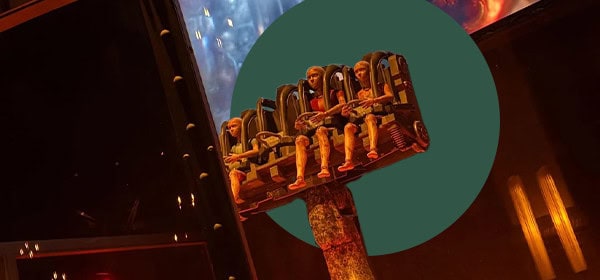
Universal Studios Hollywood recently opened Monsters Unchained: The Horror Ride. There’s no track. No fixed rail. Riders sit in pods mounted to 6-axis industrial robotic arms that tilt, spin, and lunge in real time.

Those arms aren’t custom entertainment hardware. They’re the same class of 6-degree-of-freedom (6-DOF) industrial robots used in:

  • Automotive assembly
  • Precision welding
  • Warehouse picking and packaging

The ride is spectacular. But the technology has been working in factories and fulfillment centers for years.

What this means for your DC: The same robotic arm thrilling guests at Universal can pick a case, sort a carton, or palletize a pallet. Your facility is a far more controlled environment than a moving ride full of guests. If it works there, it works for you.


second image

02. Waymo Is Running Driverless Cars in Downtown Atlanta Traffic

Waymo now operates fully autonomous commercial rides in Phoenix, San Francisco, Los Angeles, and Atlanta. No driver. No safety operator. Just a car navigating real city traffic — construction zones, pedestrians, cyclists, and rush-hour gridlock — on its own.

Downtown Atlanta at rush hour is not a controlled environment. And the autonomy works anyway.

What this means for your DC: A warehouse floor is significantly more predictable than downtown Atlanta. The routes are known. The space is mapped. The variables are managed. If autonomous vehicles can handle the complexity of city traffic, autonomous mobile robots (AMRs) can absolutely handle your floor. The technology has caught up with the idea.

third image

03. Campus Delivery Robots Are Logging Millions of Deliveries With No Human Involved

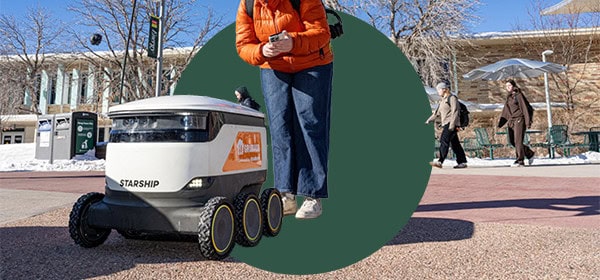
Across U.S. universities, small autonomous robots roll down sidewalks, stop at crosswalks, and hand off food directly to students. Companies like Starship Robotics have deployed thousands of units, logging millions of deliveries in rain, cold, and heavy foot traffic.

They run 24 hours a day. No scheduling. No breaks. No turnover.

Look at what these robots are actually doing:

  • Following predictable routes
  • Executing repetitive tasks
  • Operating around human foot traffic
  • Scaling up without adding headcount

Those are the same challenges your distribution center faces every day — at a much larger scale.

What this means for your DC: If this technology handles the complexity of a busy college quad at lunch, it’s ready for a warehouse floor specifically designed for it. The question is no longer capability. It’s deployment strategy.


What This Shift in Warehouse Automation Technology Means Right Now

Robots aren’t showing up in theme parks and on campuses by accident. The technology has crossed a critical line — from experimental to reliable, and from expensive to commercially viable.

That same shift is happening in industrial automation right now. Three things have changed:

The conversation has shifted. Most operations have moved past “should we automate?” The real question now is: what do we automate first, and how do we connect it to what we already have?

Integration is the hard part. AMRs, robotic arms, and automated sortation all need to communicate with your WMS, your conveyors, and each other. The hardware is ready. Getting it to work together inside your specific operation is where experience makes the difference.

The cost of waiting is going up. Lead times on automation components are extending. Operations that start planning now choose their own timeline. Those that wait have one assigned to them.


The Main Types of Warehouse Automation Being Deployed Today

Not every operation needs the same stack. Here’s a plain-language breakdown of what’s actually being installed.

Autonomous Mobile Robots (AMRs)

AMRs use onboard sensors and AI navigation to move through a facility without fixed tracks or magnetic tape. They carry totes, shelving units, or pallet loads to pick stations and pack zones — cutting the walking and transport time that eats up most warehouse labor hours.

Key advantages:

  • No floor modifications required
  • Redeployable as your operation changes
  • Often operational within weeks

AMR vs. AGV: What’s the Difference?

Automated guided vehicles (AGVs) follow fixed paths — tape, wire, or embedded tracks. AMRs navigate dynamically, adjusting routes in real time around people and obstacles.

For most modern distribution environments, AMRs offer more flexibility and faster ROI than traditional AGVs.

6-Axis Robotic Arms for Picking and Packaging

The same technology in Monsters Unchained is increasingly used in DCs for:

  • Case picking
  • Carton erecting
  • Palletizing
  • Pack-out operations

Modern robotic arms with vision systems can handle a wide range of SKU sizes, weights, and packaging types — making them viable for mixed-SKU environments, not just high-volume single-SKU lines.

Automated Sortation Systems

Sortation is the throughput multiplier in high-volume fulfillment. Products are inducted, scanned, and automatically diverted to the correct shipping lane or staging area — at rates no manual process can match.

When combined with AMRs and robotic pick systems, sortation becomes the connective tissue of a fully integrated operation.

Conveyor Systems as the Automation Backbone

Every AMR deployment, every robotic pick cell, and every sortation system connects to a conveyor backbone. That backbone needs to be designed from the start to support both current systems and future expansion.

Modular retrofits let existing facilities add automation incrementally — no full rebuild required.

For a framework on evaluating automation ROI, the Material Handling Institute (MHI) maintains in-depth resources for distribution and fulfillment operators.


How to Know If Your Facility Is Ready for Automation

Before investing in any equipment, the most valuable step is an honest look at your current operation. Start with these questions:

  1. Where are your highest labor costs? Pick, pack, transport, or sortation? The answer tells you where automation pays back fastest.
  2. What does your volume look like? Flat and predictable, or spiked seasonally? Systems need to be sized for peak, not average.
  3. What’s your software situation? Automation hardware needs an orchestration layer. Outdated or disconnected control systems are often the real bottleneck.
  4. What’s your capital structure? Phased deployments let you generate ROI while continuing to expand.
  5. Who handles integration and support? Multi-vendor deployments create risk. A single partner who handles engineering, installation, and maintenance reduces that significantly.

Conclusion: The Window to Get Ahead Is Open

The robots at Universal Studios, in Atlanta traffic, and on college campuses aren’t novelties. They’re proof of concept — at scale — built on the same technology available for your facility right now.

The cost curve has shifted. The reliability is demonstrated. The case for warehouse automation technology has never been stronger or more accessible.

Operations that start the conversation now will compound their advantages. Operations that wait will spend more, have less time to plan, and start from behind.

Century Conveyor designs and integrates complete material handling systems — conveyor backbones, sortation, AMR integration, and robotic picking. We work with distribution centers and manufacturers across the country to figure out what makes sense before you spend a dollar on equipment.

Call (908) 205-0625, email info@centuryconveyor.com, or visit centuryconveyor.com to start the conversation.


Frequently Asked Questions About Warehouse Automation Technology

What is the difference between an AMR and an AGV? AGVs follow fixed paths built into the floor — magnetic tape, wires, or embedded tracks. AMRs use sensors and AI to navigate dynamically, adapting to obstacles and route changes in real time. For most modern facilities, AMRs deploy faster, reconfigure more easily, and deliver stronger ROI.

Are warehouse robots reliable enough for live production operations? Yes. Modern AMRs, 6-axis robotic arms, and sortation systems are deployed in mission-critical fulfillment operations processing millions of orders annually. The technology is production-grade. Reliable performance depends on proper system design, integration, and an ongoing maintenance program.

How quickly can AMRs be deployed in an existing warehouse? Most initial AMR deployments are operational in weeks. Unlike fixed conveyor installations, AMRs require no floor modifications and can be redeployed as your operation changes.

Do warehouse robots replace workers or work alongside them? In practice, automation works alongside workers — not instead of them. Robots handle repetitive, high-volume, physically demanding tasks. Workers focus on judgment-intensive work: exceptions, quality control, and customer-specific requirements. Most operations reduce dependency on hard-to-fill roles while improving safety and productivity for the workers they retain.

What does a warehouse need before deploying robotic automation? At a minimum: clarity on order profiles and peak volumes, a WMS or WCS capable of communicating with robotic systems, sufficient network infrastructure, and a facility layout designed for safe human-robot interaction. A pre-deployment automation readiness assessment with an experienced integration partner is always the right first step.

Does Century Conveyor handle robotic integration alongside conveyor systems? Yes. Century designs and integrates complete systems — conveyor backbones, sortation, AMRs, and robotic picking cells — so every component communicates and operates together from day one.
Conveyor Systems for 3PL Warehouses: How Flexible Automation Helps You Scale, Win Clients, and Hit Every SLA

Running a third-party logistics operation is one of the most demanding jobs in the supply chain industry. You’re not managing one operation — you’re managing several, often simultaneously, each with its own client expectations, SKU profiles, peak seasons, and service-level agreements. When one client’s volume doubles during Q4, or a new contract demands same-day fulfillment, there’s no time to rebuild your facility from scratch.

That’s why the most competitive 3PL operators are turning to conveyor systems for 3PL warehouses designed specifically for flexibility, speed, and scalability. Not the rigid, one-size-fits-all systems of decades past — but modular, reconfigurable automation that grows with your business and adapts to your clients’ needs.

This guide breaks down what modern 3PL conveyor and automation systems look like, which solutions deliver the fastest ROI, and how to evaluate your options before your next contract cycle.


Why 3PL Operations Have Unique Automation Needs

Most fulfillment centers are built around a single tenant, a single SKU profile, and a predictable volume band. Third-party logistics facilities are none of those things.

A 3PL warehouse might handle:

  • A fashion brand with tens of thousands of SKUs and a brutal returns rate
  • A food and beverage distributor running high-volume pallet moves
  • A specialty retailer shipping small store orders on tight deadlines
  • An eCommerce startup expecting 3x volume growth in year two

Each of these clients demands something different from your floor, your equipment, and your team. That complexity is exactly why conveyor systems for 3PL warehouses must be evaluated differently than systems for a dedicated fulfillment center.

The right solution isn’t the most powerful one. It’s the most adaptable one.


The Four Biggest Pain Points 3PLs Face — and the Automation Responses That Work

1. Meeting Client SLAs When Volume Spikes Unexpectedly

Client contracts are won and lost on service levels. A missed ship window or degraded accuracy rate during peak season can cost you a renewal — or trigger a penalty clause. Manual picking and sorting simply cannot keep pace when volume surges, and adding headcount fast enough to compensate isn’t always realistic.

Automation response: Zone-based conveyor systems with integrated sortation allow your facility to handle higher order volumes without proportionally increasing labor. Orders move through pick zones at consistent speeds, are verified and sorted automatically, and reach packing or shipping lanes without manual intervention at every step. When a client’s volume spikes, the system absorbs it.

2. Labor Shortages and Turnover

Labor availability is a structural problem in 3PL operations, not a temporary one. Warehouse workers are harder to hire, more expensive to retain, and faster to leave than they were five years ago. Building a throughput model that depends on having full headcount at all times is a liability.

Automation response: Goods-to-person (GTP) systems, including autonomous mobile robots (AMRs) and shuttle-based retrieval systems, reduce the walking, searching, and manual transport that consume the most labor hours. Workers stay at fixed stations while the automation brings product to them — improving both productivity and ergonomics, which in turn reduces injury and turnover.

3. Multi-Client Complexity and Space Constraints

In a multi-client 3PL environment, carton types, SKU counts, and pick profiles vary widely from one bay to the next. Allocating dedicated infrastructure to each client is rarely practical. And adding square footage isn’t always an option.

Automation response: Modular conveyor systems with flexible lane configurations, carton flow racks, and put-wall sorting allow you to handle multiple client profiles within the same footprint. Reconfigurable zones let you reallocate capacity between clients as contract volumes shift. Vertical storage solutions — including mini-load and shuttle systems — extract significantly more throughput per square foot.

4. Fast Deployment Requirements

When a 3PL wins a new contract, the pressure to go live is immediate. A multi-year installation with 18 months of lead time isn’t a realistic option in most competitive scenarios.

Automation response: Phased automation installs and modular conveyor systems are designed for rapid deployment. Unlike custom-engineered fixed systems, modular platforms ship faster, install faster, and can be expanded incrementally. A well-designed Phase 1 installation can be operational in weeks, with subsequent phases layered in as volumes grow and capital is available.


Key Conveyor and Automation Systems for 3PL Fulfillment

Not every 3PL needs the same automation stack. The right combination depends on your client mix, order profiles, throughput targets, and capital budget. Here’s a breakdown of the most relevant systems:

Modular Conveyor Systems

The foundation of most 3PL automation upgrades. Modular conveyor platforms use standardized components — straight sections, curves, merges, diverts — that can be assembled and reconfigured without custom fabrication. This dramatically reduces lead time and simplifies future reconfiguration.

Best for: General carton transport, order consolidation, packing line feeds, and inbound/outbound flow.

Sortation Systems

Sortation is the workhorse of high-volume fulfillment. Products are inducted, scanned, and automatically diverted to the correct shipping lane, zone, or staging area. Modern sorters can handle thousands of cartons per hour with near-perfect accuracy.

Best for: 3PLs handling multiple clients in the same facility, eCommerce fulfillment with many shipping carriers, and operations with high order counts and short fulfillment windows.

Goods-to-Person (GTP) / AMRs

Rather than having workers travel to pick locations, GTP systems bring inventory to stationary pick stations. Autonomous mobile robots (AMRs) retrieve totes or shelving units from storage and deliver them to operators, who pick into outbound cartons.

Best for: High-SKU environments, fashion and eCommerce clients, and operations where walking time represents a significant portion of labor cost.

Carton Flow and Zone Picking

Carton flow racks use gravity rollers to keep product replenished at the pick face without manual restocking effort. Combined with zone picking — where each worker is responsible for a defined pick zone rather than walking an entire warehouse — this approach dramatically improves pick rates per labor hour.

Best for: Multi-SKU environments with moderate to high order volume and frequent replenishment cycles.

WCS (Warehouse Control Software)

Hardware without software is just machinery. A Warehouse Control System provides real-time visibility into equipment status, order flow, and throughput metrics. In a multi-client 3PL environment, WCS gives operations managers the data needed to balance workloads, identify bottlenecks, and report client-specific performance.

Best for: Any 3PL operating multiple conveyors, sorters, or GTP systems — or managing client-specific SLA reporting.

Conveyor Retrofits

Many 3PLs operate in older facilities with legacy conveyor equipment that’s functional but inefficient. Rather than replacing entire systems, strategic retrofits — adding new sortation modules, upgrading controls, or integrating AMR lanes — can extend the useful life of existing infrastructure and dramatically improve throughput.

Best for: Budget-conscious operations that want automation gains without a full-facility overhaul.


How to Build the Business Case for 3PL Automation

Before any capital investment conversation, decision-makers need to understand the return. Here are the primary ROI levers in 3PL conveyor and automation projects:

Labor cost reduction: Even modest throughput improvements per labor hour compound over time. A 20% reduction in labor hours per order across 5,000 daily orders creates substantial annual savings.

SLA compliance improvement: Retaining a client contract is always cheaper than replacing it. If automation reduces your risk of SLA miss events, that’s a concrete risk reduction with a quantifiable value.

New contract capacity: The ability to take on new clients without hiring proportionally is a direct revenue multiplier. Automation expands your capacity ceiling, which expands your sales ceiling.

Facility density: Automation that reduces your floor footprint per unit of throughput either delays a facility expansion or frees capacity for new clients — both represent real dollar value.

For a structured framework on evaluating automation ROI, the Material Handling Institute (MHI) offers resources developed by the industry’s leading engineers and operators — available at mhi.org.


What to Look for in a 3PL Automation Partner

Not every conveyor and automation vendor is equipped to serve the unique needs of third-party logistics operators. When evaluating partners, look for:

  • Multi-client facility experience — Have they designed systems that accommodate multiple SKU profiles and pick methods in a single footprint?
  • Phased deployment capability — Can they deliver a functional Phase 1 quickly, with a clear roadmap for expansion?
  • Engineering and integration support — Do they handle mechanical design, controls, installation, and commissioning, or are you expected to manage multiple subcontractors?
  • Ongoing maintenance and support — Downtime in a 3PL environment affects multiple clients simultaneously. What’s the response time? Do they offer preventive maintenance programs?
  • WCS/WMS compatibility — Can their systems integrate with your existing warehouse management software?

Conclusion: Automation Is a Competitive Advantage for 3PLs — Not Just a Cost

The 3PL market is competitive, and clients have more options than ever. The operators who win and retain the best contracts are the ones who can demonstrate operational reliability, scalability, and the ability to absorb volume without degrading service.

Conveyor systems for 3PL warehouses, when designed and deployed correctly, deliver exactly that. They reduce your labor dependency, accelerate throughput, improve accuracy, and give you the capacity to grow without proportionally growing your headcount.

If your facility is running at or near its current capacity — or if you’re preparing for a new contract cycle and need to demonstrate scalable infrastructure — now is the right time to evaluate your options.

Century Conveyor specializes in conveyor systems, material handling solutions, and warehouse automation for 3PL and fulfillment operations. Our engineering team works directly with operations managers and logistics directors to design systems that match your client profiles, your budget, and your timeline. Contact us today to schedule a facility consultation and explore what’s possible.


Material Handling Institute (MHI)https://www.mhi.org Cited as a credible, non-competing industry resource for ROI frameworks and automation guidance. MHI is the leading U.S. trade association for material handling and logistics technology.


These are natural internal linking opportunities to build on centuryconveyor.com, assuming these pages exist or could be created:

Anchor Text (Suggested)Target Page
“conveyor systems”/services/conveyor-systems/
“sortation systems”/solutions/sortation/
“modular conveyor systems”/products/modular-conveyor/
“warehouse automation”/solutions/warehouse-automation/
“conveyor retrofits”/services/conveyor-retrofits/
“material handling solutions”/services/material-handling/
“contact us” (CTA)/contact/
“preventive maintenance programs”/services/maintenance/

13. FAQ Section

Recommended placement: After the conclusion, before the author bio or related posts section.


Frequently Asked Questions: Conveyor Systems for 3PL Warehouses

Q1: What types of conveyor systems work best in a multi-client 3PL facility? Modular conveyor systems are generally the best fit for multi-client 3PL operations because they can be reconfigured as client volumes, SKU profiles, and fulfillment requirements change. Combined with flexible sortation and zone picking, they allow one facility to serve multiple clients efficiently without dedicating fixed infrastructure to each.

Q2: How long does it take to install a conveyor system in an existing 3PL warehouse? Timeline varies based on the scope of the project, but modular conveyor systems are specifically designed for faster deployment than custom-engineered fixed systems. A focused Phase 1 installation — covering inbound transport, sortation, and primary pick-to-pack flow — can often be operational within weeks. A Century Conveyor engineer can provide a realistic timeline estimate after a facility walkthrough.

Q3: Can a 3PL automate without shutting down operations during installation? Yes, phased installation approaches are specifically designed to allow operations to continue running during deployment. Work is typically sequenced to minimize disruption to active client areas, with cutover events planned during lower-volume windows. Your automation partner should present a detailed implementation plan before work begins.

Q4: What is the ROI timeline for 3PL conveyor automation? ROI depends on your current labor costs, order volume, error rates, and the cost of the system. Many 3PL operators recover their investment within 18–36 months through labor savings, SLA compliance improvement, and increased capacity. A qualified automation partner can help you model this before you commit to a project.

Q5: How does a Warehouse Control System (WCS) support multi-client 3PL operations? A WCS integrates with your conveyors, sorters, and other automation hardware to provide real-time visibility into throughput, equipment status, and order flow. In a multi-client environment, it can generate client-specific performance data to support SLA reporting and billing — giving you both operational control and business intelligence in one platform.

Q6: Does Century Conveyor handle installation and ongoing maintenance of conveyor systems? Yes. Century Conveyor provides full-service support including engineering design, installation, commissioning, and ongoing preventive maintenance programs. Our team works with 3PL operators to ensure minimal downtime and maximum system performance throughout the lifecycle of your equipment.

One Chokepoint. Global Consequences.

Industry Insight | Energy Markets & Supply Chain | May 2026


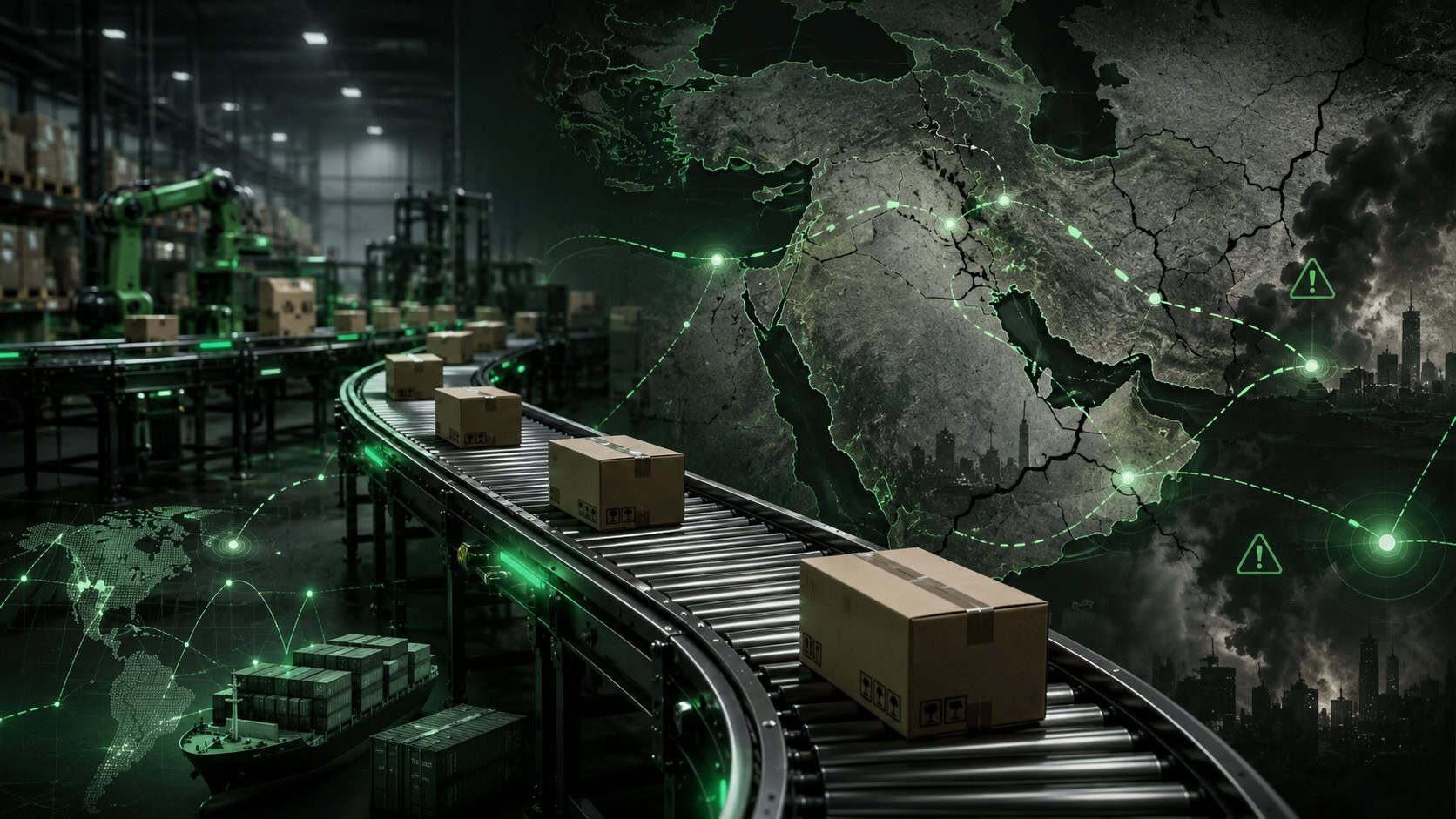
The ongoing instability in the Middle East is moving through global energy markets, freight routes, and industrial supply chains. What follows is a grounded look at what the data shows — and what it means for operations like yours.


What the Data Is Telling Us

The disruption to energy flows through the Middle East is producing measurable, documented effects across global markets. No editorializing, no forecasting. Just the numbers, drawn from international economic institutions.


01. Oil Prices Have Reached Multi-Year Highs

Global oil prices have risen more than 25% since the onset of instability, with Brent crude touching $126 per barrel at its peak. The International Energy Agency described the disruption as the largest supply disruption in the history of the global oil market.

Roughly 20% of all global oil trade passes through a single strait in the region. When access to that corridor becomes uncertain, the effects ripple outward immediately — through fuel costs, freight rates, manufacturing inputs, and ultimately the price of everything that moves.

Source: IEA / World Economic Forum


02. Shipping Routes Are Being Redrawn

Major carriers have suspended transits through the affected strait, rerouting vessels around the Cape of Good Hope. Asia-to-Europe container routes now take 8 to 15 additional days compared to pre-disruption norms, and carry significantly higher fuel and insurance costs per voyage.

That is not a rounding error. It is a fundamental shift in the economics of global freight — one that is already working its way into lead times, landed costs, and project schedules across virtually every industrial sector.

Source: IMF / UNCTAD / Oliver Wyman


03. Industrial Materials Are Under Cost Pressure

Aluminum prices rose 8% in March 2026 as Gulf production came under pressure. War-risk insurance premiums for ships operating in the region surged from 0.125% to as high as 0.4% of vessel value per transit — representing over $250,000 in added cost per large tanker voyage.

Those costs do not stay at sea. They move through distribution networks and manufacturer supply chains, eventually showing up in the price of the components, parts, and raw materials that industrial operations depend on every day.

Source: Oxford Economics / FastMarkets


04. Diesel and Energy Costs Are Cascading

Diesel, being more closely tied to trade and industrial activity than gasoline, has risen faster and harder than headline fuel numbers suggest. U.S. natural gas prices are up 7%, while European natural gas benchmarks have nearly doubled. Every link of the supply chain that depends on fuel — transportation, manufacturing, warehousing, distribution — is absorbing those increases right now.

The compounding effect matters here. Higher fuel costs drive up freight costs. Higher freight costs drive up input costs. Higher input costs compress margins at every stage of the value chain. Facilities that were already operating efficiently are in the best position to absorb the pressure. Those running inefficiently are getting squeezed from multiple directions simultaneously.

Source: Deloitte Insights / CNBC / Al Jazeera


What It Means for Material Handling

The disruption does not stop at the pump. Across the conveyor and material handling space, the ripple effects are showing up in operating costs, lead times, and project timelines. Here is where the pressure points are.


Uptime Is Becoming More Critical

When supply chains are under pressure, downtime becomes even more expensive. Conveyor issues, sortation problems, controls faults, and delayed maintenance can quickly impact throughput, labor planning, and customer service levels.

In a stable environment, a few hours of unplanned downtime is an inconvenience. In an environment where lead times are already extended and inventory buffers are thinner, the same downtime can create cascading problems that take days to recover from. Keeping existing systems running reliably is one of the most practical and immediate ways to protect your operation during uncertain periods.


Operational Flexibility Is Being Tested

Disruptions rarely affect every product or customer the same way. Order profiles change, SKU movement shifts, and distribution centers are asked to do more with the same footprint. The facilities that handle this best are typically the ones with systems designed — or maintained — for adaptability.

Flexible conveyor layouts, smart controls, scalable automation, and adaptable fulfillment processes help facilities respond without starting from scratch. If your current system was designed for one operating model and you are now running a different one, that gap is worth examining.


Spare Parts Risk Is Getting Harder to Ignore

A single unavailable motor, drive, scanner, PLC component, or conveyor part can create major operational delays. This has always been true — but the risk is higher now. Components that were previously available in days may now take weeks. Prices on many industrial inputs have increased. And the secondary market for some obsolete parts has tightened considerably.

Facilities that have not recently reviewed their critical spares inventory, aging equipment, and obsolete controls are carrying more risk than they may realize. A failure that would have been a minor inconvenience two years ago could now become a significant disruption simply because the replacement part is not available.


“The best time to evaluate your systems and plan your next move is before the next disruption, not during it.”

— Rick, Century Conveyor Corporation


Plan Now. Stay Ahead of It.

Periods of external instability are the right time to take stock of where your operation stands. Systems that are running at their best cost less to operate when margins are being compressed from the outside. And projects that are scoped and ready to move can execute quickly when conditions improve.

There are two practical areas where we see the most immediate value for operations navigating this environment:

Maintenance & Service

When operating costs are up across the board, a well-maintained system is a cost-controlled system. Deferred maintenance has a way of becoming emergency maintenance — and emergency costs are the last thing any operation needs right now. Our nationwide teams cover the entire contiguous U.S., coast to coast.

Project Planning

Lead times on components are already extending. Getting your project scoped and specced now means you are not caught waiting when you are ready to move forward. The projects that will execute fastest in the next 12 to 18 months are the ones being planned today.


Continue the Conversation.

Questions about what this means for your operation? Ready to assess where you stand? We are here.

Call: (908) 205-0625 Email: info@centuryconveyor.com Website: centuryconveyor.com


Data cited from the International Energy Agency, IMF, World Economic Forum, Oxford Economics, Deloitte Insights, UNCTAD, and Goldman Sachs. Century Conveyor Corporation makes no political or policy recommendations. This article is intended as general industry information only.

© 2026 Century Conveyor Systems. All rights reserved. Turnkey Material Handling Automation | NJ · CA · KY

One Relationship. The Full Picture. Inside the LaFayette Engineering Family of Companies.

One of the biggest conversations at MODEX 2026 happened the moment a visitor looked around Booth C14787 and asked a question that came up over and over throughout the week:

“Wait — Century, MESH, and Kendale are all connected?”

The answer is yes. And understanding how they fit together is one of the most important things a material handling buyer can know heading into an automation project in 2026.

The LaFayette Engineering Family of Companies

LaFayette Engineering is the parent company behind a family of businesses that together cover the full lifecycle of modern warehouse and distribution automation:

  • Century Conveyor Systems — conveyor, sortation, and material flow systems
  • MESH Automation — controls, robotics integration, and intelligent induction sorting
  • Kendale Industries — fabrication and mechanical engineering depth
  • Attabotics — high-density cube storage and goods-to-person robotics

Each company brings its own expertise. Together, they offer something that very few material handling providers can match: a single relationship that can design, build, integrate, and support a complete automation system — from the physical conveyor line through the software layer that orchestrates it all.

Why Integration Matters More Than It Used To

For most of the past decade, material handling buyers built systems from multiple independent vendors. A conveyor from one company. Controls from another. Robotics from a third. Software from a fourth. And then a systems integrator to stitch it all together — and absorb the blame when the pieces didn’t communicate properly.

MODEX 2026 signaled clearly that this model is losing favor. Buyers want fewer relationships and more accountability. They want a partner who owns the full scope of the system — not just the portion they manufacture. And they want someone who will still pick up the phone three years after installation when something needs attention.

The LaFayette family is built for exactly that conversation.

What Each Company Brings to the Table

Century Conveyor Systems

Century’s core is the physical execution layer of a warehouse system: conveyor lines, motor driven roller (MDR) systems, high-speed sortation, print and apply, weighing and dimensioning. These are the systems that move product through a facility — the mechanical backbone of any automated distribution operation.

Century’s portfolio includes 24V zero-pressure accumulation conveyor, high-speed sorters capable of handling mixed SKU streams, and inline data capture systems that eliminate manual scanning and weigh stations. After decades of installations across industries, Century’s product lines are refined and reliable — with a service network to match.

LaFayette Engineering (Controls & Software)

LaFayette Engineering is the intelligence layer — warehouse control systems (WCS), controls engineering, and the software that coordinates the full operation. In an era where robots, conveyors, picking systems, and human labor all need to function as a single coordinated environment, the controls and orchestration layer is increasingly where systems succeed or fail.

LaFayette Engineering’s role in the family isn’t just to wire up the conveyor. It’s to make the entire system think clearly and act fast — managing throughput, labor, SLAs, and exceptions from a single layer of intelligence.

MESH Automation

MESH Automation brings robotics integration and advanced sortation capability — including an induction sorter that drew significant attention on the MODEX floor. MESH fills the gap between the mechanical conveyor system and the robotic platforms that increasingly operate alongside it, handling the controls and integration work that makes mixed-automation environments function smoothly.

Attabotics

Attabotics is the family’s goods-to-person robotics platform — a high-density cube storage system that uses robots to retrieve and deliver items to human operators, dramatically reducing the footprint required for a given storage volume while improving pick accuracy and speed.

Attabotics relaunched under LaFayette Engineering with a sharper focus on deployment discipline: engineering depth, improved customer support infrastructure, and reliability improvements that make the technology more accessible and easier to adopt in real projects. The new integrator partnership program announced at MODEX 2026 expands access to the platform through established integration channels — making it easier for buyers to bring Attabotics into projects alongside existing Century and LaFayette Engineering relationships.

The Practical Meaning for a Buyer

Here’s what the LaFayette Engineering family means in plain terms for a distribution or manufacturing operation evaluating automation:

One conversation can cover the full system. Rather than meeting with four different vendors, getting four different proposals, and trying to reconcile them into a coherent plan, a buyer can work with one team that understands the full architecture.

Integration risk goes down. When the conveyors, controls, robotics, and software come from companies that work together daily, the integration work is less painful, less expensive, and more likely to deliver on the design intent.

Support is coherent. When something needs attention after go-live, there’s one number to call — and the person on the other end understands the full system, not just their piece of it.

The solution can be right-sized. Not every operation needs every piece of the family’s portfolio. Some projects are Century-only. Some add MESH. Some are full-stack builds with Attabotics at the center. The family’s depth means the solution can be matched to the operation — not the other way around.

What MODEX 2026 Confirmed

Three days on the floor at MODEX confirmed what the LaFayette Engineering family has been building toward: the industry is moving toward connected, integrated, serviceable automation — and the demand for a single partner who can deliver the full picture is accelerating, not slowing down.

Century Conveyor Systems is that entry point for a lot of those conversations. It’s where many customer relationships start. And increasingly, it’s where they expand — because the family’s depth means Century can grow with a customer’s operation over time.

If your operation is evaluating automation — whether that’s a first conveyor system, a controls upgrade, a goods-to-person pilot, or a full distribution center build — the Century Conveyor team is the right starting point.

Contact Century Conveyor Systems: