Great Benefits of Warehouse Automation – FAQ 101 About Century Conveyor Systems

benefits of warehouse automation

Benefits of warehouse automation has shifted from being a competitive advantage to a foundational requirement for modern distribution, e-commerce, and fulfillment operations. Within this space, Century Conveyor Systems positions itself as a full-service systems integrator that designs, builds, and supports end-to-end automation ecosystems rather than simply supplying equipment. Their approach to warehouse automation—especially in order fulfillment environments—centers on engineered conveyor systems, robotics integration, and lifecycle support that work together as a unified operational strategy.

Below is a detailed FAQ exploring the benefits of warehouse automation, specifically framed through the capabilities and solutions offered by Century Conveyor Systems.

benefits of warehouse automation

Benefits of Warehouse Automation FAQ #1: Why is warehouse automation considered a strategic advantage rather than just an operational upgrade?

Warehouse automation is no longer just about moving boxes faster—it fundamentally reshapes how a facility performs under pressure. Century Conveyor Systems designs automation with the goal of optimizing the entire material flow from receiving to shipping, not just isolated tasks like transport or sorting.

The strategic value comes from how automation integrates multiple operational layers:

  • Physical movement (conveyors, sortation, robotics)
  • Decision systems (controls, PLCs, WCS/WMS integration)
  • Labor orchestration (reducing manual touches and travel time)

Instead of relying on human-driven batch workflows, automated systems create continuous, predictable throughput. This predictability is what allows warehouses to scale without proportional increases in labor or space. In practical terms, automation turns warehouse performance into a measurable, controllable system rather than a variable one.

Century’s role as an integrator matters here because the benefit is not just the equipment—it is how well the system is engineered as a whole.


Benefits of Warehouse Automation FAQ #2: How does Century Conveyor Systems improve throughput and order fulfillment speed?

One of the most immediate benefits of warehouse automation is increased throughput—how many orders or units a facility can process in a given time window. Century’s order fulfillment solutions are designed specifically to increase output performance while reducing manual handling and delays.

In traditional warehouses, movement is fragmented: forklifts, carts, and manual picking create bottlenecks between steps. Century replaces these interruptions with continuous-flow systems such as conveyors, sortation lines, and robotic transport.

Key improvements include:

  • Continuous movement from picking → packing → shipping
  • Reduced idle time between workstations
  • Faster routing through automated sortation
  • Elimination of repetitive transport tasks

The real advantage is not just speed—it is flow consistency. When goods move predictably through each stage, downstream processes (packing stations, shipping docks, labeling systems) can operate at stable, optimized rates without sudden surges or bottlenecks.

This is especially important in e-commerce and high-SKU environments where order volumes fluctuate significantly.


Benefits of Warehouse Automation FAQ #3: How does automation reduce labor dependency without eliminating workforce value?

A major benefit of warehouse automation is labor optimization, not simply labor reduction. Century’s systems are designed to minimize manual handling tasks while allowing human workers to focus on higher-value activities such as exception handling, quality control, and system oversight.

For example, conveyor and robotic systems reduce the need for:

  • Long-distance walking across warehouse floors
  • Manual cart movement between zones
  • Repetitive lifting and carrying tasks
  • Time-consuming sorting and staging work

At the same time, Century integrates robotics such as AGVs and AMRs that handle transport tasks typically performed by forklifts or manual labor.

The key insight is that automation redistributes labor rather than simply removing it. Instead of requiring more workers as volume increases, warehouses can stabilize staffing levels and redeploy personnel toward more complex decision-based tasks.

This improves both efficiency and workforce sustainability, especially in environments facing labor shortages or high turnover.


Benefits of Warehouse Automation FAQ #4: Why does automation significantly reduce operational errors and product damage?

Error reduction is one of the most financially impactful benefits of warehouse automation. Manual handling introduces variability—mis-picks, mis-sorts, dropped items, and inconsistent routing. Century’s engineered systems aim to eliminate these inconsistencies through controlled, repeatable processes.

Century designs systems to optimize:

  • Order accuracy (correct item routing through sortation logic)
  • Handling consistency (reduced manual touches)
  • Product protection (controlled movement via conveyors and accumulation systems)

By minimizing human handling steps, the system reduces opportunities for error accumulation across the fulfillment cycle. Even small improvements in accuracy can significantly reduce return rates, re-shipping costs, and customer dissatisfaction.

Additionally, automation reduces product damage by controlling spacing, speed, and transitions between conveyor zones. Instead of unpredictable manual transport, products follow engineered pathways with defined acceleration, deceleration, and transfer points.

This is particularly valuable for fragile goods, high-value inventory, or high-volume retail fulfillment operations.


Benefits of Warehouse Automation FAQ #5: How does Century Conveyor Systems improve scalability for growing warehouses?

Scalability is one of the most important long-term benefits of warehouse automation. Century designs systems with expansion in mind, allowing operations to grow without requiring complete system replacement.

Their approach includes modular integration of:

  • Conveyor extensions and additional sortation lanes
  • Robotics (AGVs/AMRs) that can be scaled up as volume increases
  • Storage systems that integrate with automated retrieval
  • Software controls that adjust routing logic dynamically

Unlike fixed manual workflows, automated systems can be expanded in phases. This means a warehouse can start with a partial automation footprint—such as a packing or shipping zone—and gradually extend automation across the entire facility.

The benefit is financial as well as operational: instead of large upfront redesigns, businesses can scale incrementally while maintaining system continuity.

This flexibility is especially important for seasonal businesses and fast-growing e-commerce operations.


Benefits of Warehouse Automation FAQ #6: How does automation improve space utilization inside the warehouse?

Warehouse space is one of the most expensive operational constraints. Automation helps maximize usable space by reducing wasted aisle time, inefficient storage layouts, and oversized staging areas.

Century’s systems support space efficiency through:

  • Compact conveyor routing that replaces wide forklift lanes
  • Vertical integration with storage modules and racking systems
  • Automated movement that reduces the need for staging buffers
  • Robotics that operate in tighter spaces than traditional equipment

Because automated systems do not require the same turning radius or travel clearance as forklifts, warehouses can redesign layouts to prioritize storage density over manual accessibility.

This leads to a higher throughput per square foot, which is often more valuable than simply increasing speed.


Benefits of Warehouse Automation FAQ #7: Why is system integration (conveyors + robotics + software) a major benefit of Century’s approach?

One of the defining benefits of Century Conveyor Systems is that they operate as a full systems integrator rather than a single-equipment vendor.

This matters because warehouse automation only performs well when all components work together:

  • Conveyors move items physically
  • Robotics handle flexible transport tasks
  • Controls systems coordinate flow and logic
  • WMS/WCS software manages inventory and routing decisions

If these systems are disconnected, warehouses often experience bottlenecks, miscommunication between systems, or inefficiencies in routing logic.

Century’s integration-first approach ensures that automation behaves like a unified ecosystem. This reduces friction between subsystems and improves reliability under high-volume conditions.

The result is fewer “handoff failures” between systems and smoother end-to-end execution of fulfillment workflows.


Benefits of Warehouse Automation FAQ #8: How does warehouse automation improve long-term operational reliability?

Reliability is one of the most overlooked but critical benefits of automation. Warehouse systems run continuously under heavy load, and even small disruptions can create cascading delays.

Century supports reliability through:

  • Engineered system design tailored to operational needs
  • Preventative maintenance and service programs
  • Long-term parts availability and support
  • Controls and monitoring systems for early issue detection

Unlike manual systems, which vary based on workforce consistency, automated systems operate with standardized performance parameters. This consistency allows managers to forecast output, schedule labor more accurately, and reduce unexpected downtime.

Over time, this leads to improved service levels, fewer shipping delays, and stronger customer satisfaction metrics.


Benefits of Warehouse Automation FAQ #9: What is the biggest overall benefit of warehouse automation with Century Conveyor Systems?

The most important benefit is not any single improvement—it is the compounding effect of all improvements working together.

When Century designs an automated warehouse system, the combined result is:

  • Faster order processing
  • Lower labor intensity per unit shipped
  • Reduced errors and product damage
  • Improved scalability for growth
  • More efficient use of space
  • Greater operational predictability

Instead of optimizing isolated functions, Century’s approach creates a synchronized fulfillment system where each component reinforces the others.

That systemic alignment is what turns warehouse automation from a collection of machines into a high-performance logistics engine.

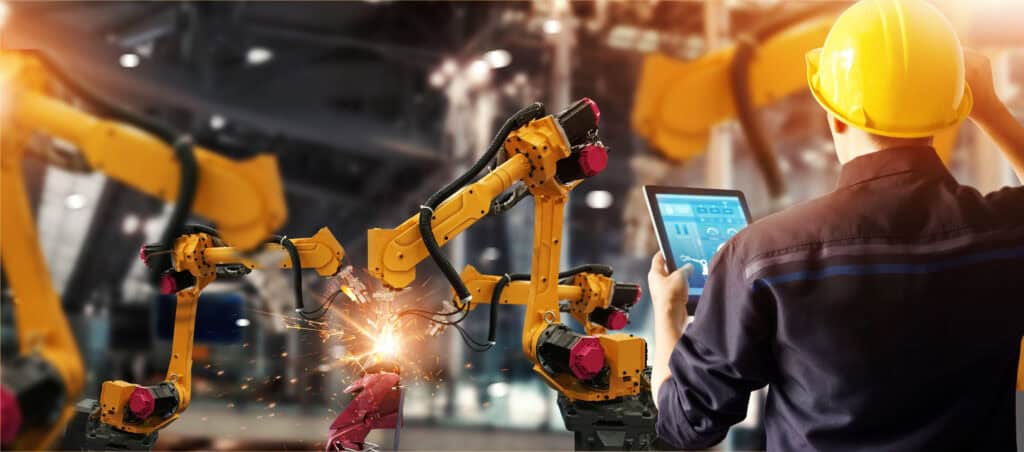
Industrial Automation and Robotics 10 FAQs: Your Guide to Century Conveyor Systems’ Automation Solutions

industrial automation and robotics

Industrial automation and robotics have become essential for warehouses, distribution centers, and fulfillment operations that need to increase throughput, improve order accuracy, and reduce reliance on repetitive manual labor. As customer expectations for faster shipping continue to rise, companies are investing in integrated automation systems that streamline every stage of material handling.

Century Conveyor Systems specializes in designing, integrating, installing, and supporting turnkey material handling industrial automation and robotics. Rather than supplying individual pieces of equipment, the company develops complete automation solutions tailored to each facility’s workflow and operational goals. Its offerings include conveyor systems, robotic fulfillment technologies, robotic palletizing, sortation systems, controls engineering, warehouse software integration, and long-term maintenance support.

Below are answers to some of the most common questions about industrial automation and robotics and how Century Conveyor Systems helps businesses modernize their operations.

industrial automation and robotics

FAQ 1: What is industrial automation and robotics?

Industrial automation and robotics refer to the use of automated equipment, intelligent controls, software, sensors, conveyors, and robotic systems to perform material handling tasks with minimal manual intervention.

Instead of relying on employees to transport products throughout a warehouse, automated systems move products efficiently between receiving, storage, picking, packing, sortation, palletizing, and shipping.

At Century Conveyor Systems, industrial automation is viewed as an integrated solution rather than a collection of independent machines. The company’s engineers design complete material handling systems that combine:

  • Conveyor systems
  • Robotic fulfillment technologies
  • Automated Guided Vehicles (AGVs)
  • Autonomous Mobile Robots (AMRs)
  • Robotic palletizing systems
  • Warehouse Control Systems (WCS)
  • Warehouse Management Systems (WMS)
  • PLC controls
  • Print-and-apply solutions
  • Storage systems

By integrating these technologies into a unified system, facilities can improve productivity while reducing operational bottlenecks.


FAQ 2: How does Century Conveyor Systems approach industrial automation differently?

One of Century Conveyor Systems’ biggest strengths is its role as a full-service automation integrator.

Many companies simply sell conveyors or robotics equipment. Century manages the entire automation lifecycle, including:

  • System analysis
  • Facility layout planning
  • Engineering
  • Equipment selection
  • Controls programming
  • Software integration
  • Installation
  • Startup support
  • Preventative maintenance
  • Replacement parts
  • Ongoing service

This turnkey approach reduces complexity for customers because they work with one automation partner throughout the project instead of coordinating multiple vendors.

The company emphasizes designing systems around operational objectives rather than forcing businesses into standardized equipment packages. Every project is engineered to match throughput goals, available space, product characteristics, labor requirements, and future growth plans.


FAQ 3: What types of robotic solutions does Century Conveyor Systems provide?

Industrial robotics encompasses much more than robotic arms, and Century Conveyor Systems supports several robotic technologies for warehouse and distribution environments.

Automated Guided Vehicles (AGVs)

AGVs travel along predefined navigation methods such as magnetic tape, laser guidance, QR codes, or inductive systems to transport materials throughout a facility.

These systems are well suited for repetitive transportation tasks that traditionally require forklifts.

Autonomous Mobile Robots (AMRs)

Unlike AGVs, AMRs navigate dynamically using onboard sensors and mapping technologies.

Their flexibility allows warehouses to adapt layouts more easily while minimizing permanent infrastructure changes.

Robotic Palletizing

Century also integrates robotic palletizing systems that automate stacking products onto pallets while improving consistency and reducing physically demanding manual labor.

Together, these robotics solutions complement conveyor automation to create a more efficient material handling process from receiving through shipping.


FAQ 4: Why are conveyors still essential in industrial automation and robotics?

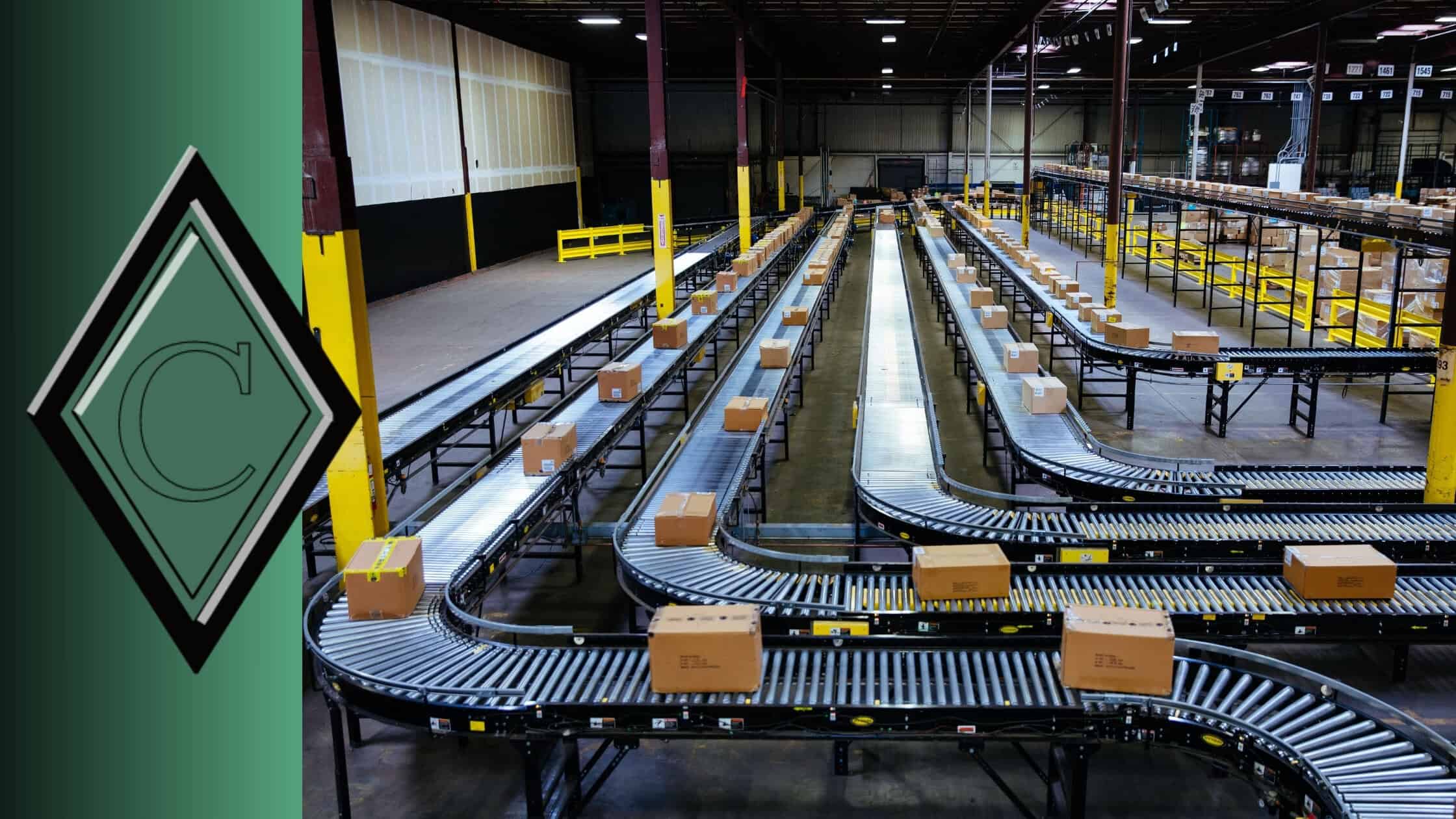
Although robotics often receives the most attention, conveyors remain the backbone of most automated warehouses.

Conveyors create continuous product flow between workstations, allowing robotics and employees to focus on value-added tasks rather than transportation.

Century Conveyor Systems engineers conveyor systems that support:

  • Cartons
  • Totes
  • Pallets
  • Polybags
  • Drums
  • Oversized products

Depending on the application, systems may include:

  • Belt conveyors
  • Roller conveyors
  • Poly-V conveyors
  • Pallet conveyors
  • Accumulation conveyors
  • Sortation conveyors
  • Trailer extendable conveyors

These systems provide the foundation upon which robotics, software, scanners, and automated workstations operate efficiently.

Rather than replacing conveyors, robotics works alongside them to create an integrated automation ecosystem.


FAQ 5: How does industrial automation improve order fulfillment?

Order fulfillment involves far more than simply moving boxes.

A typical workflow includes:

  • Receiving inventory
  • Storage
  • Picking
  • Transport
  • Packing
  • Labeling
  • Sortation
  • Shipping

Century Conveyor Systems designs automation solutions that optimize each touchpoint.

Its published objectives include:

  • Increasing throughput
  • Reducing manual interactions
  • Improving order accuracy
  • Minimizing product damage
  • Lowering return rates
  • Processing orders faster
  • Increasing profitability

By combining conveyors, robotics, controls, and warehouse software, businesses can create smoother workflows that keep products moving consistently throughout the facility.

This holistic approach helps eliminate bottlenecks that often develop when individual processes are optimized without considering the overall system.


FAQ 6: Can Century Conveyor Systems’ automation solutions scale as a business grows?

Yes. Scalability is one of the key advantages of Century’s automation philosophy.

Business needs rarely remain static. Seasonal demand, new customers, additional product lines, or facility expansions can all increase operational complexity.

Century’s automation systems are engineered with future growth in mind.

For example, the company notes that robotic fulfillment systems offer several scalability benefits:

  • Additional robots can be deployed as demand increases.
  • Mobile robotic systems are flexible and not permanently fixed in place.
  • Solutions can be customized for changing operational requirements.

This allows organizations to expand automation over time rather than replacing entire systems as production requirements evolve.


FAQ 7: What role do software and controls play in industrial automation and robotics?

Modern industrial automation depends just as much on intelligent software as it does on mechanical equipment.

Century Conveyor Systems integrates controls and software that coordinate the movement of products throughout a facility.

These capabilities include:

  • PLC programming
  • Control panel fabrication
  • Warehouse Management System (WMS) integration
  • Warehouse Control System (WCS) integration

These systems enable automated routing decisions, synchronize conveyors with robotic equipment, monitor equipment performance, and help maintain consistent product flow.

Without integrated controls, even advanced robotics would struggle to operate efficiently within a complex warehouse environment. Century’s emphasis on controls engineering helps ensure that mechanical and digital systems function together as one coordinated operation.


FAQ 8: Why is long-term service and support important for industrial automation systems?

Installing automation is only the beginning of the investment.

As systems continue operating, they require maintenance, replacement parts, upgrades, and technical support to maintain peak performance.

Century Conveyor Systems provides ongoing support that includes:

  • Preventative maintenance
  • Conveyor repair
  • Replacement parts
  • Mechanical service
  • Electrical service
  • Controls support
  • Modernization and retrofit services

This lifecycle approach helps customers extend equipment longevity, minimize unplanned downtime, and protect the value of their automation investment.

Instead of treating installation as the end of the project, Century positions long-term support as an integral part of successful warehouse automation.


FAQ 9: Which industries benefit most from Century Conveyor Systems’ industrial automation and robotics solutions?

Century Conveyor Systems focuses on material handling environments where speed, accuracy, and efficiency are essential.

Its automation solutions are particularly well suited for:

  • Distribution centers
  • Warehouses
  • E-commerce fulfillment centers
  • Manufacturing facilities
  • Third-party logistics (3PL) operations
  • Shipping and sortation facilities

Any operation that regularly moves products in boxes, totes, pallets, drums, polybags, or similar containers can benefit from customized automation that reduces manual handling while improving productivity.

Because each system is engineered around the customer’s workflow, Century can tailor solutions for facilities with different layouts, product mixes, and throughput requirements.


FAQ 10: Why should businesses choose Century Conveyor Systems for industrial automation and robotics?

Choosing an automation partner involves much more than comparing equipment specifications.

Century Conveyor Systems distinguishes itself through a comprehensive approach that combines engineering expertise, turnkey project delivery, and long-term customer support.

Key advantages include:

  • Complete turnkey system integration
  • Customized engineering instead of one-size-fits-all solutions
  • Integration of conveyors, robotics, controls, and software
  • Order fulfillment expertise
  • Scalable automation solutions
  • Full installation and startup management
  • Preventative maintenance and lifecycle support
  • Experience serving warehouses and distribution centers

Rather than focusing on a single piece of automation technology, Century designs complete systems that improve overall operational performance. This integrated approach helps businesses increase throughput, reduce labor-intensive tasks, improve order accuracy, and prepare their facilities for future growth.

For organizations exploring industrial automation and robotics, partnering with an experienced systems integrator can simplify implementation while maximizing the long-term value of the investment. Century Conveyor Systems’ emphasis on customized design, coordinated project management, and ongoing service makes it a strong choice for companies seeking comprehensive material handling automation solutions.

Your Conveyor System Has More Life Left Than You Think

century_conveyor_homepage_section_1_system_image

Replacing a conveyor system is a major decision. It’s expensive, disruptive, and time-consuming—often requiring months of planning, significant capital budget, and a full operational shutdown. But many facilities operators are quick to assume that when a system starts showing its age, replacement is the only option.

It’s not. In many cases, a well-executed retrofit can give your system another decade of reliable, high-performance life—at a fraction of the cost of a full replacement.

With economic uncertainty creating pressure on capital budgets and lead times for new equipment stretching longer than ever, this is exactly the right time to take a hard look at what modernization can accomplish. Century Conveyor’s retrofit and modernization programs are designed for operations that need performance gains without the price tag of starting over.

conveyor system

Why Retrofitting Is Gaining Momentum Right Now

The current operating environment is pushing more distribution centers and warehouses toward retrofit strategies, and the reasons are straightforward.

First, capital spending is being scrutinized at every level. When budgets tighten, investing in a $2M–$5M new system becomes harder to justify—especially when the core mechanical infrastructure of an existing system is still fundamentally sound.

Second, lead times on new conveyor equipment have been unpredictable. Global supply chain disruptions over the past several years have made it clear that waiting 18–24 months for new equipment carries real operational risk. A retrofit, by contrast, works with what’s already installed and can be phased to minimize disruption.

Third, the controls and software side of material handling has evolved dramatically over the past decade. Even a conveyor system that was built in the 2000s or 2010s may be running on outdated controls that create efficiency bottlenecks, limit visibility, and make troubleshooting difficult. Upgrading the brain of your system—without replacing the body—can unlock significant performance gains.

What a Retrofit Actually Involves

The term “retrofit” covers a wide spectrum. At one end, it might mean replacing worn mechanical components—drives, rollers, belts, and bearings—to restore the system to like-new mechanical condition. At the other end, it means a comprehensive modernization: new controls, new software, new human-machine interfaces, and potentially new functional capabilities layered on top of the existing infrastructure.

Century’s retrofit work typically involves some combination of the following:

  • Mechanical refurbishment: replacing end-of-life components to restore reliability and reduce unplanned downtime
  • PLC (Programmable Logic Controller) upgrades: replacing obsolete controls with current hardware and software platforms that offer better diagnostics, remote access, and integration capability
  • WCS (Warehouse Control System) implementation: adding a software layer that coordinates conveyor zones, sortation logic, and real-time throughput tracking across the entire system
  • HMI (Human Machine Interface) upgrades: replacing outdated operator panels with modern touchscreen interfaces that provide real-time status, alerts, and system performance data
  • Zone retrofits: targeting specific high-failure or bottleneck areas of the system without taking down the entire line

This modular approach is one of the most important things to understand about modern retrofitting. You don’t have to do everything at once. Phased retrofits allow you to spread investment over time, prioritize the areas with the highest impact, and keep operations running throughout the process.

The WCS Advantage: Smarter Control Over Existing Infrastructure

One of the most impactful upgrades Century installs in retrofit projects is a modern Warehouse Control System (WCS). If your facility is running without a WCS—or running on a legacy system that predates modern integration standards—you’re leaving significant performance on the table.

A WCS sits between your Warehouse Management System (WMS) and the physical conveyor and sortation equipment on your floor. It translates high-level order and inventory instructions from the WMS into real-time machine-level commands, and it reports back performance data that your WMS can use to optimize workflows.

Without a WCS (or with a poorly integrated one), operators are often flying blind. They know when something breaks because the line stops. They don’t know that throughput in zone 3 is running 12% below target until the end-of-shift report. They can’t isolate a fault in a sortation divert without walking the floor. They can’t dynamically reroute product flow when one lane goes down.

With a modern WCS in place, all of that changes. Real-time dashboards give supervisors line-of-sight into every zone of the system. Alerts surface problems before they become shutdowns. Throughput data feeds back into order planning and staffing decisions. And when something does go wrong, the fault is isolated and reported with enough specificity to get a technician to the right place fast.

The best part: implementing a WCS doesn’t require replacing your physical conveyors. It’s a controls and software overlay that works with the mechanical infrastructure you already have.

HMI Upgrades: The Interface Your Operators Deserve

If your facility is still running on legacy push-button panels or early-generation touchscreens, your operators are working harder than they need to. And your maintenance team is probably spending time troubleshooting issues that a modern HMI would surface automatically.

Modern Human Machine Interfaces are a significant leap forward from even mid-2000s systems. Today’s HMIs offer:

  • Full-color graphical displays showing system status, product flow, and zone-level performance
  • Alarm management systems that log, prioritize, and track faults—not just alert and reset
  • Integrated maintenance logs and preventative maintenance reminders
  • Remote access capability for off-site monitoring and troubleshooting
  • Intuitive operator interfaces that reduce training time and human error

For operations dealing with high turnover or variable staffing levels—a reality for most DCs and fulfillment centers—this last point matters more than it might seem. An operator who can look at a modern HMI and understand the state of the system in 30 seconds is far less likely to make a costly mistake than one who is interpreting cryptic legacy alarm codes and calling a supervisor for help.

How to Know If Your System Is a Good Retrofit Candidate

Not every system is worth retrofitting. There are cases where the mechanical condition is too far gone, or where the system design is fundamentally mismatched to current operational needs, and the right answer really is replacement. But those cases are less common than you might think.

A system is generally a strong retrofit candidate when:

  • The core mechanical structure—frame, drive systems, and primary conveyor paths—is in solid condition
  • The operational footprint and flow logic still align with your current fulfillment model
  • The primary pain points are controls-related: obsolete PLCs, poor diagnostics, lack of visibility, or aging HMIs
  • A full system replacement would require a major facility shutdown or capital investment that isn’t currently justified

The starting point is always an honest assessment. Century’s engineering team conducts site evaluations that look at the mechanical, electrical, and controls condition of existing systems and deliver a clear picture of what a retrofit would involve, what it would cost, and what performance gains it would deliver.

The Bottom Line

Retrofitting isn’t a compromise. Done right, it’s a strategic investment that extends asset life, improves operational performance, and positions your facility to handle increased throughput without a full system replacement.

With WCS and HMI modernization, facilities that have been running on aging controls can gain visibility and responsiveness that rival brand-new installations—at a fraction of the cost.

If your system is starting to show its age, the question isn’t whether to act. It’s whether replacement is really the most efficient path forward. In many cases, the answer is no.

Century Conveyor’s retrofit and modernization team is available to evaluate your system and put together a clear, phased plan for getting more performance out of what you already have. Contact us to schedule a site assessment.