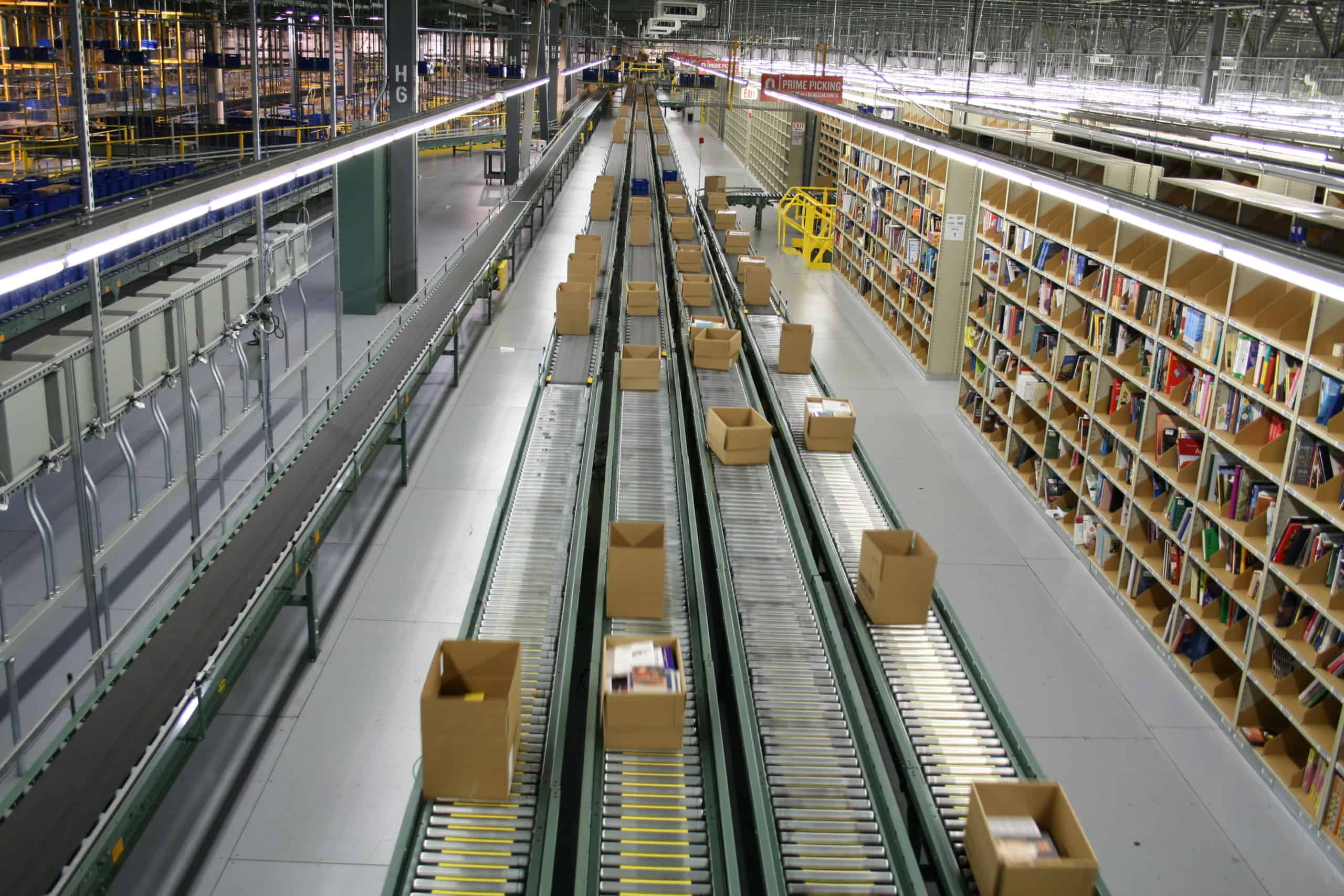
Pick to light puts a light and a display at each pick location so pickers see what to pick and how many. How it works with put walls, a WCS, and conveyor.
Continue reading
Pick to light puts a light and a display at each pick location so pickers see what to pick and how many. How it works with put walls, a WCS, and conveyor.
Continue reading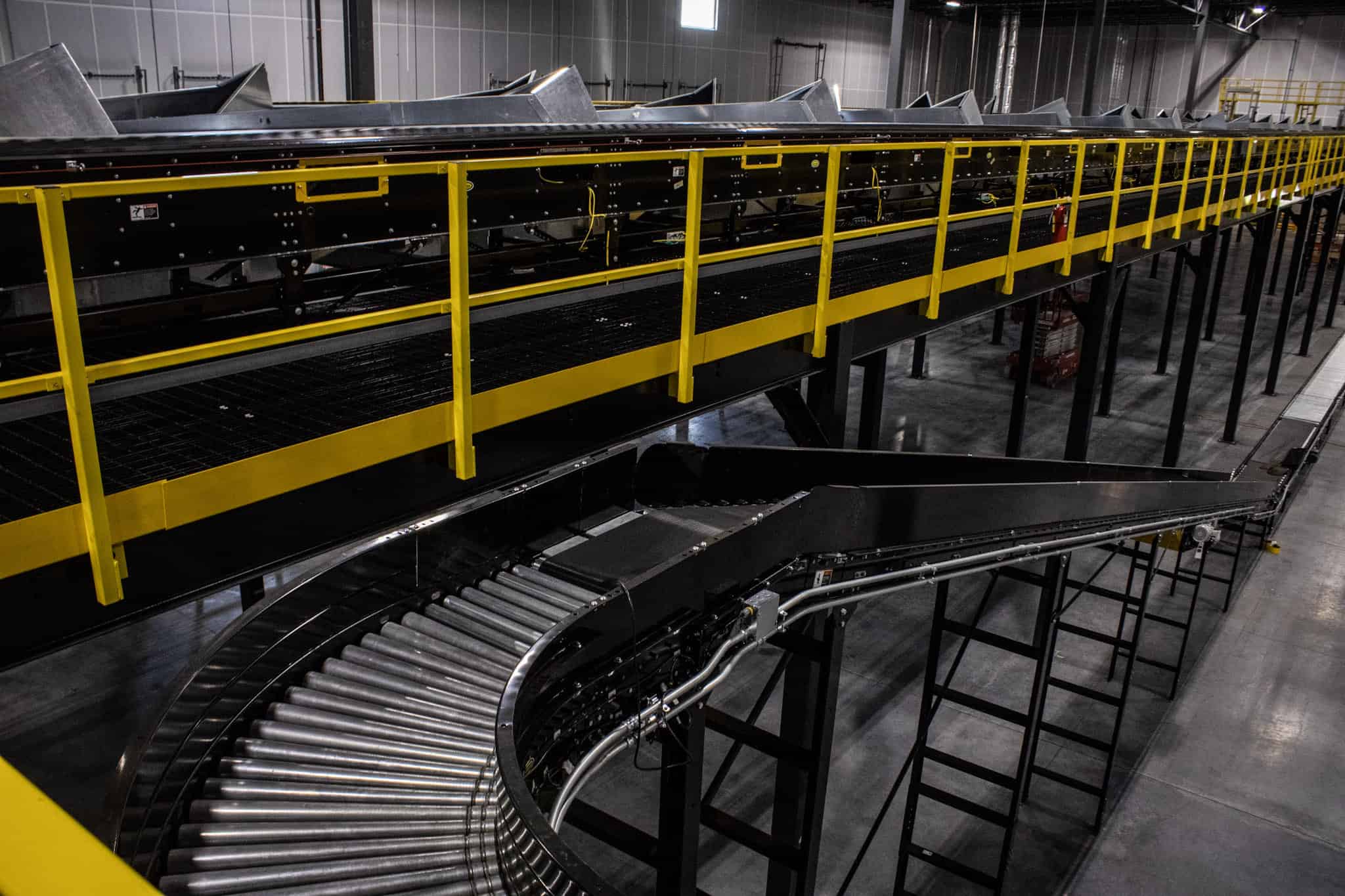
An incline conveyor carries cartons and totes up to a mezzanine or overhead line. Compare incline belt, spiral, and vertical conveyors and how to choose.
Continue reading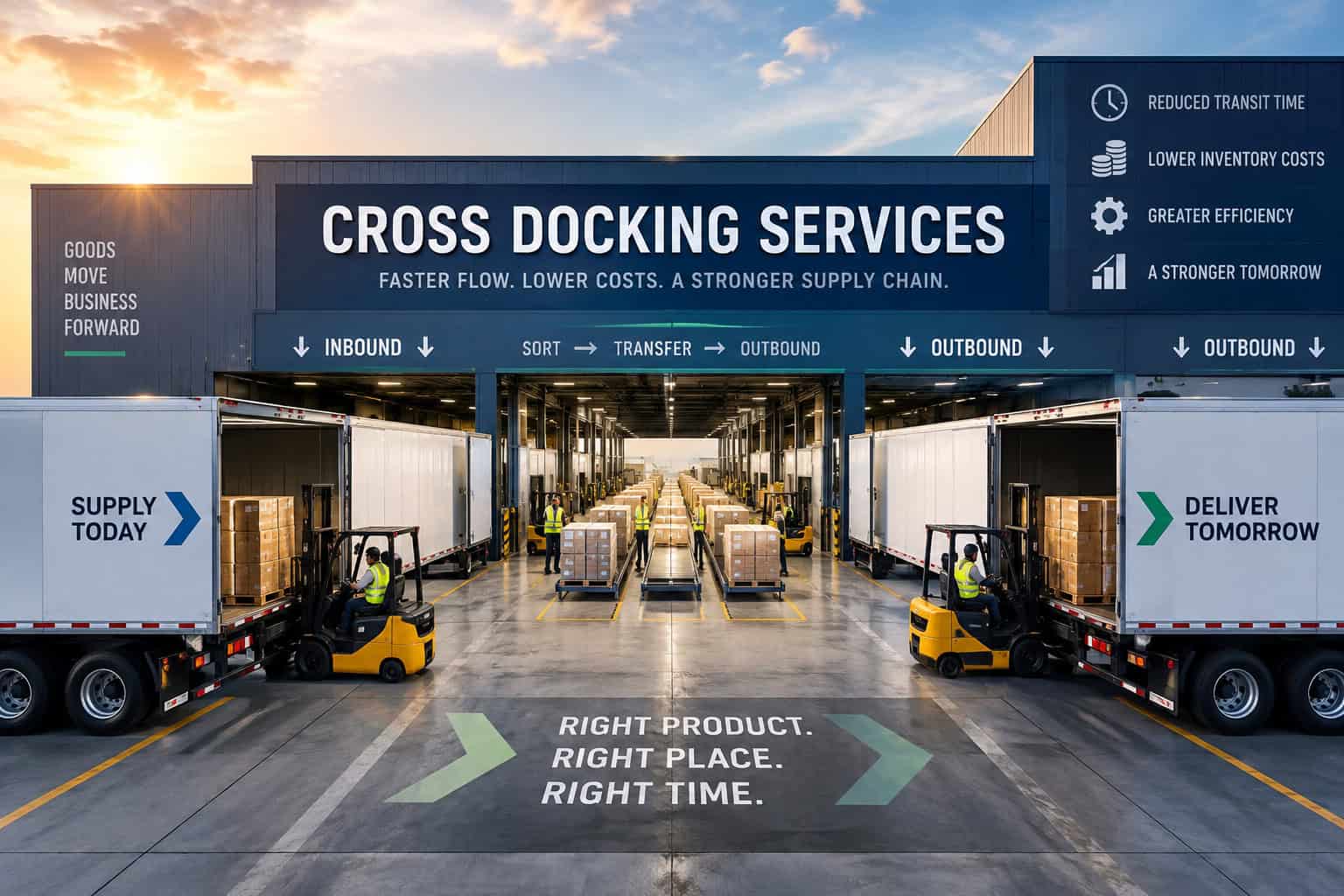
Cross docking Services is an important logistics strategy for businesses looking to move products through distribution facilities quickly, reduce unnecessary storage, and improve the flow of goods from suppliers to customers. By coordinating incoming shipments with outgoing orders, companies can minimize the time products spend sitting in a warehouse and create a more efficient distribution process. However, successful cross docking requires more than moving freight from one loading dock to another. It depends on thoughtful facility design, reliable material handling equipment, effective order fulfillment processes, and coordination across the supply chain.
Century Conveyor Systems helps businesses develop material handling and order fulfillment solutions designed around their operational needs. For companies evaluating cross docking services, understanding how conveyor systems and integrated warehouse processes work together can help clarify where automation may improve throughput, accuracy, and overall efficiency.
The following frequently asked questions explore cross docking services, the role of conveyor technology, and how businesses can approach cross docking services solutions with Century Conveyor Systems.
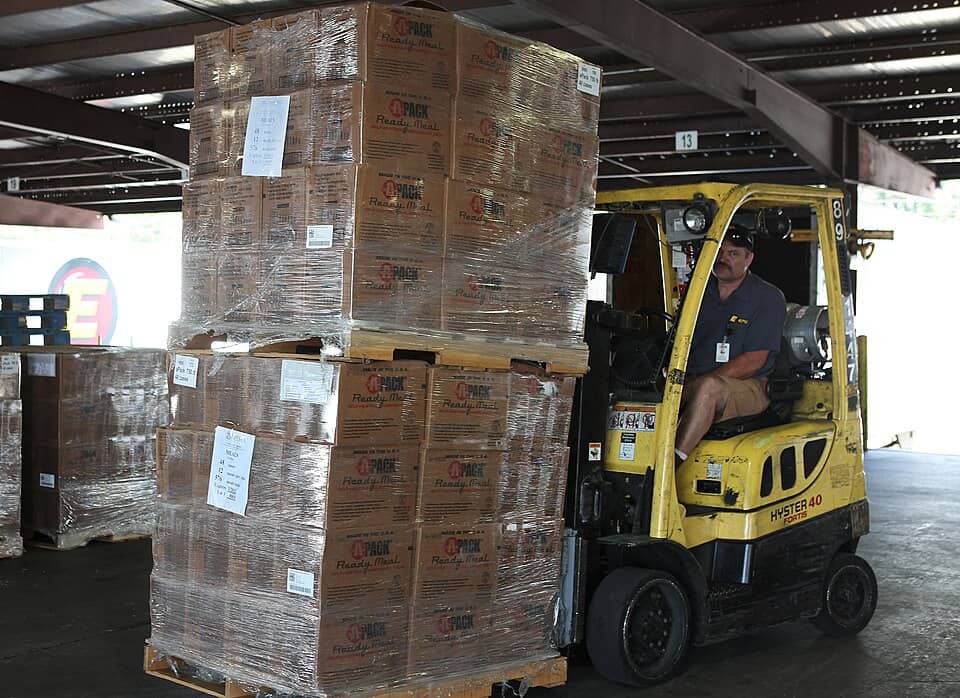
Cross docking services involve transferring products from inbound transportation to outbound transportation with little or no long-term storage in between. Rather than receiving merchandise, placing it into warehouse storage, and retrieving it later to fulfill an order, a cross docking services operation moves products through a distribution facility as directly as possible.
For example, a retailer may receive products from several manufacturers at a distribution center. Instead of storing every shipment on warehouse racks, employees or automated material handling systems can sort the incoming products by destination, combine compatible shipments, and direct them toward the appropriate outbound loading areas. The products then leave the facility on trucks bound for retail locations, regional distribution centers, or customers.
The process generally includes receiving inbound freight, identifying and sorting products, consolidating shipments when necessary, and transferring them to outbound staging or loading areas. Depending on the operation, products may be handled individually, in cases, on pallets, or through other unit-load configurations.
Cross docking services can be especially valuable for businesses handling high volumes of predictable shipments, time-sensitive products, retail replenishment, or goods that need to move quickly through a distribution network. It can also help companies reduce the amount of warehouse space devoted to inventory storage.
However, cross docking services is not automatically the right solution for every product or facility. Its effectiveness depends on shipment timing, product characteristics, order patterns, available dock space, and the ability to coordinate inbound and outbound transportation.
Century Conveyor Systems’ material handling and order fulfillment capabilities are relevant to this process because conveyor equipment can support the movement, routing, sorting, and distribution of products through a facility. The right system helps establish a more organized flow of goods and reduces dependence on unnecessary manual transfers.
An effective cross docking services operation depends on moving products through a facility with as few unnecessary handling steps and delays as possible. Conveyor systems can support this goal by creating defined pathways between receiving, sorting, order consolidation, and shipping areas.
Century Conveyor Systems focuses on conveyor and material handling solutions that support warehouse and order fulfillment operations. When evaluating a cross docking services application, businesses can consider how conveyor equipment might connect different stages of their workflow, reduce bottlenecks, and make product movement more consistent.
For instance, a facility receiving multiple inbound shipments may need to route cases to different outbound destinations. Without a well-organized material handling process, workers may have to transport products manually between several work areas. These transfers can consume labor, increase congestion, and make it harder to maintain a predictable shipping schedule.
A properly planned conveyor layout can establish more direct routes between operational zones. Depending on the system design, conveyors may move cartons from receiving stations to sorting areas, transfer products toward designated outbound lanes, or connect order fulfillment equipment with shipping operations. This can help employees spend less time transporting goods and more time performing tasks that require judgment, verification, or exception handling.
Efficiency also depends on the way the equipment integrates with the facility’s operating procedures. Conveyor capacity, transfer points, product dimensions, routing requirements, and peak shipment volumes all influence system performance. A design that works for a modest daily volume may not perform as expected during seasonal surges.
Businesses considering Century Conveyor Systems for a cross docking services project should therefore evaluate the complete material flow rather than selecting equipment based on conveyor speed alone. The objective is to develop a coordinated operation in which inbound products reach their intended outbound destinations efficiently, safely, and reliably.
One of the primary advantages of cross docking services is the potential to reduce the need for conventional warehouse storage. Traditional distribution often involves receiving products, assigning storage locations, putting inventory away, retrieving it when orders arrive, and transporting it to packing or shipping areas. Every additional step can require labor, equipment, space, and time.
Cross docking services changes this workflow by prioritizing the movement of products rather than their placement into long-term storage. When inbound goods are already associated with known destinations or customer orders, a facility may be able to transfer them directly to outbound staging areas.
Reducing storage requirements can create several operational benefits. Businesses may be able to use less floor space for inventory holding, decrease the number of internal product movements, and reduce the time employees spend locating and retrieving goods. Facilities with expensive real estate or limited expansion opportunities may find these improvements particularly valuable.
Conveyor systems can support these objectives by moving products through predetermined routes and reducing reliance on repeated manual transportation. For example, a conveyor connection between receiving and outbound sorting can help eliminate an intermediate storage or transfer step when the shipment’s destination is already known and the operating process permits direct movement.
Nevertheless, cross docking does not eliminate every storage requirement. Some shipments may arrive before their outbound transportation is available. Others may require inspection, sorting, temporary staging, labeling, or consolidation with products arriving at different times. Facilities must retain enough space to handle these activities without blocking receiving and shipping operations.
The financial value of cross docking should therefore be assessed across the entire operation. Businesses should compare potential savings in storage, labor, handling, and inventory movement against the costs of material handling equipment, facility modifications, scheduling coordination, and ongoing maintenance.
Century Conveyor Systems’ conveyor and order fulfillment solutions can be considered as part of this broader evaluation. The strongest business case comes from identifying specific process steps that can be eliminated, shortened, or made more reliable rather than assuming that cross docking will automatically lower every warehouse expense.
Order fulfillment and cross docking are closely related, but they are not identical. Cross docking emphasizes transferring products from inbound to outbound transportation with minimal storage, while order fulfillment encompasses the processes required to prepare and deliver the correct products to the correct destinations.
A cross docking facility may need to receive goods from several suppliers, identify their intended destinations, combine products into store-specific shipments, and route completed shipments to the appropriate loading doors. These activities require accurate product identification, coordinated handling, and clear movement paths.
Conveyor systems can connect the physical stages of this workflow. Incoming cartons may move from receiving stations toward sorting equipment, where products are directed into destination-specific lanes. Other conveyors may transport completed groups of products toward staging areas or connect different sections of an order processing operation.
Century Conveyor Systems’ order fulfillment solutions are relevant to businesses looking to improve the movement of products through these connected processes. Rather than viewing conveyors as isolated pieces of equipment, companies can assess how the equipment supports their broader fulfillment strategy.
For example, a distribution center serving multiple retail locations might receive mixed cartons from several suppliers. Those cartons must be identified, directed to the correct destinations, and consolidated into shipments that match each store’s requirements. A coordinated material handling layout can help reduce unnecessary travel between work areas and make product routing more consistent.
Technology alone, however, cannot compensate for inaccurate shipment information or poorly coordinated workflows. Cross docking operations still depend on reliable order data, appropriate labeling, clear destination rules, and communication between receiving and shipping teams. Warehouse management systems and other operational software may also be needed to support product identification and routing, depending on the complexity of the application.
When planning a project with Century Conveyor Systems, businesses should identify the points at which products enter the facility, change direction, undergo sorting or verification, and leave for their final destinations. Mapping these steps helps reveal where conveyor integration may improve order flow and where manual intervention remains necessary.
The goal is not simply to move products faster. It is to move the right products through the right process in the right sequence so that shipping requirements are met consistently.
Cross docking can benefit a range of industries, but its suitability depends on how products move through the supply chain. Businesses that handle frequent shipments, predictable demand, and goods that need limited intermediate storage are often strong candidates.
Retail and e-commerce distribution are common examples. Retailers frequently need to consolidate products from multiple suppliers and distribute them to stores or regional fulfillment locations. Cross docking can help synchronize these flows, especially when shipments are organized by destination before reaching the distribution facility. Conveyor-based sorting and routing may support the movement of cases through receiving, consolidation, and outbound staging.
Grocery and food distribution can also benefit when products have short shelf lives or must move quickly through the supply chain. In these environments, reducing unnecessary dwell time can be valuable. However, temperature control, sanitation, product compatibility, and handling requirements must be considered carefully, and not every food product is suitable for the same cross docking process.
Manufacturers and industrial distributors may use cross docking to coordinate components, supplies, or finished goods moving between production sites, suppliers, and customers. A facility may receive shipments from several vendors and consolidate them for delivery to a manufacturing plant. Conveyor systems may support the movement of suitable cartons or packages, while pallets and oversized materials may require different handling equipment.
Third-party logistics providers can also use cross docking to manage freight for multiple customers. Their operations may involve sorting incoming goods by destination, combining shipments, or transferring freight between transportation routes. In these settings, clear routing procedures and adaptable material handling infrastructure can be important for managing different shipment profiles.
The best candidates typically have enough shipment volume and scheduling consistency to justify the coordination required. Businesses with highly unpredictable inbound arrivals, complex inspection requirements, or products that must remain in storage for extended periods may need a hybrid distribution model instead.
Century Conveyor Systems can be considered when evaluating the material handling requirements of these environments. The appropriate approach depends on product type, package dimensions, daily throughput, facility configuration, and the degree of automation needed. A useful assessment begins with the actual movement of goods rather than assuming that one cross docking design will work equally well for every industry.Writing
Selecting the right cross docking approach requires a detailed understanding of a facility’s current operations and future requirements. Although reducing product handling and storage time is a common objective, the actual design must account for the physical characteristics of shipments, the timing of inbound deliveries, outbound transportation schedules, and the capacity of the material handling system.
Shipment volume and product characteristics are important starting points. A facility handling thousands of small cartons may need a different conveyor configuration from one moving large cases, irregularly shaped packages, or palletized freight. Product weight, dimensions, packaging quality, and handling restrictions can influence equipment selection and conveyor layout.
Inbound and outbound scheduling is equally important. Cross docking works best when products arrive at a time that allows them to move efficiently toward their next destination. If inbound deliveries consistently arrive too early or outbound trucks leave before shipments are ready, products can accumulate in staging areas. Businesses should examine delivery windows, dock availability, shipment frequency, and the time needed for sorting and consolidation.
Facility layout and available space also affect the design. Receiving doors, shipping doors, support columns, pedestrian walkways, existing equipment, and traffic patterns can all influence how products travel through the building. A well-designed system must accommodate these constraints while preserving safe access for employees and maintenance personnel.
Businesses should also consider integration with existing warehouse technology, the potential for future expansion, maintenance requirements, and the level of automation appropriate for their operations. A system that performs well today should ideally leave room for increased throughput or changing product mixes.
Century Conveyor Systems’ material handling capabilities can be evaluated against these requirements to help determine where conveyor equipment may fit within a cross docking operation. Before committing to a solution, businesses should define measurable objectives, such as reducing manual transfers, shortening processing time, improving shipment consistency, or increasing throughput during peak periods.
This approach makes equipment selection more purposeful. Instead of investing in automation simply because it is available, businesses can focus on the operational challenges that have the greatest impact on distribution performance.
Cross docking can improve labor productivity when it eliminates unnecessary storage, retrieval, and transportation tasks. In a conventional warehouse, employees may handle the same products several times before they reach an outbound vehicle. Goods might be unloaded, moved to storage, retrieved for an order, transported to a packing area, and moved again to shipping.
A cross docking workflow can reduce these intermediate steps when incoming products are ready to move directly toward their destinations. Conveyor systems can further support productivity by transporting products between work areas along established routes.
For employees, this can mean spending less time pushing carts, carrying cartons, or moving products between distant parts of the facility. Depending on the application, workers may instead focus on scanning, inspection, exception resolution, shipment verification, and other activities that require direct attention.
However, labor productivity should not be measured solely by how quickly products travel along a conveyor. The complete process matters. If cartons arrive at a sorting area faster than employees can verify or consolidate them, congestion may simply shift to another part of the operation. Effective system design must balance the capacity of conveyors with the performance of downstream workstations and shipping processes.
Shipping accuracy also depends on the quality of the information used to direct products. A conveyor can move a carton efficiently, but it cannot independently guarantee that the carton is assigned to the correct destination unless appropriate identification, routing technology, and control processes are in place.
Businesses may therefore combine conveyor equipment with barcode scanning, warehouse management software, automated sorting, or other verification tools, depending on their needs. These technologies can help identify products, confirm destinations, and reduce the risk of misrouted shipments when properly configured.
Century Conveyor Systems’ order fulfillment capabilities are relevant to this broader objective because productive fulfillment depends on coordinating equipment, processes, and product movement. Companies should evaluate both labor efficiency and accuracy when assessing a potential cross docking investment.
Useful performance indicators include units processed per labor hour, average time from receiving to shipping, shipment error rates, conveyor availability, and the amount of product waiting in staging areas. Tracking these measures before and after implementation can help determine whether the new workflow is delivering meaningful improvements.
Businesses considering cross docking services should begin by documenting how products currently move through their distribution facilities. Understanding the existing process makes it easier to identify unnecessary handling, recurring bottlenecks, and opportunities for more direct product movement.
The first step is to map the current workflow, beginning with inbound receiving and continuing through identification, sorting, staging, consolidation, and outbound shipping. Businesses should note where products wait, where employees repeatedly move the same goods, and where congestion tends to develop during busy periods.
Next, establish baseline operational data. Daily shipment volume, peak-hour throughput, product dimensions, order profiles, labor requirements, and average processing times provide a practical foundation for system planning. It is also helpful to document future business requirements, including seasonal volume increases, additional shipping destinations, or anticipated changes in product mix.
The third step is to identify which parts of the process could benefit from conveyor integration. Some facilities may need simple connections between receiving and staging areas, while others may require more extensive systems that connect multiple processing zones. The appropriate level of automation depends on the complexity of the workflow and the expected return on investment.
At this stage, businesses can explore Century Conveyor Systems’ order fulfillment solutions and broader material handling capabilities to determine how its offerings relate to their requirements.
A project discussion should cover the types of products being handled, facility dimensions, required throughput, destination-routing needs, existing equipment, and integration requirements. Businesses should also ask how the proposed design will address maintenance access, employee safety, operational flexibility, and future capacity increases.
Before implementation, it is useful to establish clear performance targets. These might include reducing the time between receiving and shipping, lowering manual handling requirements, increasing the number of cartons processed per hour, or improving the consistency of outbound dispatches. Specific targets make it easier to evaluate the system’s performance after installation.
Finally, successful implementation requires employee training, coordinated operating procedures, and a plan for maintaining the equipment. Even a well-designed conveyor system needs appropriate oversight, preventive maintenance, and clear procedures for handling jams, damaged products, and other exceptions.
Taking these steps helps businesses approach Century Conveyor Systems with a clear understanding of their operational needs and a practical framework for evaluating potential cross docking improvements.
Cross docking services offer businesses a way to streamline distribution by moving products from inbound shipments toward outbound destinations with minimal unnecessary storage. When the process is well coordinated, it can help reduce internal handling, improve the use of warehouse space, support faster order fulfillment, and make product movement more predictable.
The benefits depend on several factors, including shipment timing, product characteristics, facility layout, order accuracy, and the ability to coordinate receiving with shipping. Conveyor systems can play an important role by connecting operational areas, establishing consistent movement paths, and supporting the flow of products through a distribution facility.
Century Conveyor Systems is a potential resource for businesses exploring conveyor-based material handling and order fulfillment improvements. By examining its capabilities alongside a facility’s actual workflow, companies can identify opportunities to make cross docking more efficient without investing in equipment that does not address their needs.
The most effective starting point is a detailed review of current distribution operations, followed by a clear definition of performance goals and an evaluation of the material handling solutions that can help achieve them. With the right planning, cross docking can become a valuable part of a broader strategy for improving warehouse productivity and supply chain performance.
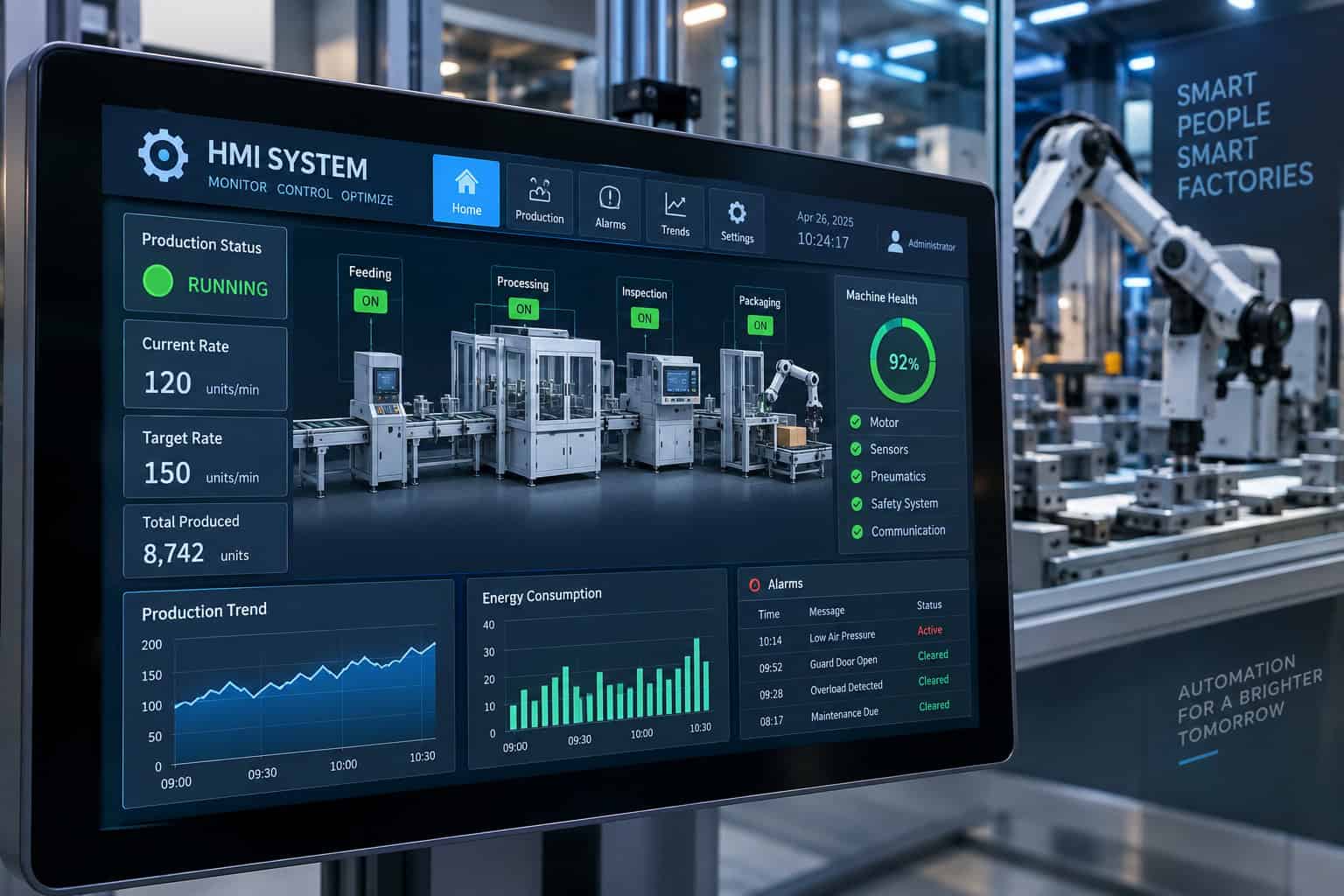
An effective human-machine interface (HMI System) system helps industrial operators monitor equipment, understand machine performance, and interact with automated processes. In conveyor applications, an HMI can make it easier to oversee material movement, identify operational issues, and coordinate equipment across a production or distribution facility. When integrated thoughtfully into a conveyor control system, it can also support more consistent operations, improve visibility, and simplify troubleshooting.
Century Conveyor Systems provides conveyor solutions and services for industrial material handling applications, including human-machine interface solutions. Understanding how an HMI system works, what it can contribute to a conveyor installation, and which factors matter during implementation can help businesses make informed decisions about their automation needs.
This FAQ explores the essential questions surrounding Century Conveyor Systems’ HMI system, from its basic functions and operational benefits to integration, usability, maintenance, and long-term planning.

An HMI system, short for human-machine interface system, is the interface that allows people to interact with industrial machinery and automation equipment. It commonly consists of a touchscreen, display panel, or computer-based interface that presents information from a machine or control system and allows authorized users to issue commands.
In a conveyor environment, the HMI acts as an accessible point of interaction between operators and the equipment responsible for moving materials. Instead of relying exclusively on physical buttons, indicator lights, or separate control stations, operators may be able to view equipment status, monitor operating conditions, and access relevant controls through a centralized interface.
The importance of an HMI system extends beyond convenience. Conveyor installations can involve multiple motors, sensors, transfer points, safety devices, and interconnected equipment. As these systems become more complex, operators need a clear understanding of what the machinery is doing and where attention may be required.
A well-designed HMI can organize this information into understandable screens and status indicators. Depending on the equipment, controls, and software configuration, it may display conveyor operating states, alarms, fault messages, and process information. This visibility can help operators recognize abnormal conditions and communicate more effectively with maintenance personnel.
For businesses evaluating Century Conveyor Systems’ HMI services, the key consideration is how the interface supports the specific conveyor application. The goal is not simply to install a screen, but to create a practical way for personnel to monitor and manage the equipment they use every day.
An HMI system contributes to industrial automation by connecting machine information with the people responsible for overseeing production or material movement. While programmable logic controllers (PLCs) and other control components typically execute automated operations, the HMI provides a human-facing layer through which operators can observe the process and interact with supported functions.
Century Conveyor Systems’ HMI service is relevant to businesses that need an interface suited to their conveyor equipment and operational requirements. The precise capabilities of an installation depend on the system design, selected hardware, control architecture, and programmed functionality.
For example, an HMI associated with an automated conveyor line may provide a visual overview of equipment states, indicate whether particular sections are running or stopped, and present alarms when a monitored condition requires attention. Where supported by the controls and software, operators may also be able to select operating modes or issue authorized commands.
This arrangement can make automation easier to manage because personnel have a more direct view of the process. Rather than interpreting information from disconnected devices, an operator may be able to consult a unified interface to understand the status of important equipment.
An HMI also supports communication between operational needs and automated responses. If a fault occurs, the interface may display information that helps an operator identify the affected conveyor section or determine whether maintenance assistance is necessary. The control system remains responsible for executing its programmed logic, while the HMI helps personnel understand and supervise that activity.
The most effective implementation begins with a clear understanding of how employees interact with the conveyor system, what information they need, and which actions they are authorized to perform. This ensures that the interface serves a practical operational purpose rather than adding unnecessary complexity.
The benefits of an HMI system depend on the application, but several areas are especially important for conveyor operations: visibility, troubleshooting, operational consistency, and access to relevant information.
Improved operational visibility: An HMI can bring equipment status and process information into one interface. Operators may be able to determine which sections are operating, which are stopped, and whether an alarm needs attention. This is particularly useful when a facility relies on several connected conveyors or automated material handling stages.
More efficient troubleshooting: When a conveyor stops unexpectedly, maintenance personnel need to identify the source of the problem. An appropriately configured HMI may display fault messages, alarm histories, or equipment status information that narrows the investigation. Faster access to useful information can reduce the time spent diagnosing an issue, although the actual improvement depends on the quality of the diagnostics and the nature of the fault.
More consistent operation: A thoughtfully organized interface can present controls and operating information in a predictable format. This can help trained employees follow established procedures and reduce uncertainty when switching between operating modes or monitoring different sections of equipment.
Better access to process information: Depending on the installation, an HMI may display information such as operating states, sensor conditions, fault notifications, or production-related data. Bringing these details together can help personnel understand the relationship between equipment behavior and material flow.
Support for maintenance planning: Alarm records and diagnostic information, when available, can help maintenance teams recognize recurring problems and investigate equipment that repeatedly stops or generates faults. An HMI does not automatically prevent breakdowns, but the information it provides may support more informed maintenance decisions.
These benefits should be evaluated against the needs of the specific facility. A small conveyor installation may require only a straightforward operator panel, while a larger automated system may benefit from a more comprehensive interface with multiple equipment views and detailed diagnostics. The appropriate solution is the one that provides useful information without overwhelming the people who operate it.Writing
Unplanned conveyor downtime can disrupt production schedules, delay order fulfillment, and create bottlenecks throughout a material handling operation. An HMI system can help address this challenge by making equipment conditions easier to monitor and faults easier to investigate.
When a conveyor stops, the immediate challenge is often determining why it stopped. The cause might involve a sensor signal, a motor fault, a blocked transfer point, a safety device, or another condition within the control system. Without clear diagnostic information, operators may need to inspect several components before identifying the issue.
A properly configured HMI can provide relevant alarms and status messages that guide the initial investigation. If the interface identifies the affected equipment or displays a fault associated with a particular component, maintenance personnel can begin troubleshooting with a more focused understanding of the problem.
This is valuable because downtime management depends on both the speed of detection and the ability to identify the underlying cause. An HMI may help shorten the information-gathering stage, allowing teams to determine their next steps more efficiently.
However, an HMI system should not be viewed as a guarantee against downtime. It does not automatically eliminate mechanical wear, electrical failures, or material handling obstructions. Its value lies in making available information easier to interpret and act upon.
For Century Conveyor Systems’ customers, the practical question is how the HMI can be configured to provide meaningful diagnostic support for the equipment being installed or maintained. Clear alarm descriptions, logical screen organization, and useful equipment status information can all contribute to a more manageable troubleshooting process.
Yes. HMI systems can be configured to reflect the equipment, operating procedures, and information requirements of individual facilities. Customization is important because a conveyor system used in a distribution center may have different monitoring requirements from one used in manufacturing, packaging, or another industrial environment.
The first consideration is the equipment itself. A facility with a single conveyor may need a relatively simple display showing operating status and a limited number of controls. A larger installation with multiple conveyor zones, accumulation sections, transfer points, and automated equipment may require a more detailed interface.
The second consideration is the operator’s responsibilities. Employees who oversee routine material movement may need quick access to equipment status and basic operating controls. Maintenance technicians, depending on their permissions and the system design, may require additional diagnostic information to investigate faults and support repairs.
Screen layout is another important factor. Equipment should be represented in a way that helps users understand the physical or logical relationship between conveyor sections. Consistent terminology, recognizable status indicators, and clearly organized alarms can make the interface easier to learn and use.
Customization may also involve determining which information deserves the greatest visibility. Frequent operational tasks should generally be straightforward to locate, while specialized settings and maintenance functions should be organized appropriately for authorized personnel.
The exact customization options available through Century Conveyor Systems depend on the project scope and control system requirements. Businesses should discuss their equipment configuration, preferred operating procedures, existing automation components, and future plans before finalizing an HMI design.
Integration is one of the most important considerations when selecting an HMI system for a new or existing conveyor installation. An interface must communicate appropriately with the underlying control architecture to display meaningful information and perform its intended functions.
In many industrial applications, the HMI communicates with a programmable logic controller or another compatible control system. The controller manages programmed machine logic and receives information from field devices such as sensors and motor controls. The HMI presents selected information to operators and, where permitted, sends commands through the control system.
Successful integration requires compatibility between the HMI hardware, software, communication protocols, and existing controls. Engineers must also determine which operating data should be displayed and which commands should be available through the interface.
For an existing conveyor installation, the process may involve reviewing the current control architecture, identifying available communication interfaces, and determining whether the existing equipment can provide the information needed by the new HMI. Depending on the system’s age and configuration, integration could require software changes, hardware upgrades, or modifications to the control program.
A new conveyor installation presents an opportunity to consider the interface during the broader system design process. This can help align the operator screens, equipment layout, control logic, and troubleshooting requirements from the beginning.
Century Conveyor Systems can be approached to discuss how its HMI services fit the requirements of a particular conveyor project. Before implementation, businesses should clarify the scope of integration, the components involved, the testing process, and any operational interruptions that may be necessary.
Choosing an HMI system requires more than comparing display sizes or selecting a touchscreen. The right solution should reflect the facility’s operational complexity, employee needs, existing automation infrastructure, and long-term maintenance requirements.
Operational requirements: Begin by identifying the tasks operators need to perform. Determine whether the interface must monitor one conveyor, coordinate multiple zones, display alarms, provide diagnostic information, or support other specific functions.
Ease of use: Operators should be able to understand the screen layout and locate essential information without unnecessary navigation. Clear labels, consistent terminology, and logical grouping can make a substantial difference in everyday usability.
Compatibility: The HMI must work with the selected or existing control hardware and communication architecture. Compatibility should be confirmed during the engineering stage rather than assumed.
Environmental conditions: Industrial interfaces may operate in environments with dust, vibration, temperature fluctuations, or frequent cleaning. The physical panel and its enclosure should be appropriate for the location in which they will be installed.
Maintenance and support: Businesses should understand how the HMI will be maintained, how software changes will be managed, and what documentation will be available. These details can influence the long-term cost and practicality of the installation.
Future expansion: A conveyor system may evolve as production requirements change. Considering possible additional equipment, new operating screens, or expanded diagnostic needs can help prevent the interface from becoming a limitation later.
By reviewing these factors with Century Conveyor Systems, businesses can establish a clearer set of requirements and determine which HMI approach best supports their operation.
An HMI system can help make conveyor operations more understandable by presenting machine information in a consistent, visual format. This is particularly useful when operators need to learn how different equipment sections interact or understand what to do when an abnormal condition occurs.
A well-organized interface can show equipment states, identify relevant alarms, and provide a consistent location for commonly used controls. Instead of learning separate procedures for multiple disconnected control panels, employees may be able to use a more unified interface to understand the system.
For training purposes, consistent screen layouts and clear terminology can help new personnel become familiar with routine tasks. Visual representations of conveyor sections may also make it easier to explain how material moves through the installation and where interruptions can affect downstream processes.
Nevertheless, an HMI is a support tool rather than a replacement for formal training. Operators must understand the equipment, follow established procedures, and know when to contact maintenance personnel. They should also be trained to interpret alarms correctly and avoid making unauthorized changes.
Safety remains essential. Emergency stops, protective devices, and other safety-related functions must be designed and implemented according to the applicable engineering requirements. An ordinary HMI command should never be assumed to replace a dedicated safety function.
For Century Conveyor Systems’ HMI applications, usability should be considered alongside technical functionality. An interface that presents the right information in a clear and consistent manner can be more valuable than one that offers numerous features that operators rarely need.
An HMI system can contribute to long-term maintenance by making equipment information more accessible and, when supported, providing diagnostic details or records of recurring faults.
For example, repeated alarms associated with a conveyor motor, sensor, or transfer point may indicate that a component requires closer inspection. Maintenance personnel can use available information to investigate the underlying cause rather than treating each interruption as an unrelated event.
Some HMI configurations also work alongside supervisory control and data acquisition (SCADA) systems, historians, or maintenance software. Depending on the installation, these connected systems may provide more extensive data collection, reporting, or analysis than the operator interface alone.
It is important to distinguish between capabilities that are built into an HMI and those that require additional software or hardware. Historical reporting, remote access, predictive analytics, and automated maintenance notifications are not guaranteed features of every HMI system.
Long-term reliability also depends on maintaining the interface itself. Software backups, controlled configuration changes, appropriate access permissions, and up-to-date documentation can help businesses preserve the integrity of their control systems.
When planning an HMI installation with Century Conveyor Systems, businesses should ask which diagnostic and maintenance functions are included, what additional integrations may be available, and how the system can be supported throughout its operating life.
The most effective starting point is a discussion about the conveyor application’s current challenges and desired outcomes. Businesses should identify whether they are planning a new conveyor installation, upgrading an existing control system, or looking to improve operator visibility and troubleshooting.
Useful information to prepare includes the conveyor layout, existing PLC and control hardware, communication requirements, operating procedures, and any recurring problems that the new interface should help address. It is also helpful to identify who will use the HMI and what information each group needs.
From there, the project team can discuss the appropriate interface structure, required functionality, integration considerations, and implementation scope. Testing and commissioning should verify that displayed information is accurate, controls behave as intended, and operators understand the interface before the system is placed into normal service.
Businesses can learn more about Century Conveyor Systems and its conveyor-related capabilities by visiting its website and reviewing the company’s human-machine interface services. A direct conversation can help establish whether the available services align with the specific needs of the proposed project.
An HMI system is an important part of the operator experience in an automated conveyor environment. By presenting equipment status, relevant alarms, and supported controls in an accessible interface, it can help personnel understand operations, troubleshoot problems, and manage material movement more effectively.
Century Conveyor Systems’ HMI services are worth exploring for businesses seeking an interface that supports their conveyor control requirements. The right solution will depend on equipment compatibility, operational complexity, usability, maintenance needs, and the functions required at the facility.
Ultimately, the objective is to make conveyor automation easier to monitor and manage. By defining operational priorities and evaluating integration requirements before implementation, businesses can make a more informed decision about the HMI system that best supports their long-term material handling goals.
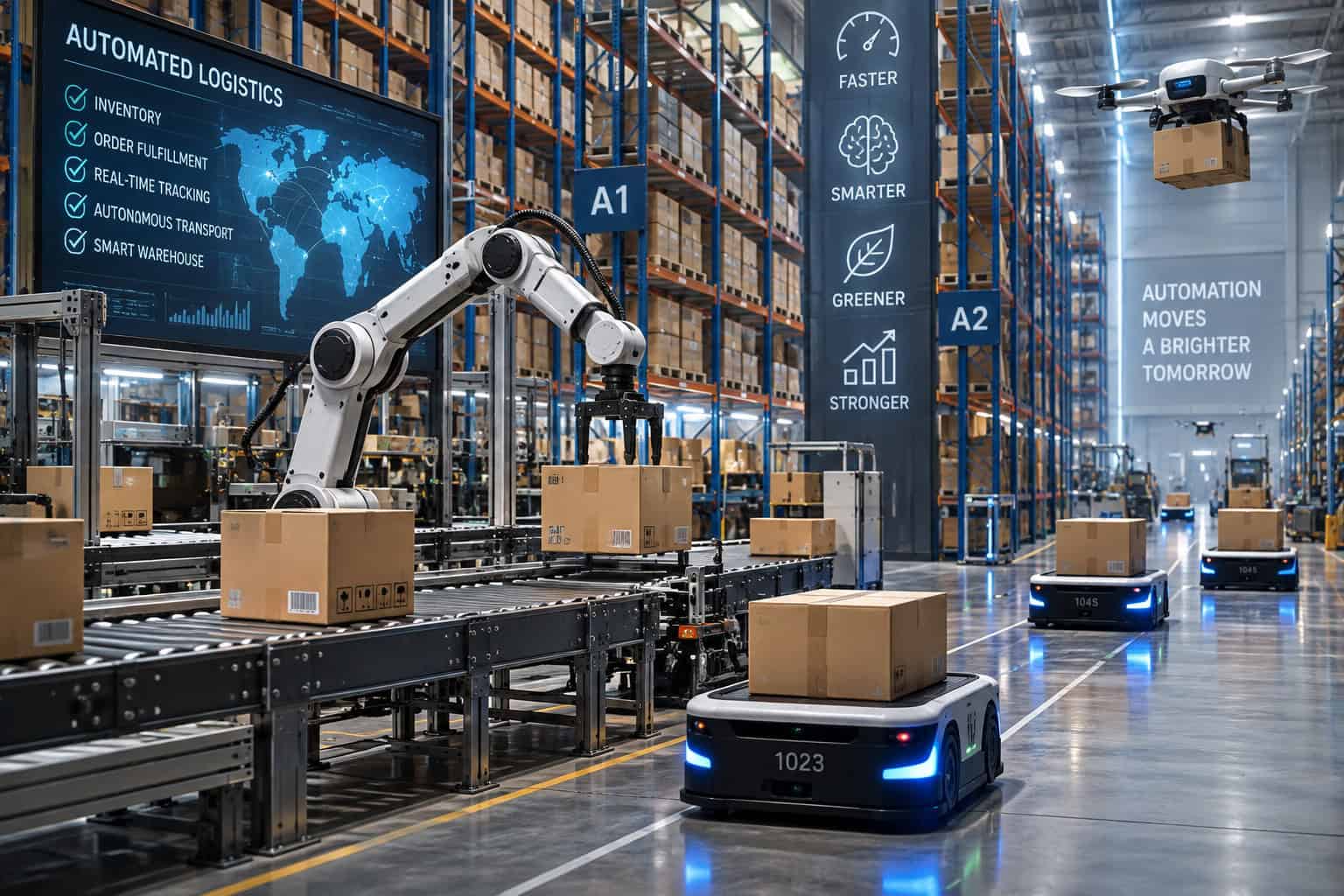
The growing demands of modern warehousing and distribution have made automated logistics systems an increasingly important investment for businesses looking to improve efficiency, increase order throughput, and manage operational costs. As customer expectations for faster deliveries continue to rise, companies need dependable solutions that can move products, manage inventory workflows, and streamline fulfillment operations without relying entirely on manual labor.
Automated logistics systems offer a practical way to address these challenges. By integrating conveyor equipment, robotic technologies, warehouse controls, and intelligent material handling solutions, businesses can create more efficient distribution environments that support both current operational demands and future growth.
Century Conveyor Systems specializes in designing, engineering, installing, and supporting automated material handling solutions for warehouses, distribution centers, and fulfillment facilities. Its approach combines multiple automation technologies into integrated systems designed around the specific requirements of each operation.
Below, we answer some of the most frequently asked questions about Century Conveyor Systems’ automated logistics systems and explain how these solutions can help businesses improve their material handling and order fulfillment processes.
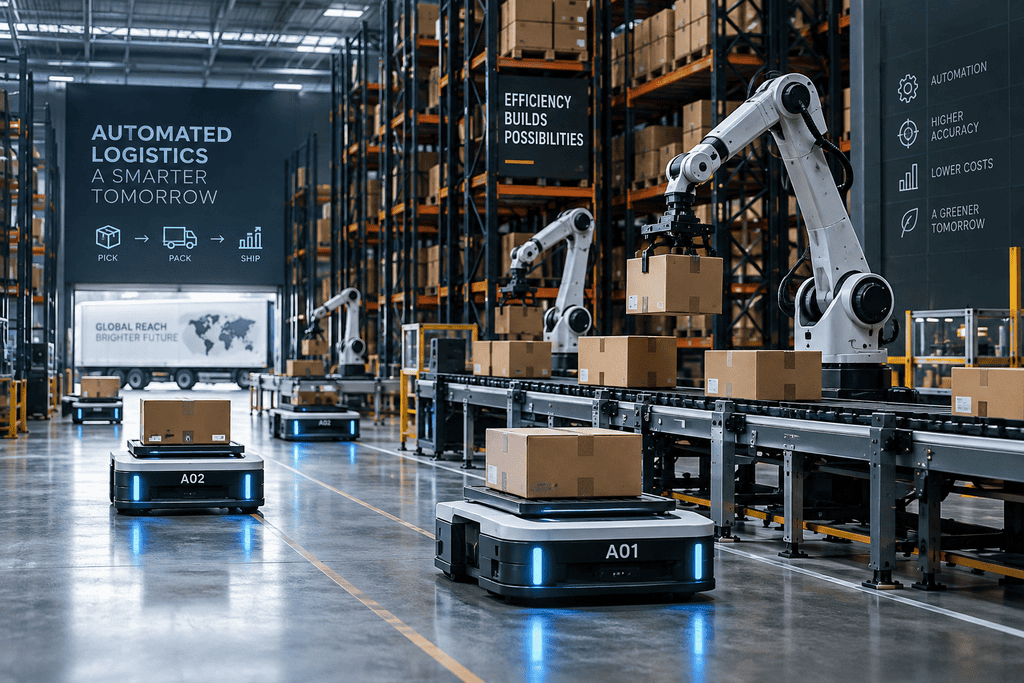
Automated logistics systems are integrated technologies and equipment designed to move, sort, store, and process products throughout a warehouse or distribution center with fewer manual interactions. Rather than relying on employees to transport every carton, pallet, or package between operational areas, automation uses mechanical equipment, robotics, and software controls to coordinate material movement.
Century Conveyor Systems takes a comprehensive approach to automated logistics systems by engineering solutions that address the complete material handling process. Rather than treating individual pieces of equipment as isolated investments, the company focuses on developing systems that work together to support the facility’s operational goals.
Its capabilities include several important technologies:
By bringing these capabilities together, Century helps businesses develop an automated logistics systems strategy that reflects their facility layout, product characteristics, order volumes, and long-term objectives.
The primary advantage of this integrated approach is that businesses can improve multiple operational processes rather than addressing only one isolated bottleneck.
Order fulfillment involves every step between receiving an order and preparing the associated products for shipment. This includes picking, transporting, consolidating, packing, sorting, and moving completed orders to the shipping dock.
When these processes depend heavily on manual transportation and handling, employees can spend significant amounts of time moving products between workstations instead of completing tasks that directly contribute to order processing.
Century Conveyor Systems designs automated order fulfillment solutions to reduce unnecessary movement, improve throughput, and create more efficient workflows.
Conveyor systems are particularly important because they establish consistent transportation pathways throughout a facility. Products can move between picking areas, packing stations, sortation equipment, and shipping operations without requiring employees to manually carry or transport every item.
Additional technologies can further improve fulfillment performance. For example, automated diverts can direct cartons toward designated processing lines, while robotic systems can transport inventory or completed orders between different operational areas.
These improvements offer several advantages:
Century’s approach also considers how each touchpoint affects the overall fulfillment process. Improving the speed of one workstation will have limited value if products continue to accumulate at another stage.
By engineering the complete workflow, businesses can create a more balanced operation in which equipment, employees, and technology work together to maintain consistent productivity.
Conveyors are among the most important components of automated logistics systems because they provide the physical infrastructure necessary to move products throughout a facility.
However, not every product requires the same type of transportation equipment. Cartons, polybags, pallets, drums, and oversized materials have different handling requirements. Selecting the appropriate conveyor technology is essential for maintaining reliable product movement and avoiding unnecessary operational complications.
Century Conveyor Systems offers several conveyor configurations designed for different applications.
Live roller and gravity conveyors
Live roller conveyors use powered rollers to transport cartons and other materials, while gravity conveyors rely on gravity to move products along the conveyor bed.
These systems are commonly used in packing lines, divert operations, and end-of-line applications. Gravity conveyors can be especially useful in areas where manual induction or straightforward product movement is required.
Belt conveyors
Belt conveyors provide a stable transportation surface that works particularly well for smaller packages, polybags, irregular carton sizes, and products that may not move reliably across rollers.
They can also accommodate inclines, declines, and product spacing requirements, making them useful in facilities that need greater flexibility in their transportation layouts.
Modular belt conveyors
Modular belt conveyors use interconnected belt sections instead of a single traditional belt. Their construction allows individual sections to be removed, cleaned, or modified more easily.
These conveyors can be particularly beneficial in specialized product handling applications where traction, tight transfers, or easier maintenance are important considerations.
Pallet conveyors
Pallet conveyors are designed to handle heavier products and larger loads. Depending on the application, Century can incorporate pallet drag chains, gravity systems, chain-driven live rollers, and Poly-V conveyors.
Extendable conveyors
Extendable conveyors are telescoping systems that can extend into trailers to help transport packages directly to loading associates. Once loading is complete, the equipment can retract.
This can reduce the distance employees need to travel while loading trucks and create a more efficient shipping operation.
Choosing the right conveyor configuration requires an understanding of the products being handled, the facility’s available space, throughput expectations, and the relationship between different warehouse processes.
Yes. One of the primary reasons businesses invest in automated logistics systems is to reduce the amount of repetitive manual work required to keep warehouse operations moving.
However, reducing labor costs does not necessarily mean eliminating employees. Instead, automation allows businesses to use their existing workforce more strategically.
Consider a warehouse where employees regularly transport cartons between picking stations, packing areas, and shipping docks. These transportation tasks consume time that could otherwise be spent on order processing, quality checks, exception handling, and other important responsibilities.
By introducing conveyor systems and mobile robotics, businesses can automate many of these repetitive transportation activities.
Century Conveyor Systems offers technologies that address different types of labor-intensive operations.
For example, AGVs can transport pallets, cartons, or other materials along established routes. AMRs offer additional flexibility because they can navigate facilities without being restricted to fixed tracks. These technologies can support goods-to-person operations, end-of-line transportation, and other material handling applications.
Robotic palletizing systems can also reduce the physical demands associated with repeatedly stacking products onto pallets.
The resulting benefits extend beyond immediate labor savings. Businesses may also experience:
The most effective automation strategies identify tasks that consume significant employee time without requiring extensive human judgment.
By automating these activities, businesses can improve productivity while allowing employees to focus on responsibilities where their experience and decision-making provide greater value.
Product damage and fulfillment mistakes can create expensive problems for warehouses and distribution centers. Damaged shipments may require replacements, additional transportation, customer service involvement, and returns processing.
Similarly, incorrect sorting or inefficient product handling can delay shipments and negatively affect the customer experience.
Automated logistics systems can help reduce these problems by creating more controlled and consistent material handling processes.
Century Conveyor Systems incorporates several equipment options designed to improve product handling throughout a facility.
One example is zero-pressure accumulation conveyor technology. These systems use sensors and controls to maintain separation between individual products as they move along a conveyor line.
By preventing packages from touching one another, zero-pressure accumulation can help reduce the possibility of damage caused by contact between products.
Minimum-pressure accumulation offers a different approach. Instead of maintaining complete separation, the system allows products to make light contact when necessary.
Automated conveyor diverts also contribute to more organized material movement by directing packages toward designated destinations. This helps reduce the need for employees to manually reposition every carton as it moves through the facility.
When combined with appropriate warehouse controls, automated sorting and transportation can also improve process consistency.
It is important to recognize that automation does not automatically eliminate every fulfillment error. Accurate inventory information, properly configured software, employee training, and equipment maintenance remain essential.
However, a well-engineered system can reduce unnecessary handling, establish more predictable workflows, and minimize opportunities for avoidable mistakes.
Scalability is an important consideration when investing in warehouse automation. A system that meets today’s requirements should also support reasonable increases in order volume, inventory movement, and operational complexity.
Businesses that install automation without considering future growth may eventually discover that their equipment cannot accommodate additional demand without significant modifications.
Century Conveyor Systems addresses this challenge by engineering solutions around each facility’s operational requirements and potential expansion needs.
Some automation technologies are particularly well suited to incremental implementation.
For example, AGVs and AMRs can offer flexibility because additional robotic units can be introduced as operational requirements change. Unlike many fixed conveyor installations, mobile robotic systems are not permanently restricted to a single physical route.
Conveyor systems can also be designed with additional automation capabilities in mind. Businesses may initially implement basic transportation equipment and incorporate additional sortation, controls, or robotic technologies as their needs evolve.
This makes it possible to approach automation as a longer-term investment rather than requiring every potential upgrade to be installed immediately.
Scalability also involves considering how individual technologies interact. Adding more conveyor capacity will not necessarily improve overall throughput if packing stations, sortation equipment, or shipping operations cannot handle the increased volume.
Century’s engineering approach considers the broader facility workflow so that automation investments support the performance of the complete operation.
For businesses anticipating growth, this forward-looking planning can help protect the value of their investment and reduce the likelihood of costly redesigns.
Yes. Century Conveyor Systems provides turnkey material handling automation services, meaning businesses can work with one integration partner throughout multiple stages of an automation project.
Implementing automated logistics systems involves considerably more than purchasing equipment. Businesses must evaluate facility requirements, determine appropriate technologies, develop equipment layouts, coordinate controls, manage installation, and validate system performance.
Century’s services cover several important stages of this process.
System design and engineering: The project begins with understanding the facility’s requirements and identifying opportunities to improve material movement, throughput, and operational efficiency.
Controls engineering: Automated equipment requires properly configured controls to coordinate transportation, sortation, and other processes. Century provides controls engineering, programmable logic controls, and control panel design and fabrication.
Project management: Coordinating equipment, installation activities, and project schedules is essential for keeping automation projects organized.
Mechanical and electrical installation: Proper installation ensures that equipment is positioned, connected, and configured to work within the facility’s operating environment.
System validation and startup: Before an automated system becomes fully operational, its equipment and controls must be checked to verify that the installation functions as intended.
Ongoing service and maintenance: Preventative maintenance, repairs, replacement parts, and technical support help businesses maintain their automation investments over time.
Having one integration partner coordinate these stages can make complex projects easier to manage. It also provides greater continuity between the original engineering decisions and the final installed system.
Automation is a long-term operational investment, and maintaining equipment performance is just as important as selecting the right technology.
Conveyor breakdowns, worn components, electrical issues, and improperly maintained equipment can interrupt material movement and create bottlenecks throughout a warehouse.
Century Conveyor Systems offers ongoing service and parts support to help businesses maintain their conveyor and material handling equipment.
Its capabilities include conveyor preventative maintenance, mechanical repairs, replacement parts, equipment installation, and technical support.
The company also provides 24/7 support services and has an established conveyor service department with experienced technicians and service vehicles.
Preventative maintenance is particularly important because it helps identify potential equipment problems before they develop into more serious operational disruptions.
For example, regularly inspecting conveyor belts, rollers, motors, and other mechanical components can help identify wear that may affect system reliability.
Maintaining accurate information about replacement parts is another important consideration. Having access to the correct components can simplify repairs and reduce the time spent identifying equipment requirements.
Century’s support capabilities help businesses consider equipment maintenance as part of their overall automation strategy rather than treating it as an afterthought.
The goal is to help facilities maintain dependable operations throughout the useful life of their material handling systems.
There is no universal automation solution that works equally well for every warehouse or distribution center.
The right system depends on several factors, including facility size, product characteristics, order volume, available labor, existing equipment, and future business objectives.
Before investing in automated logistics systems, businesses should evaluate their current operations to identify the processes that create the greatest inefficiencies.
For example, a facility experiencing excessive manual transportation may benefit most from conveyor systems or mobile robotics. A distribution center struggling with package routing may need automated sortation equipment. A business experiencing palletizing bottlenecks may benefit from robotic palletizing solutions.
Other important considerations include:
Century Conveyor Systems works with businesses to evaluate these considerations and engineer solutions around their specific operational requirements.
This customized approach helps prevent businesses from investing in equipment that addresses one problem while creating another elsewhere in the facility.
Selecting an automation partner is an important decision because the quality of the engineering, equipment integration, installation, and ongoing support can directly affect the success of a project.
Century Conveyor Systems brings together material handling engineering, conveyor technologies, robotics, warehouse controls, project management, and service capabilities.
One of the company’s primary strengths is its ability to approach warehouse automation as a complete operational solution.
Rather than focusing exclusively on individual equipment installations, Century considers how different technologies can work together to improve the movement of products throughout a facility.
Its experience includes conveyor systems, robotic fulfillment, sortation, palletizing, storage solutions, and warehouse controls. This broad range of capabilities allows businesses to explore different automation strategies through a single integration partner.
Century also emphasizes project management and turnkey implementation, helping coordinate the process from initial system design through installation and startup.
Ongoing maintenance and parts support provide another important advantage for businesses that depend on their material handling systems to maintain daily operations.
With offices in New Jersey, California, and Kentucky, Century serves businesses across the United States and has completed more than 1,500 installations over the past five years, according to its company information.
For organizations looking to modernize their distribution facilities, this combination of engineering, automation integration, and lifecycle support provides a foundation for developing more efficient warehouse operations.
Automated logistics systems are becoming an increasingly important part of modern warehouse and distribution operations. From conveyor transportation and robotic fulfillment to automated sortation and warehouse controls, these technologies help businesses improve productivity, reduce repetitive manual work, and create more consistent material handling processes.
However, successful automation requires more than purchasing advanced equipment. Businesses need solutions designed around their products, facility layouts, operational challenges, and long-term growth plans.
Century Conveyor Systems offers a comprehensive approach to warehouse automation, providing system design, engineering, equipment integration, installation, and ongoing support.
Whether a business is planning a new distribution facility, upgrading an existing conveyor line, or looking to automate specific fulfillment processes, Century can help identify opportunities to improve operational performance.
Ready to explore automated logistics systems for your facility? Contact Century Conveyor Systems to discuss your warehouse automation goals and begin planning a material handling solution engineered around your business’s needs.
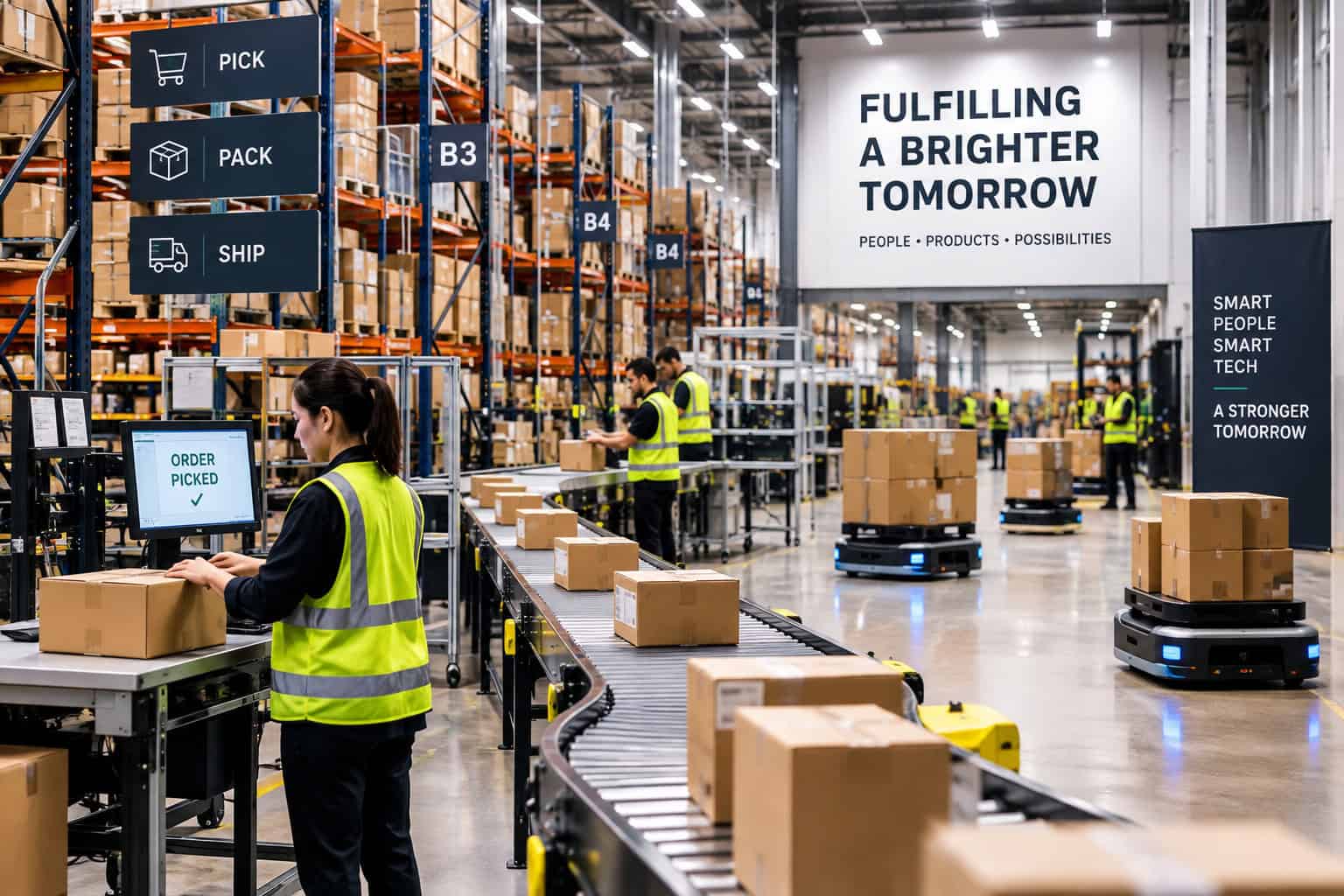
Warehouse fulfillment is a critical part of modern supply chain operations. As customer expectations for faster deliveries, accurate orders, and reliable shipping continue to grow, warehouses and distribution centers must find ways to improve productivity without continually increasing labor costs. Efficient warehouse fulfillment requires more than simply picking products and preparing packages. It involves coordinating inventory movement, order processing, sorting, packing, and shipping through a well-designed material handling system.
Century Conveyor Systems helps businesses improve warehouse fulfillment through engineered conveyor systems, robotic automation, material handling equipment, and integrated warehouse technologies. By designing solutions around the specific needs of each facility, Century helps warehouses increase throughput, reduce unnecessary manual handling, and create more efficient fulfillment operations.
Below are some frequently asked questions about Century Conveyor Systems and its approach to warehouse fulfillment.
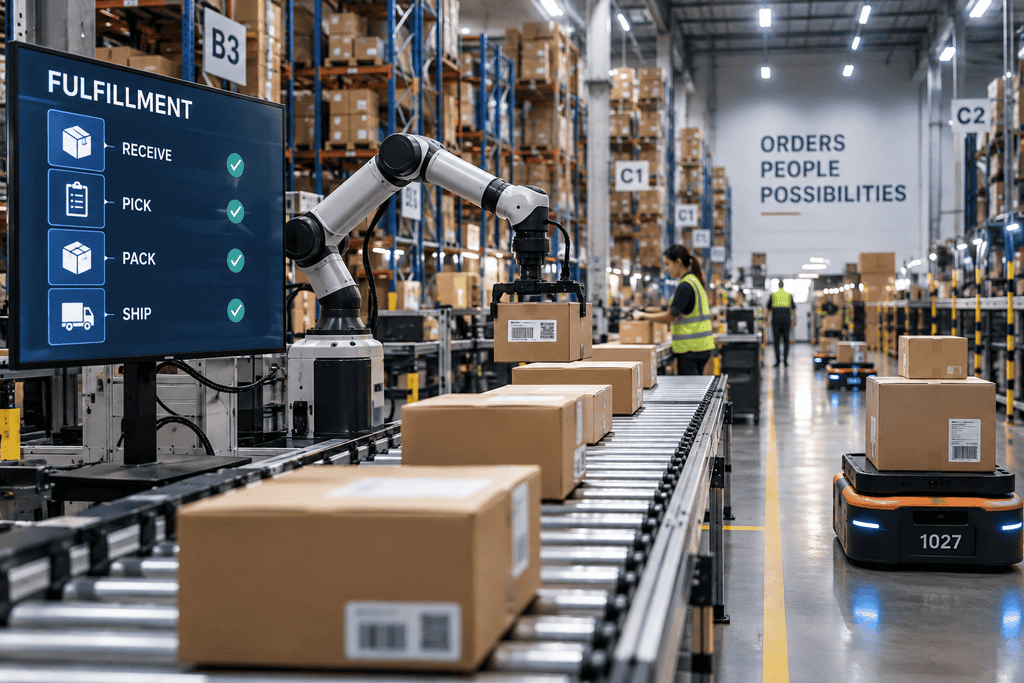
Warehouse fulfillment refers to the complete process of receiving, processing, picking, packing, sorting, and preparing customer orders for shipment. It begins when an order enters the fulfillment operation and continues until the products reach the shipping area, where they are loaded for delivery.
Every step must work together to ensure orders are processed accurately and efficiently. When a warehouse relies heavily on manual transportation, repetitive handling, or disconnected processes, bottlenecks can develop. These inefficiencies can slow down order processing, increase labor requirements, and create opportunities for shipping errors.
Century Conveyor Systems addresses these challenges by engineering automated material handling solutions that connect different stages of warehouse fulfillment. Its solutions include conveyor systems, robotic fulfillment equipment, sortation systems, warehouse controls, and storage modules.
Rather than treating each piece of equipment as an isolated improvement, Century approaches warehouse automation as an integrated operation. Its engineers design, validate, and implement systems that support the movement of products throughout the facility.
This approach helps businesses improve productivity at multiple points in the fulfillment process. Products can move between workstations with fewer manual transfers, orders can be directed toward the appropriate processing areas, and warehouse employees can focus on tasks that require more direct involvement.
The ultimate objective is to create a warehouse fulfillment operation that processes more orders while minimizing unnecessary labor, handling, and operational delays.
Conveyor systems are one of the most important components of an automated warehouse fulfillment operation because they provide a consistent way to transport products throughout a facility.
Without an effective transportation system, employees may need to move cartons, totes, and pallets manually between picking, packing, sorting, and shipping areas. This can consume valuable labor hours and create unnecessary travel throughout the warehouse.
Century Conveyor Systems engineers conveyor solutions designed to match the layout, product characteristics, and processing requirements of individual facilities.
Depending on the application, a conveyor system can transport small parcels, irregular cartons, heavy products, or full pallets. Different conveyor sections can also perform specific functions, including accumulation, product transfers, diverting, and elevation changes.
One important advantage of conveyor automation is its ability to create a continuous flow of products. Instead of relying on employees to transport every item between workstations, conveyors move products along predetermined routes.
Century offers several conveyor technologies for different warehouse fulfillment applications, including:
Selecting the appropriate conveyor technology allows businesses to create a transportation system that supports their specific fulfillment requirements.
Labor is one of the most significant operational expenses for many warehouses and distribution centers. As fulfillment volumes increase, businesses often need additional employees to transport products, move materials, sort packages, and complete repetitive handling tasks.
However, adding more employees does not necessarily solve the underlying inefficiencies in a warehouse. If workers spend a considerable amount of time walking between stations or moving products manually, productivity can remain limited.
Warehouse automation helps address this problem by reducing the amount of repetitive manual work required to process orders.
Century Conveyor Systems focuses on designing systems that allow products to move efficiently between different stages of the fulfillment process. Conveyor equipment can automate transportation, while robotic systems can assist with moving cartons, totes, and pallets.
For example, an automated conveyor network can transport packages from packing stations to sorting equipment without requiring employees to manually move each carton. Similarly, automated mobile robots can retrieve products or transport materials between designated areas.
These improvements allow employees to spend more time on activities that require decision-making, quality control, and direct supervision.
The goal is not necessarily to eliminate employees from warehouse operations. Instead, it is to make better use of available labor by reducing repetitive transportation and handling responsibilities.
For facilities experiencing labor shortages, rising labor expenses, or increasing order volumes, this can be an important component of a long-term warehouse fulfillment strategy.
Robotics provide another layer of automation that can improve warehouse fulfillment by handling transportation activities that would otherwise require manual equipment or employee involvement.
Century Conveyor Systems offers robotic fulfillment solutions using two primary technologies: Automated Guided Vehicles (AGVs) and Autonomous Mobile Robots (AMRs).
Although both technologies transport materials throughout a facility, they operate differently and serve different applications.
Automated Guided Vehicles (AGVs) follow established navigation paths using technologies such as magnetic tape, QR codes, inductive wires, and laser grids. They are particularly useful for predictable transportation requirements involving pallets, cartons, and other materials.
AGVs can also be equipped with carts or conveyor attachments to accommodate different types of products. They are often integrated with conveyor systems to support transportation between automated and manual processing areas.
Autonomous Mobile Robots (AMRs) offer greater navigation flexibility. Rather than following a fixed physical route, AMRs use sensors and programming to navigate throughout a facility.
This flexibility makes them particularly useful for goods-to-person operations. An AMR can retrieve a tote or container and transport it to a packing line or fulfillment employee, reducing the need for workers to travel throughout the warehouse searching for inventory.
Robotic automation also provides scalability. Businesses can introduce additional robots as fulfillment requirements change rather than committing to a completely fixed transportation infrastructure.
For warehouses seeking greater flexibility, robotics can complement conveyor automation and create a more adaptable fulfillment environment.
Order accuracy and product condition are essential parts of warehouse fulfillment. Shipping the wrong product, sending an incomplete order, or damaging merchandise during transportation can lead to returns, additional expenses, and dissatisfied customers.
Many fulfillment problems originate from inefficient material handling processes. Products may be transferred between workstations multiple times, handled unnecessarily, or transported through poorly designed accumulation areas.
Century Conveyor Systems addresses these challenges through equipment designed to improve product movement and reduce unnecessary handling.
For example, conveyor diverts can automatically direct cartons toward their appropriate destinations. This reduces the need for employees to manually reposition every package as it moves through the facility.
Accumulation conveyors can also help protect products during transportation. Century offers zero-pressure and minimum-pressure accumulation solutions that use sensors and controlled spacing to manage how products move along a conveyor.
Zero-pressure accumulation prevents products from touching one another, while minimum-pressure accumulation allows products to make light contact. These technologies are particularly useful when handling fragile merchandise or products that could be damaged by excessive contact.
Belt conveyors provide another advantage by offering stable transportation for smaller parcels, polybags, and irregularly shaped cartons.
By combining appropriate conveyor equipment, automated routing, and controlled product movement, warehouses can create fulfillment processes that reduce avoidable handling errors and product damage.
Yes. Warehouse automation should reflect the physical characteristics and operational requirements of the facility where it will be installed.
Every warehouse has different constraints, including available floor space, ceiling height, product dimensions, shipping volumes, existing equipment, and employee workflows. A standardized system may not address these requirements effectively.
Century Conveyor Systems provides system design and engineering services to develop material handling solutions around individual warehouse operations.
Its approach includes evaluating the facility, determining the appropriate equipment, validating system designs, and managing implementation.
For example, a warehouse with limited floor space may benefit from vertical transportation solutions such as spiral conveyors. These systems move products between different facility levels using a compact spiral configuration.
A facility with extensive pallet transportation requirements may need a combination of pallet gravity conveyors, chain-driven live roller conveyors, and pallet drag chain systems.
Meanwhile, a fulfillment center handling smaller parcels may benefit from belt conveyors, roller conveyors, and automated sortation equipment.
The important consideration is how the equipment works together. A successful warehouse fulfillment system should support the movement of products from one operational stage to the next without creating unnecessary congestion or inefficient work patterns.
By engineering solutions around existing facility requirements, Century helps businesses pursue automation without assuming that every warehouse needs the same equipment configuration.
Conveyor automation and robotic fulfillment both improve warehouse productivity, but they solve different material handling challenges.
Conveyor systems typically move products along established transportation paths. They are particularly effective when products need to travel between predictable locations, such as packing stations, sorting equipment, accumulation areas, and shipping docks.
Robotic fulfillment equipment provides more flexible transportation capabilities. AGVs and AMRs can move products, totes, and pallets through warehouse environments without requiring every transportation route to be built into a fixed conveyor network.
The main difference is how products are transported.
Conveyors provide continuous movement along an engineered pathway, while mobile robots offer point-to-point transportation and greater flexibility when navigating changing warehouse environments.
Neither technology is automatically the better choice for every application.
A high-volume distribution center may benefit from conveyors because they can continuously transport large quantities of products through established processing areas. Another facility may benefit more from AMRs because its inventory movement requirements involve multiple destinations and changing transportation needs.
In many cases, combining both technologies produces the most effective result.
Century Conveyor Systems offers conveyor and robotic fulfillment solutions that can work together as part of a broader warehouse automation strategy.
Warehouses rarely handle only one type of product. Depending on the industry, a fulfillment operation may process small polybags, standard cartons, irregular packages, drums, oversized products, or heavy pallets.
Each product category creates different material handling requirements.
Small packages may require stable belt transportation, while heavier products may need roller conveyors or specialized pallet handling equipment. Fragile items may require controlled accumulation to prevent products from colliding during transportation.
Century Conveyor Systems offers different equipment configurations to accommodate these varying requirements.
For example, modular belt conveyors are useful for applications that require specialized belt characteristics, easy cleaning, or simplified maintenance. Live roller conveyors provide powered transportation for cartons, while gravity conveyors can support staging and manual processing areas.
For larger loads, pallet conveyors provide stable transportation based on the weight and characteristics of the materials being handled.
System flexibility also matters when order volumes fluctuate. A warehouse may experience significant seasonal demand, promotional surges, or long-term business growth.
An appropriately engineered warehouse fulfillment system should account for these changes. Businesses can benefit from selecting equipment that supports current operations while allowing opportunities for future expansion.
Century’s robotic fulfillment solutions also offer scalability, allowing additional mobile robots to be introduced as operational requirements increase.
Yes. Warehouse automation requires more than physical equipment. Controls and software help coordinate the movement of products and ensure that different components of an automated system operate together.
Century Conveyor Systems provides controls and software solutions that include control panel fabrication, Programmable Logic Controls (PLC), Warehouse Management Systems (WMS), and Warehouse Control Systems (WCS).
These technologies support the coordination of warehouse equipment and operational processes.
Programmable Logic Controls help manage equipment behavior, including conveyor movement, sensors, product transfers, and automated sequences.
Warehouse Management Systems support broader warehouse activities, including inventory management and order processing.
Warehouse Control Systems help coordinate automated material handling equipment and direct product movement throughout the facility.
Integrating the appropriate controls and software is important because disconnected systems can create operational inefficiencies. Equipment may function independently while failing to support the overall movement of products through the warehouse.
A properly designed automation solution considers both the mechanical equipment and the controls responsible for coordinating its operation.
For businesses investing in warehouse fulfillment automation, this integrated approach can help establish a more consistent and manageable operation.
Even a well-designed warehouse automation system requires regular maintenance to maintain reliable performance.
Conveyor breakdowns, worn components, electrical problems, and equipment malfunctions can interrupt product movement and create bottlenecks throughout a fulfillment operation.
Because conveyor systems often connect multiple warehouse processes, a problem in one section can affect several downstream operations.
Preventative maintenance helps reduce the likelihood of unexpected equipment failures by identifying potential problems before they develop into major disruptions.
Century Conveyor Systems offers conveyor preventative maintenance, repair services, replacement parts, and ongoing support.
Its service capabilities include mechanical and electrical installation, conveyor repairs, and maintenance programs designed to support material handling equipment.
Century also provides 24/7 support services and parts assistance for conveyor systems.
The company highlights more than 40 years of conveyor experience and maintains a service department with technicians serving the New Jersey, Pennsylvania, and New York metropolitan area.
Maintenance should be considered during the initial planning of a warehouse fulfillment project rather than treated as an afterthought. Equipment accessibility, replacement components, and service requirements can all influence the long-term performance of an automated system.
A proactive maintenance strategy helps businesses protect their automation investment and maintain consistent warehouse operations.
Yes. Warehouse automation does not always need to happen as one large installation.
Many businesses prefer to introduce automation in phases, particularly when they need to maintain existing operations during implementation or manage capital expenditures carefully.
Century Conveyor Systems offers project management, system design, project phasing, and installation services that support warehouse automation projects.
A phased approach allows businesses to prioritize the areas experiencing the greatest operational challenges.
For example, a distribution center might begin by automating transportation between packing stations and shipping areas. Once that system is operating effectively, the business may introduce additional sortation equipment or robotic transportation.
Another facility may prioritize pallet movement before investing in smaller-package fulfillment automation.
The advantage of this approach is that businesses can address immediate operational needs while planning for future improvements.
However, future expansion should be considered during the initial system design. Equipment placement, available floor space, control architecture, and transportation pathways can all affect how easily additional automation can be introduced.
Century’s scalable conveyor and robotic fulfillment solutions provide opportunities for businesses to develop their automation capabilities as their operational needs evolve.
Choosing an automation partner is an important decision because warehouse fulfillment equipment affects productivity, labor requirements, shipping performance, and long-term operating costs.
Century Conveyor Systems positions itself as a full-service material handling automation integrator for warehouses, distribution centers, and fulfillment facilities.
One of its main advantages is its ability to support multiple aspects of an automation project through a single provider.
Rather than focusing exclusively on conveyor installation, Century offers a broader range of capabilities, including:
This range of capabilities allows Century to consider the entire warehouse fulfillment process when developing an automation strategy.
The company also emphasizes a turnkey project approach, managing activities from system design and validation through installation and start-up support.
For businesses looking to improve fulfillment performance, working with an integrator that understands both individual equipment and the larger material handling system can make a meaningful difference.
Warehouse fulfillment is becoming increasingly demanding as businesses work to process orders faster, manage labor expenses, and maintain reliable shipping operations. Improving performance requires more than adding individual pieces of equipment. It requires an integrated approach to material handling, transportation, automation, and warehouse controls.
Century Conveyor Systems provides engineered warehouse fulfillment solutions that combine conveyor technology, robotic automation, sortation equipment, controls, and ongoing service capabilities.
Whether a facility needs to automate carton transportation, improve pallet handling, introduce goods-to-person robotics, or modernize an existing conveyor system, the right automation strategy starts with understanding the specific challenges within the operation.
By designing systems around individual warehouse requirements and considering opportunities for future expansion, Century helps businesses build more efficient material handling operations.
For organizations evaluating their next warehouse fulfillment project, Century Conveyor Systems offers an opportunity to work with an experienced automation integrator focused on improving warehouse performance from design through implementation and ongoing support.

Capex planning for conveyor and automation work starts in Q4, with 12–20 week lead times. How to assess, prioritize, and get 2027 projects approved.
Continue reading